


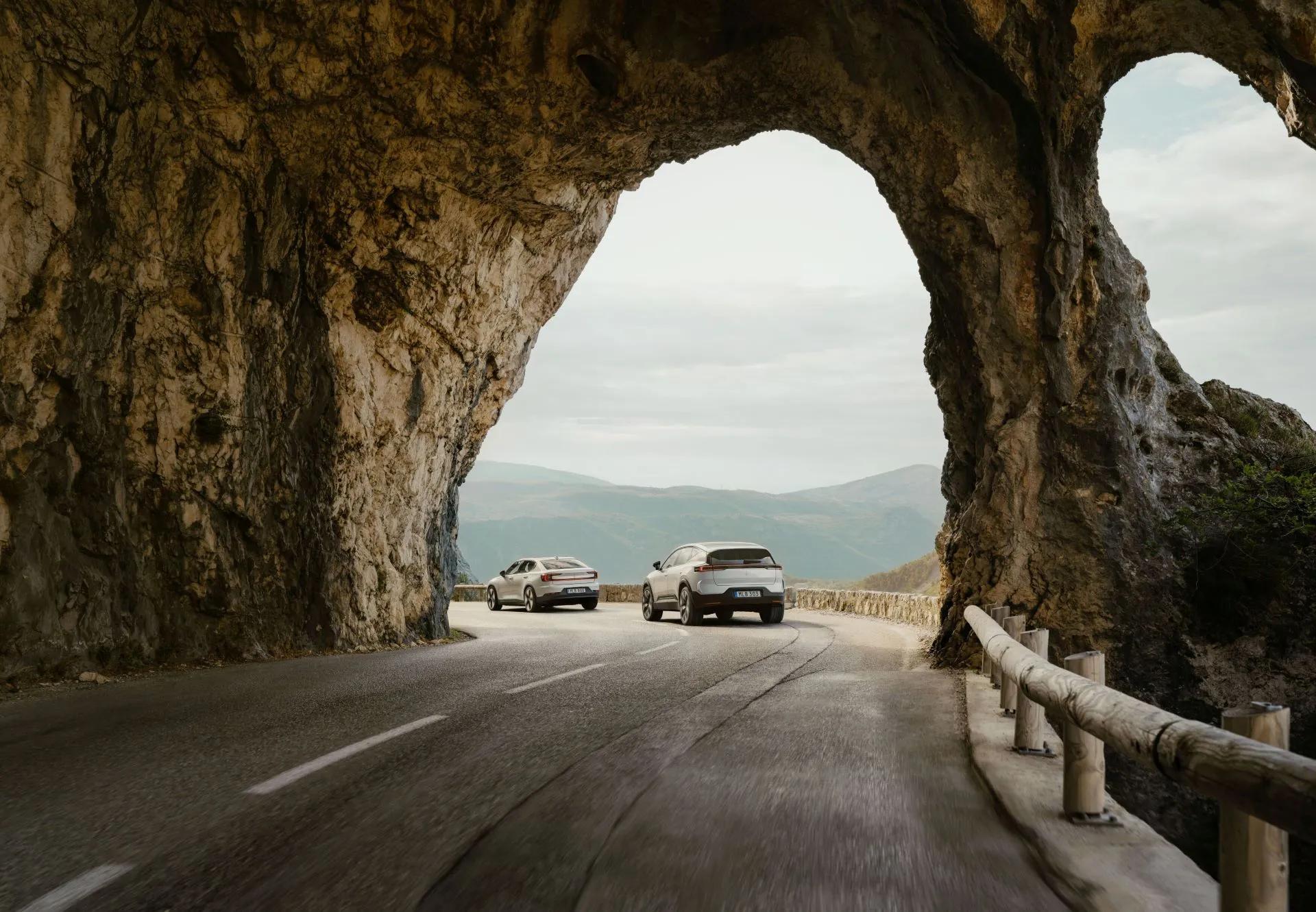
In an industry still learning how to close the loop, Polestar is quietly tightening it. From its base in Gothenburg, the electric performance marque has announced that batteries used in the Polestar 2 and Polestar 3 now contain at least 50% recycled cobalt, marking a significant step toward a more circular, less extractive EV ecosystem.
This is not a one-off milestone but part of a broader, deliberate shift in how Polestar thinks about materials. The aim is simple in theory and complex in execution: keep valuable resources in circulation for as long as possible, while reducing dependence on newly mined inputs. In practice, that means tracing materials more rigorously, recovering them more efficiently, and designing products that make both possible.
The circular story extends well beyond sourcing. Once a vehicle is on the road, the focus shifts to preserving battery health and long-term value. Working alongside Volvo Cars battery centres, Polestar refurbishes high-voltage battery packs and reintroduces them into service. When a replacement is needed, customers receive a refurbished unit with an equivalent state-of-health, maintaining performance expectations while lowering the environmental cost typically associated with new battery production. The result is a closed-loop system where batteries are not simply replaced but renewed.
Parallel to refurbishment, the company is expanding its recycling partnerships across global markets, ensuring compliance with producer responsibility frameworks while extracting maximum value from end-of-life components. The goal is not just recovery, but optimisation, capturing critical materials at a quality level that allows them to re-enter the production cycle.
Fredrika Klarén, Head of Sustainability at Polestar, frames the shift as a redefinition of value itself, where electrification is only the entry point and circularity becomes the system that sustains it. It is a philosophy that treats materials less like consumables and more like long-term assets, continuously repurposed rather than discarded.
That thinking is already visible across Polestar’s product design. Recycled aluminium and steel feature prominently, while interior materials incorporate ECONYL® polyamide and yarn derived from PET waste. These choices are supported by a push toward reduced material complexity and modular design, enabling easier disassembly and more efficient recycling at scale. The intention is clear: sustainability should not sit in opposition to performance or premium appeal, but coexist with both.
Transparency remains a cornerstone of the brand’s approach. Since 2020, Polestar has published Life Cycle Assessments for each model, detailing CO₂e emissions across the entire value chain. The Polestar 2 also broke new ground as the first vehicle to feature blockchain-traced cobalt, setting a precedent for supply chain accountability in an industry often criticised for its opacity.
Progress is measurable. Relative CO₂ emissions per vehicle have been reduced by 25% since 2020, supported by initiatives such as smart charging integration and an expanding model line-up that now spans four vehicles. Yet the underlying message remains consistent: electrification alone is not enough. Without circular systems, the gains risk being partial.
With recycled cobalt now forming a substantial share of its battery chemistry, Polestar is sketching out what a mature electric vehicle ecosystem could look like. One where materials flow in loops rather than lines, where waste is a design flaw rather than an inevitability, and where sustainability is engineered into the product as rigorously as performance.