


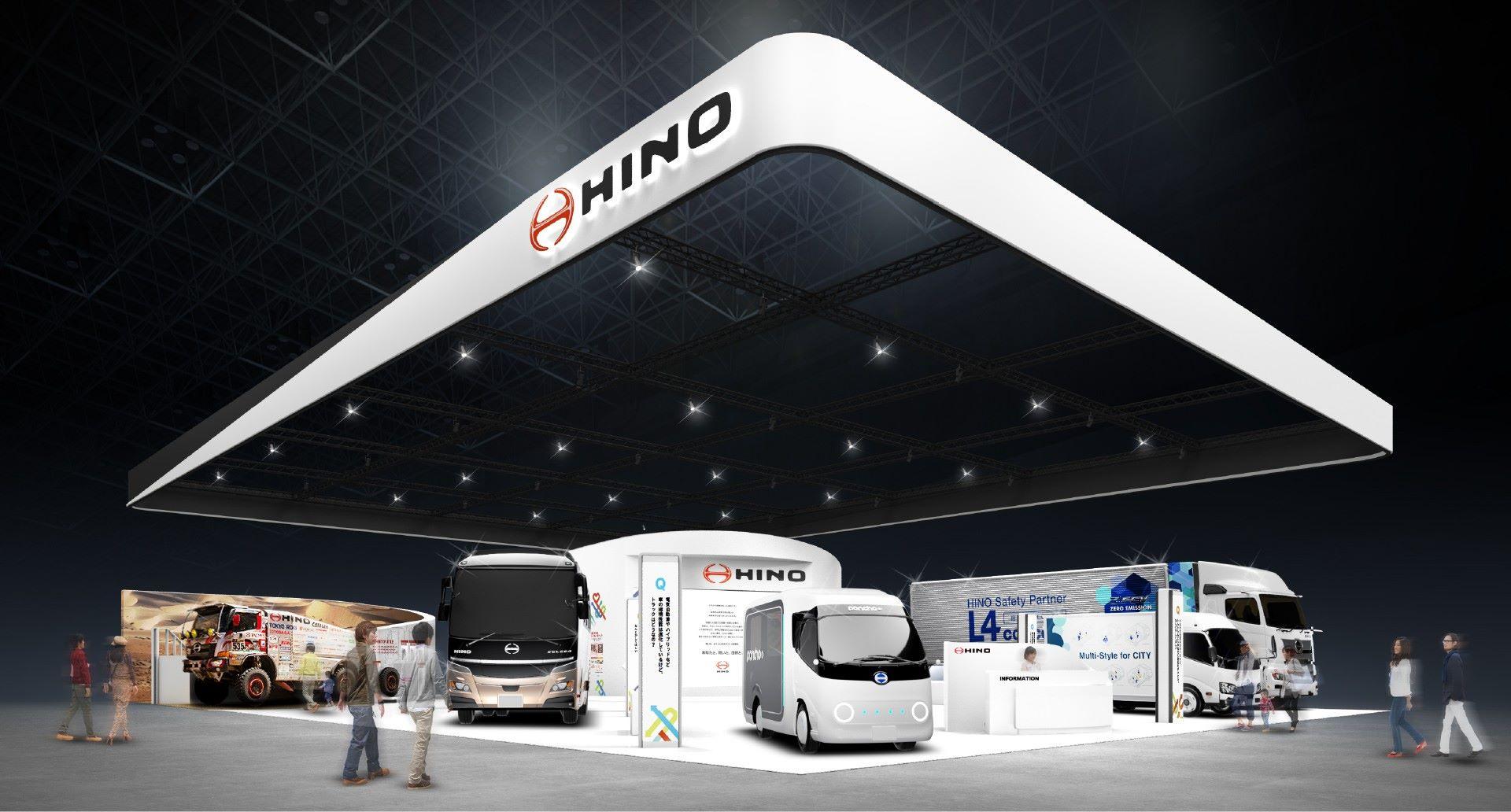
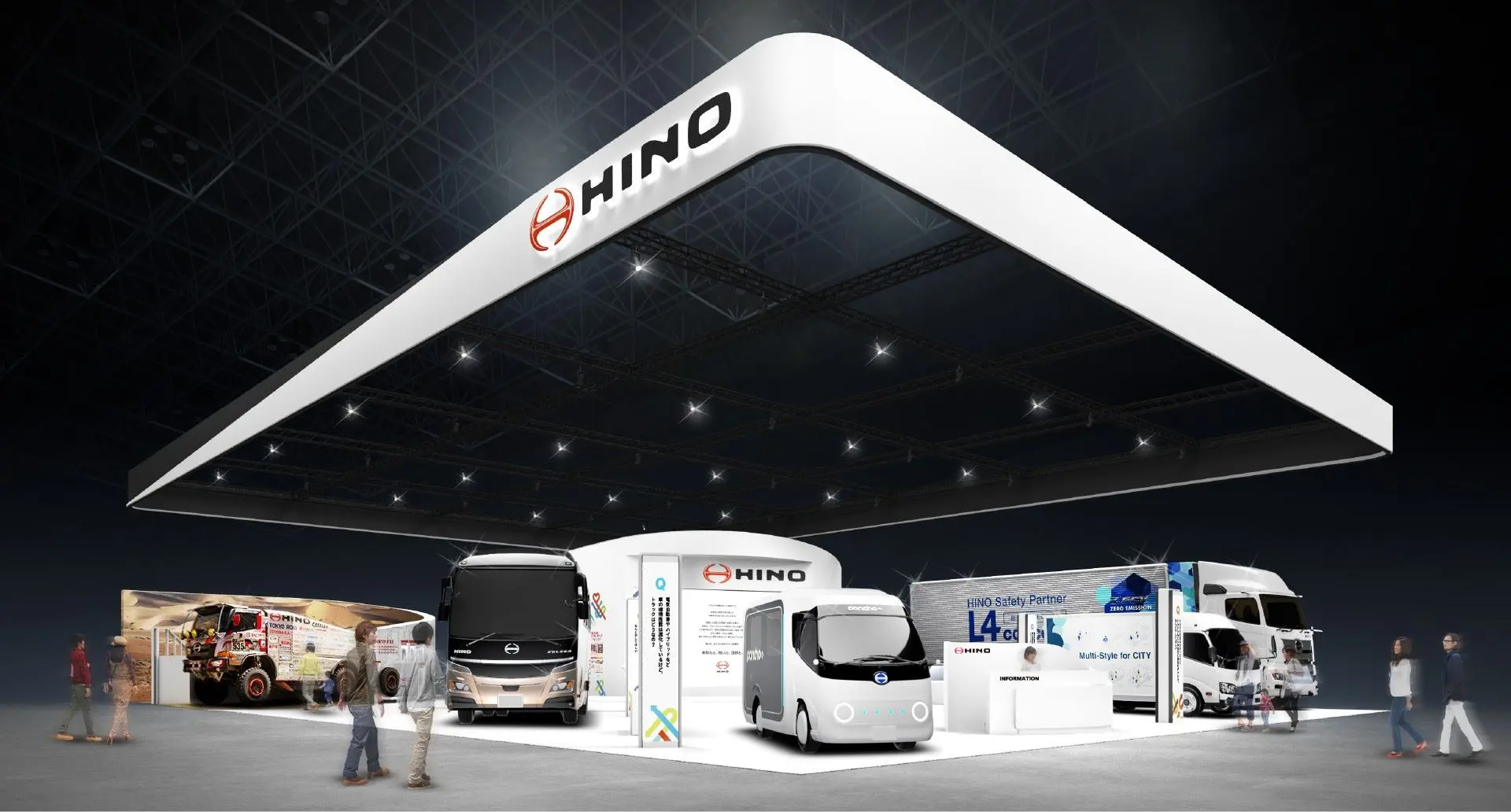
Tokyo’s Japan Mobility Show once again lived up to its reputation as a stage for forward-thinking innovation, and Hino Motors stood firmly at its centre with a series of exhibits that offered a clear, compelling vision of tomorrow’s transport landscape. Under its corporate mission of creating a better world and a better future by enabling people and goods to reach their destinations safely and efficiently, the Japanese truck and bus specialist used the event to showcase next-generation technologies that bring this vision into sharp focus.
A Hydrogen-Powered Heavy-Duty Milestone
The undisputed highlight on Hino’s stand was the latest production version of the Hino 700 hydrogen fuel-cell electric freighter. More than a technological showpiece, this truck marks a significant milestone: it is the first mass-production heavy-duty model from a Japanese manufacturer to pair true long-haul practicality with zero operational emissions.
Designed to contribute meaningfully to carbon neutrality and the broader development of a hydrogen-based society, the new 700 FCEV proves that clean transport and commercial viability no longer stand in opposition. Its fuel-cell powertrain supports the demanding performance requirements of heavy-duty logistics while enabling operators to significantly reduce their environmental footprint.
But powertrain innovation is only half the story. This pioneering model is also engineered for Level 4 autonomous driving capability on expressways, a feature that positions Hino at the forefront of advanced safety and automated mobility development.
Level 4 Autonomy: Advancing Safety on the Road
Hino’s goal of achieving “zero traffic casualties” plays a central role in the truck’s L4 integration. The company has refined its radar systems, enhanced camera placement, and incorporated high-performance sensors such as LIDAR following extensive real-world testing on Japanese expressways.
These upgrades enable far more accurate detection, recognition, and predictive decision-making, forming the backbone of a system designed to support autonomous highway travel with minimal human intervention. The result is a heavy-duty vehicle that not only operates cleanly but also raises the bar on road safety.
A Vision of Mobility Beyond Logistics
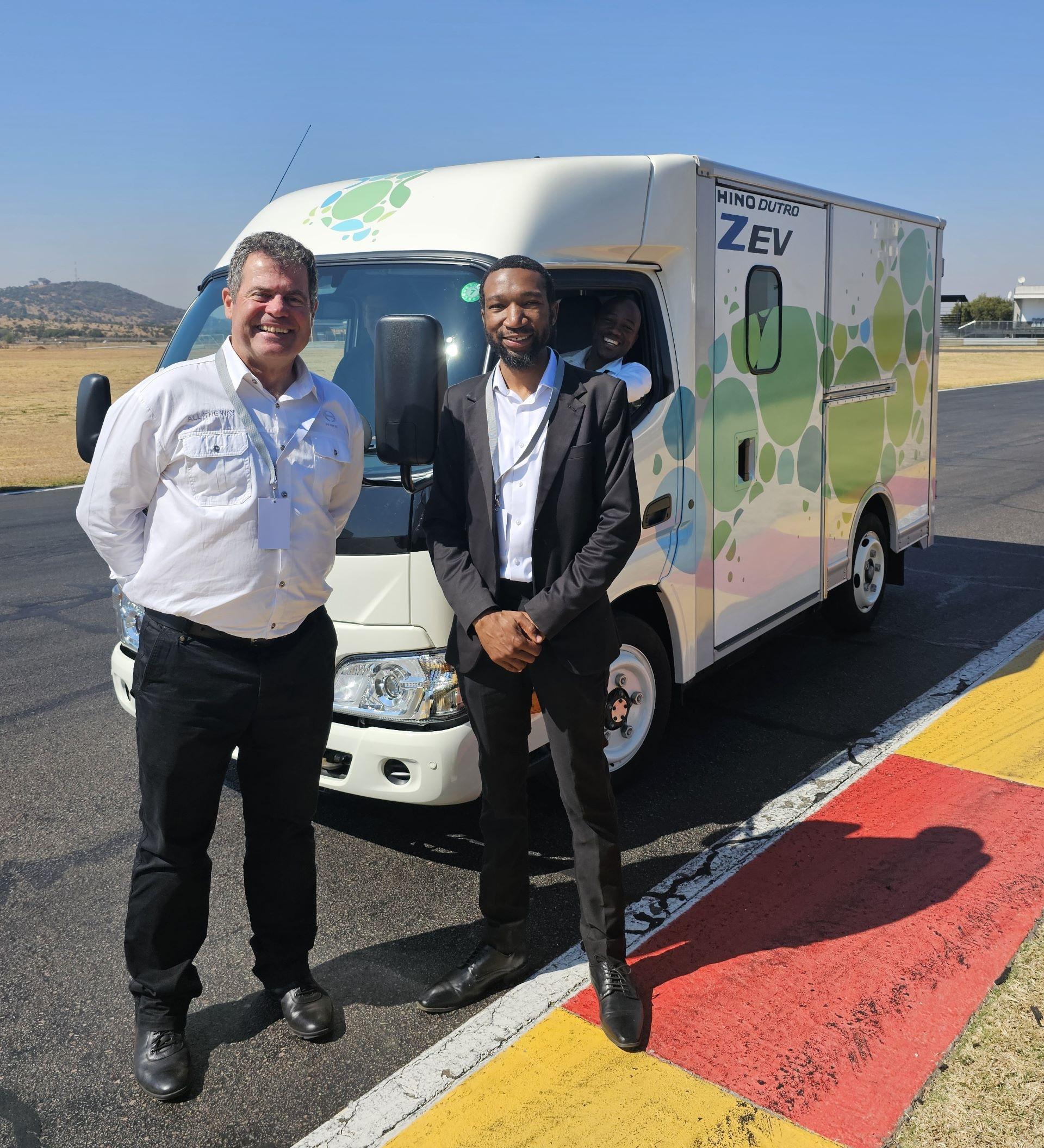
While the hydrogen-powered 700 drew the most attention, another standout was a customised version of the Hino Dutro Z EV, the manufacturer’s compact battery-electric model. Already familiar to South African audiences through its local event appearances, the Dutro Z EV was reimagined in Tokyo as a fully functional mobile office.
Thanks to its naturally low cargo floor and walk-through cabin design, the concept allows users to move in and out of the vehicle with ease, transforming it into a spacious, adaptable working environment. Hino envisions the mobile office derivative playing several roles, from an on-site control room for large outdoor events to a rapid-deployment operations centre in disaster-response scenarios.
Charting a Path Toward a Cleaner, Safer Future
Hino’s presence at the Japan Mobility Show reflected a company not merely responding to global transport trends, but actively shaping them. Through hydrogen-powered long-haul solutions, advanced autonomous technologies, and creative re-imaginings of electric mobility, Hino demonstrated a future where trucks contribute to cleaner cities, safer roads, and more flexible ways of working.
For an industry in the midst of profound transformation, Hino’s exhibits served as a reminder that innovation in mobility is not only about new technologies, but about new possibilities.