


Dacia’s 2025 results read less like a single strong year and more like the confirmation of a long, deliberate strategy paying off at scale. With 697,408 vehicles sold worldwide, up 3.1% year on year, the brand has crossed a symbolic and commercially significant threshold: more than 10 million vehicles sold since its modern rebirth in 2004. In a European market still wrestling with cost pressures, electrification mandates and shifting consumer priorities, Dacia has managed to grow without diluting its core promise.
That promise, best-in-class value for money, is no longer shorthand for basic mobility. In 2025, it became a competitive advantage strong enough to push the brand to record market share figures and podium finishes in retail sales.
A record footprint in Europe
Dacia’s performance translated directly into market share gains across Europe. The brand achieved a record 4% share of the combined passenger car and light commercial vehicle market, improving by 0.1 points compared to 2024 and retaining its 10th position in the overall European rankings. In the passenger car segment alone, Dacia reached a record 4.5% market share, a slight but meaningful increase that kept the brand firmly in ninth place.
Perhaps more telling is Dacia’s rise to second place on the European podium for sales to retail customers, its core audience. With a market share of 7.9% in this channel, the brand continues to outperform many competitors whose volumes are more heavily reliant on fleet and rental sales. This positioning underscores Dacia’s relevance to private buyers who are increasingly pragmatic, value-focused and resistant to unnecessary complexity.
Five core models, one clear philosophy
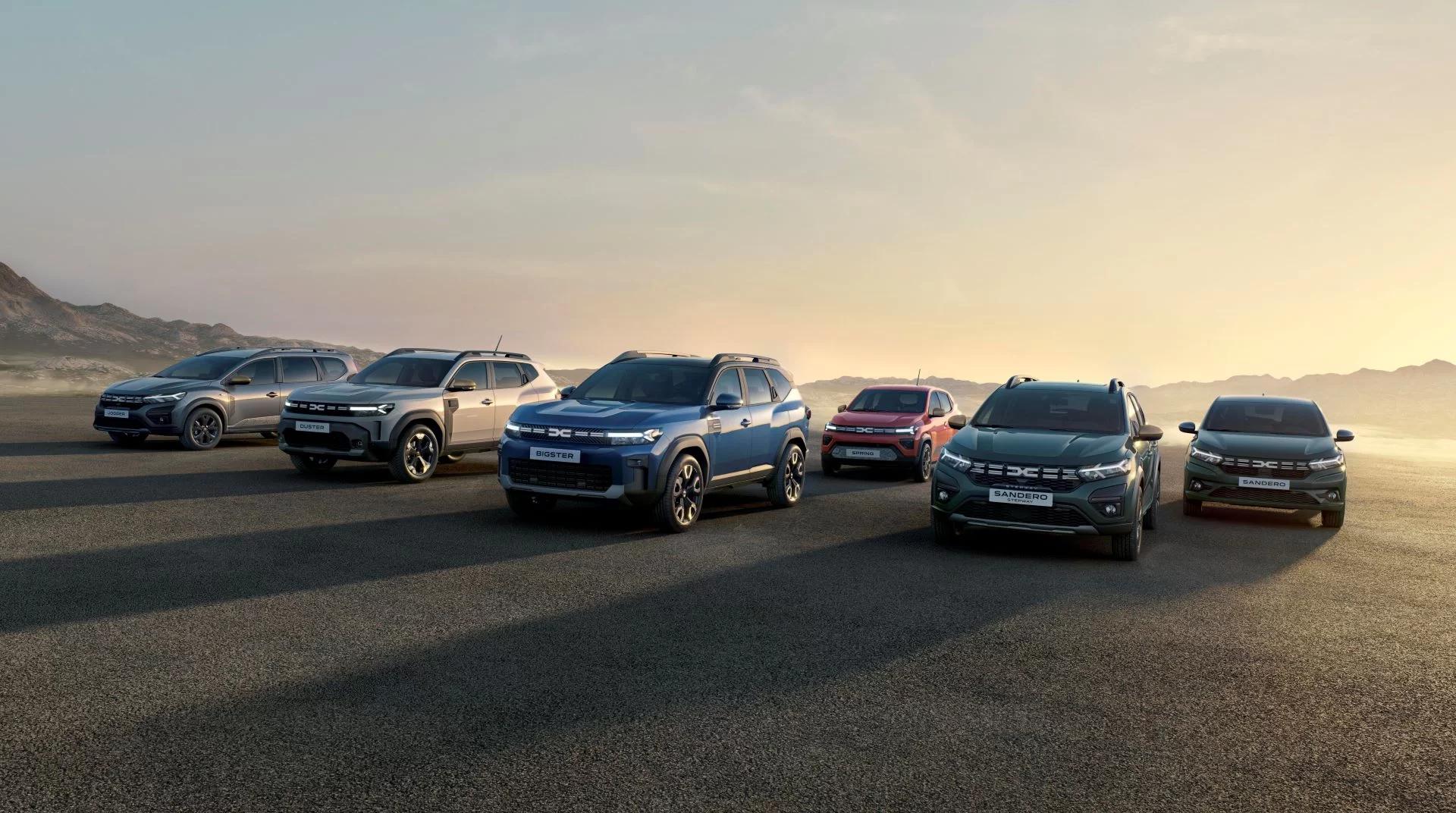
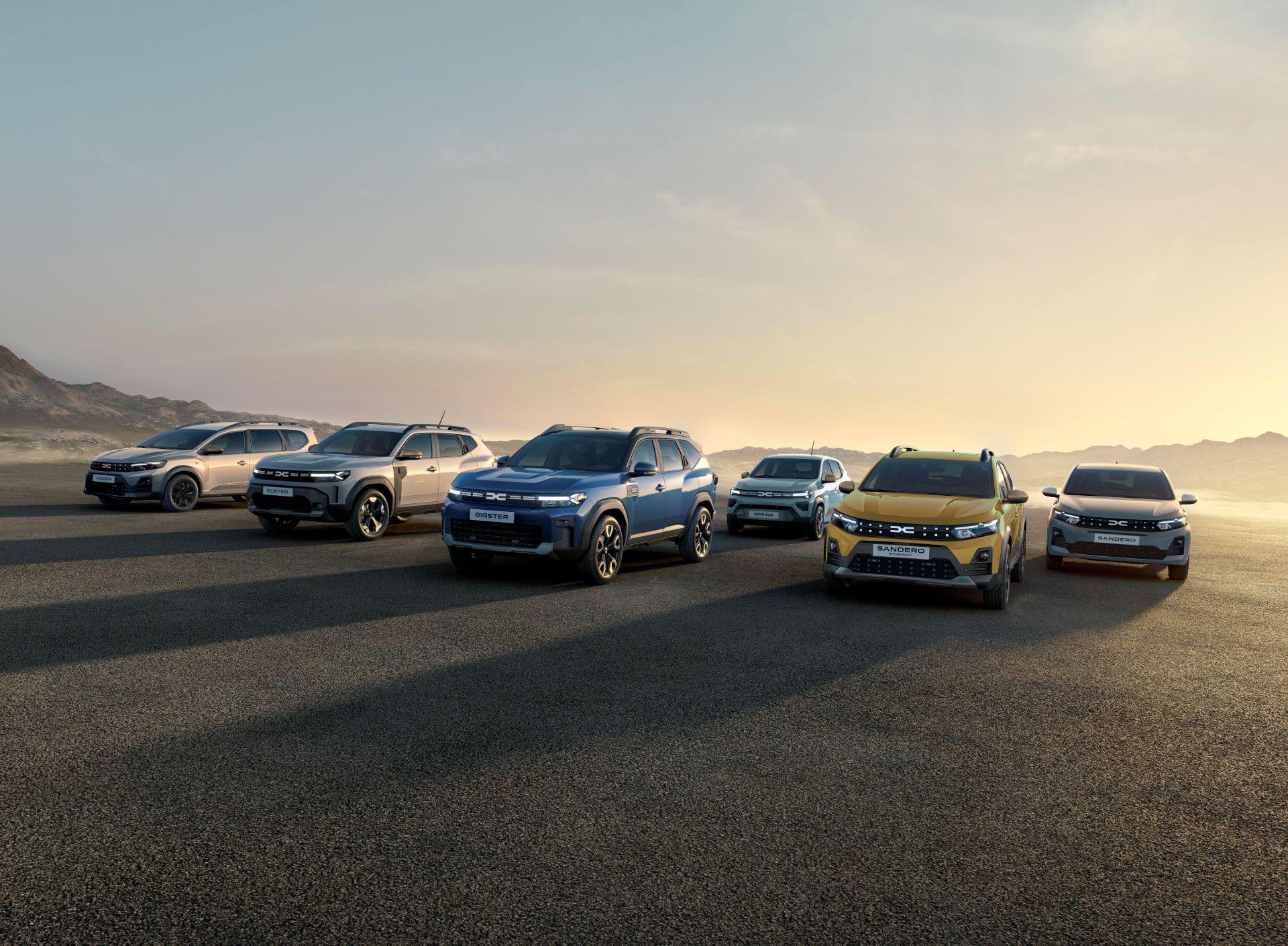
The backbone of Dacia’s 2025 success remains its tightly focused product range. Rather than chasing every niche, the brand has concentrated on five core models, each designed to dominate its segment on price, usability and perceived honesty.
Sandero once again led the charge, with 289,295 units sold worldwide. Although volumes dipped slightly compared to 2024, the model retained its crown as Europe’s best-selling passenger car across all sales channels for the second consecutive year. More impressively, it has remained the best-selling vehicle to private customers in Europe since 2017. With more than 3.5 million units sold since launch, Sandero has become one of the most quietly successful nameplates of the past decade.
Duster continued to anchor Dacia’s SUV credentials, recording 193,974 worldwide sales. It finished as the second best-selling SUV to retail customers in Europe and remains one of the brand’s most globally recognised products. Since its debut in 2010, over 2.8 million Dusters are now on the road, a testament to the model’s balance of affordability, robustness and evolving design.
Bigster emerged as one of the year’s standout stories. With 67,573 units sold worldwide, it became the best-selling C-SUV to retail customers in Europe in the second half of 2025. Its success signals Dacia’s growing confidence in moving slightly upmarket while maintaining its value-driven DNA.
Spring delivered one of the strongest growth performances in the range. With 35,034 units sold, up 53% year on year, it became the best-selling A-segment electric vehicle in Europe across all channels for the first time. This achievement positions Spring as a critical pillar in Dacia’s electrification strategy and reinforces the idea that electric mobility can be affordable without being compromised.
Jogger rounded out the core lineup with 73,695 units sold worldwide, placing it in the top five of the European C-segment excluding SUVs. Its blend of space, modularity and competitive pricing continues to resonate with families looking for practicality over prestige.
Electrification without alienation
One of the most notable aspects of Dacia’s 2025 performance is the pace at which it has accelerated electrification while keeping its customer base intact. Hybrid vehicle sales increased by 122% compared to 2024, and one in four Dacia vehicles sold in Europe is now electrified. That figure is double what it was just a year earlier.
This growth has been driven by the success of Spring, the expansion of hybrid powertrains across the range and a careful avoidance of forcing customers into technologies they are not ready for. Dacia’s approach has been incremental and inclusive, offering electrified options where they make sense, rather than positioning electrification as a premium upgrade.
Winning loyalty in a price-sensitive market
Beyond raw sales figures, Dacia’s momentum is reflected in its customer loyalty rate, which reached 70% in 2025. This level of repeat business is underpinned by improving customer satisfaction across both sales and aftersales, suggesting that value for money is being matched by ownership experience.
Price competitiveness remains central to this equation. By keeping entry prices low and option structures simple, Dacia has enabled a higher uptake of top trim levels, allowing customers to access better-equipped vehicles without stepping into a different price bracket. In an era of rising vehicle costs, this strategy has become increasingly persuasive.
A focused and ambitious outlook for 2026
Looking ahead, Dacia’s roadmap for 2026 builds directly on the foundations laid in 2025. The brand plans to continue electrifying its entire European range, with the ambition of offering a hybrid or fully electric version of every model. This expansion responds to growing demand for sustainable mobility while staying aligned with Dacia’s affordability ethos.
A new A-segment electric vehicle is set to join the lineup, complementing and renewing the brand’s electric city car offering and further lowering the barrier to entry for electric mobility. At the same time, Dacia will introduce a new internal combustion engine and hybrid model in the C-segment, ensuring choice remains central to its strategy.
Versatility will also be strengthened through the launch of a petrol hybrid 4×4 powertrain for Duster and Bigster, reinforcing the brand’s credentials in markets and use cases where traction and capability still matter.
As Dacia enters 2026, its challenge is not reinvention but consistency. By staying disciplined, focused and unapologetically value-driven, the brand has shown that growth is still possible in Europe’s mature automotive market. Ten million vehicles on, Dacia’s formula is no longer an alternative. It is a proven model for modern mobility.