Pretoria, South Africa – Tuesday, 17 June 2025 – In the realm of luxury mobility, comfort is more than just a premium perk—it’s a promise. JLR (Jaguar Land Rover) is taking this promise to the next level by employing cutting-edge robotics technology to fast-track seat testing in a bid to ensure lasting comfort for its discerning clientele.
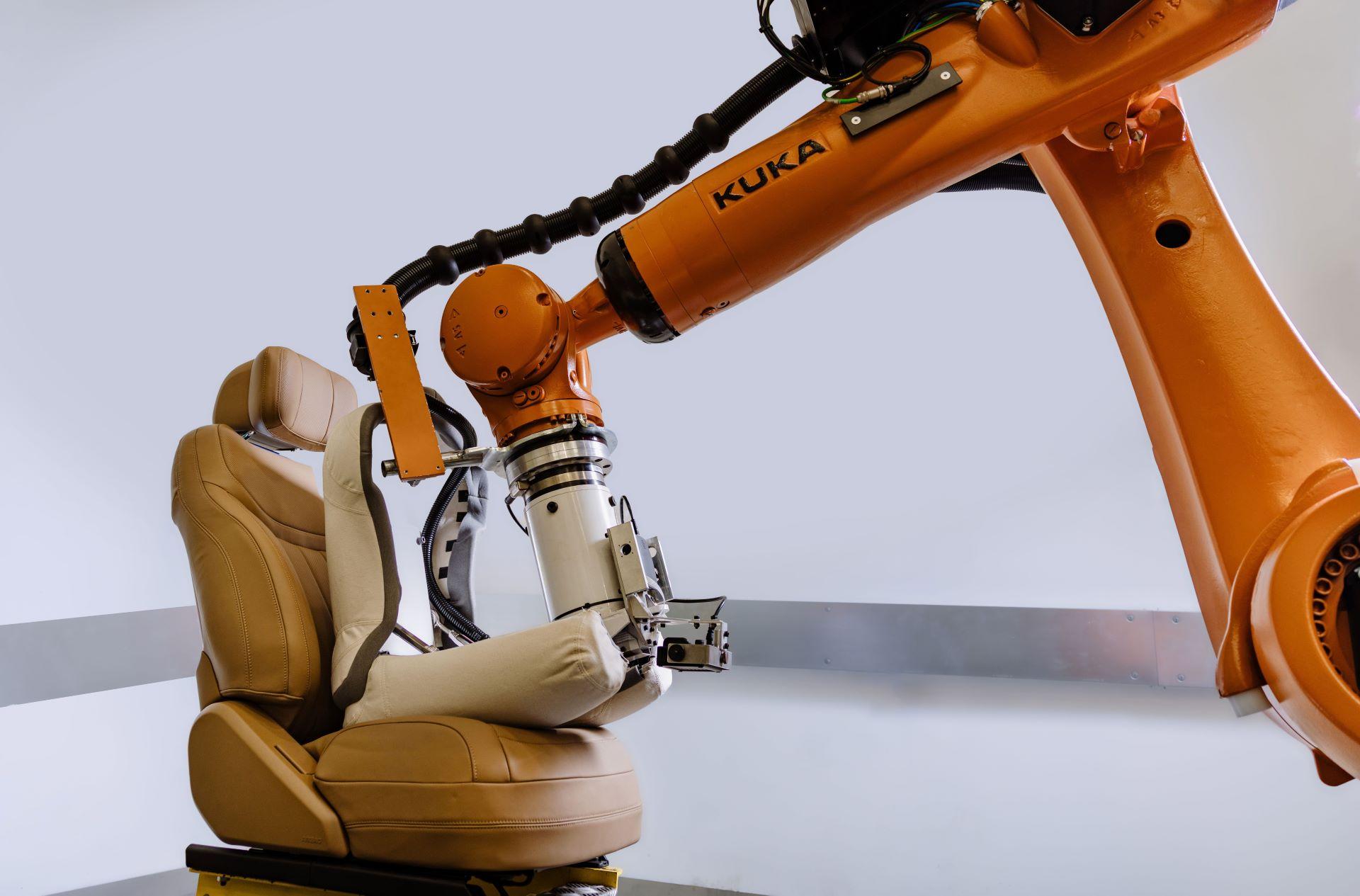
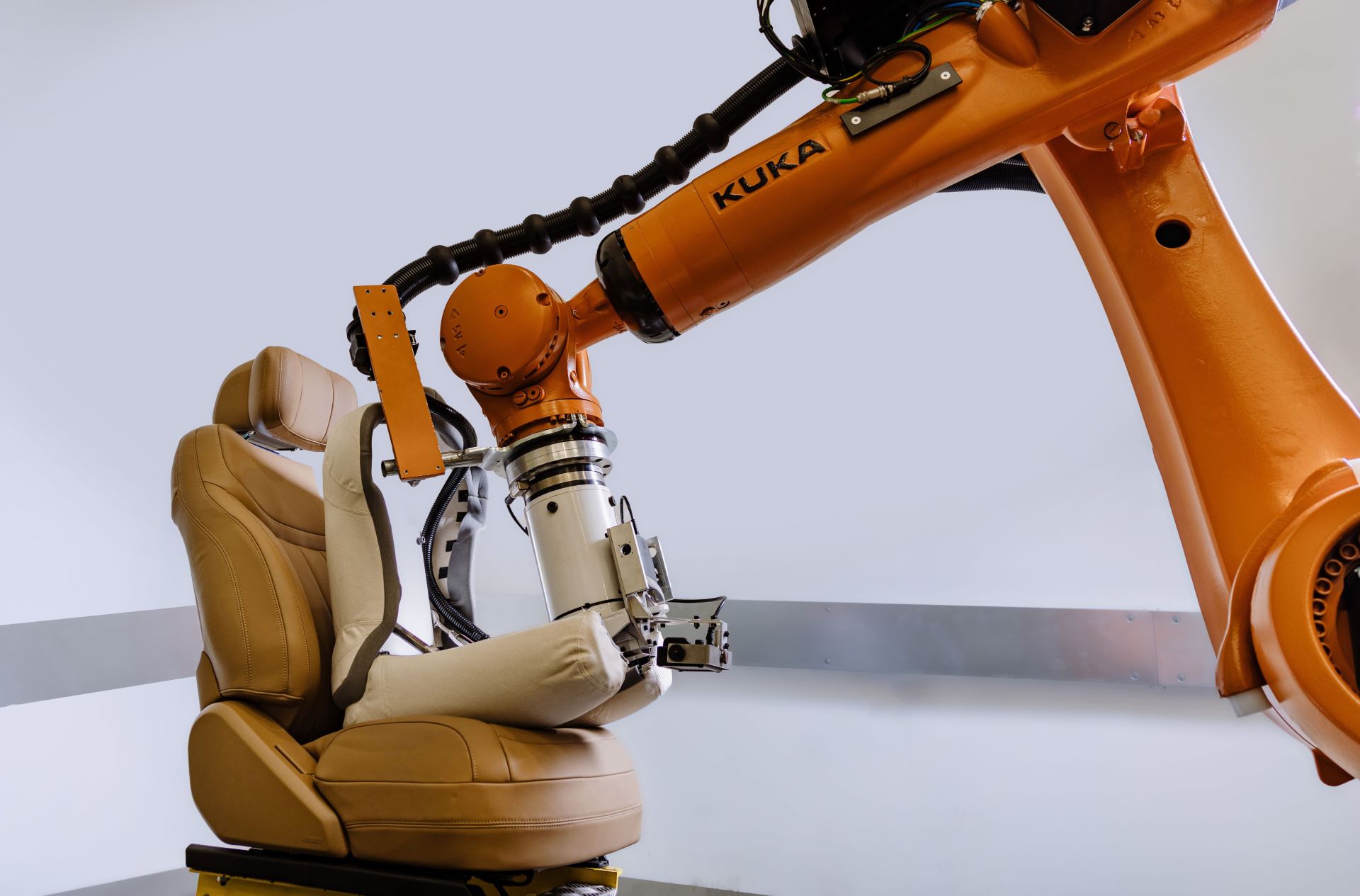
At the heart of this innovation are four state-of-the-art KUKA Occubots, each programmed to simulate a full decade of seat usage in just a matter of days. Mimicking the natural movements of sitting, twisting, and sliding—actions repeated tens of thousands of times by real-world drivers and passengers—these robots are helping JLR deliver the sort of uncompromising comfort expected from the Range Rover, Defender, Discovery and Jaguar marques.
These aren’t your average test dummies. The KUKA Occubots can exert forces exceeding 800 Newtons—equivalent to roughly 82kg—across more than 25,000 cycles over five days. This relentless routine replicates the nuanced pressure and wear exerted by people of varying shapes and sizes, from the casual slide into a seat to the firm twist of a taller frame adjusting position. The results? Deep insights into the longevity, support, and shape retention of various foams and seat coverings.
JLR’s testing doesn’t stop at the basic act of sitting. The Occubots also focus on one of modern motoring’s most underrated luxuries: heated seats. Over the course of 20,000 cycles spanning 25 days, the robots simulate body shifts, twists, and slides, applying forces between 350N and 700N to ensure the heating elements maintain full functionality and resilience across the vehicle’s lifespan.
Equipped with integrated torque sensors that take hundreds of readings per second, the robots maintain precision force control during every movement. Cameras embedded in the system continuously monitor progress, capturing images and autonomously identifying potential failures—allowing the testing process to operate 24/7 without interruption.
“Settling into your seat is one of the first experiences when entering one of our vehicles,” says Thomas Mueller, Executive Director of Product Engineering at JLR. “Comfort is critical to luxury, so it’s a make-or-break moment for our clients and they expect a consistently comfortable ride over the life of their vehicle.”
He adds, “We’ve invested in robots to work alongside our expert engineers and rigorously test every aspect of our seat materials in super quick time. Automation like this is a vital part of our comprehensive vehicle quality component testing programme.”
The robotic testing is one cog in JLR’s larger quality assurance machine, housed primarily at its cutting-edge Gaydon facility in the UK. As part of the company’s ambitious £18 billion Reimagine strategy, Gaydon hosts a wide array of advanced physical and virtual testing environments—from climate chambers that simulate arctic extremes to semi‑anechoic chambers for pinpointing acoustic comfort. The campus even boasts 52 kilometres of specially designed test track with obstacles like manhole covers and off-road courses to push vehicles to their limits.
In a recent survey commissioned by JLR, over 2,000 luxury and premium SUV clients identified comfort and convenience as the leading purchase drivers when choosing a vehicle. It’s a clear mandate—and one JLR is determined to meet head-on with both precision robotics and human ingenuity.
With each robotic press, twist, and glide, JLR is reshaping the future of luxury seat design—proving that in the pursuit of comfort, no detail is too small, and no test is too thorough. After all, in the luxury segment, excellence isn’t just expected—it’s engineered.