



BMW Group has announced the development of its new Cell Recycling Competence Centre (CRCC) in Kirchroth, located in the Straubing-Bogen district of Lower Bavaria. This state-of-the-art facility will be dedicated to pioneering a groundbreaking “direct recycling” method that aims to enhance sustainability and efficiency in battery production. This new step is part of BMW’s ongoing commitment to creating a closed-loop system for battery cells, ensuring that valuable raw materials can be reused, reducing waste, and contributing to the circular economy.
A Leap Forward in Battery Cell Recycling
The CRCC will serve as a critical hub for the innovative direct recycling process, which allows BMW to dismantle both residual materials from battery cell production and entire battery cells into their valuable components. These recovered materials—such as lithium, cobalt, graphite, manganese, nickel, and copper—will be fed back into the production cycle at BMW’s Battery Cell Competence Centres (BCCC) in Munich and Parsdorf. This process eliminates the need for energy-intensive chemical or thermal treatment commonly used in traditional recycling methods, making it a far more efficient and sustainable solution.
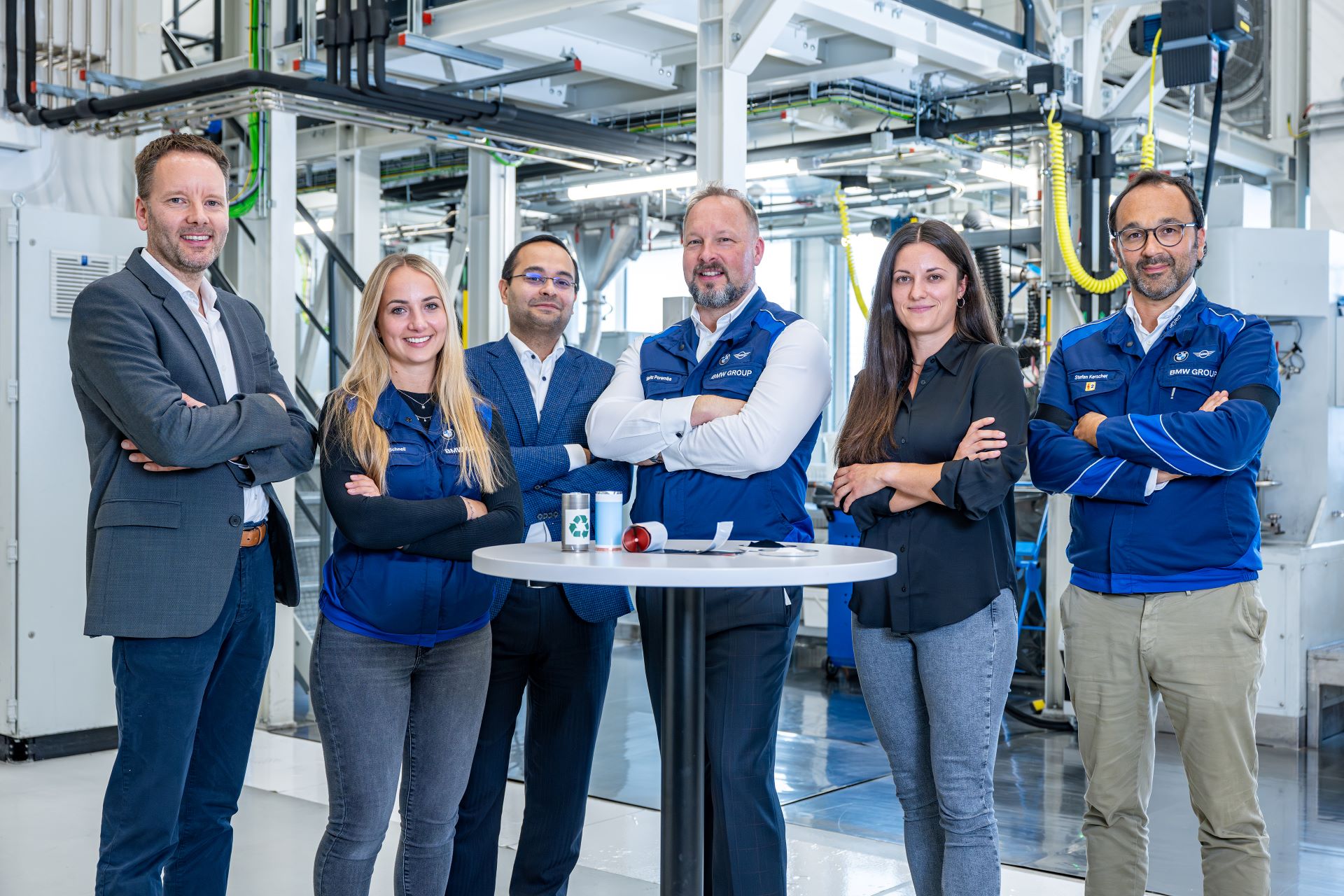
Markus Fallböhmer, Senior Vice President of Battery Production at BMW AG, highlights the strategic significance of the new facility: “The new Cell Recycling Competence Centre brings another element to our in-house expertise. From development and pilot production to recycling, we are creating a closed loop for battery cells,” he explains. The CRCC will support the company’s mission to reduce costs associated with battery cell production while enhancing environmental responsibility.
Optimizing Resource Efficiency and Reducing Costs
One of the primary drivers behind the CRCC is the need for greater efficiency in managing the raw materials used in battery cells. These materials represent a significant portion of the cost of cell production, making responsible sourcing and recycling critical both economically and environmentally. BMW’s direct recycling method ensures that valuable raw materials are reused effectively, creating a more sustainable and cost-efficient production cycle.
“This direct recycling process will help reduce the costs for our battery cell pilot line,” says Fallböhmer, emphasizing the financial and ecological advantages of the innovation. Once the CRCC is fully operational, the new process will enable the recycling of several tonnes of battery cell material per year, contributing to a more sustainable supply chain.
A Strategic Location in Bavaria
Bavaria, home to BMW’s extensive battery cell research and development facilities, provides an optimal location for the CRCC. The region already houses the BMW Group’s BCCC, where the company develops and tests next-generation high-voltage batteries. The most promising battery cells from the BCCC are then scaled up for production on pilot lines at the Cell Manufacturing Competence Centre (CMCC) in Parsdorf. The CRCC will now complete this closed-loop system by recycling surplus materials from the pilot production and reintroducing them into the production cycle in Parsdorf.
The close proximity of BMW’s Competence Centres in Bavaria will ensure minimal transportation costs, enabling a seamless flow of materials and preventing the loss of valuable resources. This interconnected approach marks an important milestone in BMW’s strategy to create a circular economy in its battery production processes.
Partnerships for Sustainable Innovation
The CRCC is a joint venture between the BMW Group and Interzero Group, operated through Encory GmbH. Encory is responsible for implementing logistics and consulting solutions across a variety of areas, including collection, recycling, and remanufacturing of vehicle components. With both partners holding a 50% stake, the joint venture brings together expertise in sustainability and logistics to ensure the success of the new facility.
Located in the Kirchroth-Nord industrial park near Straubing, the CRCC spans 2,200 m² and will operate with an innovative energy concept. The electrical energy generated from discharged cells will be captured in energy storage systems within the building and used to power the recycling operations. In addition, photovoltaic systems on the building’s roof will contribute to the centre’s energy needs, further supporting BMW’s commitment to sustainability.
BMW Group’s Commitment to the Circular Economy
The CRCC is an integral part of BMW Group’s ongoing commitment to the circular economy, which focuses on optimizing resource use throughout the entire lifecycle of vehicles. By ensuring that materials are reused and recycled, BMW is striving to make vehicles a source of raw materials for future production cycles.
The company’s approach, which revolves around the principles of Re:Think, Re:Duce, Re:Use, and Re:Cycle, guides its efforts in vehicle design, production, and end-of-life processing. BMW’s focus on recycling, particularly for high-voltage batteries, is a cornerstone of its broader sustainability strategy, with the CRCC acting as a critical piece of the puzzle in achieving a more resource-efficient future.
Looking Ahead
Construction of the new Cell Recycling Competence Centre is set to begin in the second half of 2025, with full operations expected to commence shortly thereafter. The facility will employ around 20 people and serve as a model for how the automotive industry can integrate sustainable practices into its production processes.
As the automotive world shifts towards electrification, BMW Group’s investment in cutting-edge recycling technologies is ensuring that the company remains at the forefront of sustainable innovation. The CRCC is a testament to BMW’s vision for a circular economy, where valuable resources are recovered, reused, and reintegrated into the production process, ultimately reducing environmental impact while driving the future of mobility forward.