


Munich – As the global shift toward electric mobility accelerates, the importance of sustainable battery recycling has taken center stage. On November 1, 2024, the BMW Group announced a groundbreaking pan-European partnership with SK tes, a global leader in lifecycle technology solutions. Building on its successful closed-loop recycling system in China, BMW aims to establish an innovative and efficient circular economy for high-voltage batteries in Europe and beyond.
A Closed-Loop Recycling Model
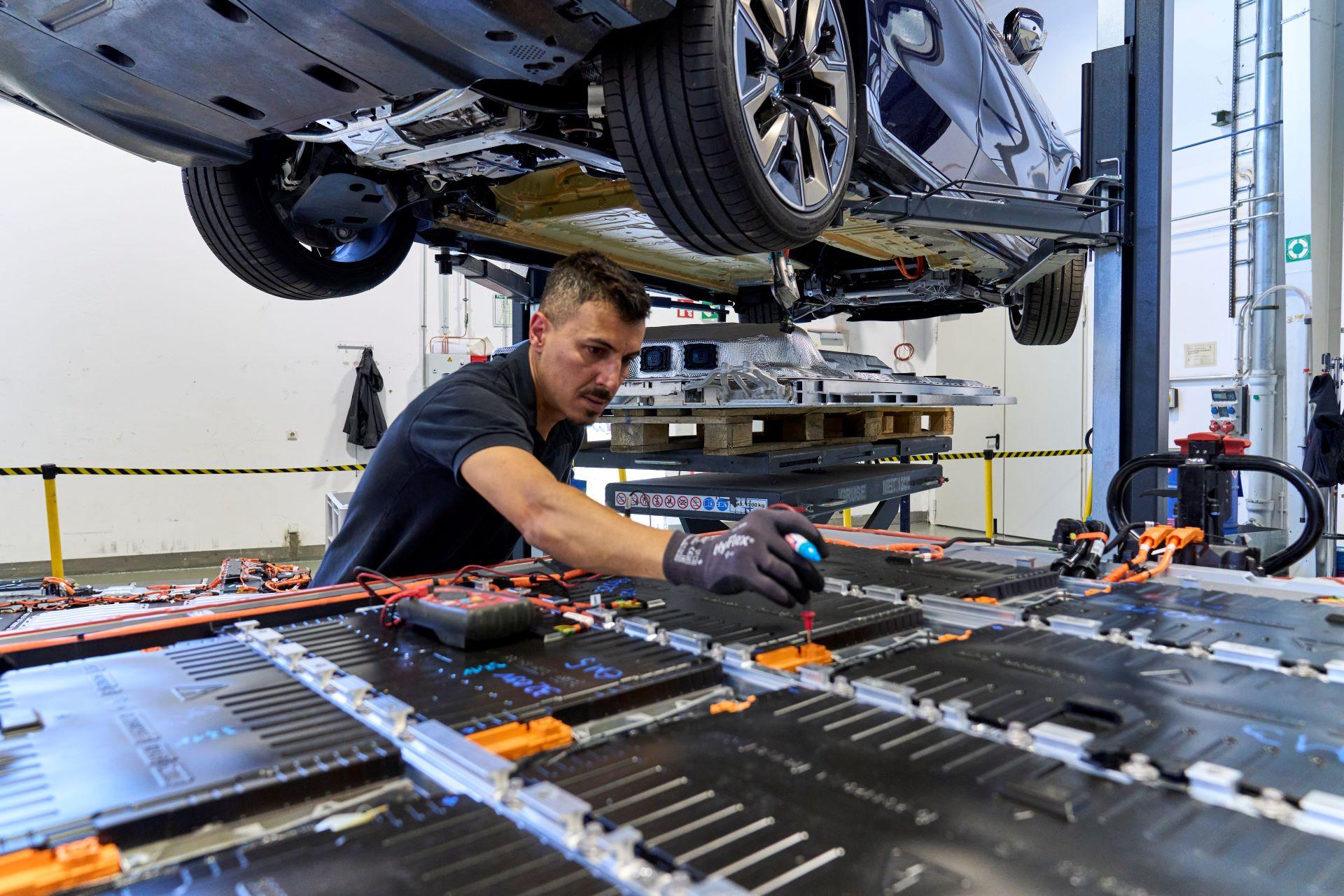
This partnership marks a significant milestone in BMW’s journey toward sustainability. High-voltage batteries that have reached the end of their lifecycle will now be processed by SK tes, which employs a cutting-edge recycling method to recover valuable materials such as cobalt, nickel, and lithium. These secondary raw materials will be reintroduced into BMW’s production line, particularly for its next-generation GEN 6 drivetrains.
The process begins with the mechanical shredding of used batteries to produce a concentrated material known as black mass. Through a highly efficient hydrometallurgy process, the metals are extracted and refined, ensuring they can be reused in new battery production.
Global Expansion Plans
While the partnership currently focuses on Europe, plans are already underway to expand the closed-loop recycling system to North America, including the US, Mexico, and Canada, by 2026. This global rollout underscores BMW’s commitment to reducing resource dependency and achieving sustainability targets on a global scale.
Insights and Innovation
The collaboration with SK tes not only advances BMW’s recycling capabilities but also provides valuable insights for its development teams. This knowledge exchange allows for the creation of more efficient, recyclable products and strengthens BMW’s position as a pioneer in sustainable mobility.
“Partnerships like this increase our efficiency in terms of the circular economy. In the closed-loop process, all partners mutually benefit from their experiences,” said Jörg Lederbauer, Vice President of Circular Economy, Spare Parts Supply High Voltage Battery and Electric Powertrain at BMW AG.
Sustainability and Awards
SK tes has been recognized globally for its sustainable practices, winning accolades such as the Business Intelligence Group’s Sustainability Service of the Year and the UN Global Compact’s Apex Award. These honors reflect the innovation and environmental impact of their recycling methods.
BMW Group’s Vision for Circular Economy
The partnership with SK tes aligns with BMW’s broader sustainability strategy, guided by the principles of Re:Think, Re:Duce, Re:Use, and Re:Cycle. This approach ensures that every stage of a vehicle’s lifecycle—from design to production and end-of-life recycling—contributes to conserving resources.
The BMW Group’s Recycling and Dismantling Centre has been at the forefront of circular economy practices for over 30 years, developing and refining processes to recover valuable materials.
“The promotion of circular economy is an important strategic topic for the BMW Group,” said Nadine Philipp, Vice President of Sustainability Supplier Network at BMW AG. “By increasing the use of secondary materials and closing loops, we not only conserve resources but also enhance supply chain resilience.”
Driving Toward a Sustainable Future
As the automotive industry grapples with the environmental challenges of electrification, BMW’s long-term partnership with SK tes sets a benchmark for innovation and sustainability. Through its closed-loop recycling system, the BMW Group is proving that the path to a greener future lies in collaboration, technological advancement, and a steadfast commitment to conserving resources.
With plans for global expansion already on the horizon, BMW is not just adapting to the future of mobility—it’s shaping it.