




The Volkswagen Group has never been shy about scale. For decades, its strength has rested on the disciplined orchestration of brands that speak to different customers while sharing deep industrial foundations. With the introduction of a newly formed Brand Group Core Board of Management, the Group is now sharpening that orchestration into something faster, leaner and far more decisive.
Announced in Wolfsburg in January 2026, the reorganisation of the Brand Group Core marks a structural turning point for Volkswagen Passenger Cars, Škoda, SEAT&CUPRA and Volkswagen Commercial Vehicles. It is less about consolidation for its own sake and more about building a governance model that reflects the realities of a fiercely competitive global automotive market, one defined by cost pressure, electrification, software complexity and shrinking development cycles.
At its heart, the move is about steering. Not branding, not market positioning, but the machinery of decision-making itself.
A new centre of gravity for the Brand Group Core
The newly established Brand Group Core Board of Management becomes the highest management body for cross-brand decisions within the volume segment of the Volkswagen Group. This is a deliberate shift away from parallel structures that, while effective in an earlier era, increasingly slowed decisions and diluted accountability across brands that share platforms, technologies and production assets.
By centralising cross-brand governance at Brand Group Core level, Volkswagen is creating a clearer centre of gravity. Decisions that affect multiple brands will no longer need to be negotiated across separate boards with overlapping mandates. Instead, they will be prioritised, assessed and executed through a single steering body focused on the interests of the Brand Group Core as a whole.
The objective is explicit: streamline processes, shorten decision-making paths and reduce structural complexity. In practice, that means fewer interfaces, fewer approval loops and a governance structure designed to move at the speed demanded by global competition.
Lean boards, sharper focus
Crucially, this reorganisation does not erase brand autonomy. From January 2026 onward, the Boards of Management for Škoda, SEAT&CUPRA and Volkswagen Commercial Vehicles will each retain four core functional roles: Chief Executive Officer, Board Member for Finance, Board Member for Human Resources and Board Member for Sales. These positions anchor brand identity, commercial strategy and people leadership where they matter most.
What changes is what sits around them. Production, Technical Development and Procurement will gradually transition into cross-brand management under the Brand Group Core Board of Management. This rebalancing allows brand boards to focus on market-facing leadership, while industrial and technical functions are steered with a holistic view of scale, synergies and long-term investment efficiency.
By summer 2026, the total number of board members across the four volume brands will be reduced by around one third. Over the medium term, further streamlining is planned. The intent is not austerity, but clarity. Fewer management layers mean clearer responsibilities and a faster route from strategy to execution.
From parallel effort to shared momentum
Technical Development sits at the centre of this transformation. As vehicle architectures converge and software complexity grows, duplicating development work across brands has become both costly and inefficient. Under the new model, increased cross-brand development scopes will allow the Brand Group Core to raise the efficiency of its total investments, while simultaneously reducing Technical Development expenses at individual brand level.
This is not about homogenising products. Instead, it is about building shared technological foundations more intelligently, freeing brands to invest their energy where customers actually experience differentiation: design, user experience, brand character and market positioning.
The same logic applies to Procurement. Managing supplier relationships, material strategies and cost structures across brands creates leverage that no individual brand can achieve alone. Centralised steering enables more consistent standards, better negotiating power and a clearer view of supply chain risks across regions.
Production as proof of principle
If the strategic intent is clear, Production provides the most tangible proof of the model’s potential. In this area alone, the new steering model unlocks cumulative savings of one billion euros through 2030. That figure is not an abstract forecast; it is the result of concrete structural changes to how Volkswagen’s production network is organised and governed.
More than 20 production locations worldwide will, in future, be organised into five production regions. These regions will assume responsibility for cross-brand and cross-national planning, steering and logistics. The result is a system that is more decentralised operationally, yet more coherent strategically.
Regional management gains greater independence and flexibility, allowing faster responses to local challenges and market shifts. At the same time, cross-brand coordination within regions reduces duplication, improves capacity utilisation and creates more resilient production clusters.
The Iberian Peninsula serves as an early example. There, production plants have already been combined into a cross-brand cluster, demonstrating how shared governance can improve efficiency without eroding brand-specific manufacturing requirements. It is a model designed to scale.
Speed, scale and strategic focus
Beyond cost savings, the new steering model fundamentally changes how quickly the Brand Group Core can act. Operational activities can be implemented faster, while Group-level leadership can concentrate on strategic synergy areas such as software platforms and battery technology.
This redistribution of responsibility reflects a more mature understanding of scale. Not everything needs to be decided centrally, but what is central must be decided decisively. Regional and specialist competencies will be deployed where they generate the greatest benefit for the organisation as a whole, rather than being confined within brand silos.
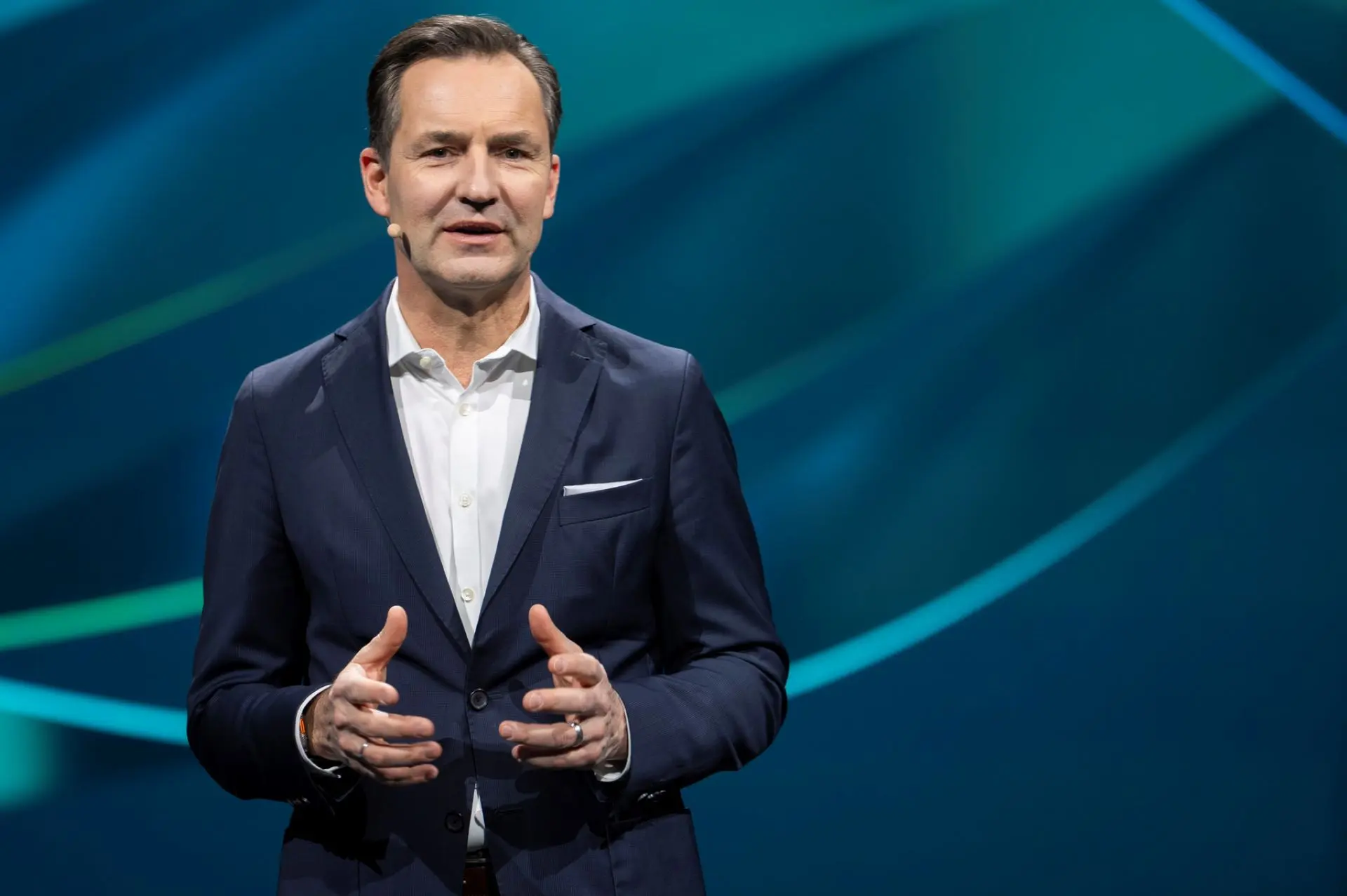
Thomas Schäfer, Member of the Volkswagen AG Board of Management, CEO of the Volkswagen Passenger Cars Brand and Head of the Brand Group Core, frames the shift in unmistakably pragmatic terms. The new governance model, he argues, is about management efficiency and faster processes for more competitive products. It reduces costs and structures while raising the overall efficiency level of the Brand Group Core. More than an internal adjustment, it is positioned as a foundational step for long-term viability.
Protecting individuality while strengthening the core
One of the perennial challenges of multi-brand groups is maintaining individuality while pursuing efficiency. Volkswagen’s approach rests on a clear principle: strong business management and individualised branding, powered by a lean and efficient internal powerhouse.
By stripping complexity out of internal structures, the Brand Group Core aims to give brands more, not less, room to express themselves in the market. When development, production and procurement are aligned and efficient, brand leadership can focus on differentiation that customers actually perceive.
This is particularly relevant as the industry transitions toward electrification and software-defined vehicles. The competitive battlefield is shifting, and success depends on how well manufacturers can balance shared technological platforms with distinct brand experiences.
A reorganisation with a deadline
The timeline for this transformation is deliberately tight. The new steering model begins in January 2026, with full implementation targeted for completion by summer 2026. Such urgency reflects both confidence and necessity. In a market shaped by new entrants, volatile demand and relentless cost pressure, incremental change is no longer enough.
For the Brand Group Core, the message is clear. Cooperation is no longer just a strategic aspiration; it is being embedded into the very structure of management and decision-making. The result is an organisation designed to move faster, invest smarter and compete more effectively, without losing the brand diversity that has long been Volkswagen’s defining strength.
This reorganisation does not promise easy wins. It promises disciplined execution. And in today’s automotive landscape, that may be the most valuable advantage of all.


