



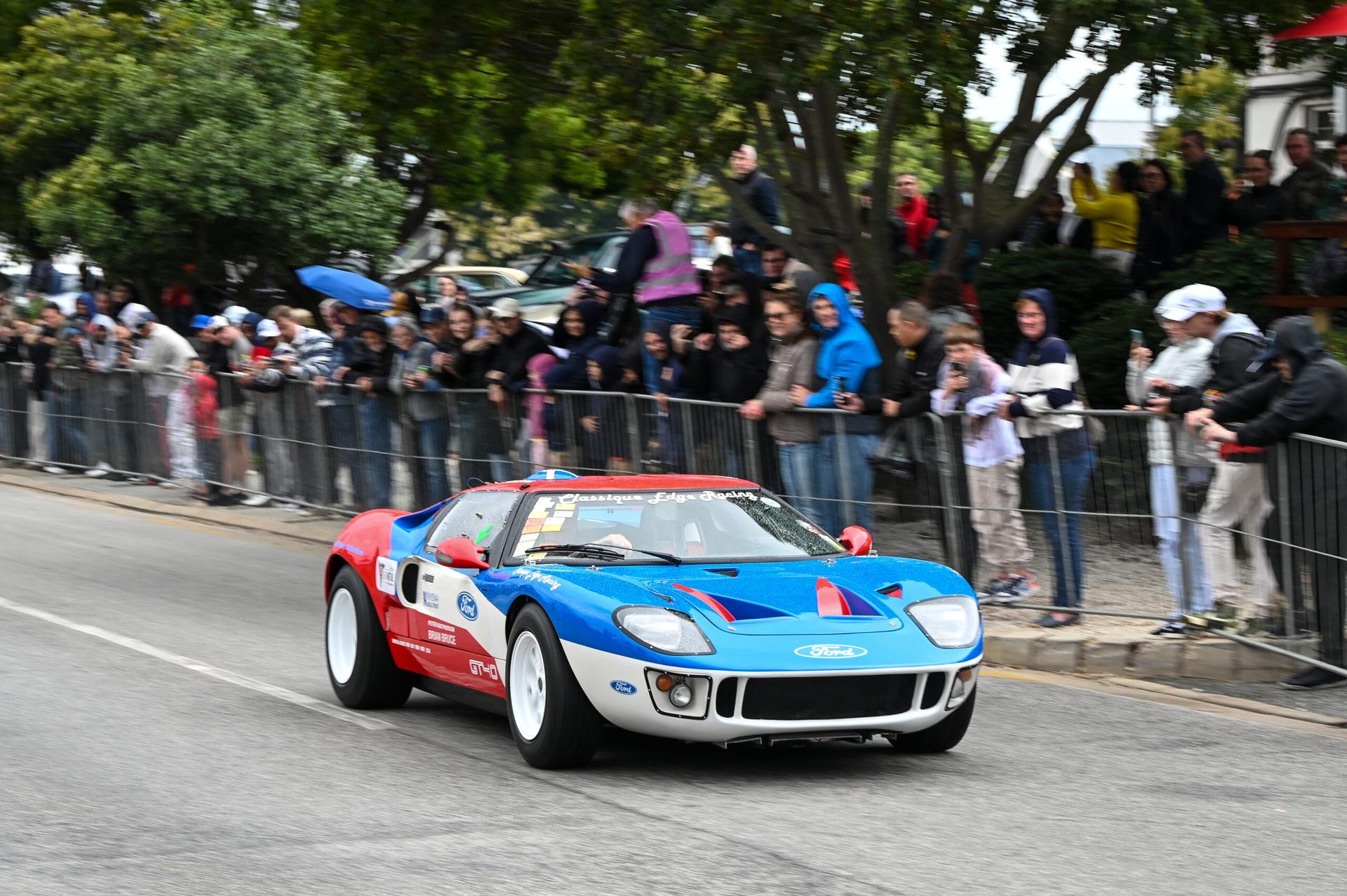
KNYSNA, South Africa, 19 February 2026 – There are motorsport events, and then there are events that bend time.
At the Simola Hillclimb, 34.161 seconds is enough to make global history. That is the current record over the 1.9 km stretch of tarmac that snakes up Simola Hill, set at an average speed of 200.228 km/h from a standing start. No rolling launch. No easing in. Just physics, nerve and a right foot with nothing left to give.
From its modest debut in 2009, when 1 500 spectators gathered to see what this new hillclimb might become, the event has grown into South Africa’s premier annual motoring and motorsport lifestyle showcase. In 2025, a record 20 224 spectators lined the course, terraces and hospitality decks, drawn to Knysna by the promise of something rare: elite competition framed by the natural theatre of the Garden Route.
But the magic of those 34 seconds begins long before a single engine fires.
The World’s Fastest Hillclimb
Speed defines Simola. The current benchmark was established in 2022 by Andre Bezuidenhout in the fearsome Gould GR55, storming from zero to over 200 km/h average speed in just over half a minute. That makes Simola the fastest hillclimb in the world.
For context, the iconic Goodwood Festival of Speed covers a similar 1.9 km distance. Its current record, set in 2022 by Max Chilton in the revolutionary McMurtry Spéirling, stands at 39.08 seconds with an average of 175 km/h. Simola’s numbers eclipse that, and they do so on a public road transformed into a high-speed corridor of precision.
It is this blend of accessibility and extremity that gives Simola its character. A quiet road to the Simola Hotel Country Club and Spa becomes, for one extended weekend, a strip of tarmac where reputations are made and limits are tested.
Twelve to Eighteen Months for Three Days
For spectators, the event unfolds over four days, from the Knysna street parade and Fan Fest to Classic Car Friday and the crescendo of King of the Hill. For organisers, it is a year long undertaking.
Within 24 hours of the final run each May, the organising team sits down with Motorsport South Africa and key stakeholders to debrief. Every marshal report, every safety note, every operational challenge is dissected. Objectives for the following year are defined almost before the tyre marks have faded.
Planning often stretches 12 to 18 months. Regular coordination with the local municipality, emergency services, suppliers, partners and sponsors ensures that when the first car lines up, nothing is left to chance.
Building a Motorsport City
More than two months before the event, the transformation begins.
Sixty seven FIA specification concrete barriers are installed, linked with specially developed steel plates and hardware. Over 7 000 used tyres are bound together with 1.4 km of stainless steel strapping to create additional safety buffers. Forty one MSA approved apex markers are fixed into the tar to demarcate track limits. Seventy three kilometres of additional speed and safety fencing safeguard spectators.
Temporary infrastructure rises quickly. Grandstands and decks covering 2 153 m2 provide seating, including 500 seats at Turn 2 and 300 at The Esses. Forty three marquees span 2 587 m2 for pit lane operations and VIP hospitality. Twenty two pits accommodate up to 84 competition vehicles, supported by additional spaces for track experience and demonstration cars. Thirteen containers house timing, livestream production, offices, catering and storage.
For a few days, Simola Hill becomes a self contained motorsport ecosystem.
Competition at the Highest Level
Classic Car Friday welcomes 65 competitors across 10 classes for vehicles up to 2005, celebrating heritage with as much intensity as the modern machinery that follows.
King of the Hill sees 84 competitors divided into 25 classes across three broad categories: Road going Saloon Cars and Supercars, Modified Saloon Cars, and Single Seaters, Sports Cars and Sports Prototypes. More than 550 crew members and mechanics support them in the pit lane.
Across warm up sessions, practice, qualifying, class finals and the Top 10 Shootouts, over 1 400 timed runs are completed up the hill in just three days. Every run is measured, scrutinised and etched into the weekend’s evolving narrative.
The roll of honour reads like a who’s who of South African hillclimb talent. Franco Scribante has claimed seven Classic Conqueror titles and multiple King of the Hill victories across different categories. Andre Bezuidenhout has dominated the Single Seater, Sports Car and Sports Prototype class with six wins. JP van der Walt has secured four victories in the Road going Saloon and Supercar category. Their rivalry and excellence have elevated the event to international stature.
An Army Behind the Scenes
Delivering a safe, world class event requires a disciplined operational backbone. The Simola Hillclimb employs six full time and 31 part time staff. Motorsport South Africa appoints 12 officials, including the clerk of the course, stewards, timekeepers and scrutineers.
Fourteen track marshals are stationed at seven marshal points along the course, supported by 25 pit lane marshals. Seven medical, ambulance, fire and rescue personnel remain on site throughout. Ninety safety and security staff work daily shifts, totalling 360 over the event.
It is choreography on a grand scale, where every role is critical and every second matters.
A Global Audience from a Garden Route Town
While the roar of engines echoes through Knysna’s hills, the audience extends far beyond the Garden Route.
The Simola Hillclimb revolutionised its reach by introducing a livestream in 2017. Since 2019, all three days of competition have been broadcast in full. In 2025, the event was viewed in 120 countries. The livestream attracted 546 000 viewers, 54 percent international and 46 percent South African. More than 75 million minutes were viewed across the event’s YouTube channel and Facebook page.
Nineteen crew members operate a 22 camera production spanning the pit lane and the full 1.9 km course. The Castrol Media Centre, a 150 m2 hub adjacent to the pit lane, supports 157 accredited media representatives covering print, digital and broadcast platforms.
During the build up between February and May 2025, related Hillclimb content generated more than one million Facebook views and over three million YouTube views. The official website recorded five million hits in May alone.
For competitors, manufacturers, sponsors and partners, that exposure translates into measurable value. For Knysna, it means sustained tourism, economic upliftment and international recognition.
The Road to 2026
The 16th edition of the Simola Hillclimb takes place in Knysna from 30 April to 3 May 2026. By the time the first car stages at the start line, nearly 18 months of planning will have already shaped the moment.
What spectators will see is simple and spectacular. A car at rest. A countdown. An explosion of motion. Thirty four seconds that feel like a blink and an eternity all at once.
What they will not see is the year long orchestration that makes that moment possible.
That duality is the essence of Simola. Effort measured in months. Glory measured in seconds.


