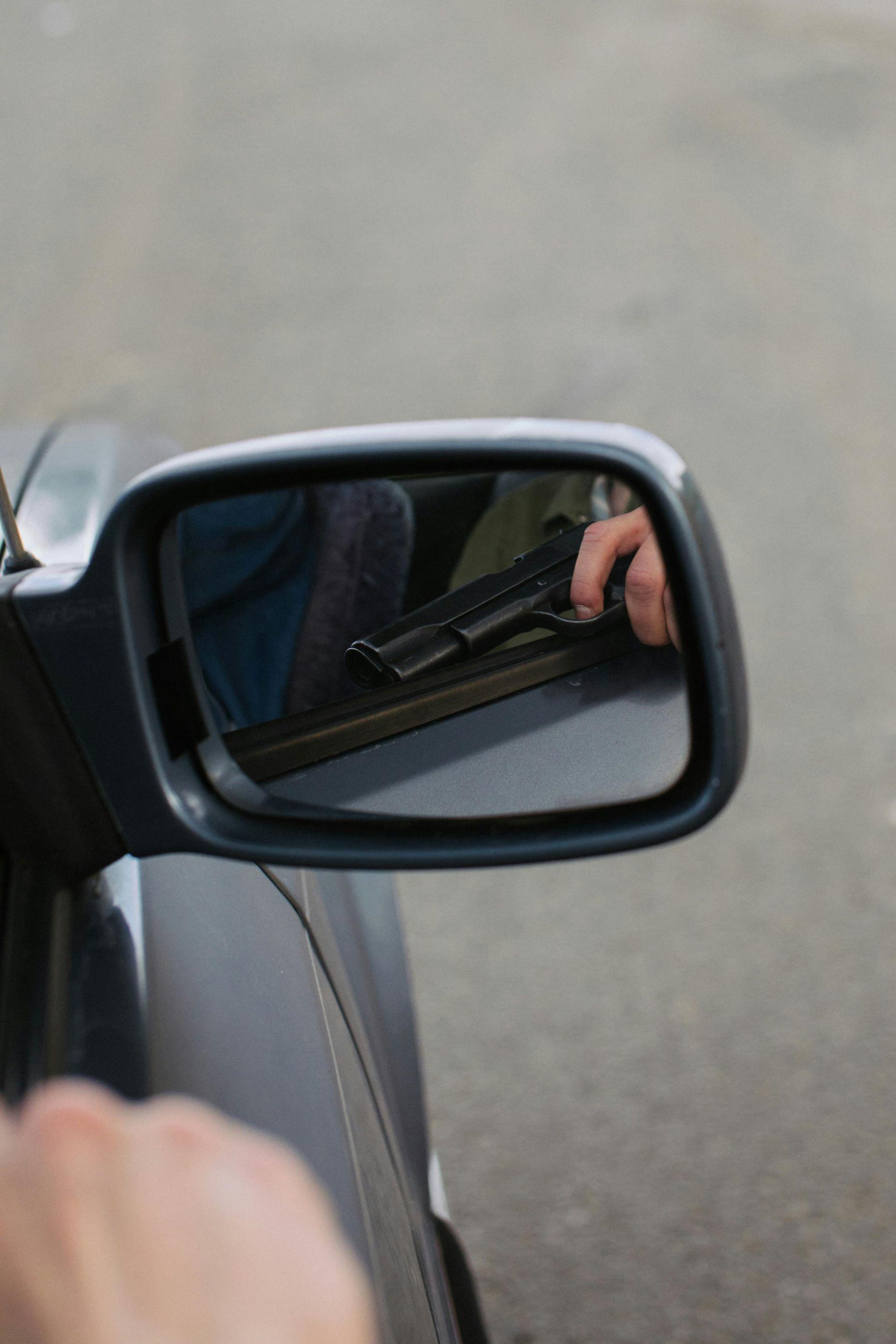


Sunday afternoon in Emmarentia turned from an ordinary stretch of suburban traffic into an unimaginable tragedy, when a father was killed and his wife wounded in a road rage incident while their children watched. The shock was immediate and national, but beneath the outrage lies a more uncomfortable question: why do such moments escalate so quickly, and so violently, on South African roads?
According to Eugene Herbert, CEO of MasterDrive, the answer is rarely about the other driver in isolation. It is about what that driver represents in a moment already overloaded with pressure. “Instead, the vehicle ahead represents emotional and cognitive overload,” he explains. “Congestion, deteriorating infrastructure, and the daily accumulation of stress create highly-strung drivers. By the time a minor bumper-bashing occurs, many drivers are already at capacity.” In this state, a small collision is no longer just an accident. It becomes a perceived insult, a trigger in an already unstable emotional system.
Herbert notes that this is where escalation begins, not in the impact itself, but in interpretation. “The collision is perceived as disrespect, and when combined with a refusal to back down it triggers an aggressive response. The Emmarentia incident is testament to this exact dynamic: a minor collision quickly escalated with consequences that irreversibly changed lives.” In other words, the danger is not only physical but psychological, unfolding in milliseconds before reason can fully catch up.
At the core of this lies what Herbert describes as a preventative cognitive spiral. Before any confrontation occurs, the mind may already be primed for threat. “When a driver perceives a threat or insult, the part of the brain that controls emotions fires before rationality can intervene. Drivers do not make a decision in that moment but are reacting. The goal of psychological driver education is to close that gap.” This gap between reaction and reasoning is where road rage takes hold, and where prevention must begin.
That prevention, he argues, is not only about traffic rules or vehicle control, but emotional regulation. Drivers who are able to identify their internal state before setting off are far better equipped to avoid escalation. A conscious mental reset before driving, reframing other motorists as uninvolved in personal conflict, and simple physiological controls like slower breathing and relaxed posture can all interrupt the stress response before it hardens into aggression. Even increasing following distance becomes more than a safety tactic; it is a psychological buffer that prevents proximity from becoming provocation.
Herbert also warns against the circulation of unverified statistics that amplify fear rather than understanding. Claims of thousands of road rage-related deaths often circulate without context or clear sourcing, conflating different categories of violent incidents. “Irresponsible statistic use causes harm,” he notes. “When motorists absorb inflated fear-based data, it worsens the emotional and cognitive overload already being carried, making ignoring the situation that much more difficult.”
The tragedy in Emmarentia should not be reduced to a headline of outrage alone. It exposes a deeper truth about modern driving conditions in South Africa: that roads have become emotional pressure cookers as much as physical routes. If anything meaningful is to emerge from such loss, it may be a shift in how driver safety is understood, not only as a technical skill behind the wheel, but as an emotional discipline within it.