


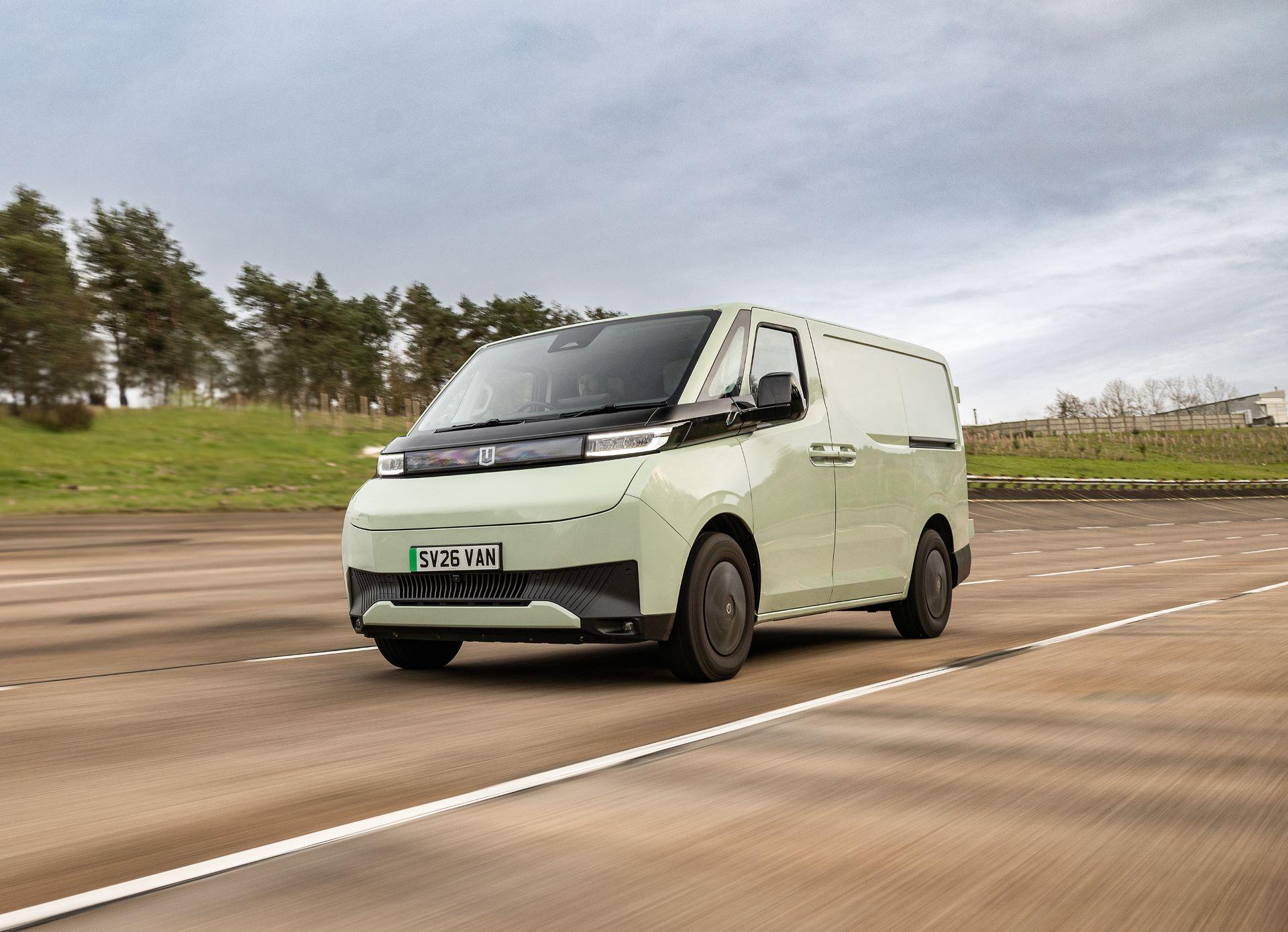
The Farizon SV enters 2026 with a sharpened edge, blending affordability, smarter technology and meaningful usability upgrades that reflect direct customer feedback. Already an award-winning entrant in the large electric van segment, the SV now broadens its appeal with a new Core trim level and a suite of enhancements designed to make everyday commercial driving more comfortable, connected and cost-efficient.
At the heart of the update is the introduction of the Core specification, positioned as a more accessible entry point to the SV range. Available in L1 H1 format with either a 67 kWh or 83 kWh battery, it retains much of the standard model’s generous equipment list, including heated seats, a heated multifunction steering wheel, a 360-degree surround view system and a comprehensive suite of advanced driver assistance systems. Even at this level, the focus remains firmly on reducing driver fatigue and improving operational safety in demanding urban and long-distance conditions.
The Core trim starts from £39,000 + VAT, excluding delivery, ZEVG, first registration fee and VED, widening the SV’s accessibility to smaller operators and sole traders looking to transition into zero-emission logistics without compromising on essential capability. Higher up the range, pricing remains unchanged despite a substantial uplift in specification, with the standard SV line starting from £44,000 + VAT.
Beyond pricing strategy, the 2026 model year introduces a series of refinements that elevate the SV’s everyday usability. All variants now feature a six-way adjustable driver’s seat with lumbar support, alongside steering wheel reach and rake adjustment, allowing for a more tailored driving position across a diverse range of operators and shifts. Connectivity also takes a step forward with the addition of full wireless Android Auto, joining Apple CarPlay to ensure seamless smartphone integration regardless of device preference.
Software enhancements play a particularly important role in this update, with drivers now able to schedule climate control pre-conditioning directly through the infotainment touchscreen. This allows the cabin to be warmed or cooled ahead of departure, improving comfort during early starts and reducing energy waste during operation. In the same interface, charging schedules can now be set to take advantage of off-peak tariffs, helping operators reduce running costs while ensuring vehicles are fully charged when required.
The blend of digital functionality and physical control remains a defining characteristic of the SV interior. While touchscreen capabilities have expanded, key functions such as air conditioning, driving modes and energy regeneration remain accessible via physical buttons, maintaining a tactile level of control that supports safer use on the move.
Security has also received significant attention for 2026, with upgrades to door locks and alarm and immobiliser systems developed in collaboration with Thatcham. These improvements are expected to lower insurance risk classifications for the SV, translating into reduced premiums for operators and fleet managers. In a segment where total cost of ownership is closely scrutinised, this enhancement is likely to carry meaningful financial impact over the vehicle’s lifecycle.
Practicality continues to be a core strength of the SV platform. The 2026 range introduces a full-size spare wheel as standard on the flagship L3 H3 variant, while Vehicle-to-Load functionality now extends across the line-up, excluding Core models. Additional reassurance comes in the form of four years of AA Roadside Assistance included as standard, extending well beyond the previous single-year coverage and reinforcing the brand’s focus on long-term reliability.
Calum James, General Manager at Farizon Auto UK, emphasised the brand’s iterative approach to development, noting that customer feedback has played a central role in shaping the latest updates. He explained that the improvements reflect a commitment to refining the SV experience for both sole traders and large fleet operators, particularly those seeking practical pathways into zero-emission mobility.
Underneath the refinements, the SV retains its strong technical foundation. Built around drive-by-wire technology and cell-to-pack battery architecture, the van delivers up to 170 kW of power and 336 Nm of torque. Payload capacity reaches up to 1,365 kg, while cargo volume extends to 13 cubic metres, supported by an ultra-low loading height of just 550 mm that simplifies repeated loading and unloading tasks.
Battery options include 67 kWh, 83 kWh and 106 kWh variants, with a WLTP combined range of up to 247 miles. Rapid charging capability enables a 20 to 80 per cent top-up in as little as 36 minutes, ensuring operational downtime is kept to a minimum. Safety remains a standout feature, with the SV already holding a five-star Euro NCAP rating, reinforcing its position as one of the most secure large electric vans in its class.
With its 2026 update, the Farizon SV does not reinvent itself so much as refine and expand a formula that is already proving successful. The result is a more adaptable, more connected and more cost-conscious electric van that continues to push expectations in the rapidly evolving commercial EV landscape.