



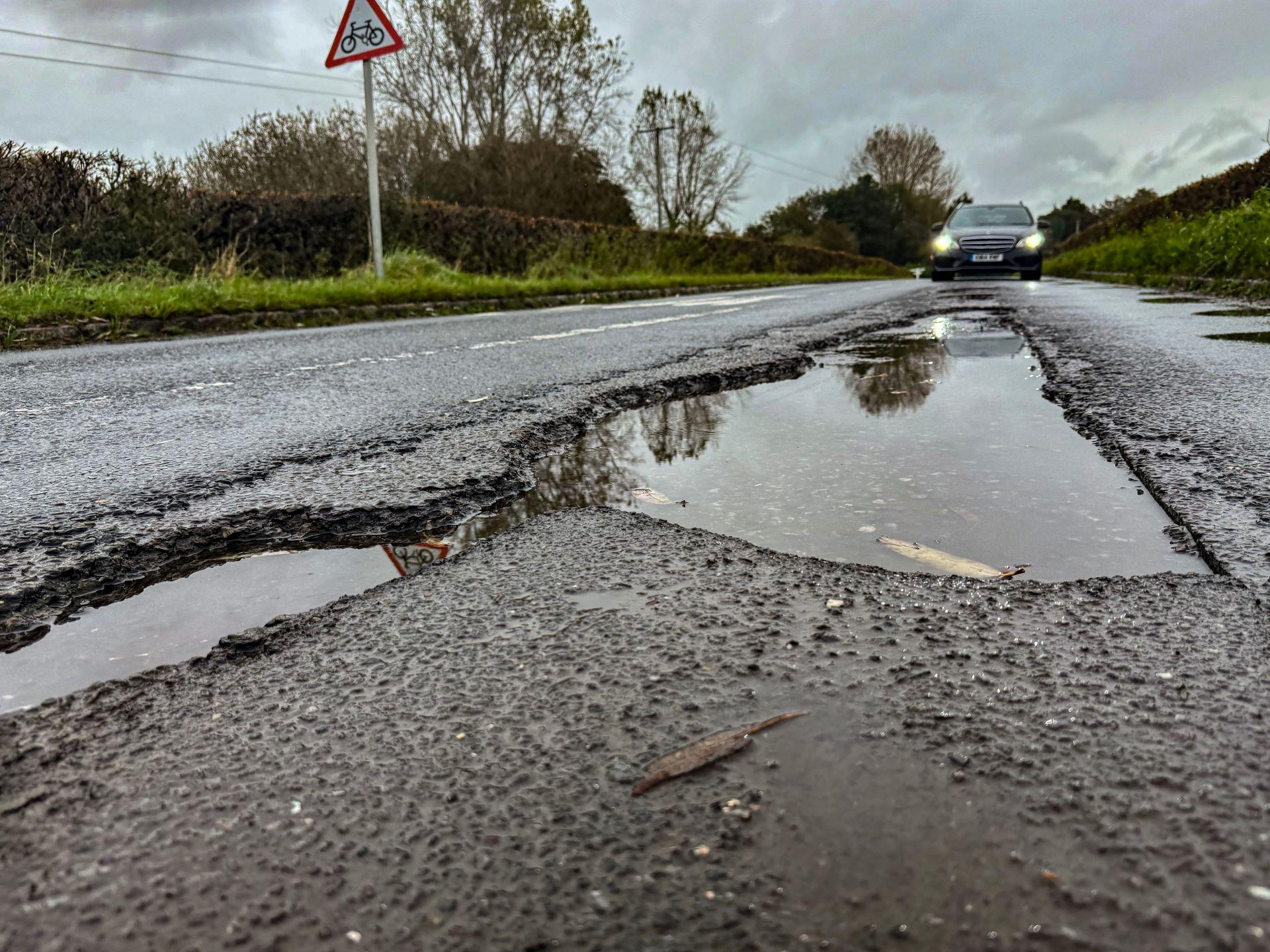
Despite increased government investment in road maintenance, UK motorists remain overwhelmingly pessimistic about the condition of local roads, according to new research from Kwik Fit. The findings, released alongside the company’s 2025 Pothole Impact Tracker (PIT) Report, reveal widespread scepticism and growing public support for targeted levies on vehicles perceived to cause the most damage.
The study highlights that while public spending on road infrastructure is rising, 64% of drivers do not expect to see any meaningful improvement to roads in their area in the near future. This is despite recent government pledges and funding announcements aimed at addressing the UK’s pothole crisis.
According to the PIT Report, pothole-related vehicle damage cost UK drivers a staggering £1.7 billion over the past year — a 150% increase since 2016. While the financial impact is severe, it is the reputational damage that seems to sting just as much: 77% of motorists surveyed believe the poor state of the country’s roads is an embarrassment for a G7 economy.
A Road to Repair — But Who Pays?
Kwik Fit’s research, which surveyed thousands of motorists across the UK, suggests a growing frustration with how road maintenance is currently funded — and who should be responsible for the bulk of future costs. More than half (56%) of drivers believe heavy goods vehicle (HGV) operators should pay an additional, ring-fenced levy dedicated to repairing road surfaces, with only 17% opposed to the idea.
Delivery vans are also in the spotlight. With the rise of e-commerce and home delivery, many motorists (44%) feel that van operators should contribute more to maintenance efforts via a similar levy, compared to just 23% who disagree.
Interestingly, almost half of respondents (48%) think that road tax — officially known as Vehicle Excise Duty (VED) — should be calculated in part based on the weight of a vehicle, citing the greater wear caused by heavier cars. Only 21% opposed this view.
But when asked whether they themselves would be willing to contribute more in VED, just 26% of drivers were in favour. Younger drivers showed greater willingness: 40% of Gen Z and 38% of Millennials would accept an increase in local road tax if it were ring-fenced for repairs, compared to only 18% of Gen X and 15% of Boomers.

Mounting Costs, Widening Gap
The funding gap is significant. The Asphalt Industry Alliance’s latest ALARM Report places the total cost of clearing the UK’s backlog of road repairs at £16.8 billion — a figure that has surged by 42% in under a decade. With maintenance budgets struggling to keep pace, the burden is increasingly falling on individual motorists through out-of-pocket repairs.
Dan Joyce, operations director at Kwik Fit, said the figures paint a picture of a system under pressure with no simple fix:
“The data shows that there is an increasingly pressing need to invest in the maintenance of our road network, but our new research highlights that there are no easy answers as to how this is funded. Motorists already feel that they are contributing enough, so it is understandable that they want the additional burden to be on the heavier vehicles believed to do the most damage to road surfaces.”
He added a word of caution, however:
“Any costs placed on businesses through levies on HGVs or delivery vans are likely to be passed through to the end consumer, so it’s critical that potential measures are not looked at in isolation. What is vital is for there to be a long-term strategic plan for road maintenance rather than short-term patching.”
Free Damage Checks at Kwik Fit
For those concerned about the potential impact of potholes on their vehicles, Kwik Fit offers free damage checks at any of its 600-plus centres across the UK. Drivers who have recently encountered a pothole can have their vehicle assessed by a trained technician, helping to spot issues early and avoid costlier repairs down the line.
As the debate over who should pay for Britain’s crumbling road network intensifies, one thing is clear: most drivers don’t believe that change is coming any time soon — unless bold and long-term solutions are put in place.


