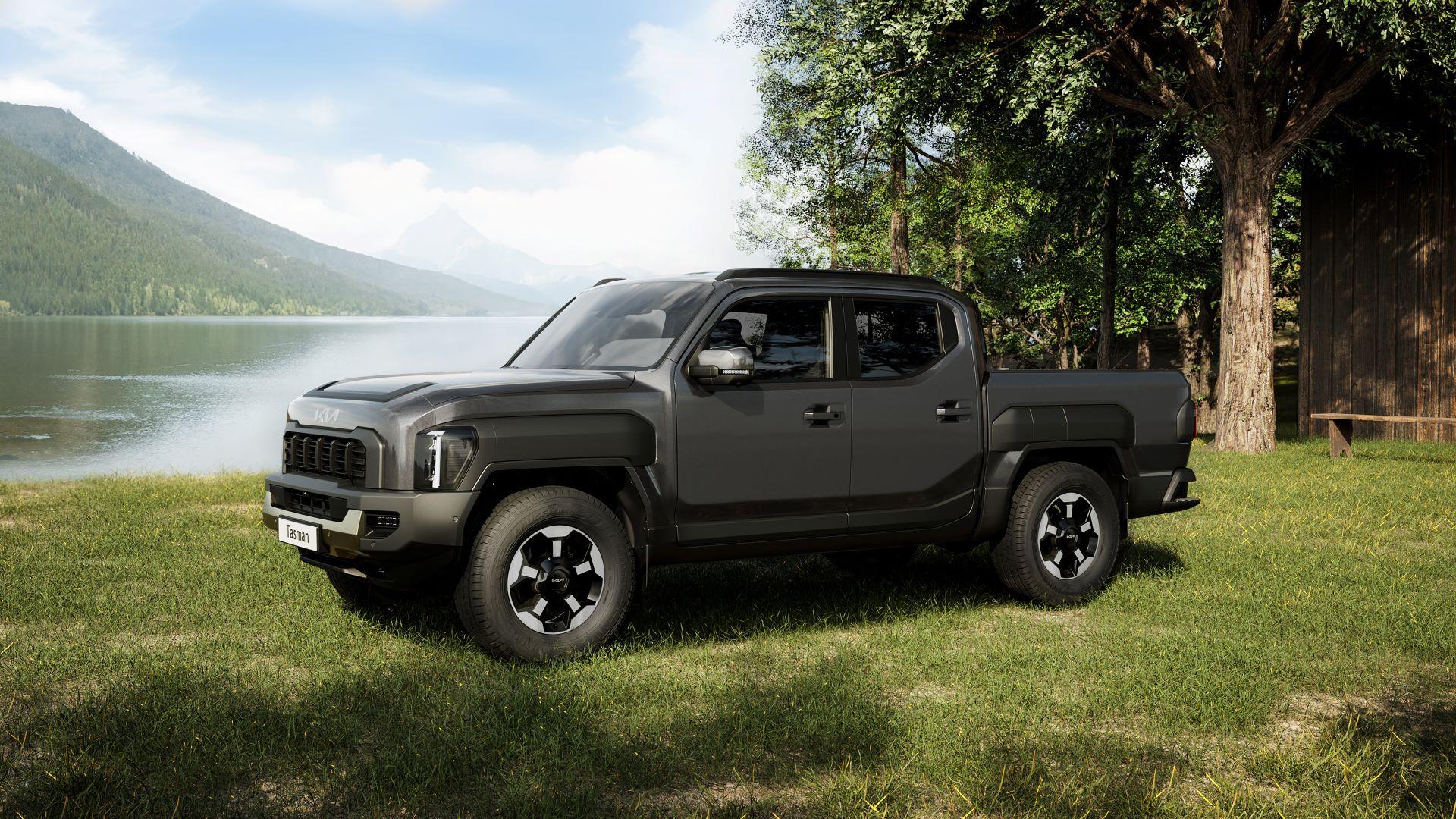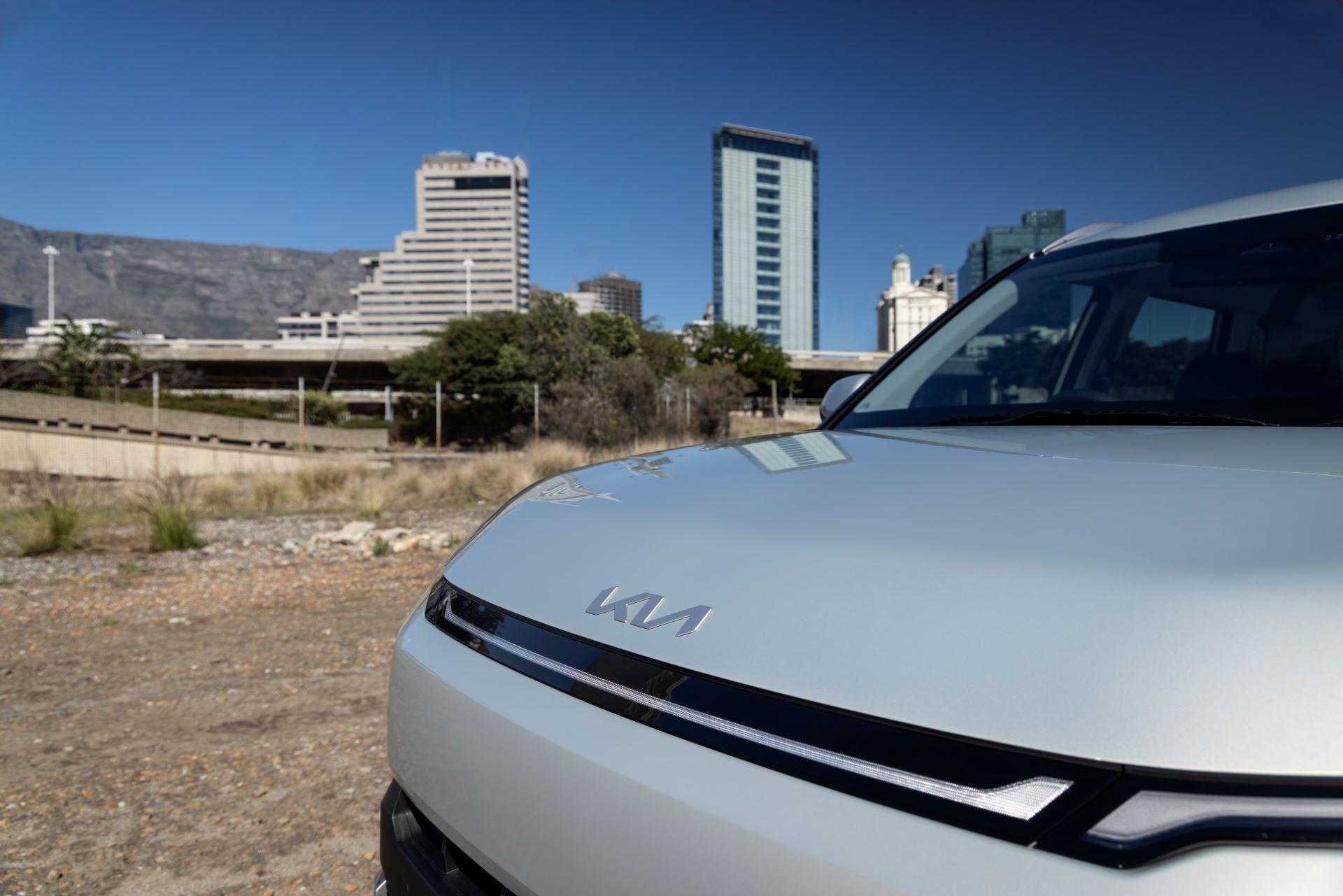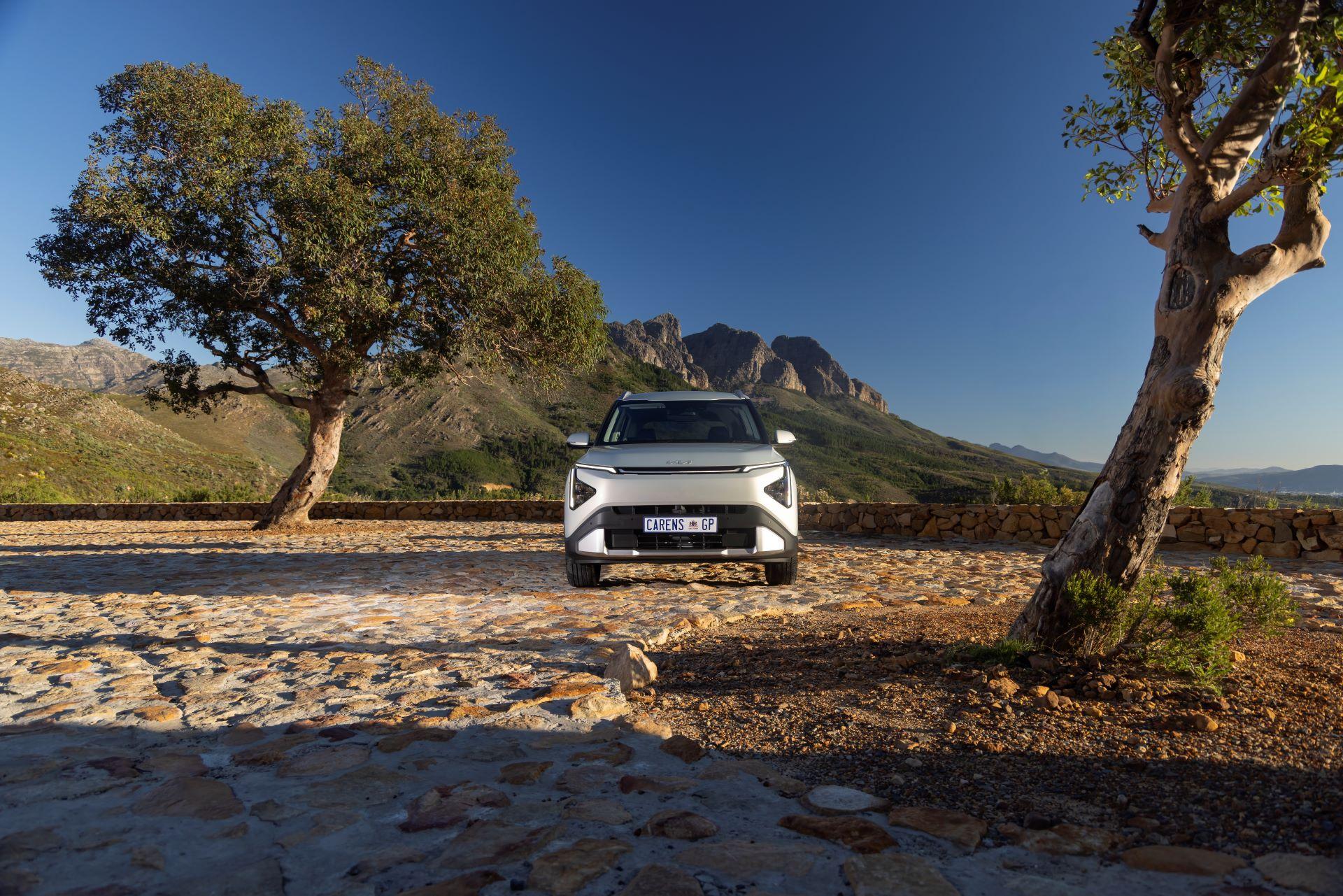



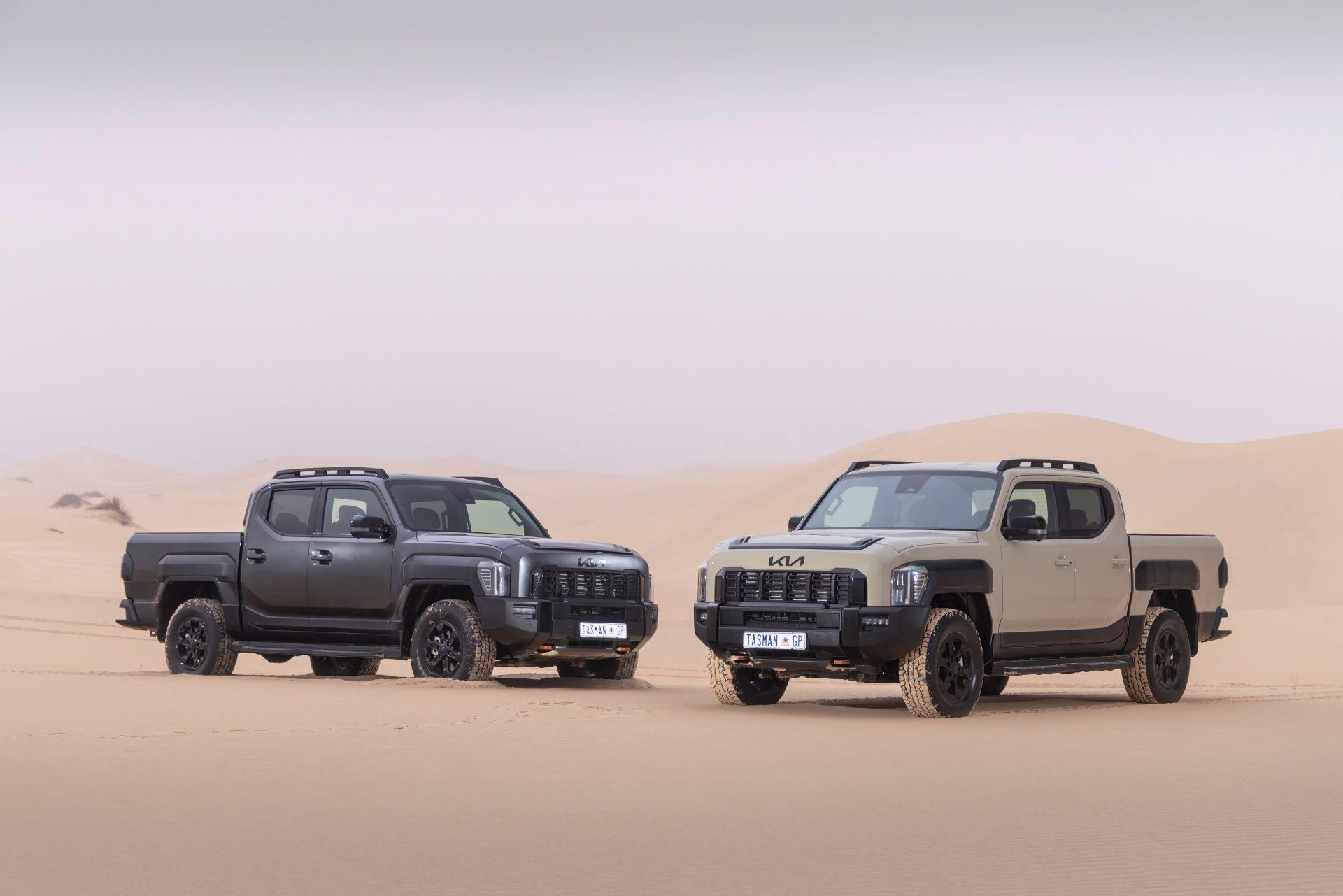
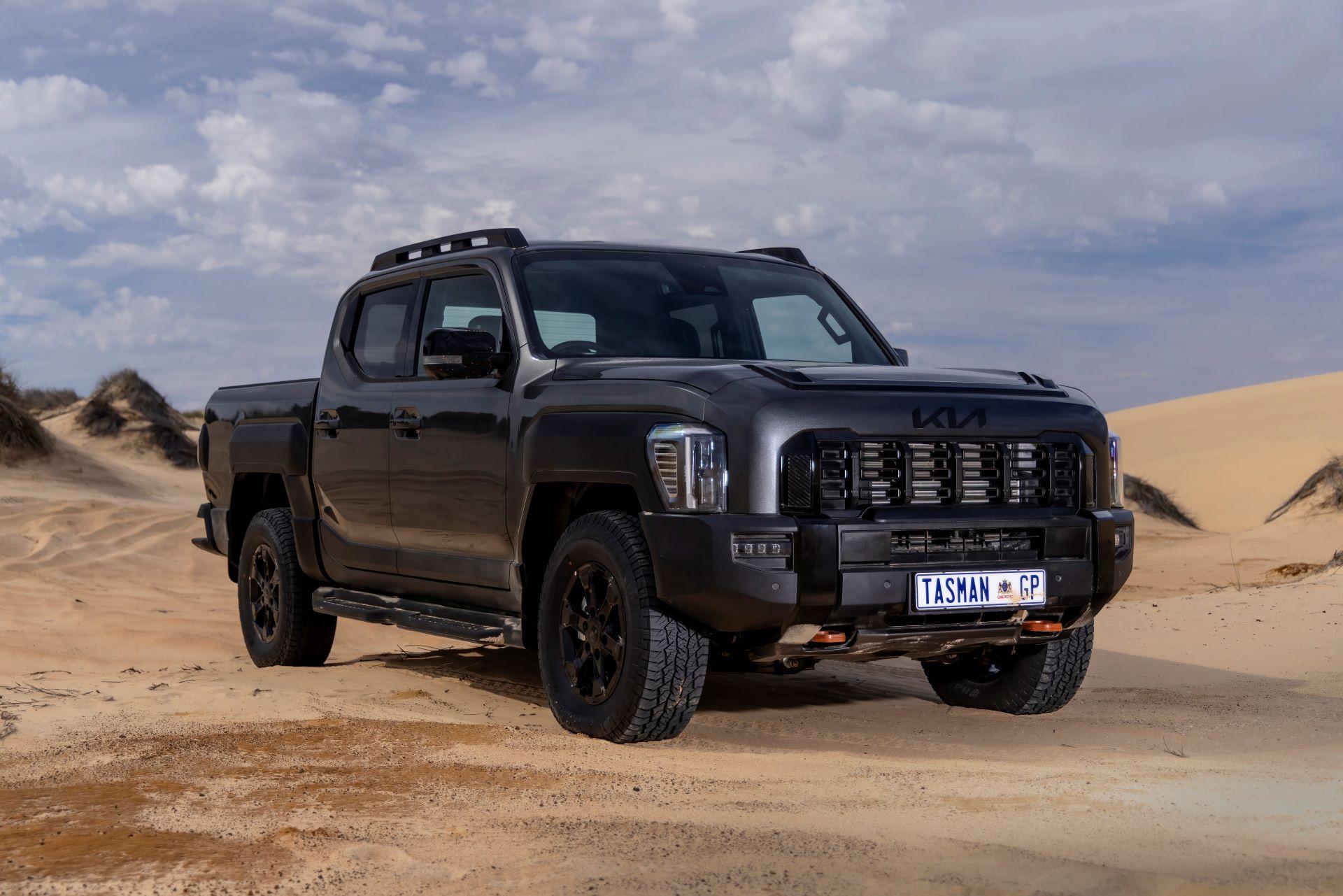


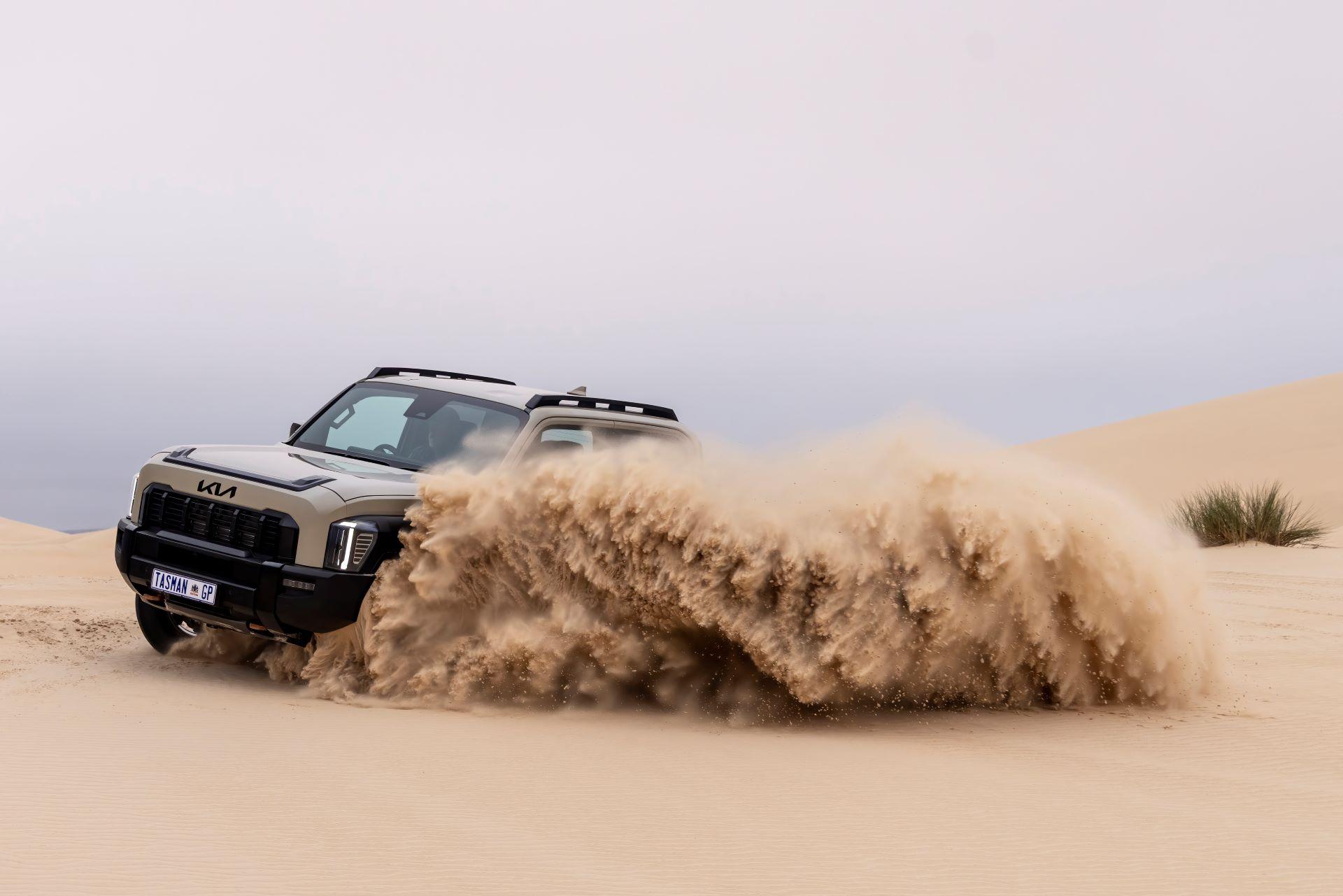
Kia South Africa has stepped into one of the country’s most hotly contested arenas with the launch of the all-new Tasman, marking a decisive and long-anticipated expansion for the brand. Known locally for its passenger cars and SUVs, Kia now plants its flag in bakkie territory with a product developed from a clean sheet, rather than adapted from an existing platform. The intent is clear: this is not a tentative entry, but a calculated bid to challenge the segment’s entrenched hierarchy.
The Tasman leans into the fundamentals that define a credible double cab in South Africa, combining traditional body-on-frame toughness with a distinctly modern execution. It is engineered to operate across a wide spectrum of use cases, from demanding work environments to long-distance touring and off-road exploration, without losing sight of everyday usability.
At its core sits Kia’s 2.2-litre SmartStream turbodiesel engine, producing 154 kW and 440 Nm. The torque delivery is broad and accessible, lending itself to the varied demands placed on a bakkie, whether hauling, towing or navigating technical terrain. An eight-speed automatic transmission manages power delivery with a focus on both refinement and efficiency, ensuring the engine remains within its optimal range regardless of conditions.
The mechanical foundation reflects a deliberate focus on durability. A ladder-frame chassis is paired with double wishbone front suspension and a rigid rear axle with leaf springs, striking a balance between load-carrying capability and day-to-day comfort. It is a familiar formula, but one that has been carefully calibrated to meet modern expectations.
Physically, the Tasman commands attention. Its 5,410 mm length, 1,930 mm width and 3,270 mm wheelbase place it firmly among the larger contenders in the segment, translating into both a spacious cabin and a generously proportioned load bin. Practicality remains central to its design, with over 1,300 litres of load capacity ensuring it is as comfortable on a job site as it is heading out for a weekend away.
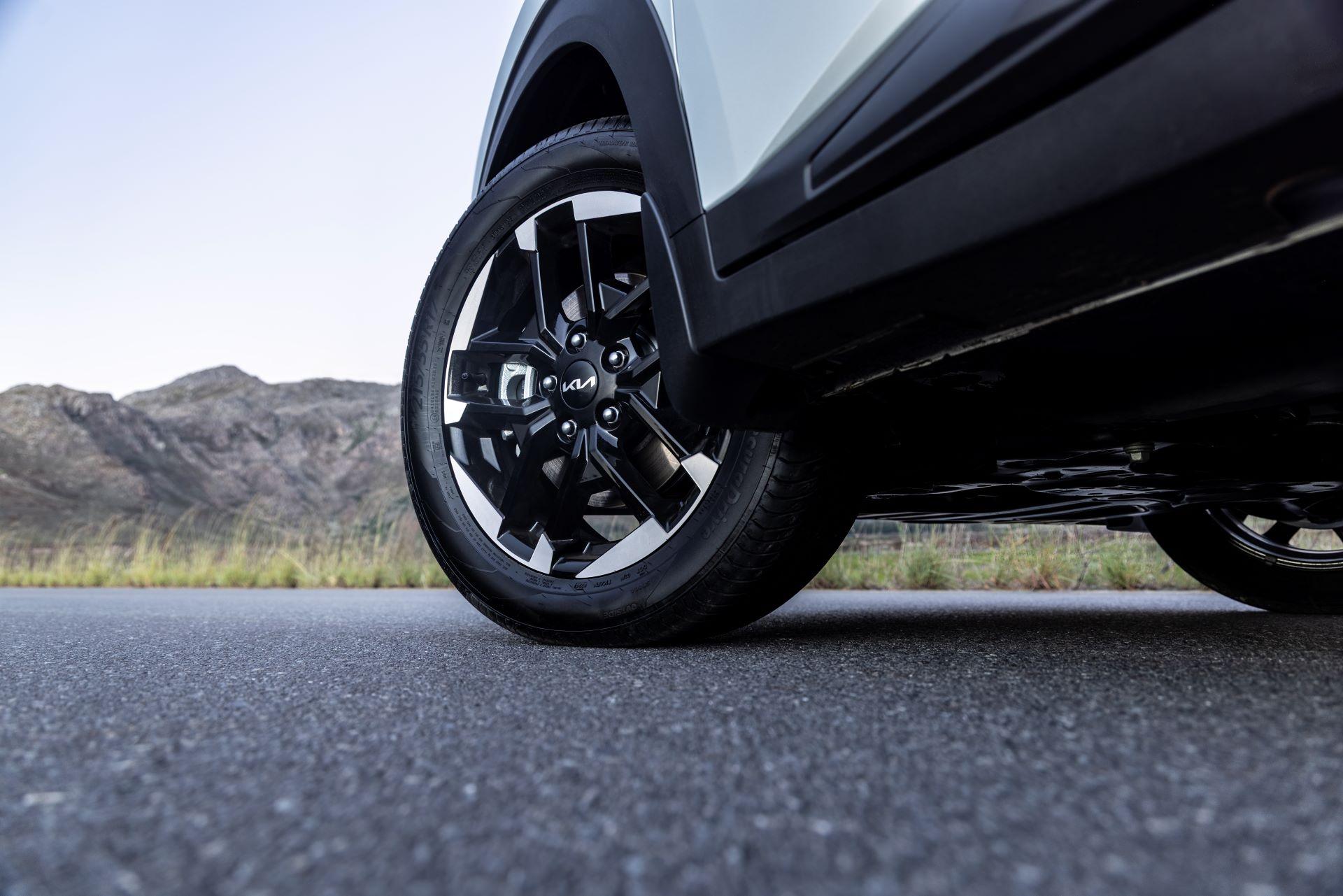
Off-road performance is not treated as an afterthought. With ground clearance of up to 252 mm and a wading depth of 800 mm, the Tasman is engineered to tackle challenging terrain with confidence. Approach, departure and breakover angles have been optimised to handle steep inclines and uneven surfaces, reinforcing its capability credentials.
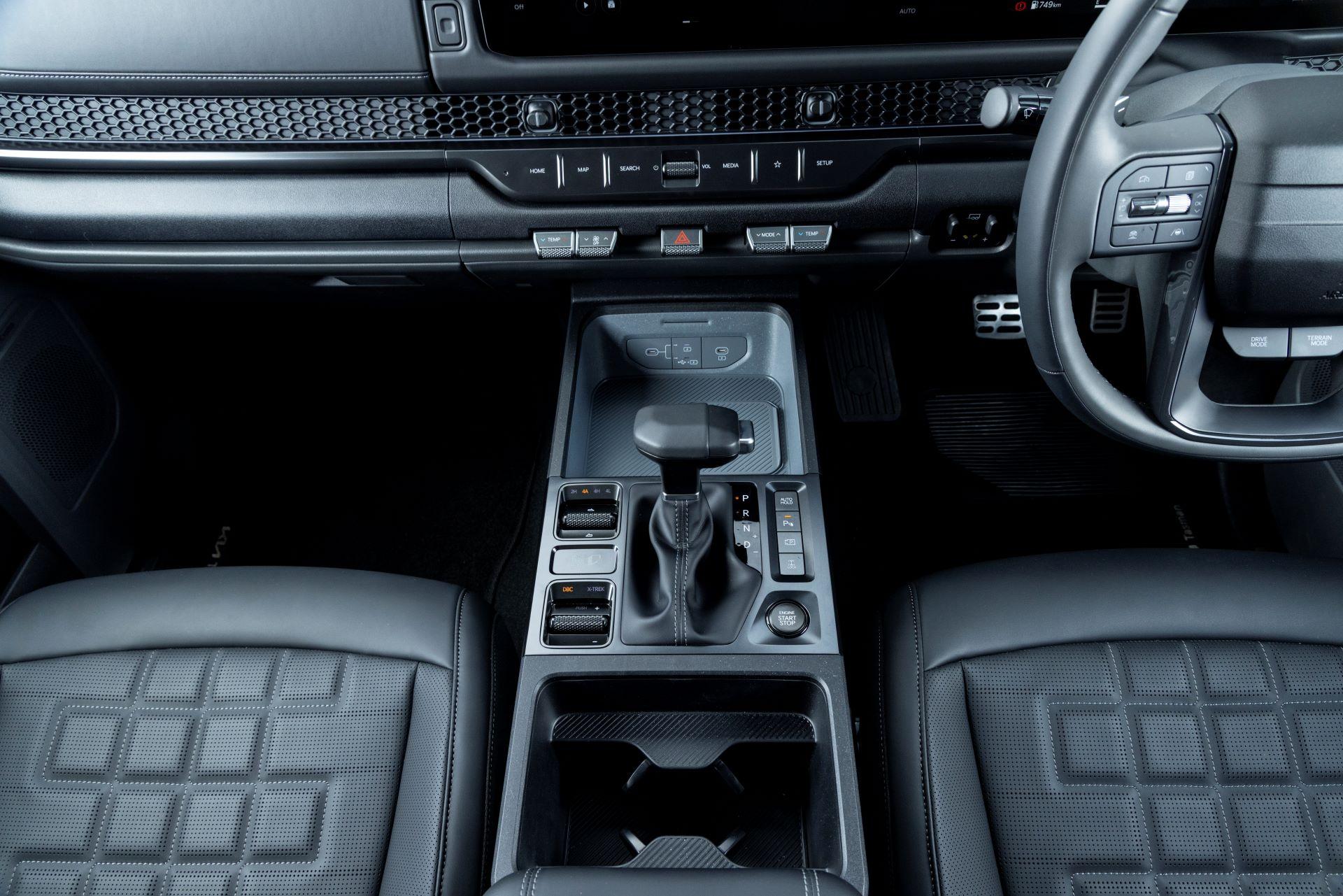
Selectable drive modes allow the vehicle to adapt to different driving conditions, while dedicated terrain settings cater to low-grip surfaces such as sand, mud and gravel. More demanding scenarios are addressed through systems like X-TREK mode, which enables controlled low-speed progress over rough terrain. A rear electronic differential lock enhances traction by distributing torque where it is needed most, while Downhill Brake Control manages speed on steep descents, reducing driver input and fatigue.
Beyond its off-road ability, the Tasman is engineered to meet the expectations of serious workhorse buyers. With a gross vehicle mass of 3,250 kg and a gross combined mass of 6,200 kg, it is built to handle substantial loads. Payload capacity exceeds one tonne, while a braked towing capacity of 3,500 kg positions it among the segment’s top performers.
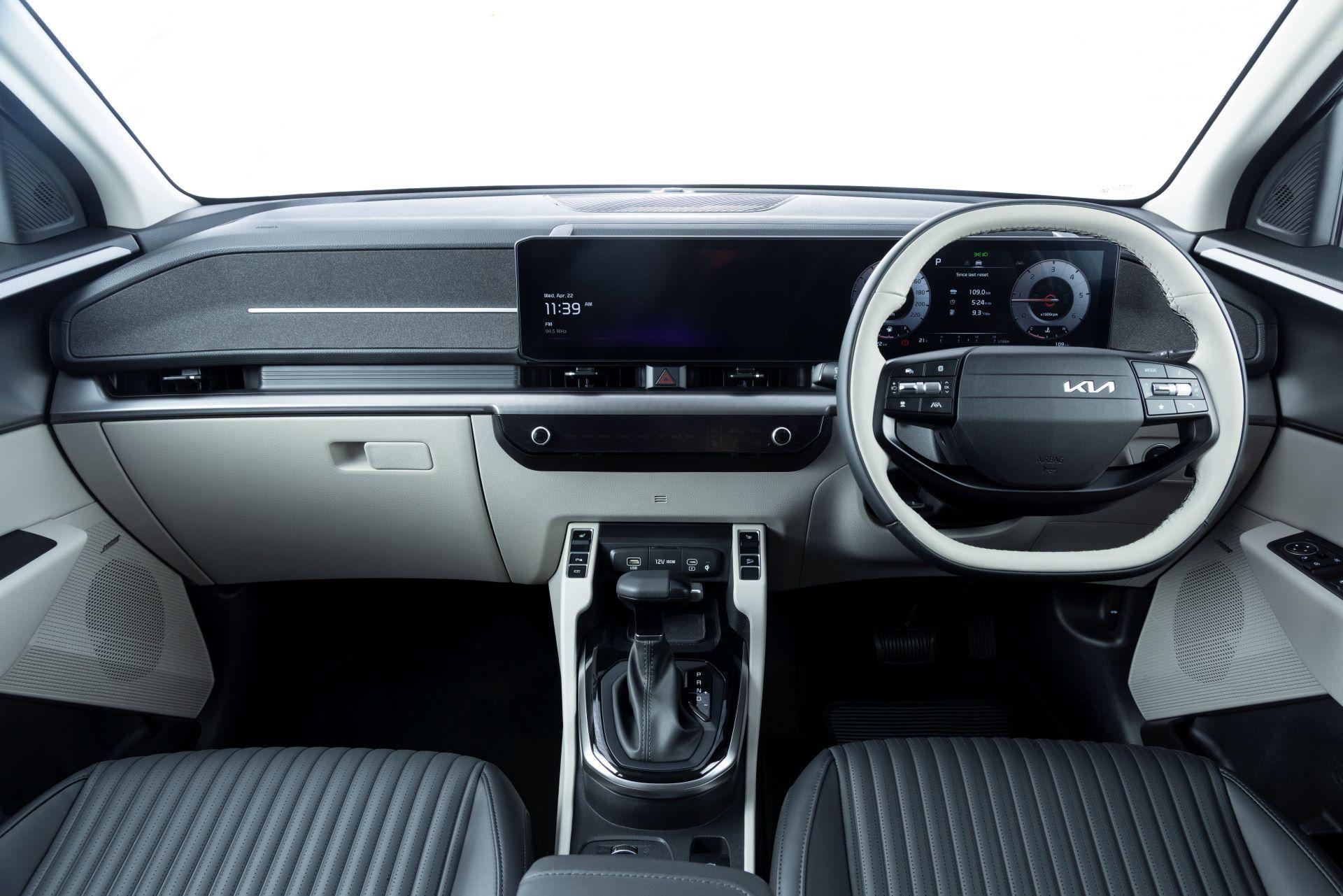
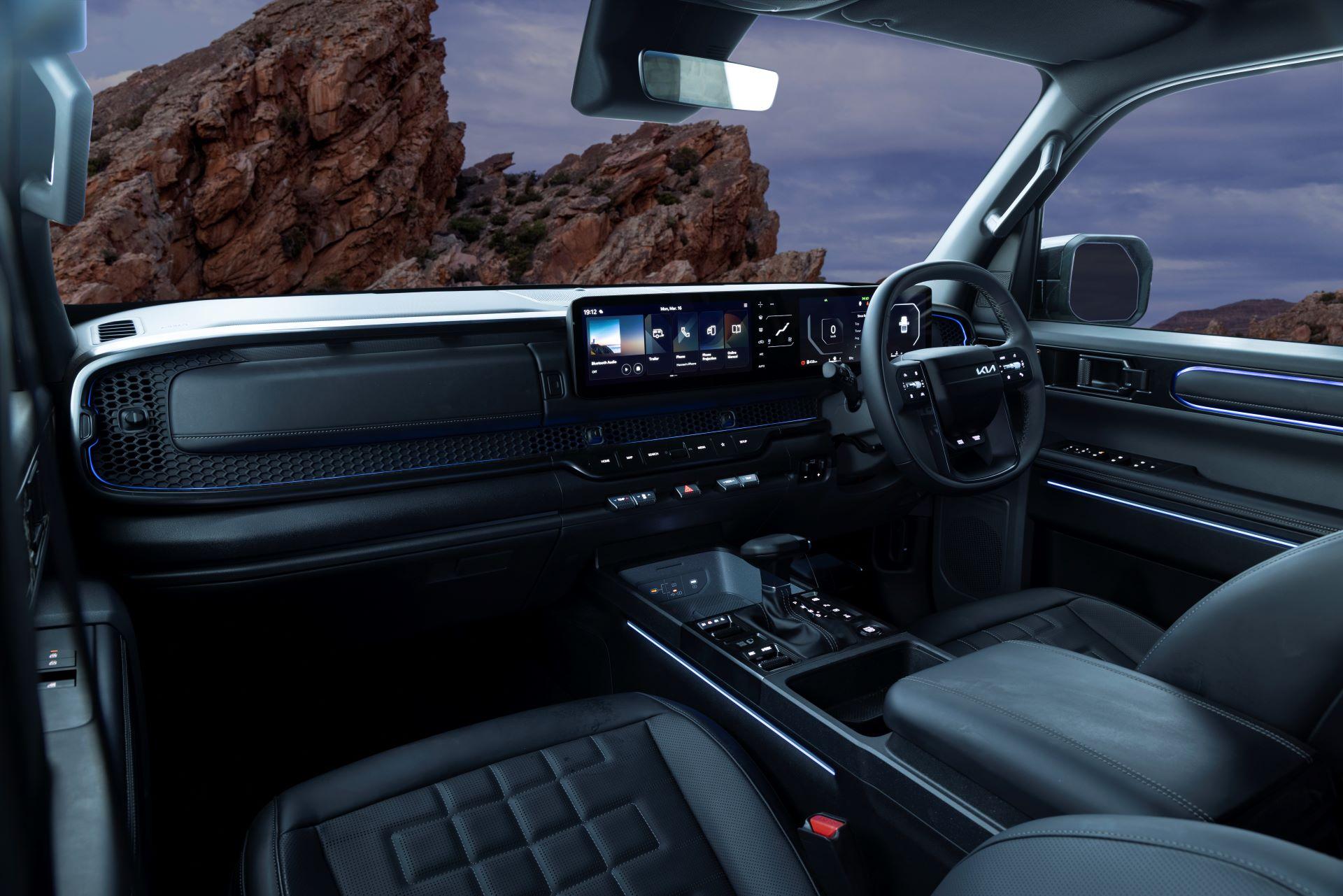
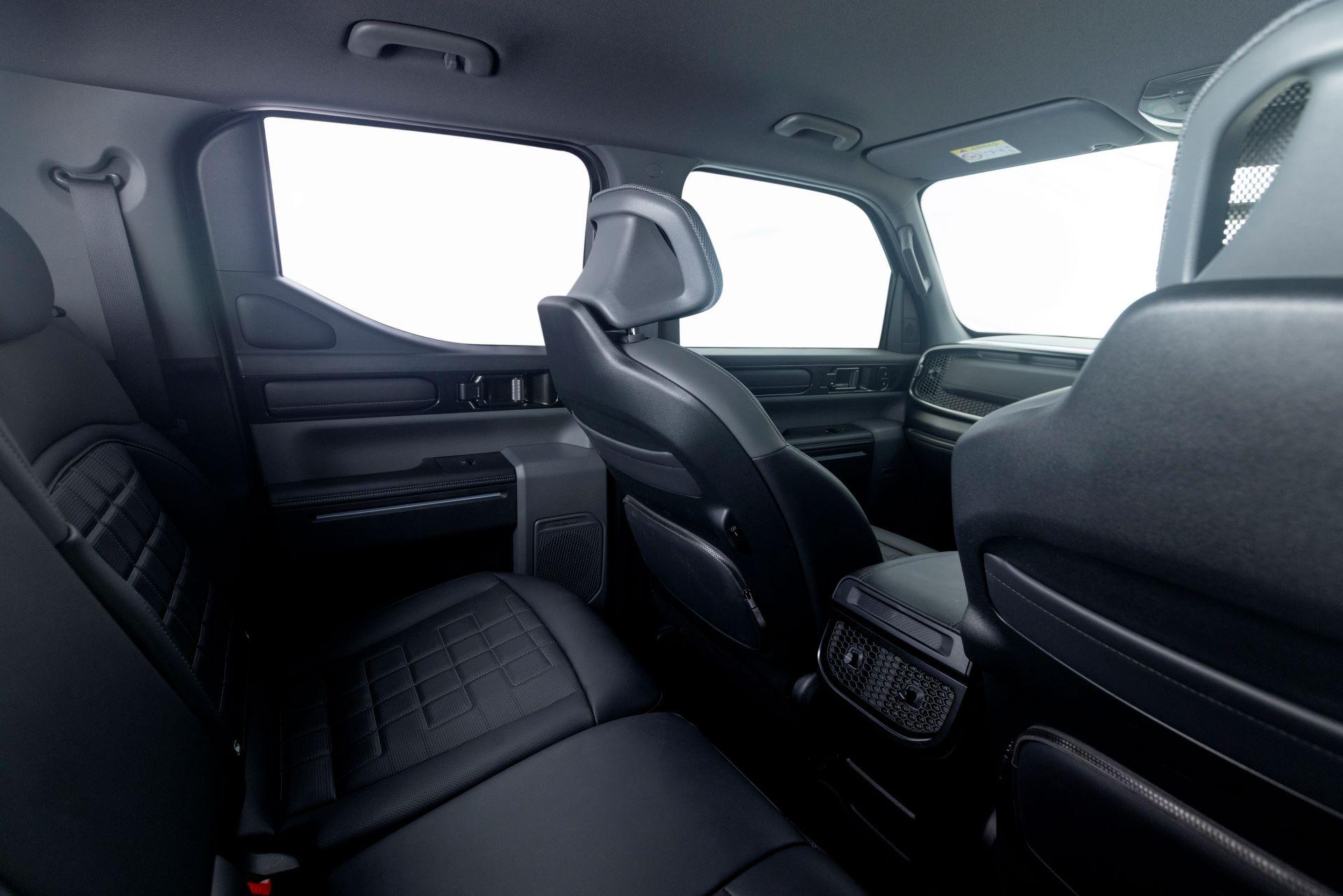
Inside, Kia shifts the narrative from purely utilitarian to something more refined. The cabin integrates a 12.3-inch digital driver display, a central infotainment interface and a dedicated climate control screen into a cohesive layout that mirrors the brand’s latest passenger vehicles. The emphasis is on usability and comfort, with generous space for occupants and a suite of connectivity features designed to support both work and leisure.
Safety and driver assistance technologies are comprehensive, including adaptive cruise control, lane-keeping assistance, blind-spot monitoring and autonomous emergency braking. These systems reinforce the Tasman’s positioning as a modern, technology-driven interpretation of the traditional double cab.
The local range is structured to cater to a broad spectrum of buyers. The LX 4x2 serves as the entry point, focused on durability and functionality, while the Colour Coded variant introduces a more refined exterior finish. The SX 4x4 adds all-wheel-drive capability, appealing to those requiring additional traction, with its own Colour Coded derivative enhancing visual appeal. At the top of the line-up, the X-Pro 4x4 is geared towards maximum off-road performance, with the Colour Coded version combining capability with a more premium aesthetic.
Pricing reflects the Tasman’s positioning within the segment, with the LX starting at R679,995, the SX at R789,995 and the flagship X-Pro at R999,995. This places it squarely among established competitors, but with a value proposition built around specification, technology and capability.
The arrival of the Tasman represents more than just a new model introduction. It signals Kia’s intent to compete in a segment that is deeply ingrained in South African motoring culture and defined by strong brand loyalty. By blending proven mechanical underpinnings with a more refined, technology-rich package, the Tasman enters the market not as a follower, but as a credible challenger aiming to rewrite expectations.