




Volkswagen Group’s software ambitions in China have crossed a decisive threshold. With the start of production of the VW ID. UNYX 07 at the Volkswagen Anhui plant, the Group has brought its first China Electronic Architecture from concept to series production, on schedule and at record speed. More than a new model launch, the moment signals Volkswagen Group China’s entry into full-cycle Software-Defined Vehicle production, built in China, for China.
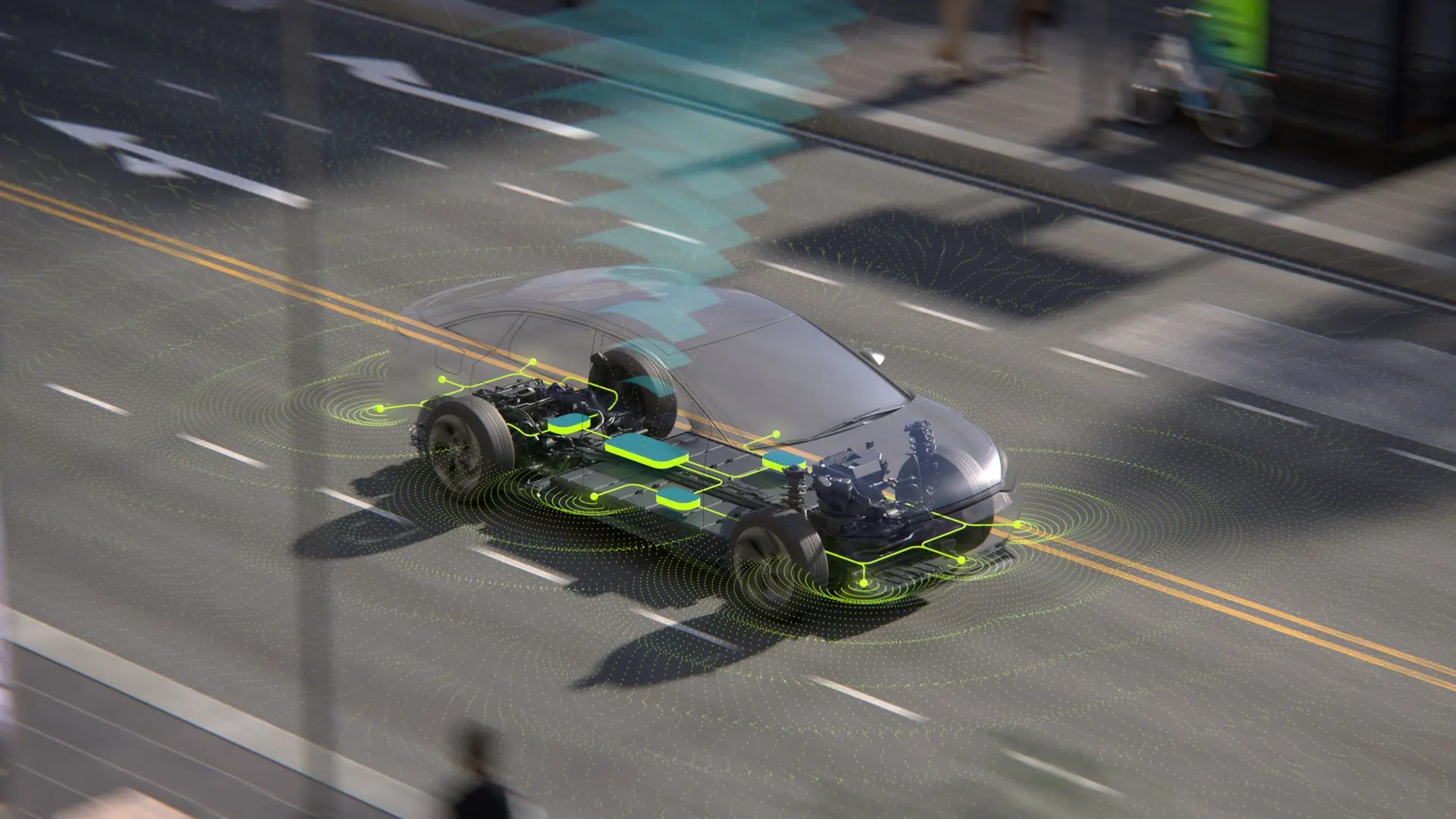
At the heart of this milestone is the China Electronic Architecture, or CEA, Volkswagen Group’s first fully zonal electronic and electrical architecture. Developed, tested and industrialised entirely within China, the CEA represents a fundamental shift in how vehicles are conceived, engineered and evolved over their lifecycle. It is the technological foundation for a new generation of Intelligent Connected Vehicles designed to compete at scale in the world’s most demanding and fast-moving automotive market.
A new architecture for a new pace of innovation
Traditional vehicle electronics grew organically over decades, with dozens of electronic control units layered onto platforms as new functions were added. The result was complexity, cost and limited flexibility. The China Electronic Architecture replaces that legacy with a zonal structure anchored by high-performance central computing. Functions are consolidated, software is decoupled from hardware, and the vehicle becomes continuously upgradeable through over-the-air updates.
For Volkswagen Group China, this is not an abstract software strategy. The CEA reduces the number of electronic control units by around 30 percent compared with previous vehicle generations, significantly simplifying system architecture. This streamlined foundation enables advanced AI cockpit features, China-specific driver assistance systems and full-vehicle over-the-air updates across powertrain types, from battery-electric vehicles to hybrids and internal combustion models.
Crucially, the architecture is scalable. Volkswagen Group China is the first automaker to deploy a zonal electronic architecture across multiple vehicle platforms and all powertrain technologies. That scalability allows software-driven innovation to move faster, travel further across the model range and reach customers at competitive cost.
From concept to production in 18 months
Speed is the defining currency of China’s Intelligent Connected Vehicle market, and here the CEA project has rewritten internal benchmarks. From initial concept to series production, the architecture was delivered in just 18 months, the fastest timeline Volkswagen Group has ever achieved for an all-new electronic architecture.
What makes this achievement stand out is not speed alone, but the conditions under which it was delivered. Validation standards remained unchanged. Safety, durability and reliability requirements were upheld in full. Rather than cutting corners, Volkswagen Group China redesigned workflows, localised development and integrated suppliers earlier in the concept phase to compress timelines without compromising quality.
Oliver Blume, CEO of Volkswagen Group, describes the result as a defining moment in the Group’s “In China, for China” strategy. For the first time, a completely new, scalable electronic architecture has been developed end to end within China, from engineering through validation to mass production. The CEA, he notes, enables software-driven innovations across all powertrain types, accelerates the expansion of the Group’s Intelligent Connected Vehicle portfolio in China and marks a decisive step toward Volkswagen’s ambition of becoming a global automotive technology driver.
China-developed, China-focused
The China Electronic Architecture was developed by Volkswagen Group China Technology Company, CARIAD China and XPENG, reflecting a deeply localised approach to innovation. Rather than adapting global architectures to local needs, the CEA was designed from the outset for Chinese customers, Chinese digital ecosystems and China’s regulatory and usage environment.
This local focus extends beyond software features. Enabled by new development processes, overall vehicle development cycles can be shortened by up to 30 percent. In selected key projects, development costs for new models are reduced by up to 50 percent through localisation and early supplier integration. Agile development methods allow rapid adjustments to evolving customer expectations, a critical capability in a market where digital features and user experiences can quickly define brand relevance.
Ralf Brandstätter, Member of the Board of Management of Volkswagen AG responsible for China and Chairman and CEO of Volkswagen Group China, frames the CEA as the blueprint for scaling Intelligent Connected Vehicles. By combining local development speed with Volkswagen’s engineering DNA, the Group can bring software-driven innovation to market faster and more cost-effectively, across electric, hybrid and combustion engine vehicles alike.
One software platform, many vehicles
The ID. UNYX 07 is the first expression of this strategy, but it is only the beginning. Over the course of the year, Volkswagen Group will present four additional CEA-based vehicles from across its joint ventures in China. Beginning this year, models built on the new architecture will expand from A- to B-segment vehicles, offering customers a broad and competitive Intelligent Connected Vehicle portfolio.
This unified software platform approach allows Volkswagen Group China to scale innovation horizontally. New functions developed once can be deployed across multiple models and brands, accelerating time to market while maintaining consistency in quality and performance. Over-the-air updates ensure that vehicles continue to evolve after delivery, extending product lifecycles and strengthening customer relationships.
China speed, without compromise
Volkswagen’s reputation in China has been built over more than four decades and more than 50 million customers, grounded in trust, safety and reliability. The CEA programme was designed to preserve that trust in an era defined by software velocity and digital differentiation.
While the overall delivery cycle was reduced to 18 months, validation cycles were not shortened. Safety, durability and reliability testing remain aligned with Volkswagen Group’s global standards. This balance between speed and discipline is central to the Group’s positioning in China’s Intelligent Connected Vehicle era, where rapid innovation must coexist with long-term brand credibility.
The start of production of the VW ID. UNYX 07 therefore marks more than a technological milestone. It confirms Volkswagen Group China’s ability to execute complex, software-led transformation at local speed, without diluting the values that define the brand. With the China Electronic Architecture now in series production, Volkswagen has laid a scalable, future-ready foundation for its next chapter in the world’s most important automotive market.


