



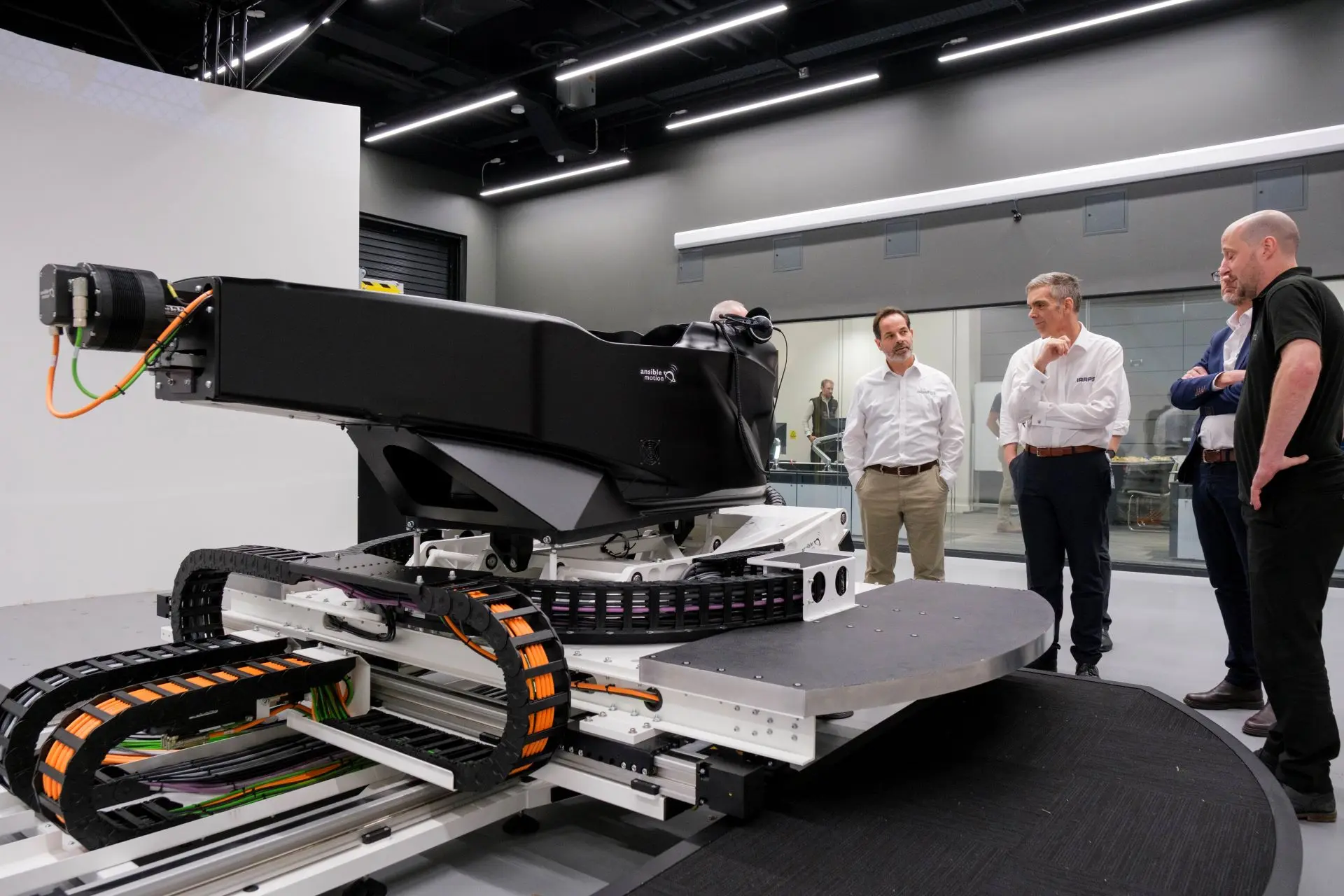
Ansible Motion is set to deepen its collaboration with the Institute for Advanced Automotive Propulsion Systems (IAAPS) with the installation of a Delta S2 Driver-in-the-Loop (DIL) simulator at the Bristol and Bath Science Park. The move will integrate the simulator with IAAPS’s existing full powertrain dynamometer, creating a pioneering Vehicle-in-the-Loop (VIL) environment that bridges virtual and real-world testing.
Building on successful initial collaborations from 2024, this long-term installation—scheduled to be operational from February 2026—will enable researchers, engineers, and drivers to interact in real time with actual powertrain systems. By connecting the Delta S2 DIL simulator directly to IAAPS’s AVL 1800kW full four-wheel-drive powertrain dynamometer, the new setup offers unparalleled precision in capturing driver and vehicle behaviour under controlled lab conditions.
Accelerating Powertrain Development
The VIL-DIL environment allows early-stage evaluation of internal combustion, hybrid, and electric powertrains, along with Advanced Driver Assistance Systems (ADAS) and autonomous driving transitions. By simulating complex or hazardous driving scenarios safely in the lab, the system accelerates driveline calibration and validation while reducing the need for resource-intensive real-world testing.
“This next stage of collaboration provides IAAPS, its partners, and the wider UK automotive industry with access to a world-class simulator environment that advances research methods for all forms of powertrain,” said Dan Clark, managing director at Ansible Motion. “It underscores our shared ambition to innovate in validation and testing techniques for increasingly complex vehicle systems.”
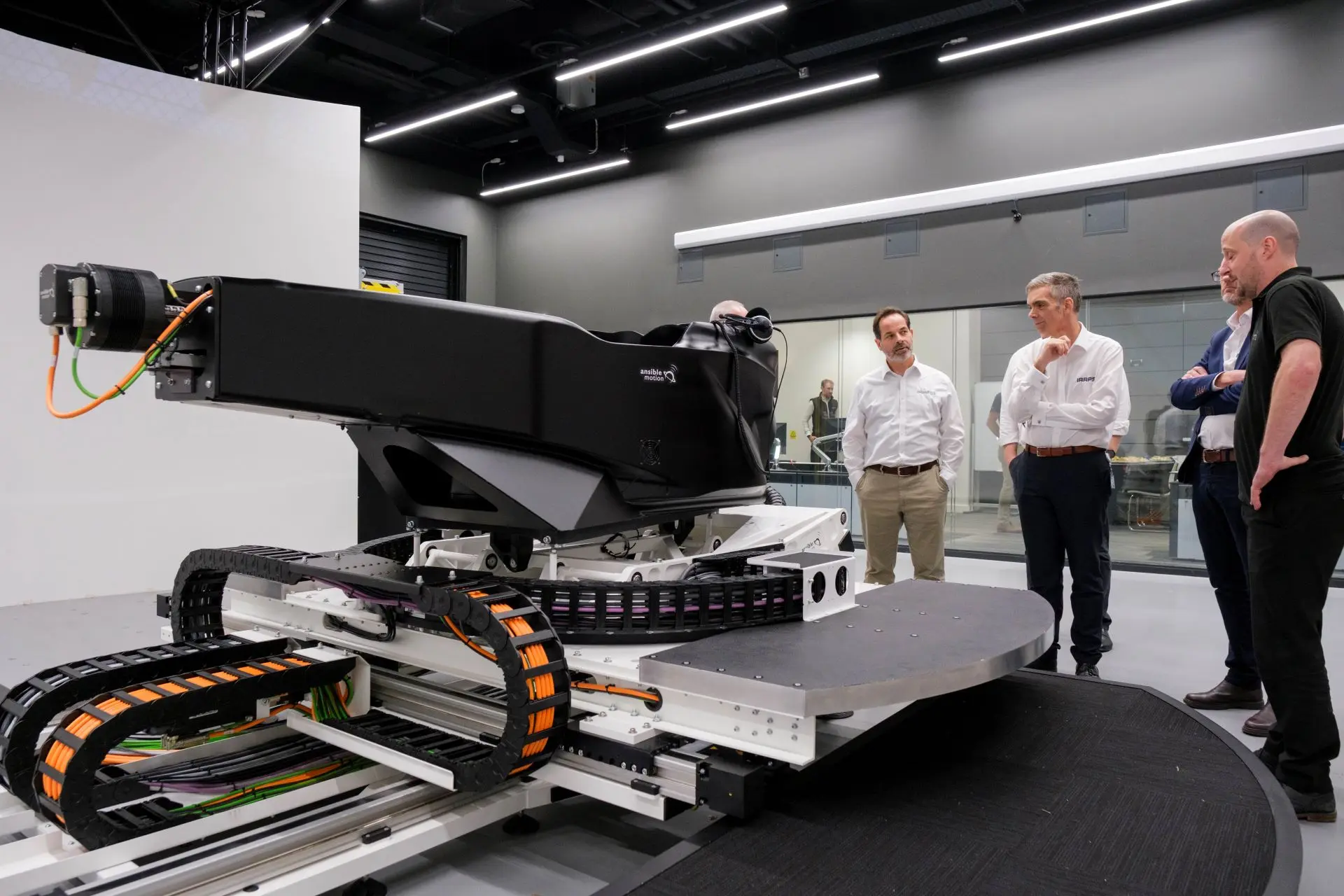
Cutting-Edge Technology in a Compact Footprint
The Delta S2 was chosen for its high-fidelity, immersive dynamics, delivered within a compact footprint that minimises impact on facilities. Its patented six-degrees-of-freedom Stratiform motion base, projection-based vision system, interchangeable cockpit, and advanced control and computational systems integrate seamlessly with IAAPS’s dynamometers. Ansible Motion will also provide full support and maintenance to ensure the system meets IAAPS’s advanced research needs.
Prof Rob Oliver, managing director at IAAPS, added: “This partnership represents a powerful alignment of capabilities, combining IAAPS’s cutting-edge propulsion system engineering with Ansible Motion’s advanced simulation technology. It is a milestone moment for both organisations and a testament to our commitment to innovation.”
Mutual Access and Future Plans
Under the new agreement, Ansible Motion will have scheduled access to the simulator lab and IAAPS’s wider research ecosystem for internal R&D, customer demonstrations, and professional driver evaluations. The company will also establish a dedicated office for four staff members within the IAAPS facility. A joint launch event is planned for after the system becomes fully operational in February 2026.
This collaboration signals a significant step forward in vehicle and powertrain development, combining the best of virtual and real-world testing to accelerate innovation while ensuring safety, repeatability, and environmental responsibility.


