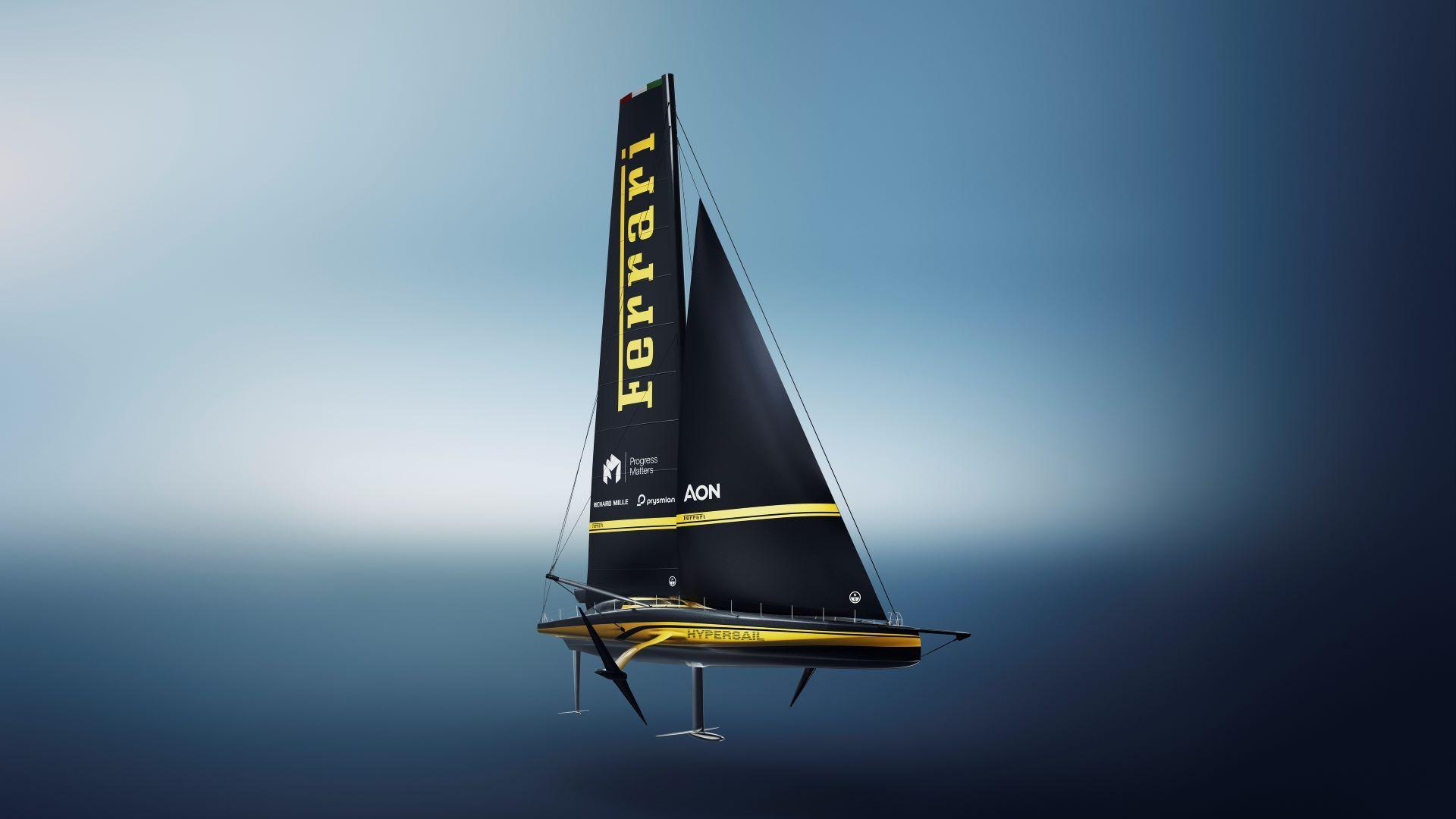

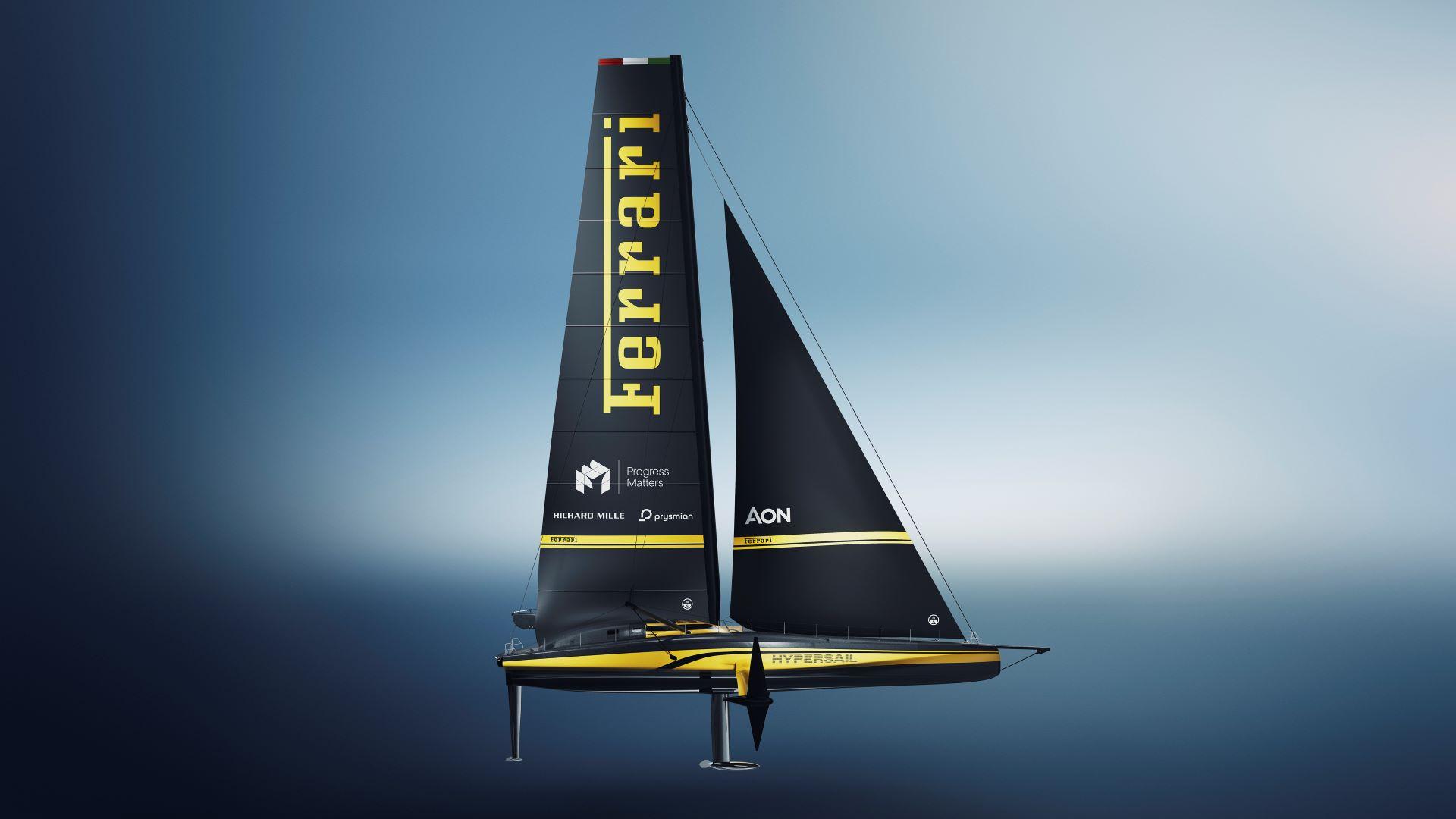
Ferrari has never been content with staying in its lane, and with Hypersail, it quite literally leaves the road behind. Revealed during Milan Design Week, this 100-foot flying ocean monohull is not just a vessel but a statement, where performance, innovation and design collide in a way that feels both inevitable and unexpected.
Hypersail emerges from Maranello as a project that treats the ocean like a racetrack without boundaries. It is the product of an unusually fluid collaboration, bringing together Ferrari’s engineering minds, its Design Studio under Flavio Manzoni, and renowned naval architect Guillaume Verdier. The result is less a boat and more a translation exercise, converting Ferrari’s DNA into a language spoken by wind and water.
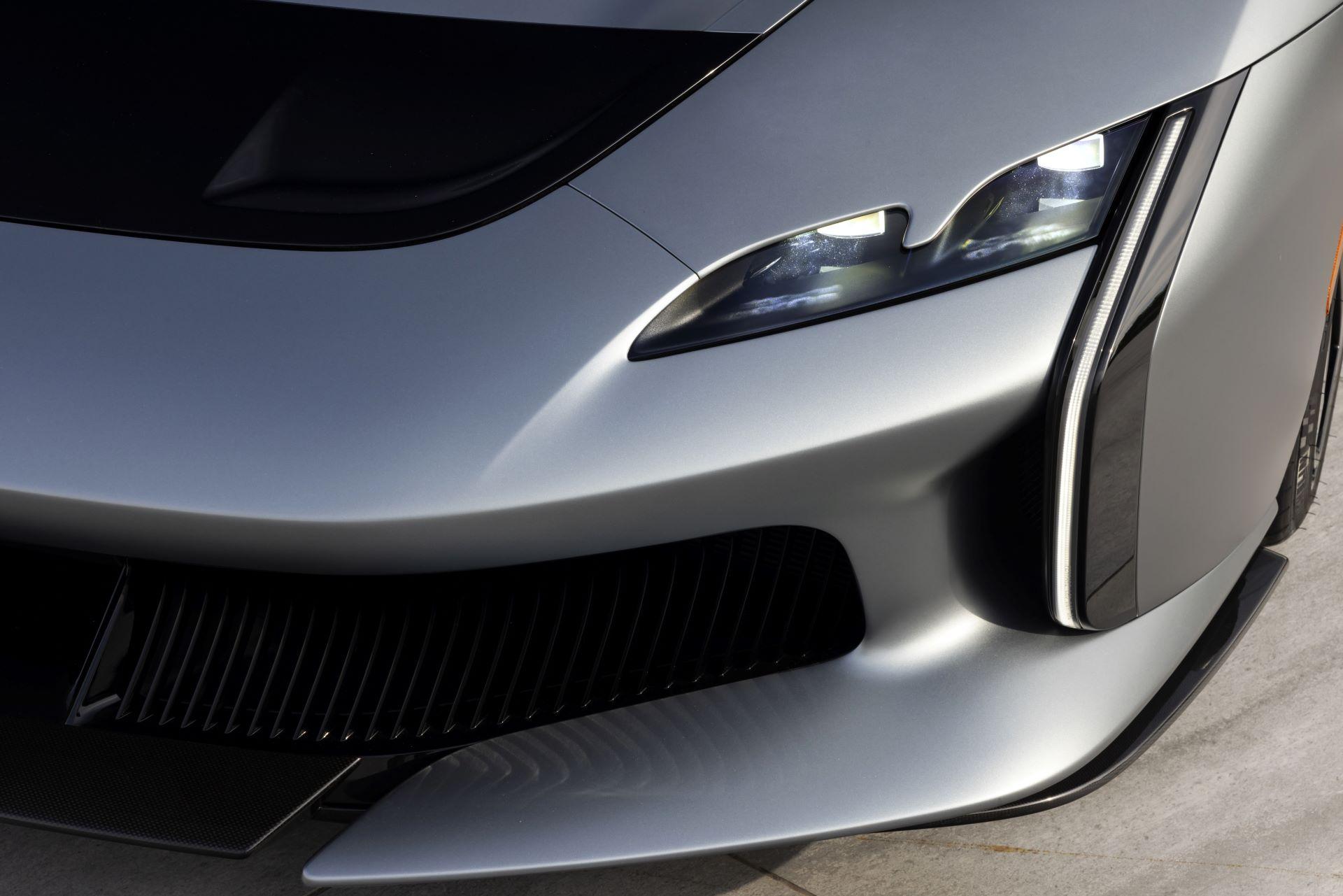
What makes Hypersail compelling is that its design is not layered on top of engineering as an afterthought. Instead, form is carved directly from function. Every curve, every surface, every angle is shaped by aerodynamic and hydrodynamic forces. The vessel’s silhouette carries the same sense of proportion and purity seen in Ferrari’s Monza SP1 and SP2, while the deck architecture subtly echoes the visual language of the Le Mans-winning 499P Hypercar. It feels familiar, yet entirely recontextualised, like spotting a thoroughbred galloping across an open sea.
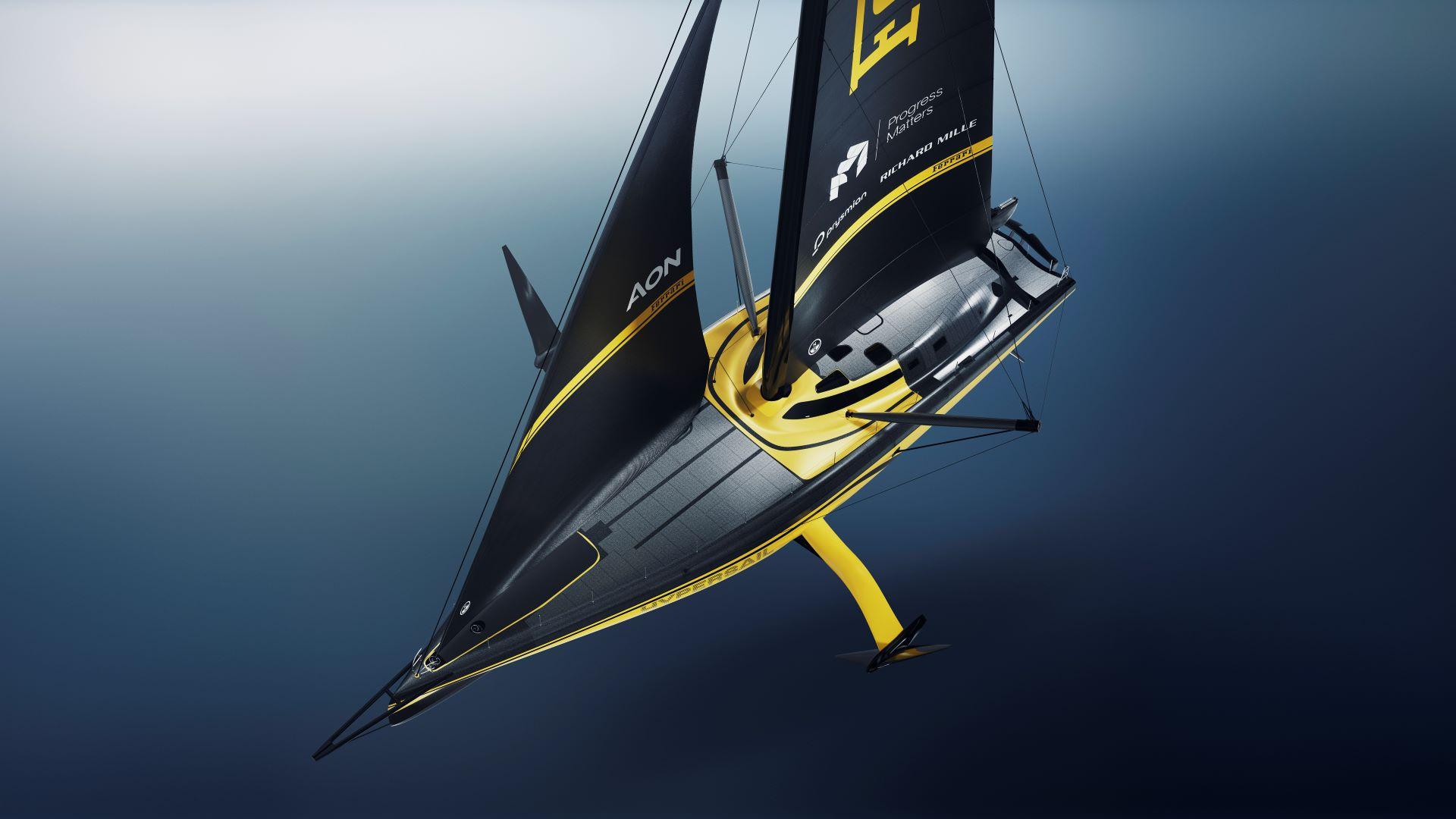
This philosophy extends into the smallest details. Solar panels are not simply attached but integrated into the deck and hull, designed to be walked on, gripped, and trusted underfoot. Their placement is the result of detailed studies of solar exposure during real-world navigation, ensuring they contribute meaningfully to the vessel’s energy ecosystem. Hypersail is powered not by a single source, but by a choreography of renewable inputs, harvesting energy from wind, sun and motion to sustain its performance.
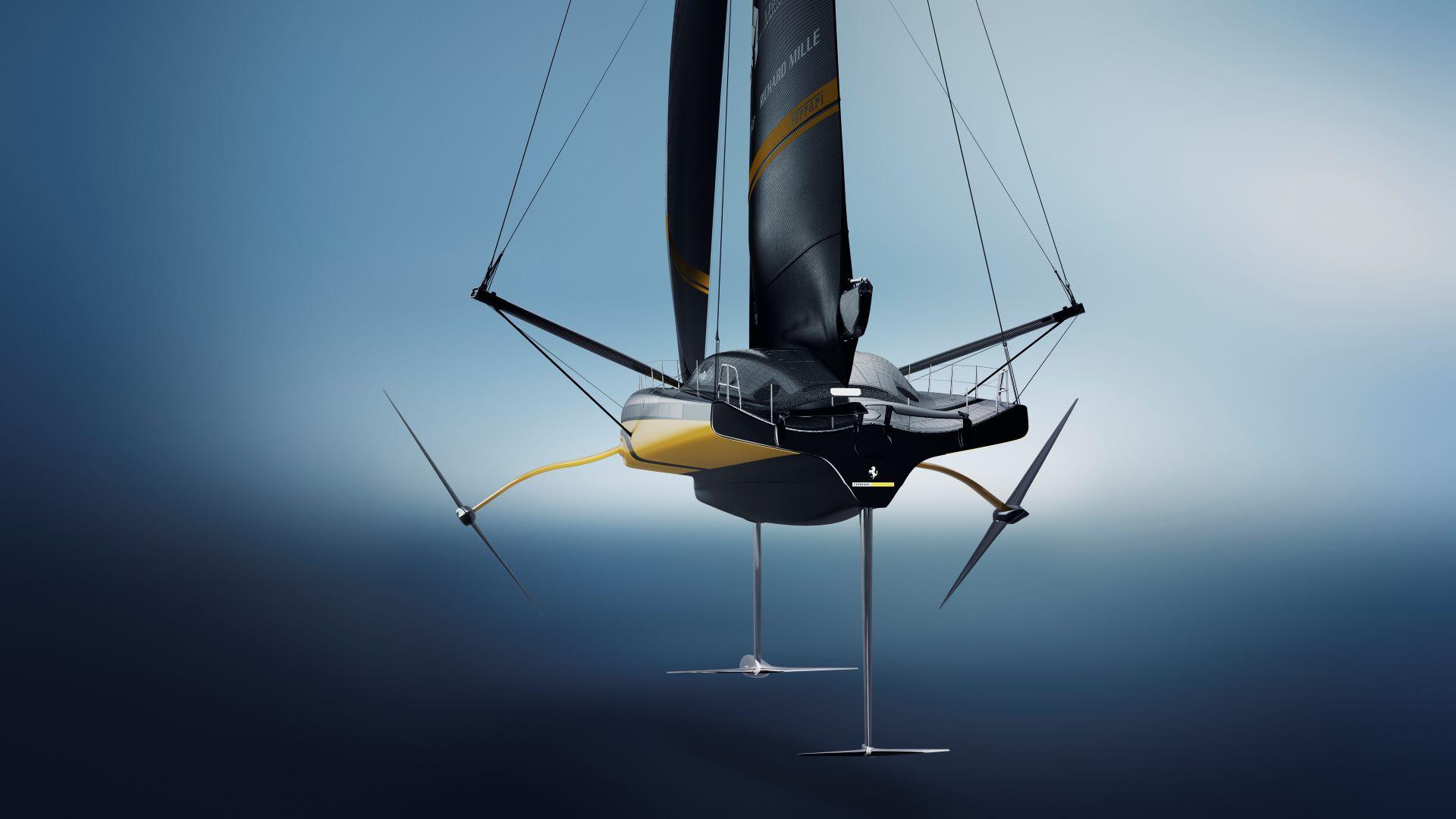
At the core of this floating machine is foiling technology, allowing the monohull to rise above the water and reduce drag to extraordinary levels. It is here that Ferrari’s automotive expertise quietly reveals itself. The control systems, the responsiveness, the relentless pursuit of efficiency all mirror the logic of a high-performance car, just translated into a far less predictable environment. The ocean does not offer smooth asphalt or repeatable conditions, and yet Hypersail is engineered to thrive within that chaos.
Visually, the project finds its emotional anchor in colour. The livery introduces Nuovo Giallo Fly, a vivid yellow that carries deep roots within Ferrari’s history. Once inspired by Fiamma Breschi and associated with the iconic 275 GTB, Giallo has long existed as Ferrari’s “second soul,” a counterpoint to its more dominant red identity. On Hypersail, the name “Fly” becomes more than poetic, linking directly to the vessel’s foiling capability and reinforcing the sensation that this is something designed to defy traditional constraints.
This yellow is set against Grigio Hypersail, a bespoke grey derived from the raw presence of carbon fibre. The interplay between the two creates a visual tension that is both striking and purposeful. The yellow traces key elements of the hull, foils and cabin, highlighting functional zones while simultaneously referencing classic Ferrari design cues, including the bold colour separations seen on the 512 BB. It is a livery that communicates speed and intent even at a standstill, as if the boat is already in motion before it touches water.
Even the branding evolves within this project. The elongated “F” motif on the sail connects Hypersail to Ferrari’s broader contemporary design language, appearing across recent Formula 1 cars and special projects. Subtle references to models like LaFerrari and the F80 are woven into the detailing, creating a layered narrative that rewards those who look closely.
Beyond the vessel itself, Ferrari has chosen to present Hypersail as an experience. During Milan Design Week, the project unfolds within the Ferrari Flagship Store through a curated exhibition that explores its design journey. Above the city, on the HIGHLINE Milano terrace overlooking Piazza del Duomo, a lighthouse installation designed by the Ferrari Design Studio stands as a symbolic extension of the project. It acts as both a beacon and a metaphor, pointing toward a future where technology and design are not separate pursuits but intertwined forces pushing boundaries forward.
Hypersail ultimately feels less like a departure and more like an expansion of Ferrari’s identity. It takes the brand’s obsession with performance and places it in one of the most demanding environments imaginable. The road may have disappeared beneath it, but the philosophy remains intact, refined and now carried forward on a current of wind, light and relentless ambition.