


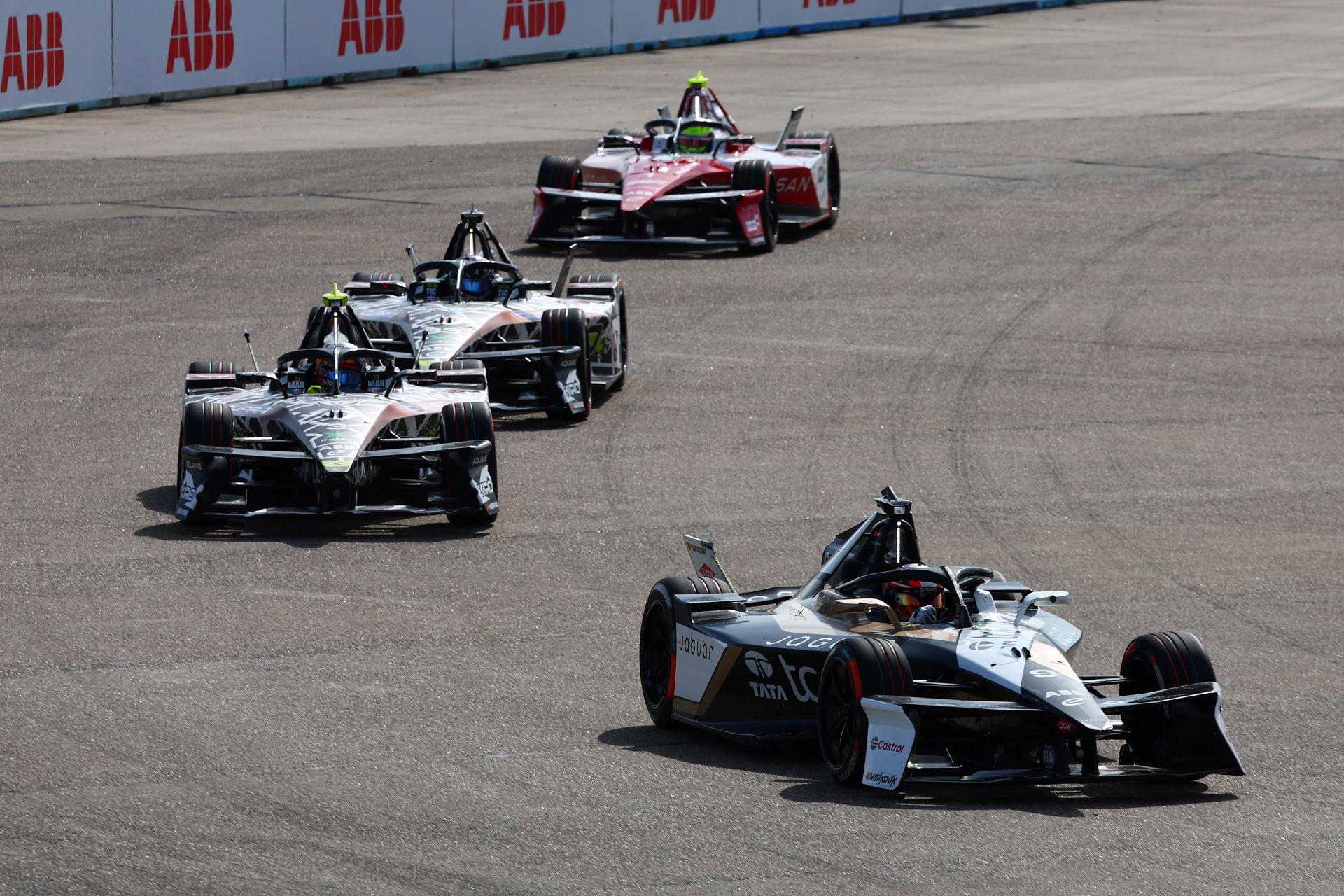
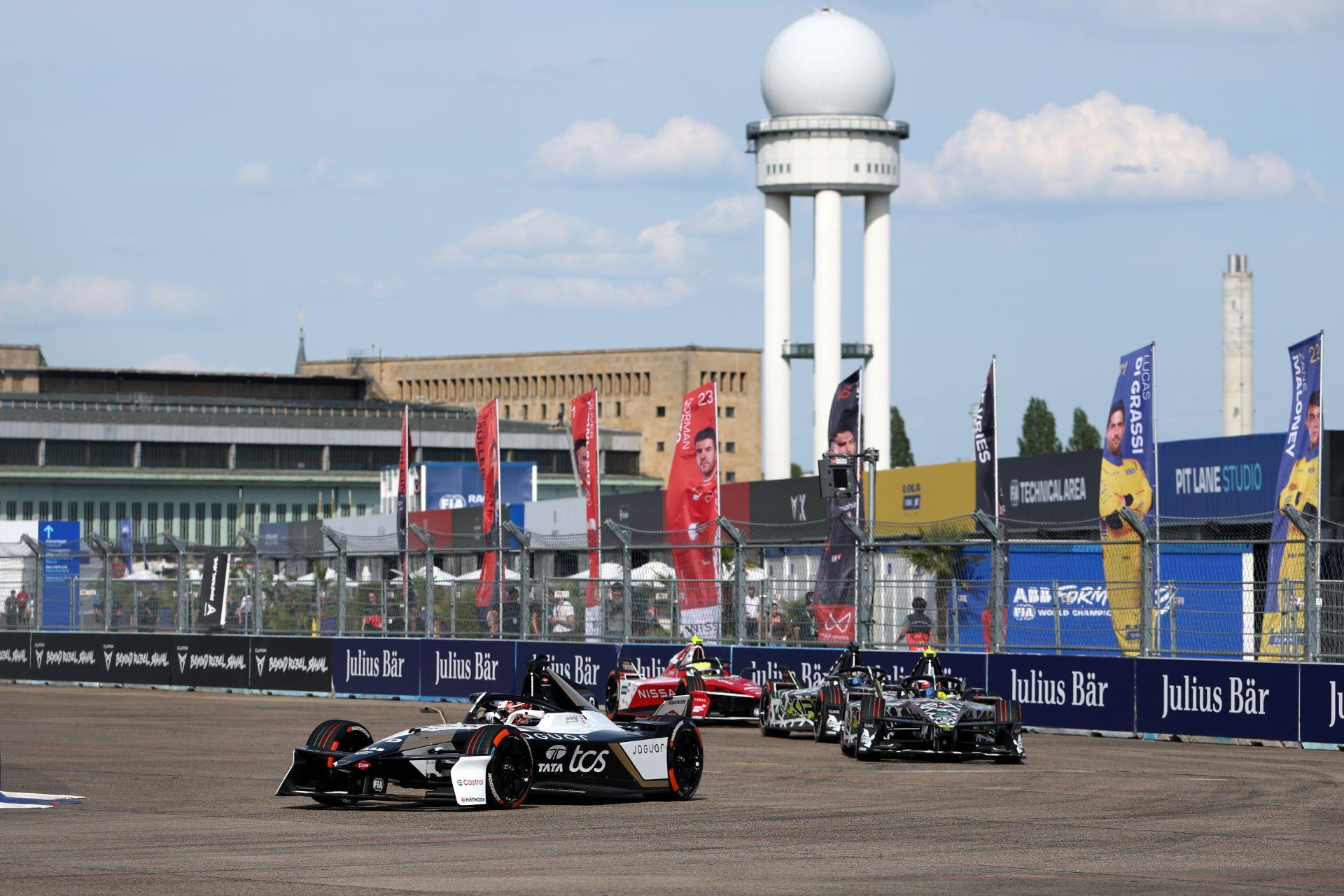
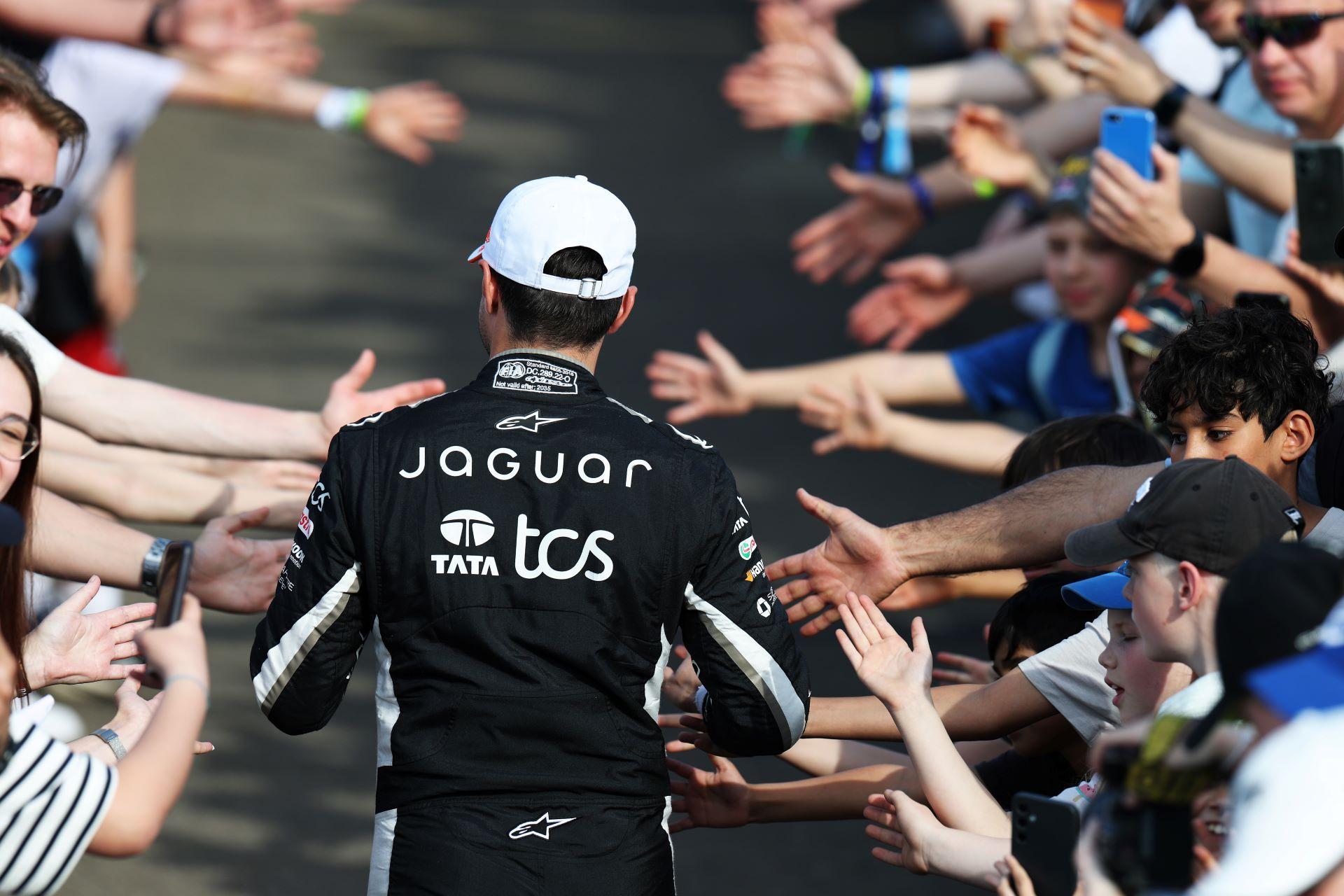
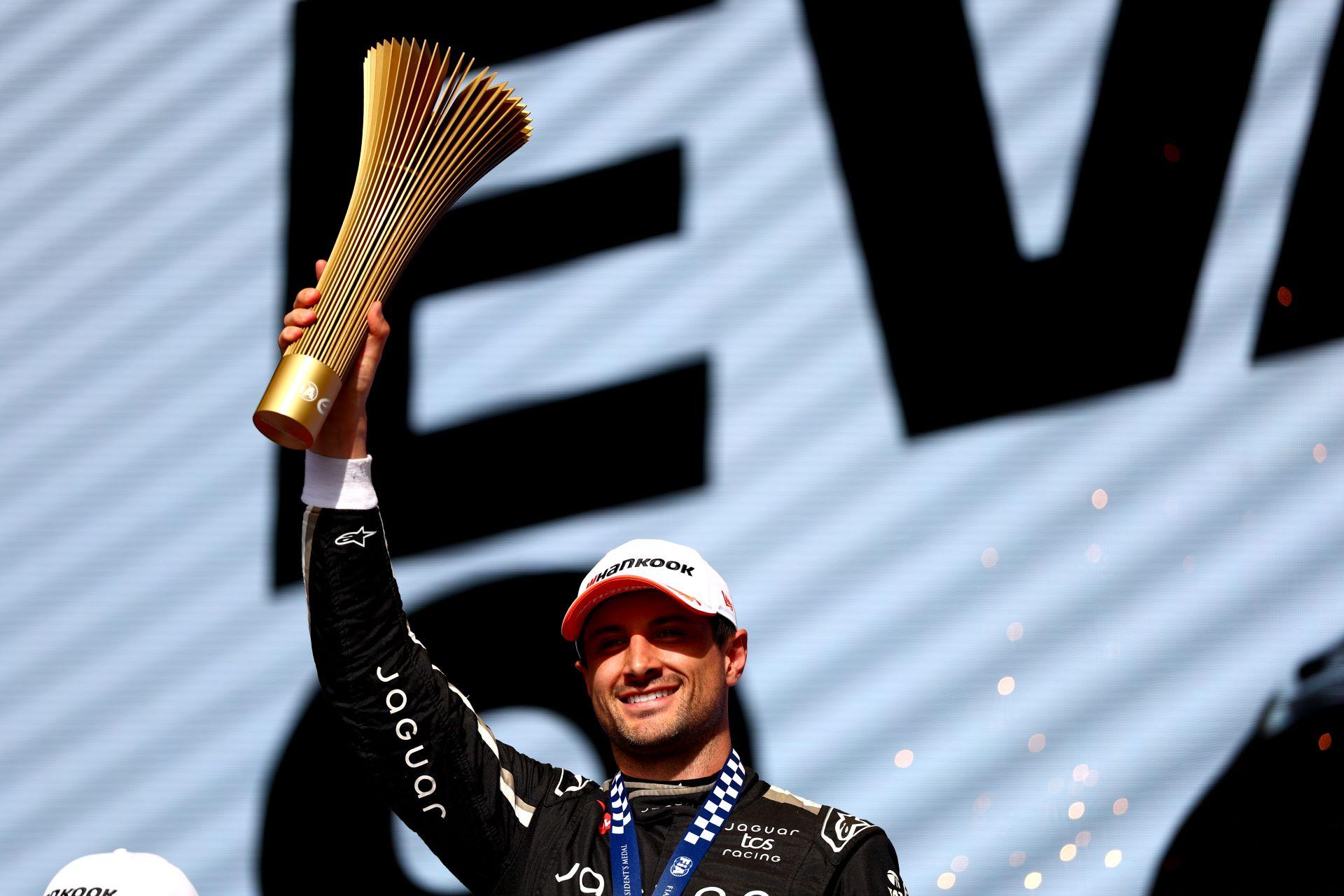
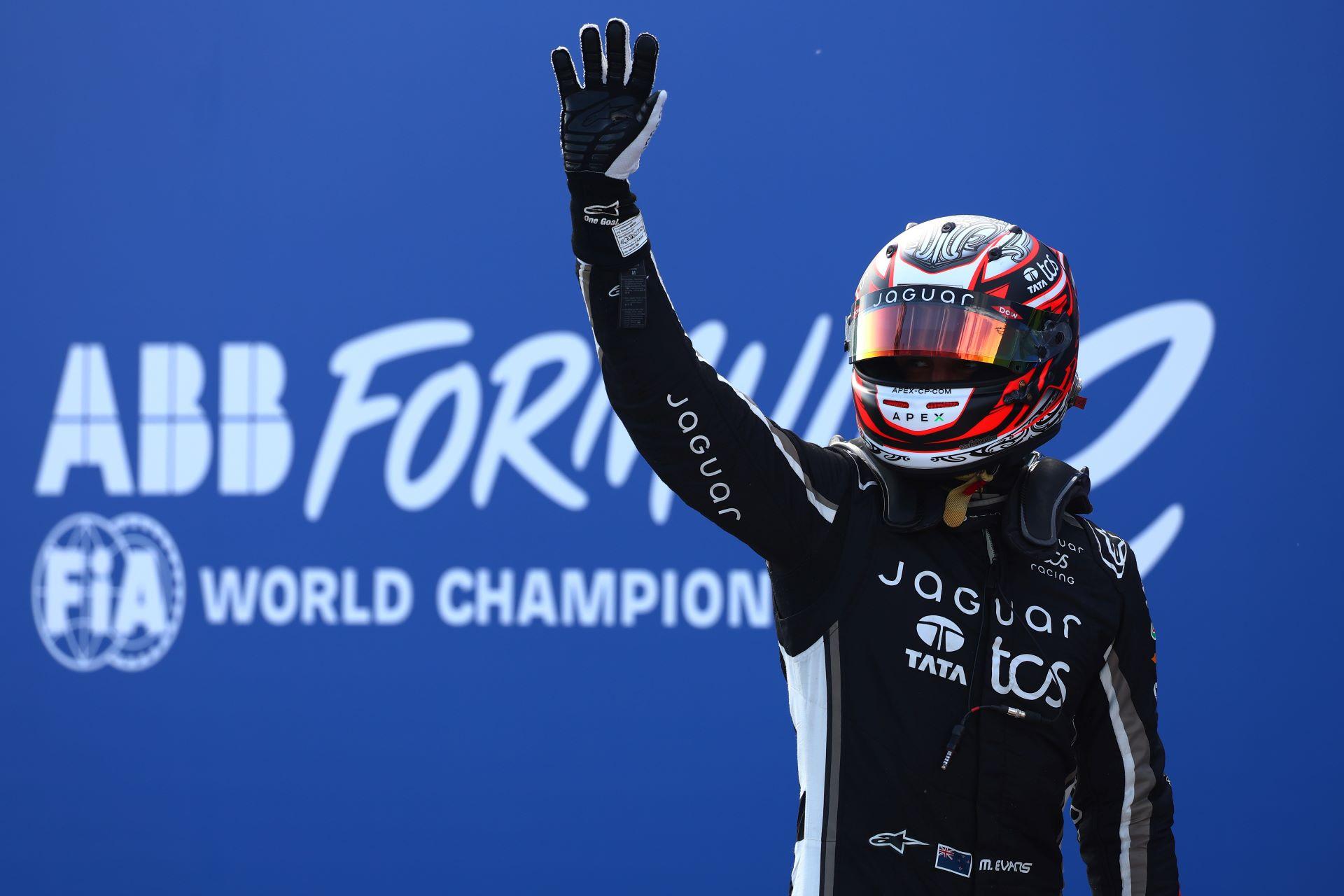
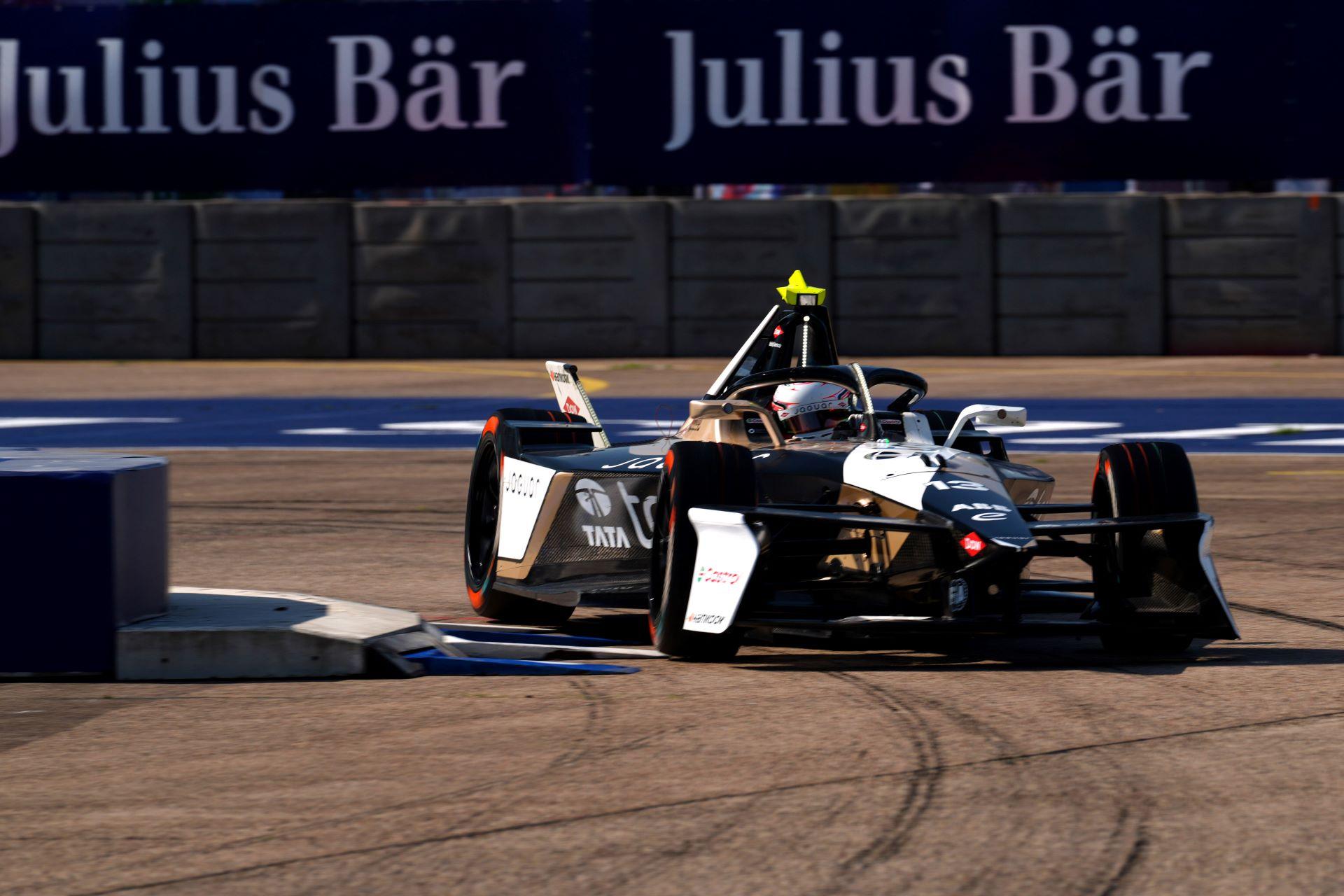
Mitch Evans delivered a performance that will be replayed in highlight reels for seasons to come, surging from a P17 start to claim a commanding victory in the Berlin E-Prix at the Tempelhof Street Circuit. In a race defined by relentless energy management, chaotic pack racing, and razor-thin strategic margins, Evans transformed patience into precision and strategy into silverware.
The weekend had not initially hinted at triumph. Struggling for one-lap pace, Evans and Jaguar TCS Racing made a deliberate call to compromise qualifying performance in favour of race-day advantage, preserving tyre life and prioritising efficiency over grid position. Starting deep in the field, he resisted early chaos as the pack compressed into four-wide battles, with positions shifting almost every lap and survival often as important as speed.
As the race settled into its energy-intensive rhythm, Evans began to carve forward with measured intent, reading gaps rather than forcing them. The turning point came with a decisive six-minute ATTACK MODE deployment, a move that sliced him from P18 into contention at the sharp end of the field. From there, his energy conservation paid dividends, allowing him to emerge into the lead fight with a stronger energy profile than any of his rivals.
By lap 27, Evans had reached the front with clarity and control, effectively dictating the tempo while others were forced into compromise. A second late ATTACK MODE activation provided the final tactical edge, enabling him to retake the lead when it mattered most and defend it through the closing laps with composure under pressure. It was a performance built not on raw aggression, but on surgical timing and relentless efficiency.
The win marked Evans’ second victory of the season and secured Jaguar TCS Racing’s fourth win of the year, reinforcing their status as the only team in the final season of the GEN3 Evo era to produce multiple double race winners across both drivers. It was a statement of consistency as much as speed, highlighting a team operating at full strategic alignment.
Behind the winner, António Félix da Costa showcased front-running pace and elite energy management of his own, running as high as P2 and firmly embedded in the lead pack fight. His race, however, unraveled in the closing stages after contact from Nico Müller resulted in a puncture, forcing an unscheduled pit stop that dropped him to P18. Despite the setback, his performance had been a reminder of his competitive sharpness and efficiency throughout the weekend.
For Evans, the victory carried added significance given the circumstances of the weekend and the challenges faced in qualifying trim. The execution of the race plan, combined with calm decision-making in the heat of constant overtaking battles, underlined a driver at peak strategic confidence.
With momentum now firmly on their side, Jaguar TCS Racing turns its focus to Monaco for the upcoming double-header, where narrow streets and unforgiving barriers will demand another level of precision. If Berlin was a test of patience and energy discipline, Monaco promises a different kind of pressure altogether, one where control will matter just as much as speed.