


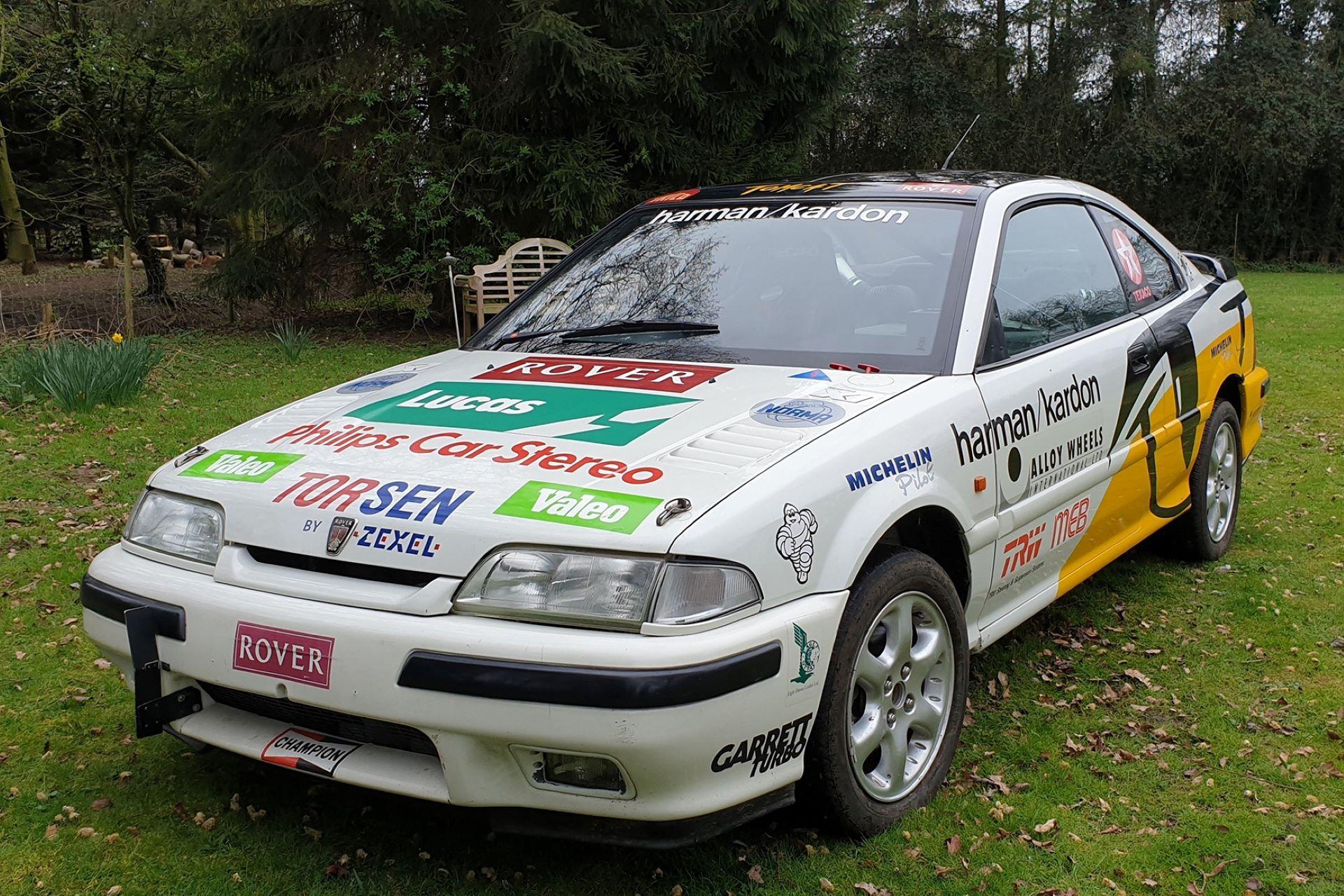
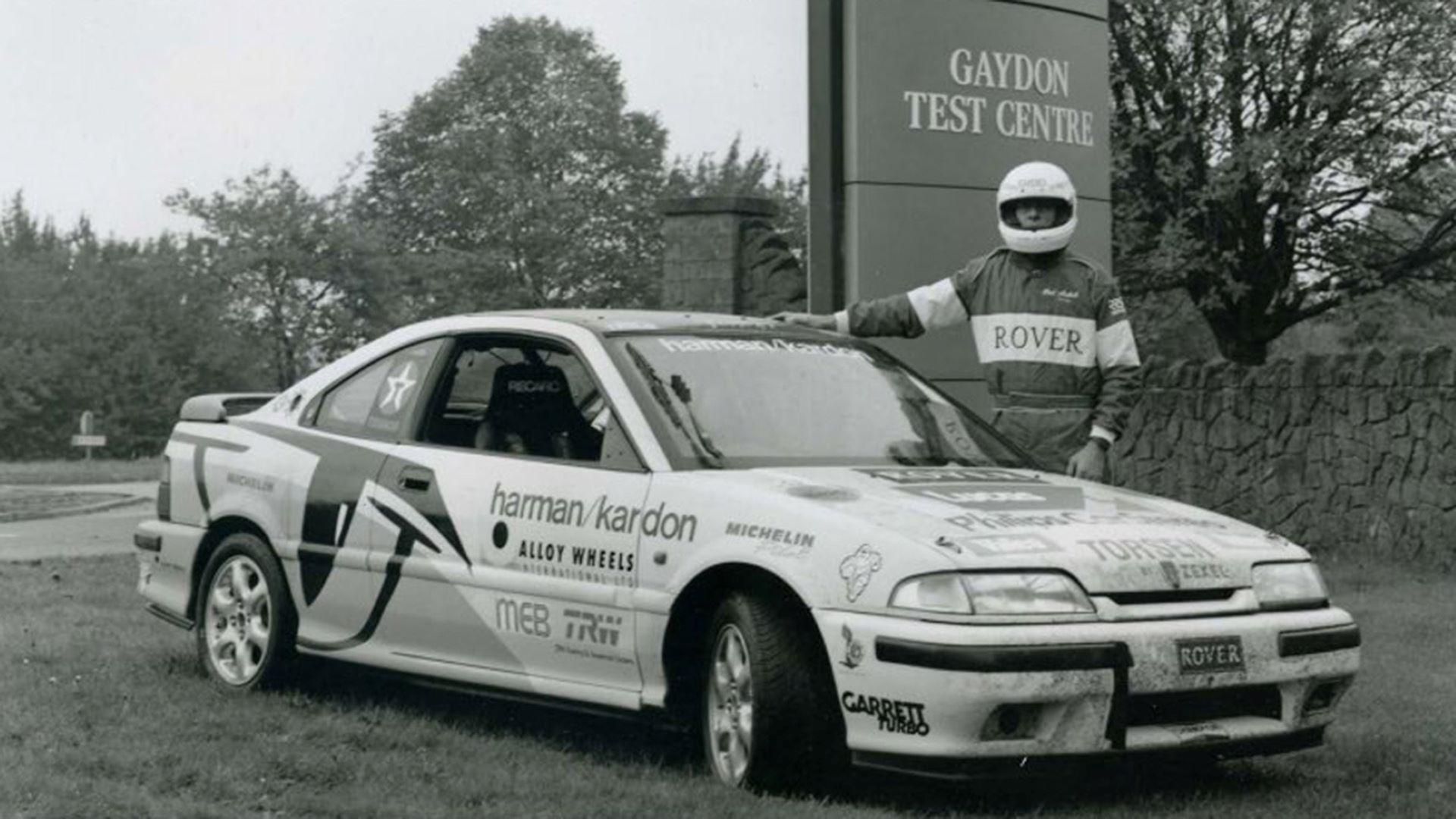
There are cars that whisper their legacy, and then there are cars that still feel like they are running on the echo of applause. The 1992 Rover 220 Coupe Turbo ‘Tomcat’ belongs firmly in the latter category, a machine forged not just for speed, but for proof. On Sunday 10 May, this remarkable piece of British engineering history will return to the very ground where it made its name, as it heads to auction with H&H Classics at Millbrook Proving Ground in Bedfordshire.
The setting could hardly be more appropriate. Millbrook is not just a test track, but a proving theatre where engineering ambition is pushed into measurable reality. It was here, 34 years ago, that the Tomcat carved its name into motoring folklore, and now it returns as both participant and protagonist in its own legacy.
The car itself is no ordinary Rover. Built as one of two specially modified pre-production Rover 220 Coupe Turbo models, the Tomcat was developed by Rover’s engineering team with a clear mission: to challenge and surpass existing speed and endurance benchmarks for 2-litre front-wheel-drive vehicles. In doing so, it became a statement of intent from a British manufacturer eager to demonstrate the capability of its new turbocharged coupe.
What followed in August 1992 was a relentless display of mechanical endurance and precision. Stripped back to a bare shell and rebuilt with purpose-driven modifications, the Tomcat was equipped with performance enhancements, a roll cage, upgraded fuel systems including a large-capacity tank, racing seat, and a suite of safety upgrades designed to sustain high-speed operation over extended periods. This was not a lightly tweaked road car, but a focused endurance instrument dressed in coupe clothing.
The results were extraordinary. The Tomcat went on to secure 37 UK land speed records, a tally that still stands in remarkable form today, with 36 of those records remaining unbeaten. Among its achievements were a 24-hour world endurance land speed record averaging 138 mph, and a flying 5 km speed record of 156 mph, figures that underline just how comprehensively the project exceeded expectations.
Few cars can claim such a concentrated burst of record-setting achievement, and fewer still remain in existence in anything close to their original specification. This particular example is believed to be the sole surviving vehicle from the original land speed record attempt, still presented in its record-breaking configuration.
Its story did not end in the 1990s. In 2022, the Tomcat was professionally recommissioned for a commemorative return to Millbrook, where it once again took to the track to lead a cavalcade of surviving Tomcat models. That event carried its own emotional weight, as members of the original Rover factory team reunited with the car they helped create, bringing the story full circle in a way few automotive projects ever experience.
Now, the Tomcat is set to enter a new chapter under the hammer. Estimated at £19,000 to £23,000, it will be offered without reserve context to its historical importance, attracting collectors, Rover enthusiasts, and those drawn to landmark moments in British automotive engineering. It is a car that exists beyond typical valuation metrics, defined instead by what it achieved rather than what it is worth.
Chris Wardley, motor car specialist at H&H Classics, captured the sentiment surrounding the sale, noting that there could be no more fitting venue than Millbrook for a car that made its history there. The auction itself marks another milestone for H&H Classics, as it stages its first weekend sale at the iconic proving ground, adding another layer of significance to an already notable occasion.
Viewing will be open to the public at Millbrook from midday on Saturday 9 May, with further access from 9am on the day of the sale. The auction will commence at 12pm on Sunday 10 May, with bidding available in person, online, by telephone, or via commission.
For those who understand the rare intersection of engineering ambition, motorsport endurance, and British automotive history, the Tomcat represents more than a collector’s item. It is a preserved moment of velocity made tangible, a machine that once chased records and still carries their weight in every mechanical detail.