


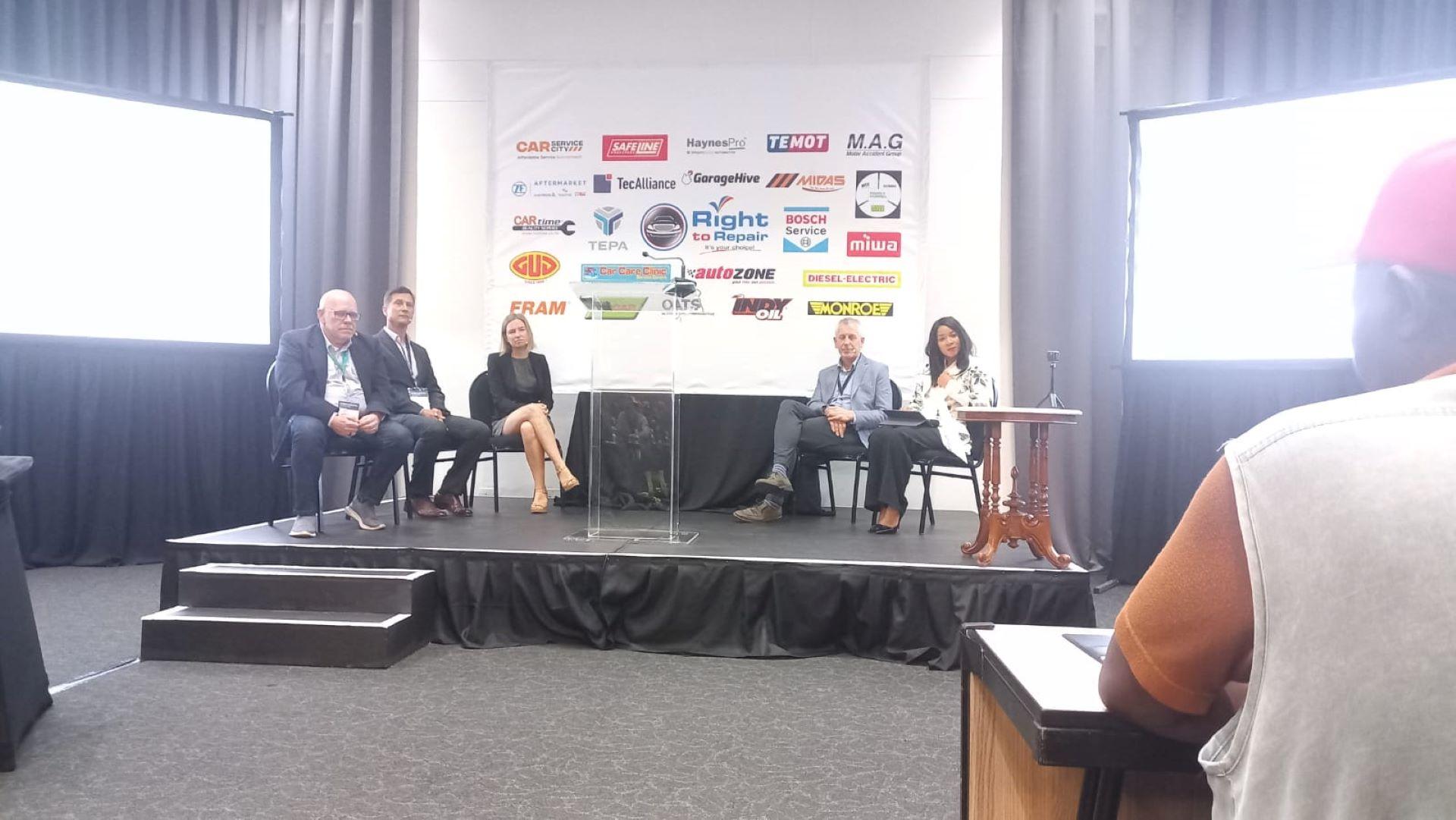
In a world where vehicles are increasingly defined by code rather than carburettors, access to accurate and timely repair data has become the lifeblood of the automotive aftermarket. Yet in South Africa, independent service providers (ISPs) continue to face mounting challenges when it comes to obtaining the technical information they need to keep vehicles safely on the road.
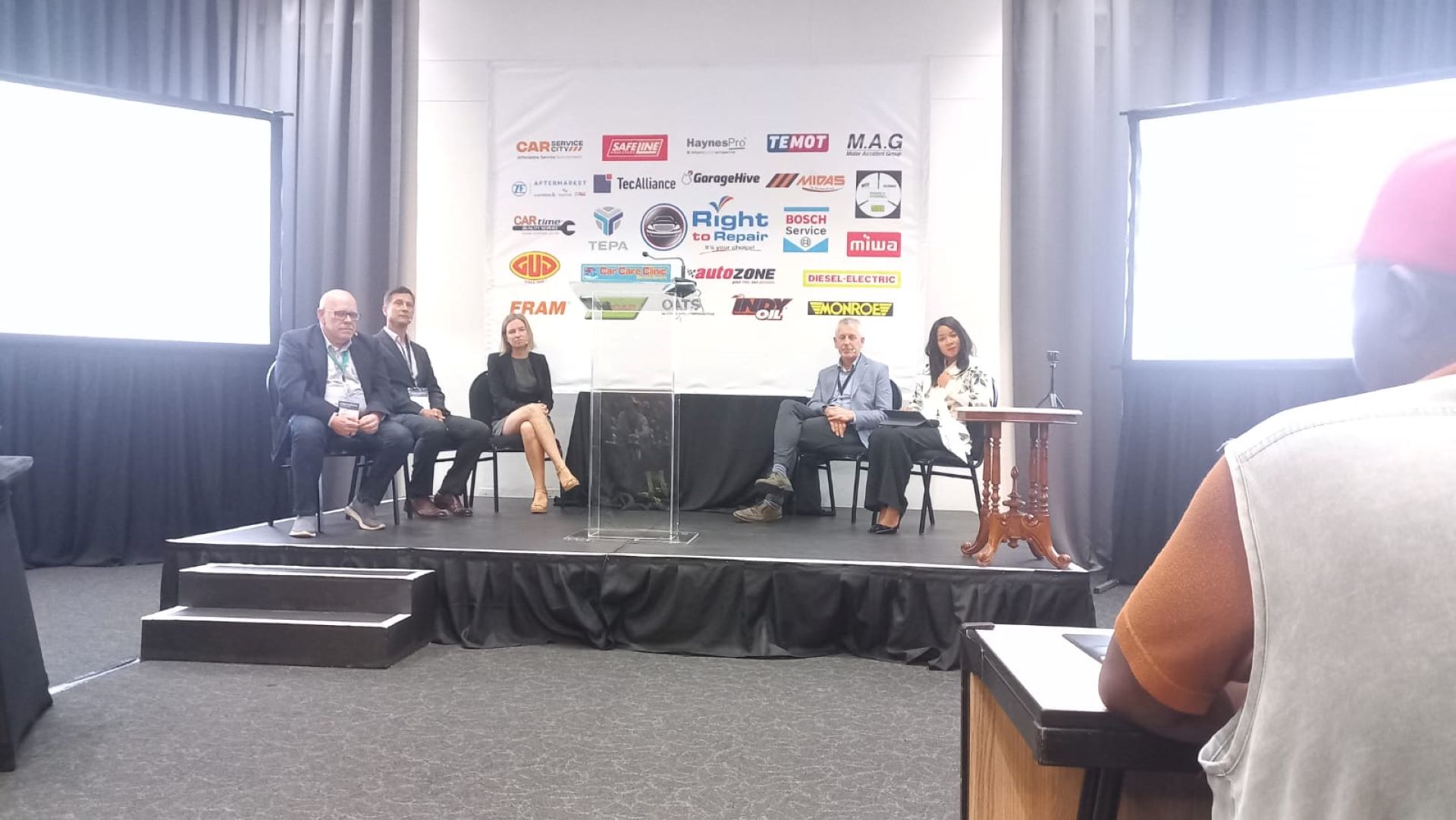
That was the central theme of the Right to Repair Conference, held this week at Automechanika Johannesburg, under the banner Access to Technical Information – A Vital Piece in the Puzzle. The discussions underscored a growing consensus: without accessible, affordable, and standardised data, there can be no truly competitive, consumer-friendly automotive ecosystem.
The Uneven Playing Field
Kate Elliott, CEO of Right to Repair South Africa (R2RSA), made it clear that while the Guidelines for Competition in the South African Automotive Aftermarket legally oblige OEMs to provide independent workshops with access to technical information, the reality on the ground is far less straightforward.
“Technical information is the lifeblood of the modern aftermarket,” Elliott said. “Without access, independent workshops cannot compete on a level playing field, which ultimately impacts consumer choice and affordability.”
The conference revealed that the missing link lies in the formal recognition of data publishers — specialist organisations that bridge the gap between vehicle manufacturers and the independent repair ecosystem.
Lessons from Europe
According to Pierre Thibaudat, Director General of the Association of Data Publishers for the Automotive Aftermarket (ADPA), Europe provides a powerful model for how structured data access can transform the industry.
“In the EU, data publishers bridge the gap between vehicle manufacturers and the independent aftermarket by aggregating, standardising, and securely distributing repair information,” Thibaudat explained. “This enables competition, innovation, and consumer choice while maintaining strict data protection standards.”
ADPA, which represents 18 members including 12 data publishers, has helped establish a single, harmonised system across Europe. Workshops can now access consistent, multi-brand repair data through one subscription, one interface, and one standardised format — saving time, money, and immense frustration.
This model is underpinned by robust legislation such as the Motor Vehicle Block Exemption Regulation, the Type Approval Regulation, and the EU Data Act. Thibaudat believes South Africa can benefit greatly from adopting a similar framework.
“It’s not about challenging OEMs’ rights,” he said. “It’s about ensuring that the aftermarket can function in a compliant, sustainable way. When data publishers are formally recognised, everyone benefits — from workshops and distributors to motorists.”
A Local Challenge with Global Implications
On South African soil, the same principles hold true — though implementation remains patchy. Dereck Knight, Technical Service and Support Africa for Bosch Automotive Aftermarket, explained that the absence of standardised data remains one of the biggest obstacles facing workshops.
“Each manufacturer provides information in different formats and at different times,” he said. “This makes it costly and complex for independent workshops to obtain accurate, up-to-date repair data.”
Knight emphasised that companies like Bosch invest heavily in encryption, secure licensing, and controlled access systems to ensure OEM data remains protected. “We fully respect the intellectual property of vehicle manufacturers,” he said. “Our goal is to make essential repair and maintenance information accessible, secure and practical – not to replicate proprietary design data.”
The Workshop Perspective
From the front lines of the workshop floor, Gunther Schmitz — Chairman of R2RSA and owner of AutoWORKS — reinforced how the lack of data access directly affects small businesses and consumers alike.
“When independents have to send vehicles to dealerships for software updates or to decode proprietary fault data, turnaround times increase and costs rise — costs that inevitably fall back on consumers,” Schmitz explained.
He argued that access to repair information is not an infringement on intellectual property, but a matter of ownership rights. “We’re not ‘stealing IP’,” he said. “It’s like buying a house. The owner receives the plans and is automatically given access to those plans for maintenance and repairs. The intellectual property still belongs to the architect. Why should it not be the same in the automotive industry?”
Closing the Gap
Elliott believes that the solution lies in updating South Africa’s Guidelines for Competition in the Automotive Aftermarket to formally recognise data publishers.
“Without formal recognition of the data publishers who make that information usable, access will remain a challenge,” she said. “We need data publishers to do the heavy lifting — obtaining, decoding, and distributing technical information — so that small business owners can focus on maintaining and repairing vehicles.”
She added that such reform would immediately level the playing field. “OEMs can trust data publishers because they already have the systems and safeguards in place to protect sensitive information. If we follow the international model and allow publishers to purchase OEM data at fair market value, it will unlock enormous value for the independent aftermarket.”
The Road Ahead
As the automotive industry accelerates into an increasingly digital future, collaboration will be key. For South Africa to build a modern, fair, and future-fit aftermarket, stakeholders must act decisively.
“The next move is clear,” Elliott concluded. “If South Africa is serious about creating a competitive and sustainable automotive aftermarket, this is the reform that will make it happen. It’s time to close the loop — and give our workshops access to the right data, through the right channels, for the right reasons.”


