



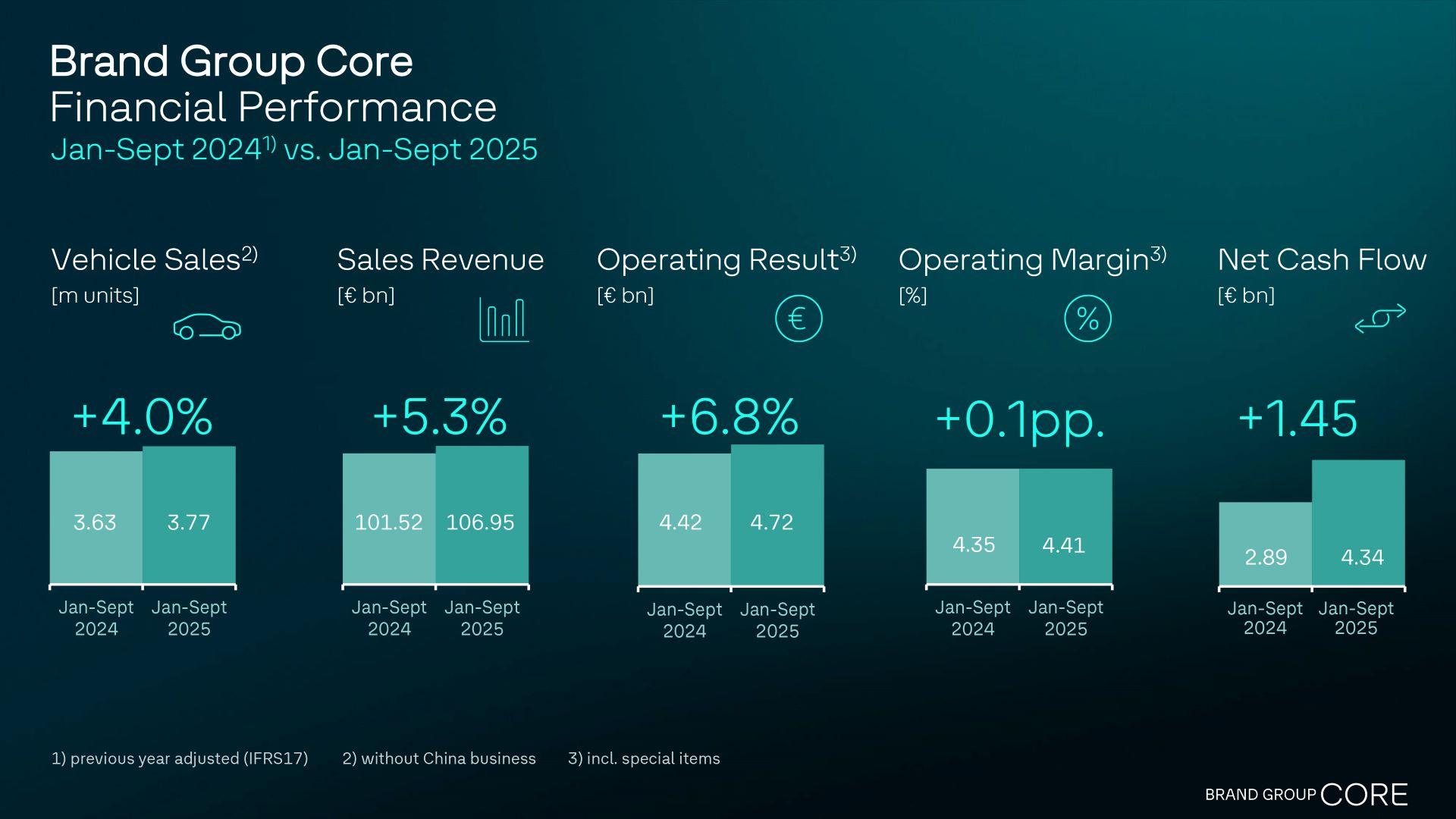
The Volkswagen Brand Group Core has demonstrated remarkable resilience and growth in the first nine months of 2025, posting significant improvements in vehicle sales, revenue, and operating results. A combination of disciplined cost management, successful model launches, and strong market demand underpinned the positive performance, despite ongoing challenges in global trade and the ramp-up of electric vehicle production.
Robust Sales Momentum Across the Portfolio
From January to September, the Brand Group Core delivered 3.77 million vehicles outside China, marking a 4% increase compared with the same period in 2024. This growth was driven by high demand for new and established models across all powertrain types. Flagship launches such as the Volkswagen Tayron, ID.7 Tourer, and the revamped Transporter/Multivan, alongside the Škoda Elroq and CUPRA Terramar, contributed substantially to incoming orders and strengthened market share across core brands.
Volkswagen Passenger Cars recorded 2.28 million deliveries, up 0.8% year-on-year, led by the popular ID. family and SUVs like the T-Cross and T-Roc. Škoda Auto achieved a striking 14.1% unit growth with 765,700 vehicles delivered, cementing its position as Europe’s third-largest automotive brand. SEAT/CUPRA also posted growth in deliveries, reaching 480,600 units, while Volkswagen Commercial Vehicles saw mixed results as it ramped up production of the new Transporter and expanded its electric vehicle offering with the ID.Buzz.
Revenue and Operating Performance
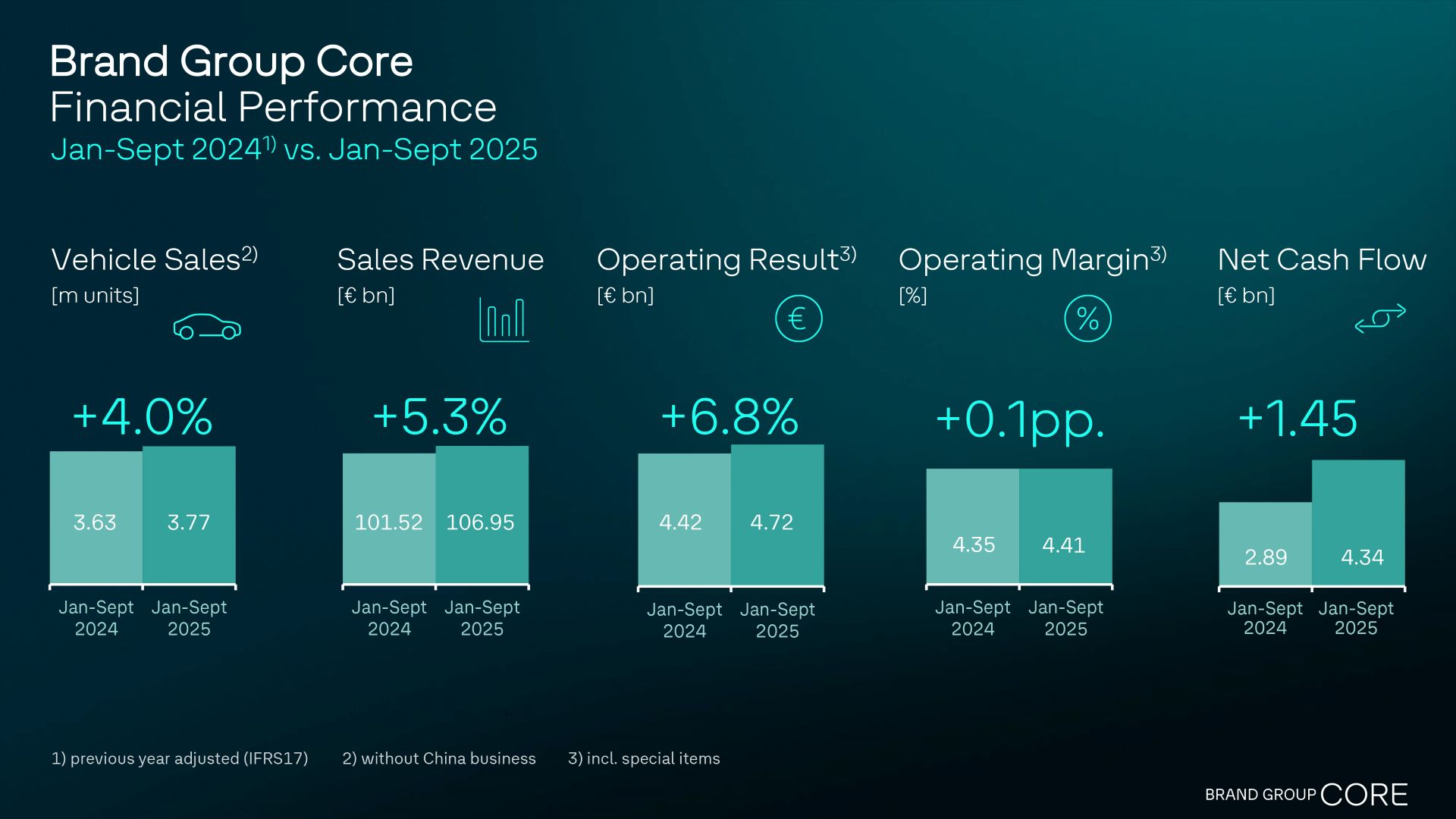
The Group’s sales revenue rose 5.3% to €106.95 billion, supported by higher unit sales and favorable product mix effects. The operating result improved by 6.8% to €4.72 billion, reflecting disciplined cost reductions from brand performance programs and synergy gains across development and production networks. The operating margin remained stable at 4.41%, with the potential to reach 5.5% excluding special items such as US import duties, restructuring costs, and the margin impact from lower-margin electric vehicles.
Volkswagen Passenger Cars’ operating result increased to €1.48 billion, while Škoda achieved €1.79 billion, underscoring the effectiveness of its “Level Efficiency +” program. SEAT/CUPRA faced margin pressures, reporting €16 million due to shifts in its BEV sales mix and European import tariffs on the CUPRA Tavascan. Volkswagen Commercial Vehicles saw its operating result fall to €220 million, reflecting the temporary impact of market launch costs and fleet CO₂ provisions in Europe.
Strategic Initiatives and Future Outlook
Looking ahead, the Brand Group Core is prioritizing efficiency improvements, cost reduction, and cross-brand synergies to secure long-term competitiveness. Volkswagen is driving the “BOOST 2030” strategy to position itself as a technologically leading volume manufacturer, while Škoda continues to expand its international footprint, notably in India, where deliveries more than doubled.
A key upcoming milestone is the launch of the cross-brand Electric Urban Car Family in 2026, managed jointly by SEAT/CUPRA. The four planned models—two from Volkswagen, one each from Škoda and CUPRA—will be built in Spain, unlocking synergy potential of over €600 million across the product lifecycle and reinforcing the Group’s commitment to affordable, sustainable e-mobility.
Despite global headwinds, from trade tariffs to the challenges of scaling electric vehicle production, the Brand Group Core has delivered strong results in the first three quarters of 2025. Strategic cost initiatives, targeted model launches, and cross-brand collaboration have enabled steady growth in sales, revenue, and profitability. With continued focus on operational efficiency and e-mobility expansion, the Group is well-positioned to navigate a complex automotive landscape and deliver long-term value for customers and stakeholders alike.


