


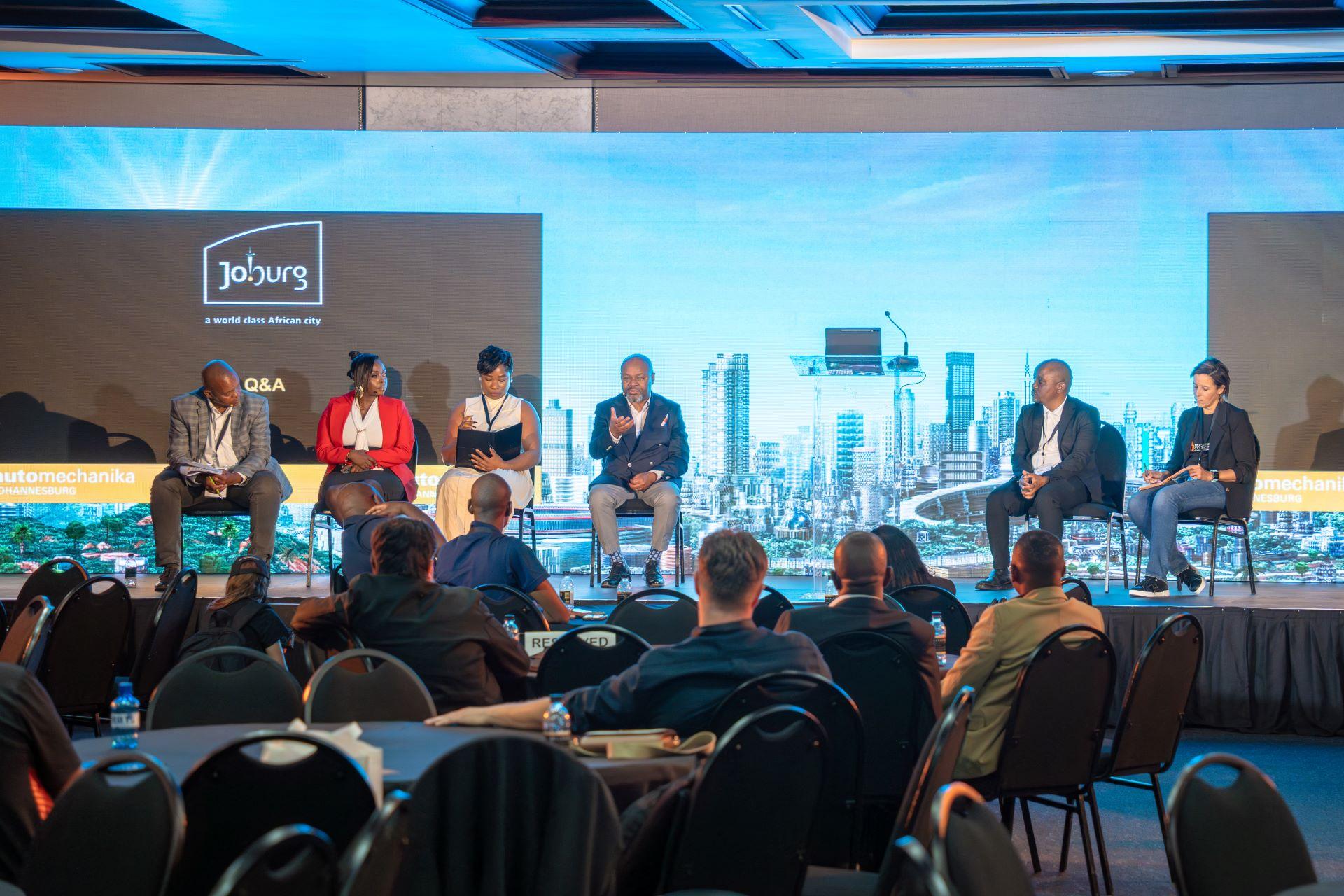
The milestone 10th edition of Automechanika Johannesburg, held from 28 to 30 October, signalled a renewed era of collaboration, innovation, and market connectivity for South Africa’s automotive aftermarket sector. Staged for the first time at the Gallagher Convention Centre, the event gathered industry leaders, policymakers, innovators, and technical specialists under one roof, transforming the venue into a strategic meeting ground for discussions that will shape the future of mobility on the continent. With an expanded footprint, upgraded facilities, and renewed industry enthusiasm, this year’s edition reinforced the trade fair’s role as the region’s most influential aftermarket platform.
The new venue played host to 307 exhibitors and supported a thriving business matchmaking ecosystem that generated 2,959 targeted meetings between buyers, suppliers, and service providers. This commercial energy was amplified by a diverse international contingent representing 34 countries, including prominent African markets such as Zimbabwe, Zambia, Botswana, Namibia, Kenya, and Nigeria, as well as global industry hubs including Germany, the United Kingdom, China, India, and the United Arab Emirates. For South Africa’s aftermarket community, this global reach illustrated the growing relevance of the local sector in international supply chains and export-driven growth strategies.
Opening the event, the Q4 CEO Breakfast set a strategic and solutions-focused tone for the three days ahead. Sponsored by SKF, Nedbank, the Gauteng Growth and Development Agency (GGDA), and the Automotive Industry Development Centre (AIDC), the breakfast underscored the importance of aligning business decision-making with long-term sustainability, technological readiness, and regulatory compliance. Programme director Victor Radebe, Chief Director of the Programme Management Office at the Gauteng Provincial Government, expertly guided the discussions, ensuring a balanced mix of visionary thinking and practical insights.
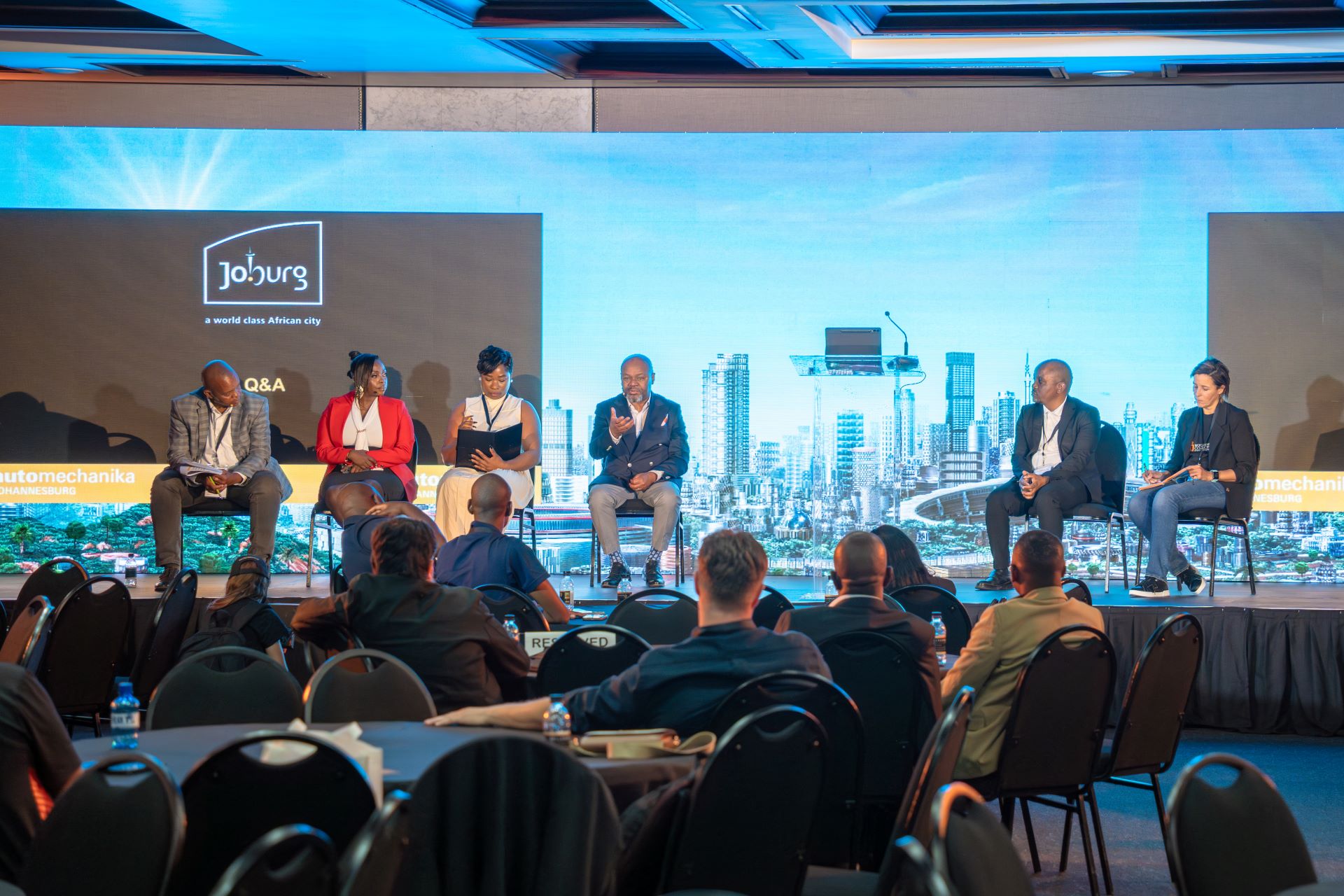
Keynote contributions framed some of the most pressing priorities facing the automotive ecosystem. Sthembiso Dlamini, Acting CEO of the GGDA, emphasised the role of the aftermarket in fostering inclusive localised growth, particularly through initiatives such as Township Economic Revitalisation, which support the formalisation and scalability of small enterprises. Her message underscored that the aftermarket is not only a commercial sector but a developmental engine capable of expanding participation and stimulating grassroots economic momentum.
Andile Africa, Chief Executive Officer of the AIDC, delivered a wide-lens exploration of global disruption and technological transformation. He encouraged stakeholders to prioritise electrification within public transport, last-mile delivery solutions, and circular production models that reduce waste while increasing operational resilience. His insights echoed broader global trends, positioning South Africa to align more closely with international sustainability and innovation standards.
Providing a technical and global perspective, Andrew Marsh, Technical Director at AutoBody Bible, unpacked the accelerating complexity of modern vehicle technologies. He highlighted an urgent skills gap within the independent aftermarket, noting that incoming new-energy vehicles are engineered with entirely unfamiliar systems, including layered high-voltage circuits that require specialised training. His message was clear: without a concerted industry-wide commitment to education and capability building, the sector risks falling behind as electrification intensifies.
Further deepening the sustainability narrative, Kudzayi Mazukana, Head of Sustainability Business and Commercial Banking at Nedbank, outlined the compelling business case for energy efficiency. From his perspective, sustainability no longer exists on a parallel track to profitability; instead, it delivers tangible financial returns through three- to four-year payback cycles and operational savings of 10 to 15 percent. Finally, Duncan Mutengwa, Acting CEO of the NRCS, reframed compliance as a strategic differentiator rather than an administrative hurdle, emphasising its role in safeguarding competitiveness, consumer trust, and export readiness.

Reflecting on the event’s significance, Michael Dehn, Managing Director of Messe Frankfurt South Africa, highlighted the longstanding global heritage of the Automechanika brand. For 54 years, he noted, Automechanika has acted as a navigational guide in a fast-changing aftermarket landscape, helping businesses understand shifting trade routes, emerging technologies, and new market corridors. In the context of global supply chain volatility and disrupted trading patterns, he positioned Automechanika Johannesburg as an essential source of orientation and opportunity.
Over its three-day programme, the event delivered a rich spectrum of knowledge-sharing, technical demonstrations, and sector-driven dialogue. Day one featured the City of Johannesburg’s Township Development Panel Discussion, which explored new pathways for integrating township-based enterprises into mainstream industrial networks. The always-popular RMI car door wrapping competition added practical flair, showcasing craftsmanship and creativity.
Day two maintained momentum with the Chartered Institute of Logistics and Transport (CILT) Conference, a Right to Repair Talk that examined the balance between consumer protection and market fairness, the MasterDrive Fleet Safety Awards, and technical competitions and demonstrations, including the Bearings International Rotake Competition and a live spray-painting showcase. The final day concluded with the Collision Repairers Association (CRA) Conference, bringing together specialists from across the repair ecosystem to address challenges ranging from technology adoption to compliance and workforce development.

Collectively, the programme placed a strong spotlight on the forces reshaping the aftermarket. Electrification and digitalisation, circular economy principles such as remanufacturing and recycling, and enhanced regional integration through the Africa Continental Free Trade Area (AfCFTA) all featured as core themes. Many sessions also explored the importance of public-private partnerships in establishing innovation ecosystems capable of accelerating competitiveness, investment, and job creation.
As the event drew to a close, Dehn affirmed Automechanika Johannesburg’s commitment to leading the continent’s aftermarket evolution. He reflected on the energy, collaboration, and technical curiosity that defined this year’s edition, noting that these qualities form the foundation for a sector ready to navigate disruption with confidence. The announcement that Automechanika Johannesburg will return from 27 to 29 October 2026 reinforces the event’s long-term vision and the industry’s demand for a centralised, future-focused marketplace.
For exhibitors looking to secure their presence at the 2026 edition, more information is available at automechanikasa.co.za, or by contacting Tracy Gounden at [email protected].


