



The automotive industry is on the cusp of a transformative era, one defined by the convergence of artificial intelligence (AI), robotics, automation, and flexible manufacturing solutions. As manufacturers transition to the mixed production of internal combustion engine (ICE), hybrid, and electric vehicles (EVs), the drive for advanced manufacturing technologies has never been more urgent. The latest Automotive Manufacturing Outlook Survey, conducted by ABB Robotics in partnership with Automotive Manufacturing Solutions, underscores the pivotal role that these technologies will play in overcoming industry challenges and accelerating production capabilities.
Embracing the Smart Factory
The push towards “Smart Factories” is emerging as the defining step forward for global automotive manufacturers and suppliers. According to Joerg Reger, Managing Director of ABB Robotics’ Automotive Business Line, the integration of advanced robotics, AI, and digital twinning technologies is accelerating this evolution. “These technologies are forming the building blocks of Smart Factories, enabling carmakers to introduce new models faster and more cost-effectively, while drastically reducing energy consumption and meeting sustainability targets,” Reger asserts. This vision is already being realized in automotive plants across the world, as manufacturers leverage cutting-edge technologies to enhance production efficiency, flexibility, and sustainability.
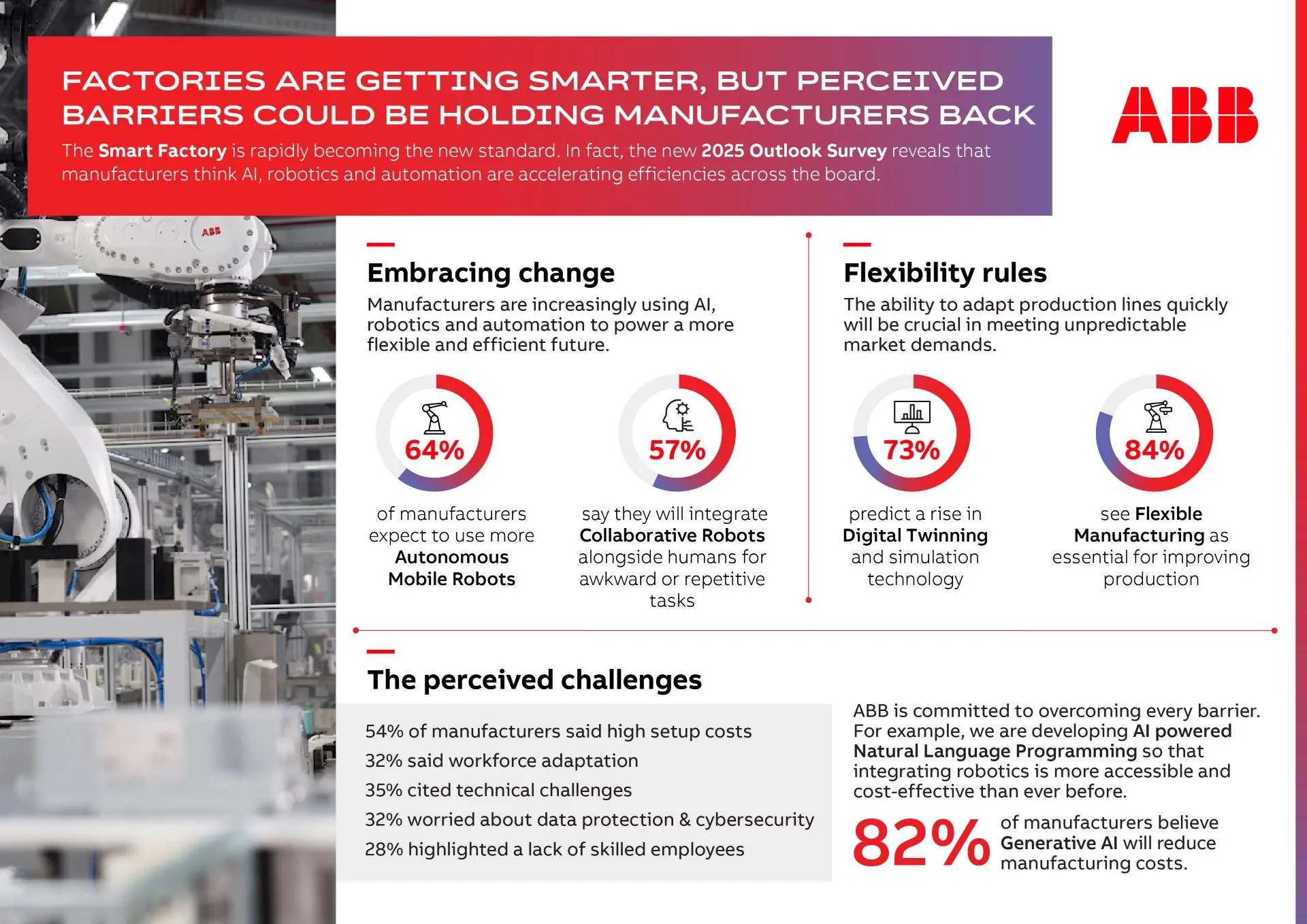
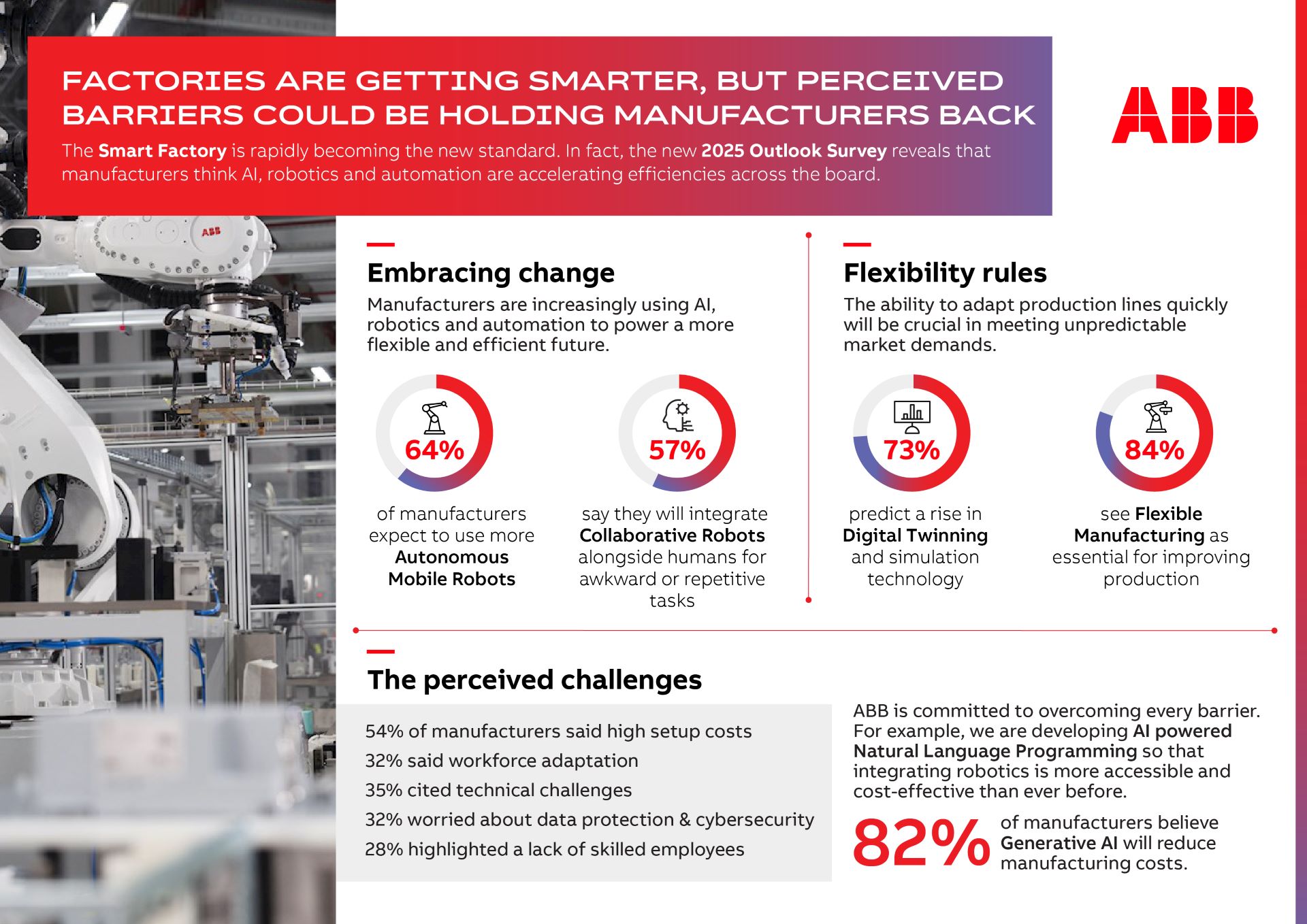
The survey results demonstrate that the industry is poised for significant change. Among the technologies gaining widespread traction are autonomous mobile robots (AMRs) and collaborative robots (cobots), both of which promise to transform the manufacturing floor. In fact, 64% of respondents believe that AMRs will play an increasingly significant role in automotive production, while 57% anticipate greater use of cobots working alongside human workers to handle repetitive assembly tasks.
AI and Automation: Key Drivers of Transformation
AI, in particular, is poised to revolutionize automotive manufacturing, as 82% of survey participants agreed that generative AI could significantly reduce production costs, improve quality, and streamline the introduction of new vehicle models. By harnessing the power of AI, automotive manufacturers can optimize everything from vehicle design to production scheduling, ensuring that the right parts arrive at the right time and that every vehicle meets stringent quality standards.
Equally important is the rise of digital twinning and simulation technologies. Digital twinning—creating virtual replicas of physical processes—enables manufacturers to simulate and optimize production before implementing changes on the shop floor. The survey reveals that 73% of respondents expect the use of digital twins to increase, citing the technology’s potential to enhance decision-making, reduce downtime, and improve overall efficiency.
The Need for Flexible Manufacturing
The complexities of producing multiple vehicle types, including ICE, hybrid, and EVs, on the same production line are another challenge facing manufacturers today. The industry’s ability to remain agile in the face of fluctuating demand and short product lifecycles hinges on flexible manufacturing capabilities. ABB Robotics has been a key player in advancing this concept, which allows manufacturers to adapt to shifting consumer preferences or market conditions without the need for significant capital investment.
Reger explains, “Flexible manufacturing is essential for managing the complexities and financial challenges that many carmakers are currently facing. It enables manufacturers to scale production capacity quickly and efficiently, particularly when demand for specific models or powertrains surges.”
Survey results support this view, with 84% of respondents highlighting the importance of flexible manufacturing over the next five years. This flexibility is increasingly seen as a critical success factor in the face of unpredictable demand for various vehicle types and the need to maintain quick production cycles.
Navigating the Challenges of Change
Despite the optimism surrounding these advancements, the industry is not blind to the hurdles that lie ahead. The high initial costs associated with implementing new technologies—cited by 54% of survey respondents—remain a significant barrier. Furthermore, technical challenges, cybersecurity concerns, and the need for skilled workers are all factors that manufacturers will need to address as they transition to more advanced, technology-driven production environments.
Daniel Harrison, Chief Analyst for Automotive Manufacturing Solutions, emphasizes that while the industry is well aware of the technologies that hold the most promise, there remains a critical need to address the human factor. “Concerns over workforce adaptation and the lack of skilled employees in IT were highlighted by respondents. As we move towards smart factories, industry partners must play a crucial role in training, education, and facilitating the adoption of AI and other technologies in a way that is both accessible and non-disruptive,” he explains.
The Future of Automotive Manufacturing: A Vision of Collaboration
One of the most exciting developments in the push towards smart factories is the continued integration of AI with robotics. ABB Robotics is at the forefront of this shift, particularly with its advancements in natural language programming. In 2024, ABB’s AI Start-Up Challenge recognized T-Robotics and Mbodi for their innovations in enabling more intuitive communication between humans and machines, further improving the efficiency and flexibility of production lines.
Equally groundbreaking are the advancements in autonomous planning capabilities. ABB’s AMRs are now equipped with VSLAM (visual simultaneous localization and mapping), giving them environmental awareness and the ability to make real-time decisions. These robots can navigate complex automotive manufacturing environments, perform tasks such as inventory tracking, and collaborate safely with human workers—all while seamlessly communicating with other robots on the production line.
Conclusion: Engineered to Outrun
As the automotive industry transitions towards a future dominated by mixed manufacturing—spanning ICE, hybrid, and electric vehicles—advanced technologies such as AI, robotics, and digital twinning will continue to play a central role in shaping this new landscape. However, the journey towards fully integrated Smart Factories is not without its challenges. The key to success will be finding a balance between cutting-edge technological solutions and addressing the workforce needs of the future.
ABB Robotics remains committed to supporting the industry’s journey towards a more flexible, sustainable, and efficient manufacturing future. With its comprehensive portfolio of robotics, automation, and AI solutions, ABB is helping automotive manufacturers of all sizes meet the demands of the next generation of vehicle production, ultimately driving the industry forward.
ABB, with its rich 140-year history, continues to shape the future of the automotive industry by providing cutting-edge technologies that enable manufacturers to outperform. Engineered to Outrun—ABB is more than just a technology provider; it’s a partner in the industry’s journey to a smarter, more sustainable future.


