



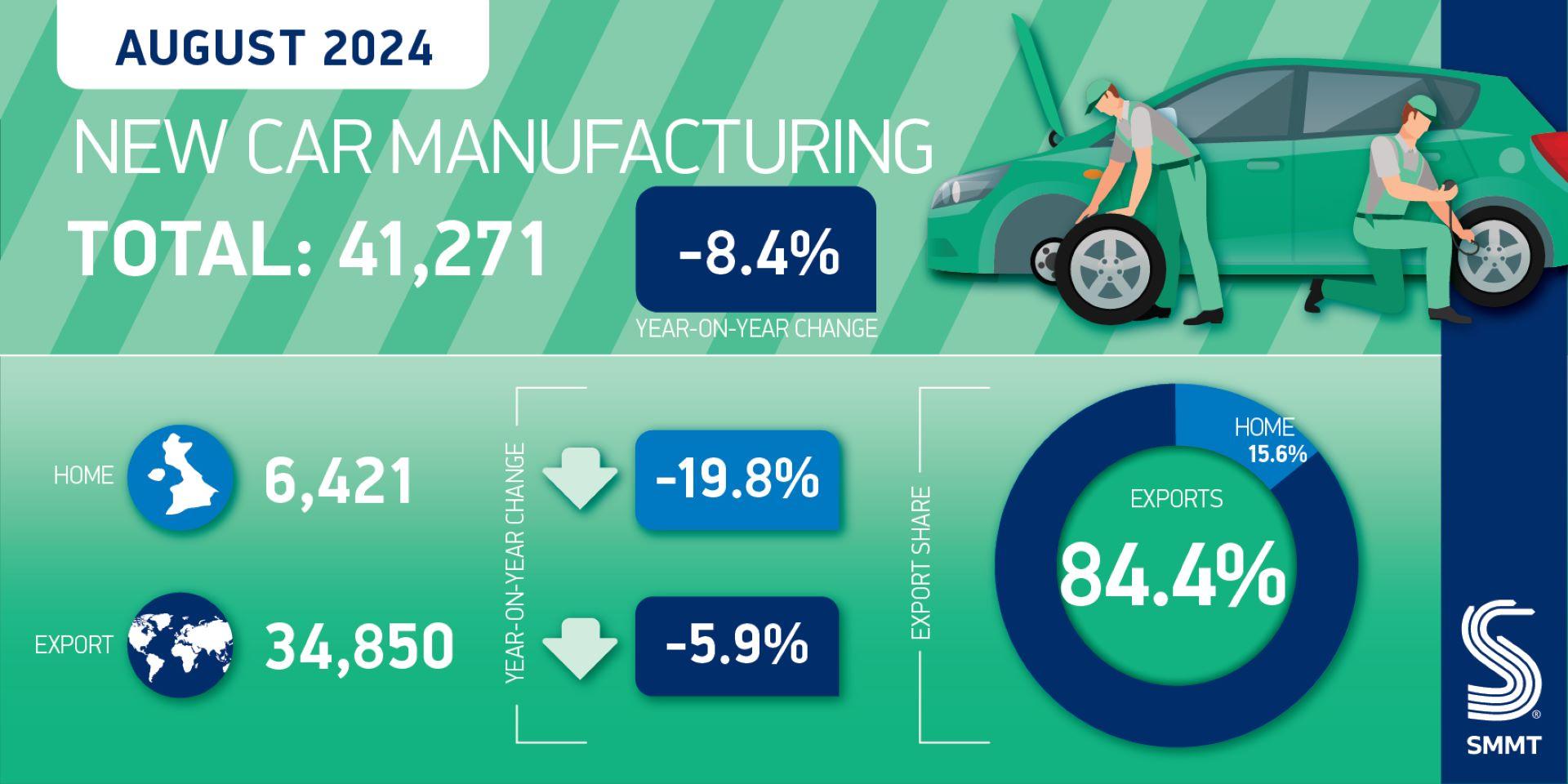
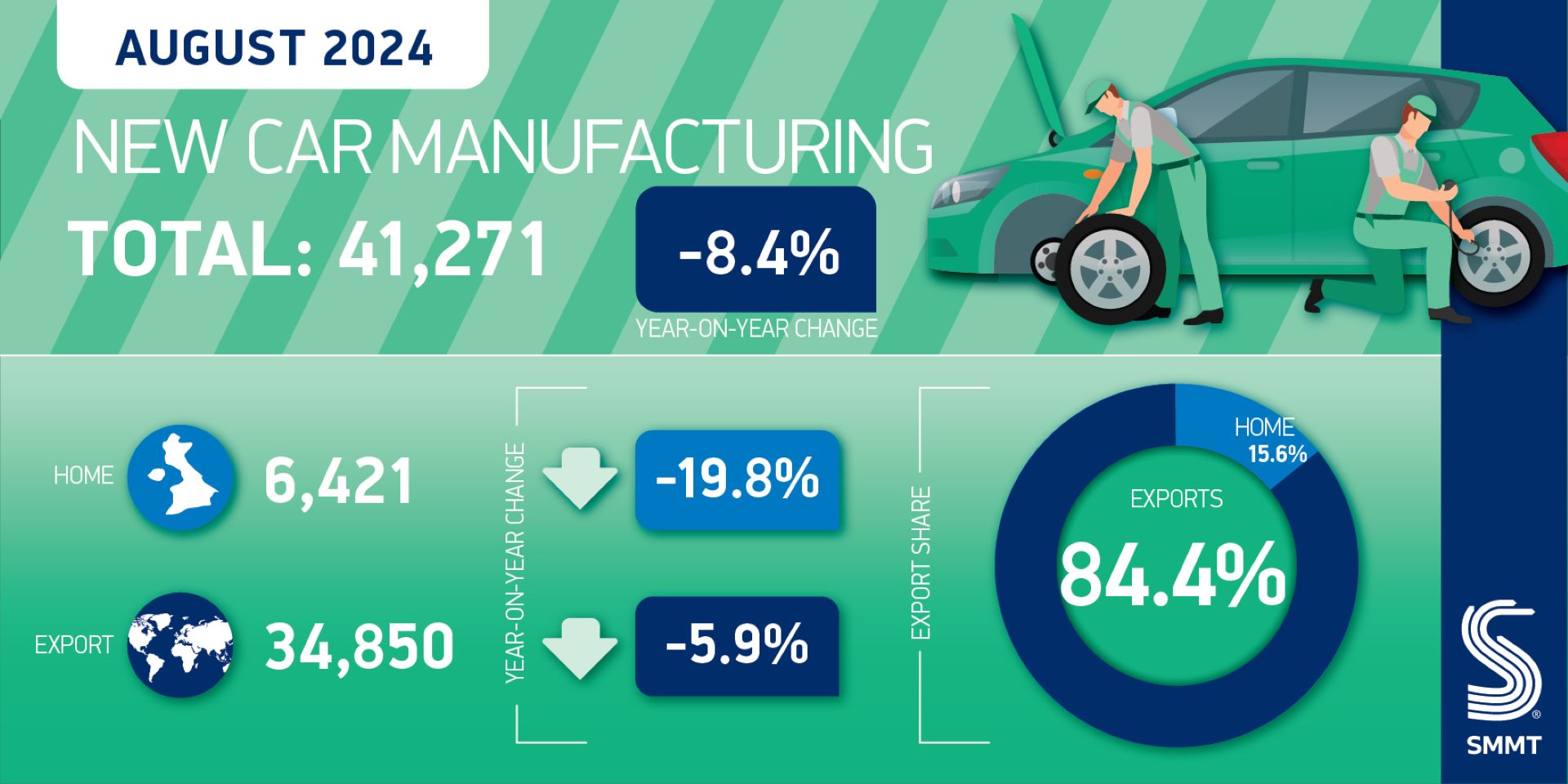
UK car manufacturing continued its downward trend in August 2024, with production falling by -8.4% compared to the same month last year. The traditionally quiet ‘summer shutdown’ period saw 41,271 new cars rolling off the assembly lines, marking a decline of 3,781 units, according to the latest figures from the Society of Motor Manufacturers and Traders (SMMT).
The contraction in production reflects an ongoing trend, driven largely by the industry’s transition to electric vehicles (EVs) following the £24 billion in investments announced last year. UK factories are in the midst of winding down production of older models while retooling for the next generation of vehicles, many of which will be electrified.
While August saw an overall dip, the domestic market took the hardest hit, with production for the UK plummeting by -19.8%. This steep drop is somewhat exaggerated by the relatively low output volume during the month, given that much of the UK’s car production is geared towards export markets. By contrast, exports showed a more modest decline of -5.9%, driven largely by model changeovers for European Union markets.
The EU continues to be the UK’s largest automotive export destination, accounting for 49.8% of total exports. Other key markets include the US (17.0%), China (6.5%), Japan (5.1%), and Australia (4.4%). Growth was observed in both the American and Japanese markets, providing a small silver lining amidst broader declines.
Electrified vehicle production—which includes battery electric, plug-in hybrid, and hybrid models—saw a significant drop of -25.9%, reducing its share of total output to 29.6%. This decline in electrified vehicle production is anticipated to be temporary as UK plants complete their retooling processes and new electric models come online. The long-term outlook for EV production remains positive, buoyed by record investment and consumer demand for sustainable transport.
Looking at the year-to-date figures, UK car production has fallen by -8.5%, with a total output of 522,823 units. Despite the domestic decline in August, production for the UK market remains up by 12.3% for the year, reflecting strong performance in earlier months.
SMMT Chief Executive Mike Hawes commented on the figures, noting that the summer slowdown was expected due to the seasonal shutdowns and factory preparations for new models. However, he expressed optimism for the sector’s future: “The sector remains optimistic about a return to growth, with record levels of investment announced last year.”
Hawes emphasized that realizing these investments—and ensuring the UK’s automotive sector remains competitive—will require government support. “We look forward both to the Chancellor’s Autumn budget and the government’s proposed Industrial Strategy as critical opportunities to demonstrate that it backs auto. Labour’s Automotive Sector Plan, launched at their Party Conference a year ago, should be the blueprint with its proposals for cheaper, green energy, skills investment, and the cultivation of healthy markets here and abroad,” he added.
As the UK car industry navigates this period of transition, the focus remains on embracing electrification, securing further investment, and maintaining competitiveness on the global stage. The steps taken in the coming months, both by industry leaders and policymakers, will be crucial in shaping the sector’s future and ensuring its continued contribution to the UK economy.


