Twisted Automotive, the Yorkshire-based engineering house celebrated for its meticulous reinterpretations of classic British 4x4s, has unveiled a bold new chapter in its story with the launch of the TRRC. For the first time in its 25-year history, the company has turned its attention away from the Defender and toward another icon of British motoring: the two-door Range Rover Classic.
Known for its uncompromising approach to craftsmanship and engineering, Twisted has applied its signature “anti-ordinary” philosophy to a vehicle that defined luxury off-roading long before the segment existed. The TRRC, short for Twisted Range Rover Classic, is a deeply personal project for founder Charles Fawcett, who traces the inspiration back to vivid childhood memories of the 1980s.
For Fawcett, the Range Rover Classic was once the undisputed king of the road. He recalls one particular example from his youth that left a lasting impression. Finished in terracotta brown and wearing fibreglass extended wheel arches, the vehicle sat proudly on white Weller eight-spoke wheels wrapped in General Grabber tyres. His father had even fabricated a front valance using an MGB GT spoiler. That combination of ingenuity and character would become the emotional blueprint behind the TRRC.
“When I think back to the 1980s, my father always seemed to have a two-door Range Rover, and there was one particular one that stood out,” says Fawcett. “Today, the TRRC exists out of unapologetic nostalgia, recreating something I remember from when I was a tiny boy. I think many customers will relate to that feeling.”
Beneath its carefully sculpted exterior, the TRRC is engineered to deliver modern performance that far exceeds anything imagined by the original Range Rover’s designers. At its heart lies a 6.2-litre LT1 V8 producing 500hp, paired with an eight-speed automatic transmission. The drivetrain transformation is supported by Twisted’s extensive engineering experience developed through decades of reworking Land Rover Defenders.
Harnessing this power required careful chassis tuning. Twisted engineers reworked the suspension and bushings to achieve a delicate balance between precision and comfort. The result, according to Fawcett, is a driving experience that feels sharp and communicative without sacrificing the supple ride that defined the Range Rover’s reputation.
“We spent an age tweaking the bushings so that you got something that was sharp and super drivable but not too harsh,” he explains. “A Range Rover needs to be supple.”
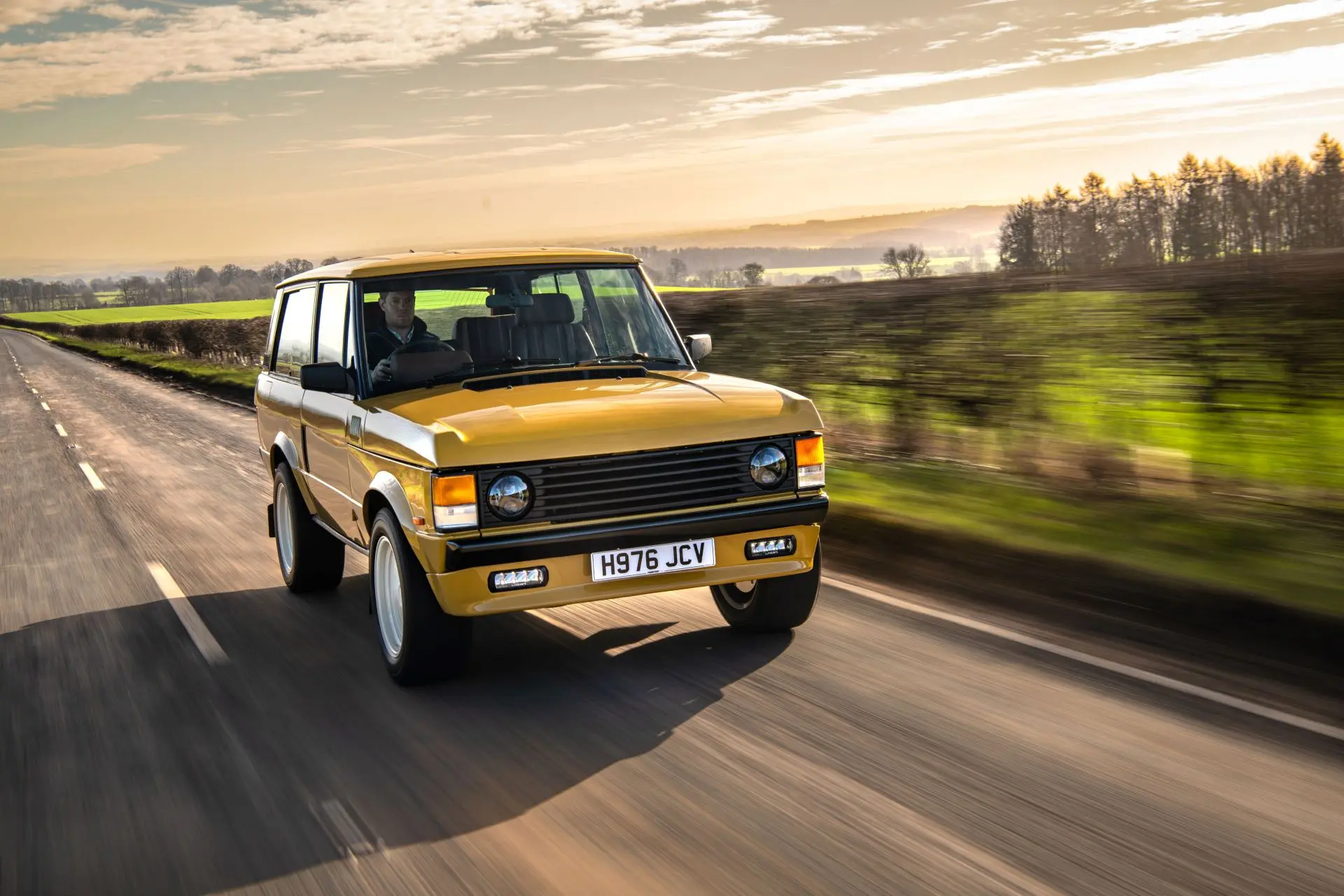
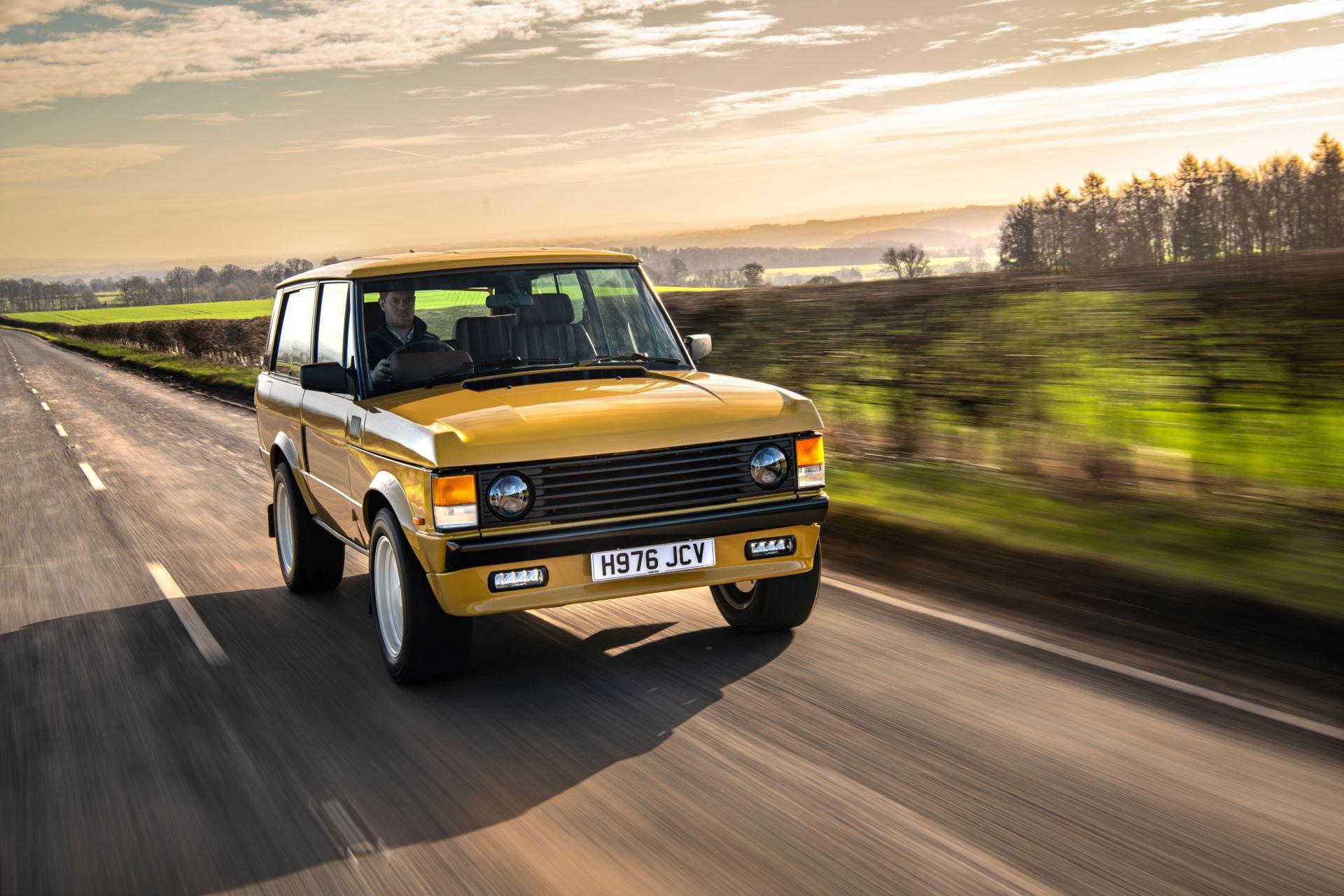
Visually, the TRRC represents a curated interpretation of the Range Rover Classic across its various generations. Twisted has blended design elements from different eras, pairing a 1970s-style front bumper with the grille and headlight surrounds associated with 1990s models. The approach reflects the brand’s belief that the best restomods celebrate heritage rather than simply recreating it.
Every external panel on the TRRC is newly crafted from hammer-formed aluminium using bespoke tooling developed specifically for the project. The attention to detail extends to panel fitment, where Twisted’s engineers pursued exceptionally tight tolerances in pursuit of a flawless finish.
The C-pillar treatment introduces another distinctive option. While traditional Range Rover Classics featured the brand’s signature floating roof effect, Twisted offers customers the choice of colour-coding the C-pillar to emphasise the muscular two-door silhouette. Additional sculpted vents integrated into the pillar panel further reinforce the TRRC’s bespoke identity.
Subtle stance adjustments also play a role in the design. The vehicle sits slightly lower at the nose, giving the classic profile a more purposeful posture while remaining faithful to the proportions that made the original design so enduring.
Inside the cabin, Twisted has carefully rethought the driving position and materials while preserving the spirit of the original vehicle. The front seats are mounted lower than in the factory configuration, placing the driver’s eyeline in the upper portion of the windscreen and maximising the panoramic visibility that has always been one of the Range Rover’s defining characteristics.
In keeping with early Range Rover construction methods, the company has chosen to attach soundproofing to the underside of the carpet rather than the painted body shell. This unusual detail allows owners to lift the carpet and reveal the immaculate paintwork beneath, a nod to the beautifully finished metal surfaces of early examples. Customers can even leave the rear inner arches exposed if they wish to celebrate the craftsmanship.
The interior itself receives a comprehensive upgrade, with extended premium carpeting, leather trimming across interior surfaces, heated front seats and a discreet eight-channel Twisted audio system integrated with a single-DIN infotainment unit. The aim is to deliver contemporary comfort without diluting the minimalist charm of the original design.
Each TRRC begins life as a carefully sourced 1990 to 1992 two-door Range Rover Classic donor vehicle, available in either left- or right-hand drive configuration. The chassis and axle casings are stripped, blasted and e-coated in a protective satin black finish before a complete body-off restoration is carried out. Upgraded differentials, a progressive suspension system and a Twisted braking package featuring six-piston front and four-piston rear calipers ensure the platform is capable of handling its significant power increase.
Production will remain deliberately limited. Twisted plans to build no more than 12 examples of the TRRC each year, with every vehicle undergoing a 500-mile validation programme before delivery. With prices starting at £350,000 and all 2026 build slots already reserved, the company’s newest creation is clearly resonating with collectors worldwide.
“The Range Rover Classic is a British icon,” says Fawcett. “It’s not for everyone, and that’s the point. As with all Twisted products, not everyone will want one and of those that do, not everyone will get one.”
For Twisted Automotive, the TRRC represents more than just a new product. It is a nostalgic tribute, an engineering statement and a reminder that some legends never truly fade—they simply return, reimagined for a new generation.