



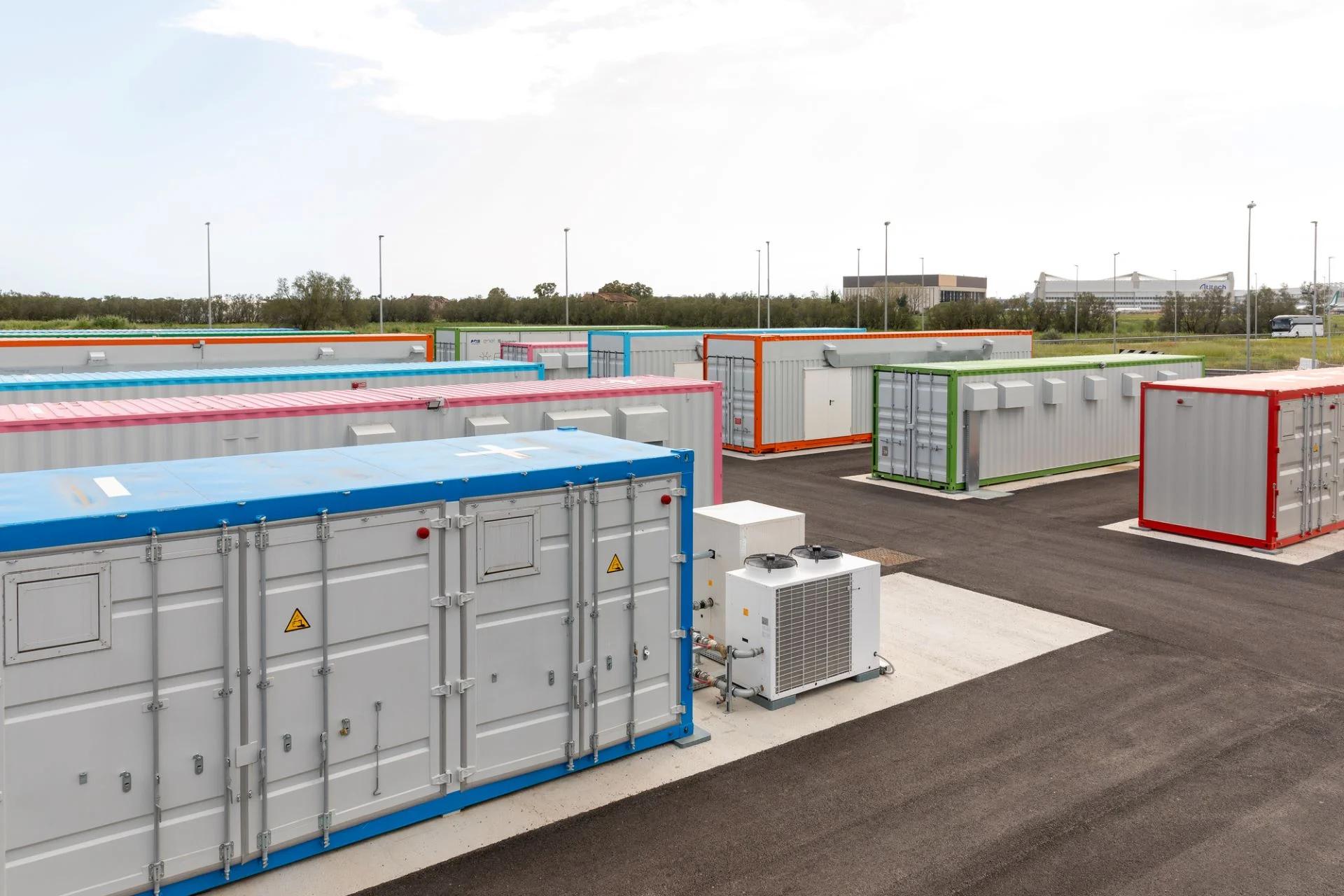
Rome, Italy – In a bold demonstration of sustainable innovation, Nissan has helped transform what was once considered automotive waste into a powerful solution for clean energy. As part of Aeroporti di Roma’s (ADR) ambitious net-zero roadmap, 84 reconditioned Nissan LEAF batteries are now at the heart of a new Battery Energy Storage System (BESS) designed to support Italy’s busiest international airport – Fiumicino – in its transition to renewable energy.
This transformative initiative, aptly named ‘Pioneer’, is co-funded by EU Innovation Funds and developed in collaboration with energy provider Enel and system integrator Loccioni. It brings together energy and mobility in a sophisticated ecosystem that aligns with ADR’s mission to reach net-zero emissions by 2030.
From Road to Grid: Giving EV Batteries a Second Life
The BESS boasts a total storage capacity of 10 MWh, with Nissan contributing 2.1 MWh through 84 requalified Gen 3 and Gen 4 LEAF batteries. Sourced from high-mileage electric vehicles and warranty returns, these batteries have undergone rigorous testing and certification to meet stringent performance and safety standards. Now deployed in a fixed infrastructure, their second life is expected to span 6–7 years of daily operation – proving the endurance of EV technology even beyond the road.
Soufiane El Khomri, Nissan Energy Director for the AMIEO region, remarked:
“This project not only demonstrates the long-term viability of repurposed EV batteries in demanding environments, but underscores Nissan’s commitment to sustainable end-of-life battery management.”
Nissan’s contribution goes beyond battery supply. The company is also involved in the technical integration of second-life batteries, lifespan simulation, and offers warranties to ensure performance reliability. At the conclusion of their second life, Nissan will oversee the responsible recycling of the units – completing a closed-loop lifecycle for its EV battery technology.

Solar Synergy: Clean Power at Scale
The BESS is designed to operate in synergy with a 55,000-panel solar farm situated on-site, which is expected to generate a remarkable 31 GWh of renewable energy annually. This combination of solar and storage will ensure a stable and flexible power supply to the airport’s terminals and infrastructure – significantly reducing reliance on the national grid and fossil fuels.
In practical terms, the system will provide dynamic support to the airport’s grid, enhancing energy resilience while driving measurable progress toward decarbonisation goals. It’s a system built not just for today, but for the sustainable infrastructure of the future.
Partnership with Purpose
The collaboration among Nissan, Loccioni, and Enel reflects a shared vision of innovation through circularity. The same team has already delivered similar second-life battery solutions – including the Melilla Energy Storage System in Spain and the Nomadic LabAlliance system – proving the scalability of this approach.
Enrico Loccioni, President and founder of Loccioni, describes the initiative as a vital link between two decarbonising sectors:
“With Pioneer, we have built a bridge between two worlds on their way to decarbonisation: energy and mobility. At the centre always remains quality – of people, of projects, of innovations – which is another way of saying sustainability.”
A Model for the Future
As energy systems grow more decentralised and renewable-focused, the role of second-life battery applications becomes increasingly significant. Nissan’s strategy of reusing and eventually recycling its EV batteries helps reduce material waste, cut emissions, and provide cost-effective energy solutions not only at industrial scale but also for residential use – offering backup power options for homes during outages.
El Khomri concluded:
“We are turning potential waste into valuable energy assets. Our re-use strategy not only supports large-scale industrial projects like ADR’s Fiumicino Airport but opens the door for more localised energy solutions.”
In a world rapidly shifting toward cleaner, smarter infrastructure, Pioneer stands as a powerful case study in circular energy innovation. By closing the loop on EV batteries, Nissan isn’t just extending their lifespan – it’s reimagining their purpose. And in doing so, it’s helping Europe’s airports, cities, and communities chart a more sustainable course into the future.


