




In the first half of 2024, Stellantis Pro One has emerged as a formidable leader in the commercial vehicle sector, capturing the top spot across Europe, South America, and the Middle East & Africa. This remarkable achievement underscores the strength of Stellantis’ strategic vision and product innovation, aligned with the company’s ambitious Dare Forward 2030 targets.
Global Market Leadership
Europe 30 (EU 30)
Stellantis Pro One solidified its position as the No. 1 commercial vehicle manufacturer in the EU 30, boasting a market share of over 28.5% and a year-on-year volume increase of 4%. In Germany, the growth was particularly impressive, with a 4-percentage-point increase in market share and sales surging by more than 45%. Stellantis Pro One also achieved BEV (Battery Electric Vehicle) leadership with a 31.9% market share. Notably, approximately 70% of recreational vehicles (RVs) on European roads are based on the Fiat Professional Ducato Motorhome Base.
To enhance operational efficiency, Stellantis introduced the “My Tasks” feature on its commercial vehicles in Europe, enabling drivers and fleet managers to streamline daily operations through schedule adjustments, better productivity, and improved coordination within the fleet.
Middle East & Africa
Stellantis Pro One achieved the No. 1 position in the Middle East & Africa, securing a 22.2% market share in commercial vehicles and a 30.8% share in the van segment. Fiat also performed strongly, ranking as the No. 2 brand in van sales with a 16.7% market share. The Fiat Fiorino emerged as the best-selling van in the region, holding an 11.1% segment share.
South America
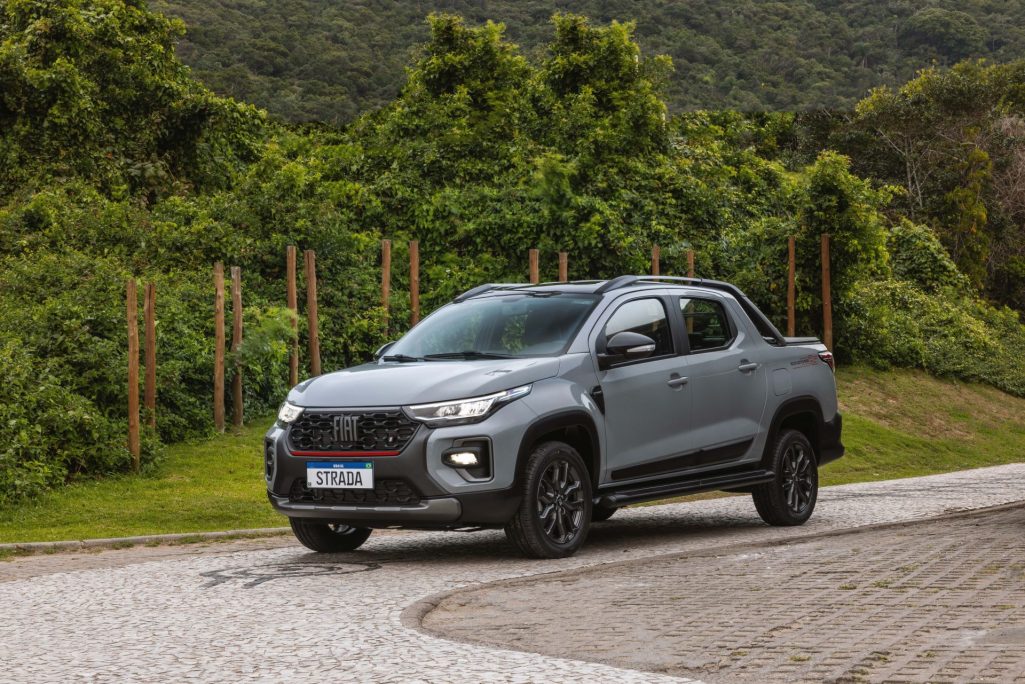
In South America, Stellantis Pro One dominated the market with significant shares in LCV (Light Commercial Vehicle), pickup, and van sales, achieving 31.1%, 34.1%, and 33.3% market share, respectively. Fiat, Peugeot, and Citroën were among the top brands, with Fiat leading in LCV, pickup, and van sales. The Fiat Strada was the most sold LCV and pickup, while the Fiat Fiorino led van sales.
The introduction of the new Fiat Titano, a 1-ton pickup, further strengthened Stellantis Pro One’s market presence. The Ram brand also saw substantial growth, increasing its pickup market share to 5.9% and rising three places in the rankings due to the success of the Ram Rampage.
North America
In North America, Stellantis Pro One secured the No. 3 position in the region, with Ram being one of the top three pickup brands in the U.S. and Canada. January saw the launch of the new Ram ProMaster EV Delivery, the brand’s first fully electrified vehicle, with the ProMaster EV Cargo van announcement following soon after.
India & Asia Pacific
In Australia, Ram dominated the 1-ton-plus pickup segment with a 40% market share, while Stellantis increased its van market share to 6.7%, up from 5.8% the previous year. The renewed Pro One van lineup, featuring models from Citroën, FIAT Professional, Opel, Peugeot, and Vauxhall, showcased second-generation electrification and full connectivity for vans and pickups.
Innovative Technology and Electrification
Stellantis Pro One’s large van lineup now includes the new MultiJet 4.0 engine and an innovative AT8 8-speed transmission. The MultiJet 4.0 engine, renowned for its durability, delivers an impressive 450 Nm of torque, making it the best in its class for front-wheel-drive large vans. Additionally, the advanced dual-circuit exhaust gas recirculation system enhances reliability, performance, and emissions.
The AT8 transmission offers a 10% reduction in CO2 emissions compared to the current automatic version, thanks to its well-balanced, efficient, and precisely controlled torque. These advancements demonstrate Stellantis Pro One’s commitment to sustainability and innovation in the commercial vehicle sector.
Stellantis Pro One’s impressive performance in the first half of 2024 reflects the company’s strategic foresight and dedication to innovation. By leading global markets and continuously enhancing its product lineup with advanced electrification and connectivity features, Stellantis Pro One is well-positioned to achieve its Dare Forward 2030 goals and redefine the future of commercial vehicles.


