



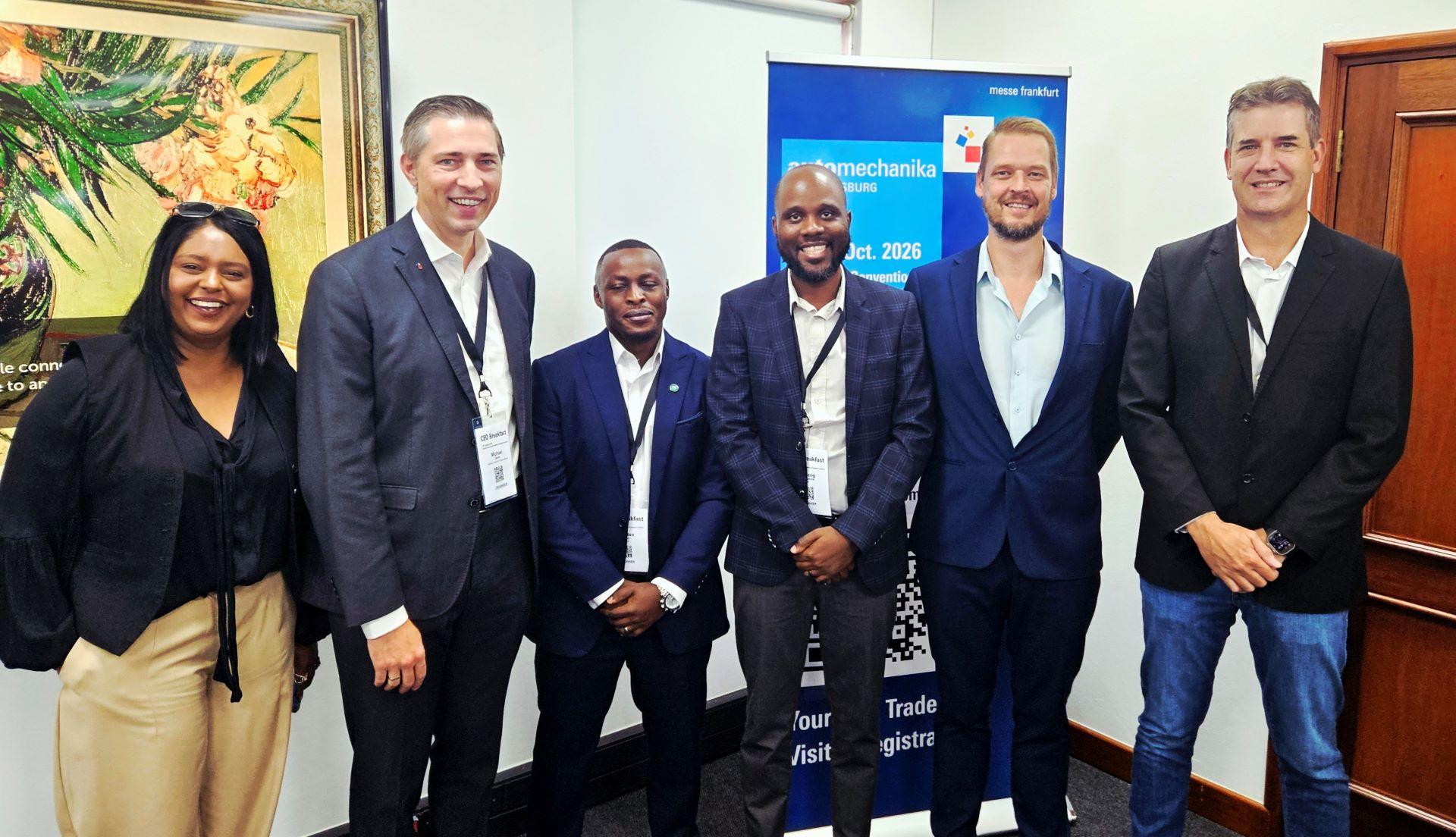
Johannesburg – South Africa’s automotive sector must confront a deepening skills crisis and rapid technological disruption to remain competitive, industry leaders warned at the first Automechanika Johannesburg CEO Breakfast of 2026, held at the South African German Chamber of Commerce.
In his inaugural address as CEO of AHK Southern Africa, Maximilian Butek praised the local industry’s strategic strengths, highlighting South Africa’s established supplier network and deeply integrated supply chain. “We must actively promote and protect this ecosystem as a differentiator,” he said, emphasizing the need to leverage these advantages in a crowded global market.
Skills Crisis Poses Economic and Safety Risks
Ipeleng Mabusela, CEO of the Retail Motor Industry Organisation (RMI), underscored the urgent need to tackle the country’s automotive skills shortage. Despite an increasing number of apprentices, the number of artisans has declined by 31% over the past decade. “Mobility cannot be realised without addressing skills,” Mabusela stressed, warning that the skills gap affects economic mobility, safety, and transformation.
Mabusela highlighted that the auto retail and aftermarket segment accounts for roughly 70% of employment across the automotive value chain, with aftermarket employment growing at a compound annual growth rate of 1.2% between 2020 and 2024. He called for “collaboration with intent” between industry, government, and training institutions to scale existing training and enterprise pipelines effectively.
Structural Shifts Reshape the Market
Paul-Roux de Kock, Chief Analytics Officer at Lightstone, detailed post-COVID recovery trends and structural shifts in the light vehicle market. Increasing brand diversity, changing consumer demand patterns, and evolving pricing dynamics are reshaping the competitive landscape. “The market is getting more crowded and more complex,” he said, emphasizing the need for businesses to track pricing, brand share, and supply origins to maintain a competitive edge.
Global Forces Accelerate Local Transformation
Greg Cress, Principal Director: Automotive & eMobility at Accenture South Africa, outlined five global forces redefining the automotive sector. He noted that the global transition to electric vehicles (EVs) presents a critical opportunity for South African OEMs to secure new energy vehicle product lines.
Cress also highlighted localisation opportunities in advanced driver assistance systems and autonomous vehicles. He referenced Level 4 autonomous technology already in global pilot environments and stressed that connectivity and software are becoming key competitive battlegrounds. “Over-the-air capability is becoming standard,” he said, noting that more than 75% of new vehicle models will support remote software updates, enabling continuous improvements without workshop visits.
Financial Sector Supports Tailored Solutions
Tagatso Sello, Senior Manager of Manufacturing at Nedbank, highlighted the role of financial institutions in supporting the automotive sector’s transition. “The transformation underway demands flexible, sector-appropriate support, not one-size-fits-all approaches,” he said, underscoring the importance of customised financing and advisory services.
Collaboration as a Strategic Imperative
Michael Dehn, Managing Director of Messe Frankfurt South Africa, concluded that deeper collaboration is essential to navigate these challenges. “Our 2026 engagement strategy, comprising quarterly CEO breakfasts and six regional roadshows across Southern and East Africa, creates platforms for industry leaders to forge partnerships, share intelligence, and build resilience through greater connection,” he said.
Automechanika Johannesburg 2026 will take place from 27 to 29 October at the Gallagher Convention Centre. For more information on attending or exhibiting, visit automechanika.za.messefrankfurt.com or contact Tracy Gounden at [email protected].


