

The release of dashcam footage from the Vanderbijlpark crash that claimed the lives of 14 schoolchildren has reignited painful questions about road safety, responsibility and preparedness. Beyond the speculation surrounding the footage itself lies a far more confronting issue. If you were in that position, facing an imminent head-on collision, would you know what to do?
According to Eugene Herbert, CEO of MasterDrive, the uncomfortable truth is that every defensive driver should assume a head-on collision is always a possibility. Not as a worst-case fantasy, but as a realistic risk on South African roads where overtaking errors, fatigue and poor judgement remain persistent threats.
“Drivers must understand and accept that mistakes or bad decisions will be made by others,” Herbert says. “Preparedness is not about panic. It is about responding in a way that minimises risk for everyone involved. While nothing can guarantee safety, there are actions that can reduce harm in those critical moments.”
When instinct works against you
One of the most dangerous aspects of a looming head-on collision is that human instinct often pushes drivers toward the wrong decision. In high-stress situations, reactions are driven by fear rather than logic, and fear does not always prioritise survival.
Herbert explains that effective defensive driving is about replacing instinctual reactions with trained responses. When drivers understand what their instincts are likely to do, and why those reactions can be harmful, the mental battle between panic and preparation becomes easier to win.
The overtaking threat
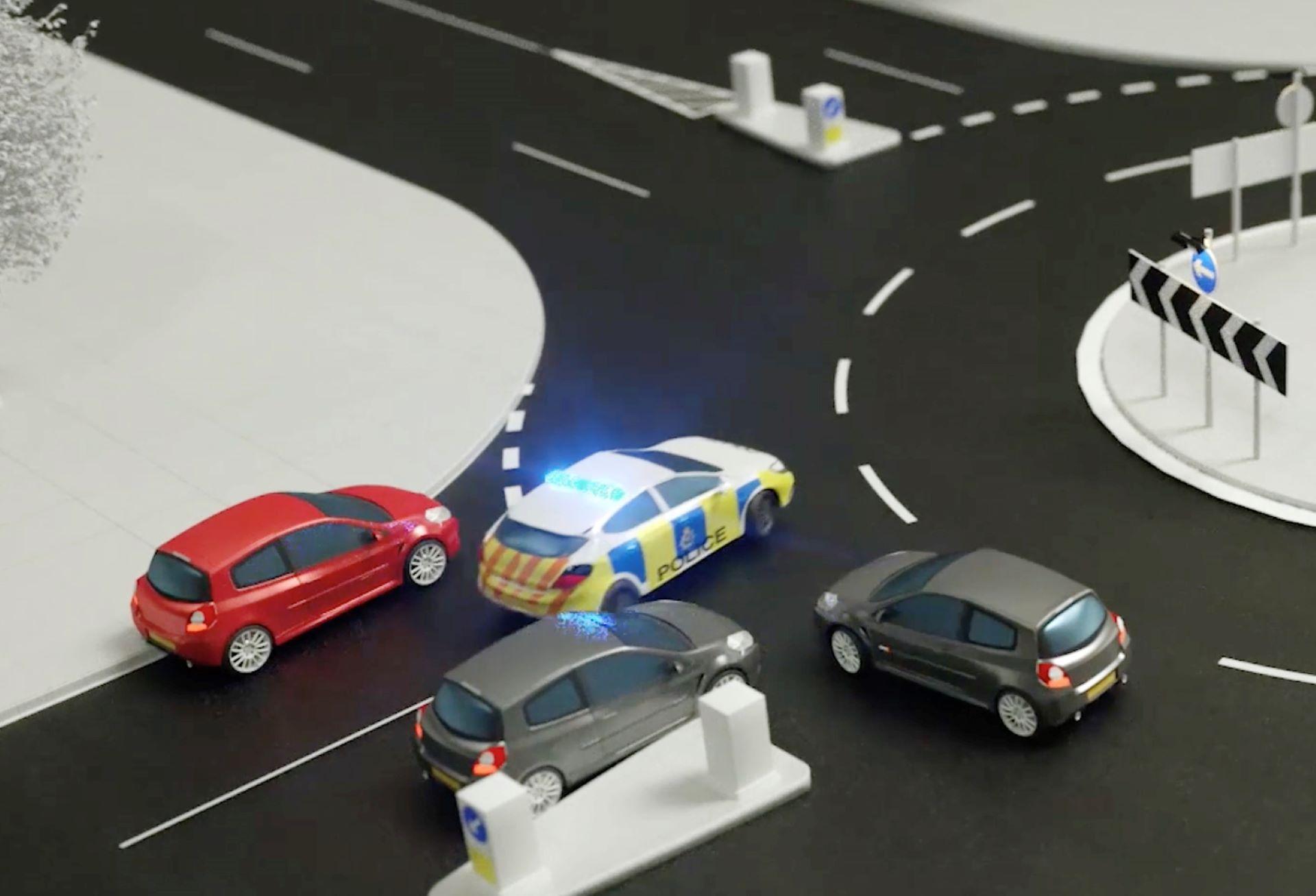
In scenarios like the Vanderbijlpark incident, where an oncoming vehicle is overtaking and encroaches into your lane, instinct typically tells drivers to flee the danger. This often results in what is known as a “faked left”, where both drivers instinctively swerve toward the left shoulder at the same time.
“The natural reaction is to escape,” Herbert explains. “But as the non-overtaking driver, you should never move into the right-hand lane. In most cases, the safest option remains moving left, onto the shoulder if possible, and maintaining predictability.”
Staying predictable gives the overtaking driver a chance to correct their mistake. Sudden, unexpected movements can remove that opportunity entirely.
The danger of fixation
Another instinctive response that increases risk is fixation. When drivers lock their gaze onto the oncoming vehicle, they often steer directly toward it, a phenomenon well documented in accident analysis.
“Once you have identified the risk, you must consciously look away from the threat,” says Herbert. “Your vehicle will naturally follow your line of sight. Focus on where you want to go, not what you want to avoid.”
This simple shift in focus can be the difference between a collision and a near miss.
Braking without losing control
When time compresses and danger looms, slamming on the brakes feels like the only option. Unfortunately, harsh braking can cause wheels to lock on vehicles without ABS or destabilise the vehicle due to sudden weight transfer.
The trained response is counterintuitive. Ease off the accelerator and apply the brakes progressively. Controlled deceleration maintains traction and steering ability, giving the driver options rather than removing them.
“Reducing speed smoothly creates space,” Herbert notes. “Often, drivers in the left lane will open a gap instinctively, allowing the overtaking vehicle to return safely without forcing split-second, high-risk decisions.”
When there is nowhere to go
Some of the most terrifying moments occur when the left shoulder offers no clear escape. Trees, ditches or uneven terrain can make any movement feel dangerous.
In these cases, freezing or making last-second corrections is a common instinct. Yet even here, a trained response can reduce the severity of impact.
“If a collision cannot be avoided, aim for a glancing blow rather than a full-frontal impact,” Herbert explains. “Steering toward the shoulder and contacting an obstacle from the side absorbs energy more effectively than a direct hit.”
It is a grim calculation, but one that prioritises survivability.
A tragedy that demands action
As South Africa mourns the children lost in the Vanderbijlpark crash, the conversation cannot end with outrage or speculation alone. MasterDrive has extended its condolences to the families and communities affected, while also reinforcing calls for stronger training requirements for scholar transport drivers.
“Greater training is the first step in preventing needless loss of young, innocent lives,” says Herbert. “This tragedy underscores how vital professional, defensive driving skills are, especially when responsible for children.”
MasterDrive has developed a dedicated scholar transport training programme and has committed to extending it to more service providers and engaging with all sectors of society. The goal is simple but urgent: safer journeys for the country’s youth.
The footage may fade from headlines, but the lessons it exposes should not. Every driver who shares South African roads carries the responsibility to be prepared, not just for the drive they expect, but for the one they hope never happens.