



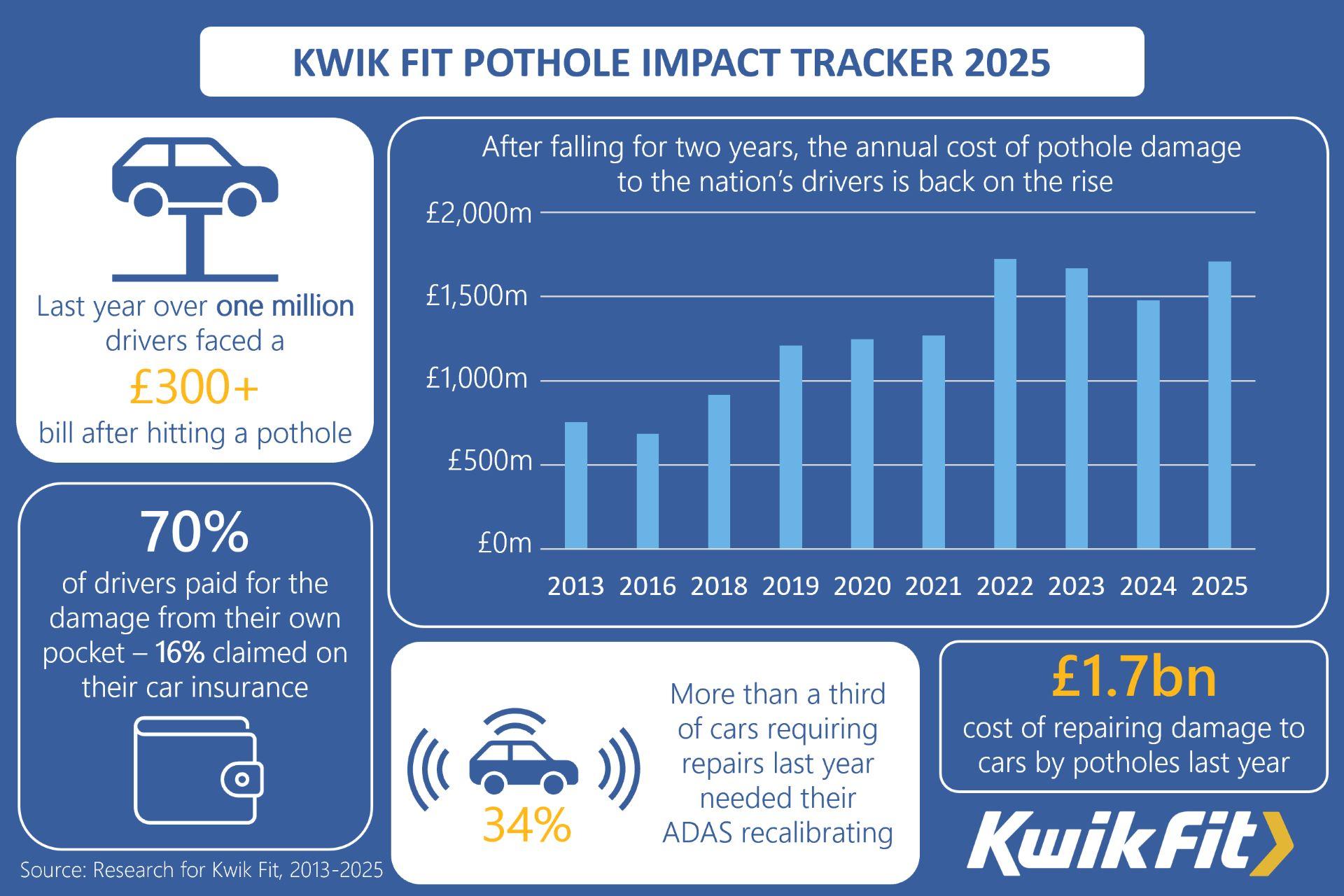
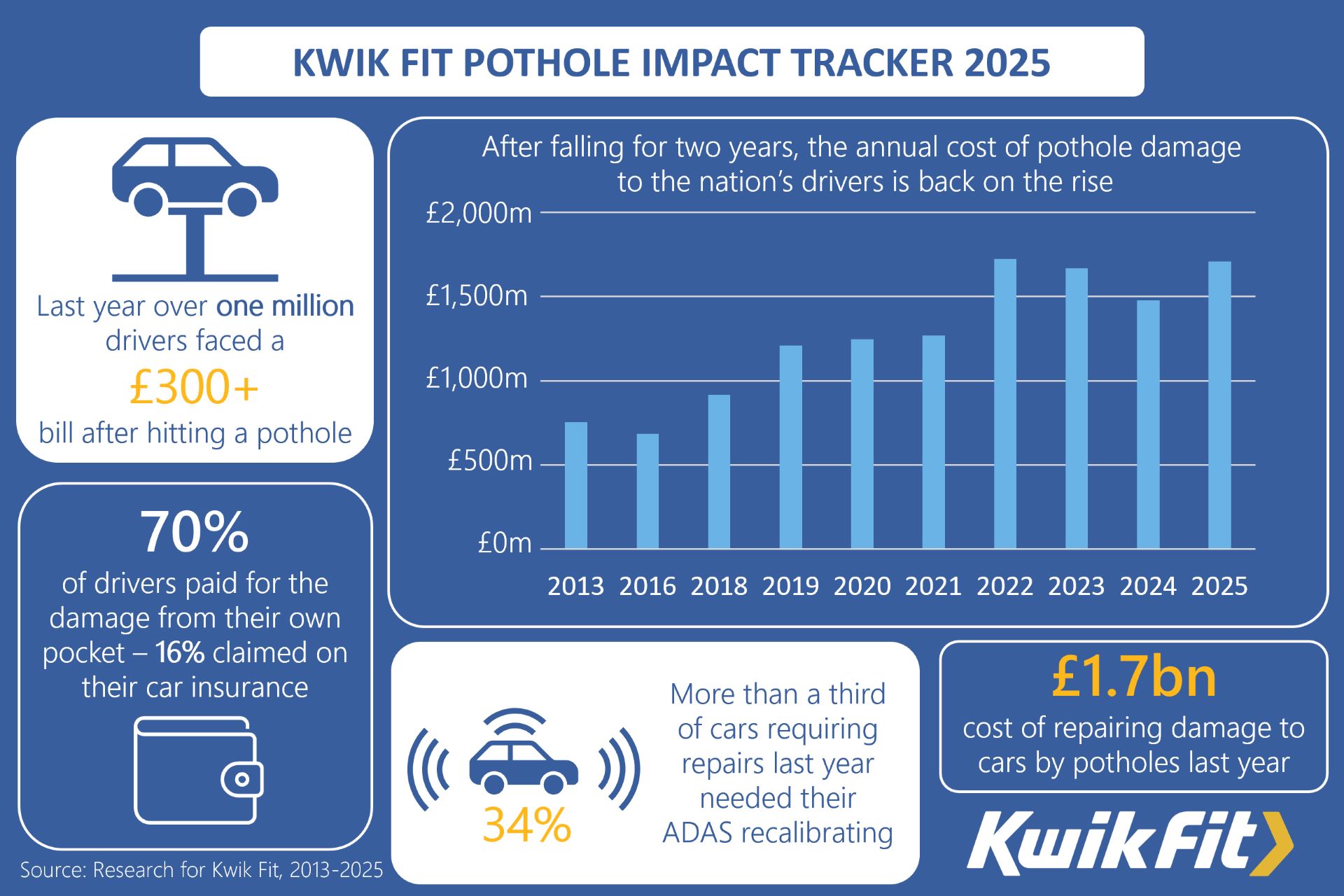
In a concerning turn of events for UK motorists, pothole damage is on the rise once again, sending repair bills to record highs. After a slight reprieve over the last two years, the latest figures reveal that the nation’s drivers have been hit with an alarming total of £1.7bn in pothole damage repairs over the past year.
According to the latest Pothole Impact Tracker (PIT Report) from Kwik Fit, the UK’s leading automotive service and repair provider, the average repair cost has surged to its highest point since the company began tracking the issue in 2013. Over the past 12 months, drivers have been forced to fork out an average of £144 for repairs, up from £120 in the previous year. But it’s not just the average cost that’s rising—more than one million drivers have faced repair bills exceeding £300, highlighting the scale of the problem.
A Nation’s Woes: The High Cost of Potholes
Kwik Fit’s data underscores the fact that potholes are not only a common nuisance but a growing financial burden for UK drivers. The company’s research tracks all instances of pothole damage, including cases where vehicles can still be driven to a garage, not just those that require roadside recovery. In the past year, tyres accounted for 38% of the damage, while suspension and wheels were affected in 28% and 22% of cases, respectively.
However, as modern vehicles become increasingly advanced, the impact of potholes goes beyond the immediate damage to essential components. With more cars now fitted with Advanced Driver Assistance Systems (ADAS), the knock-on effect is far-reaching. Nearly half (48%) of the cars needing repairs also required wheel alignment, and a significant 34% needed ADAS recalibration, driving up the overall repair costs.
Who’s Paying for Pothole Damage?
Unfortunately, a large portion of the repair costs has been borne directly by drivers. A staggering 70% of those impacted by pothole damage have paid for repairs out of their own pockets. In contrast, only 16% have turned to their car insurance, and just 7% were covered by separate tyre insurance policies, such as Kwik Fit’s Tyrecare. Despite the government’s recent efforts to increase funding for road repairs, a mere 6% of drivers have successfully claimed compensation from the local authorities responsible for maintaining the roads.
The increasing prevalence of larger wheel sizes on modern cars is also exacerbating the situation. Damage to tyres on premium vehicles is often far more costly to repair. To mitigate the risk, many drivers are opting for specialist tyre insurance. In fact, the number of Tyrecare policies taken out on larger, premium tyres has almost doubled in the past two years.
The Road Ahead: Are Conditions Set to Improve?
Despite a growing sense of frustration among UK motorists, the outlook for the nation’s roads is bleak. Over half (51%) of drivers feel that road conditions have worsened in the past year, with only 16% believing they have improved. Most worry that local roads won’t see significant improvements any time soon. A staggering 62% of drivers don’t expect to see meaningful change in the near future, despite the government’s recent pledge to invest in road infrastructure.
Dan Joyce, Operations Director at Kwik Fit, expressed concern over the continued impact of potholes, saying, “It’s disheartening to see the downward trend of the past two years reverse in the latest figures. While the financial burden of repairs is unwelcome in the current economic climate, the real danger lies in the long-term safety risks posed by pothole damage.”
The Hidden Dangers: Safety Risks Beyond the Immediate Impact
Potholes don’t just cause immediate damage to tyres, wheels, and suspension—they can also compromise the safety of the vehicle. Many motorists may not realise that even if a car is still drivable after hitting a pothole, the impact could affect the vehicle’s handling. In fact, many drivers have had to have their ADAS systems recalibrated following a pothole impact, a crucial safety feature that helps prevent accidents on the road.
As Joyce explained, “Tyres, suspension, and steering are interconnected. Even if the car seems fine after hitting a pothole, the impact could have undermined its stability. That’s why it’s essential to inspect your car closely after any pothole collision.”
Expert Tips to Minimise the Risk of Pothole Damage
While it’s difficult to avoid potholes entirely, there are several ways to reduce the risk of costly repairs and improve safety on the road. Kwik Fit’s experts recommend the following tips for drivers:
- Maintain Correct Tyre Pressure: Your tyres are the first point of contact with the road, so ensuring they’re properly inflated can help absorb the impact of potholes and prevent damage.
- Drive with Caution: Slowing down and leaving more space between your car and others will give you more time to spot and avoid potholes. If avoidance is impossible, slowing down will reduce the force of impact.
- Check Your Car After Hitting a Pothole: If you hit a pothole, even if the car seems fine, pay attention to any unusual sounds or handling issues. It’s essential to inspect your vehicle immediately after the incident and again in the following days, as some damage may not be immediately visible.
- Get a Professional Check: If you’re unsure whether your vehicle has suffered damage, take it to one of Kwik Fit’s 600+ centres across the UK. The company offers a free check-up service to assess any potential pothole damage.
As pothole damage continues to add financial strain and safety risks to UK drivers, it’s crucial to take preventive measures and stay vigilant on the road. With the rising cost of repairs and the growing complexity of modern vehicles, being proactive in maintaining your car can save you money and keep you safe on the road. For the latest news and updates on pothole damage and repair solutions, follow Kwik Fit on X/Twitter at @kwik_fit.


