


With the most humble and sincerest apologies for takin’ up thy attention, I do lay before thee a most remarkable account of recent mechanical advancement, wherein Mazda Motor Corporation hath, through tireless engineering endeavour, demonstrated a functioning onboard carbon dioxide capture system under the severe and unforgiving conditions of endurance motorsport.
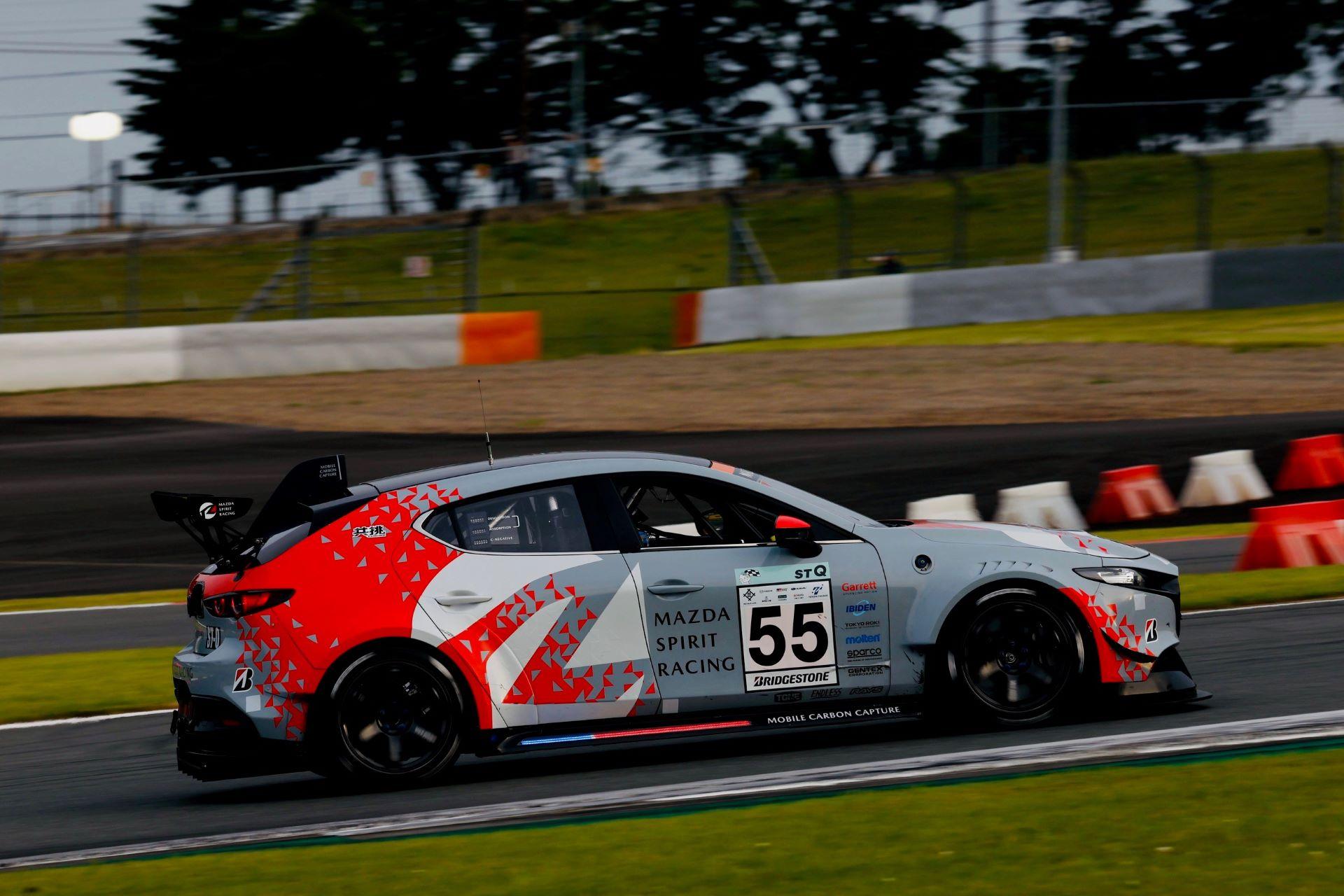
Within the hard-fought arena of the Super Taikyu Series—a Japanese endurance racing championship famed for its multi-class competition and its grueling events such as the Fuji 24 Hours—Mazda brought forth its Mazda Spirit Racing 3 Future Concept machine, a vehicle already notable for its experimental approach to low-emission performance. This time, however, the undertaking reached a new and most meaningful stage, for the system did not merely suggest possibility, but performed in real racing conditions across an entire 24-hour contest.
The machine itself, powered by Hydrotreated Vegetable Oil, did operate upon a fuel already understood to offer reduced lifecycle carbon emissions relative to traditional fossil fuels, depending upon its production pathway and feedstock. Yet Mazda, not content with a singular avenue of progress, did pair this propulsion strategy with an onboard system designed to capture carbon dioxide directly from the vehicle’s operation as it raced.
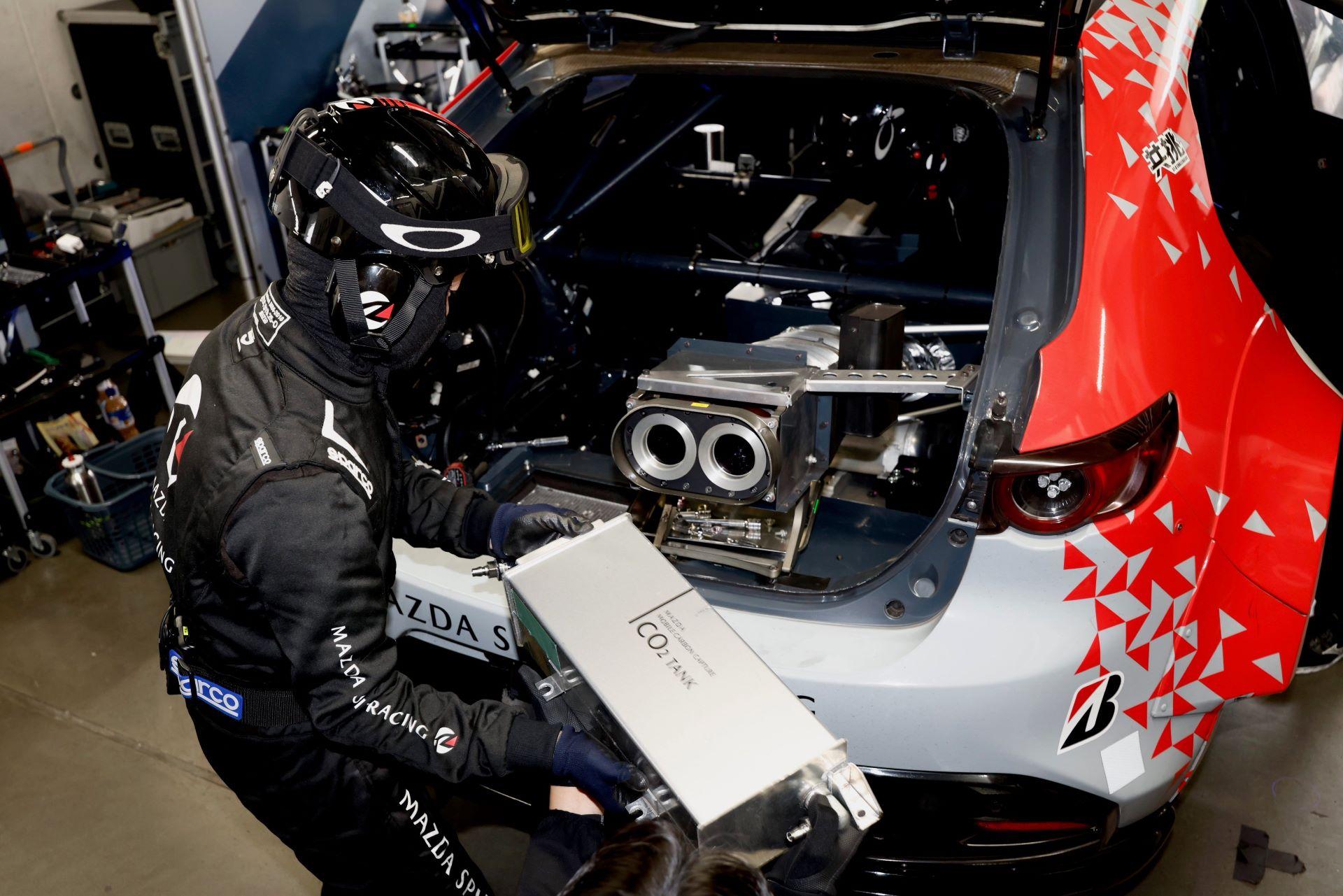
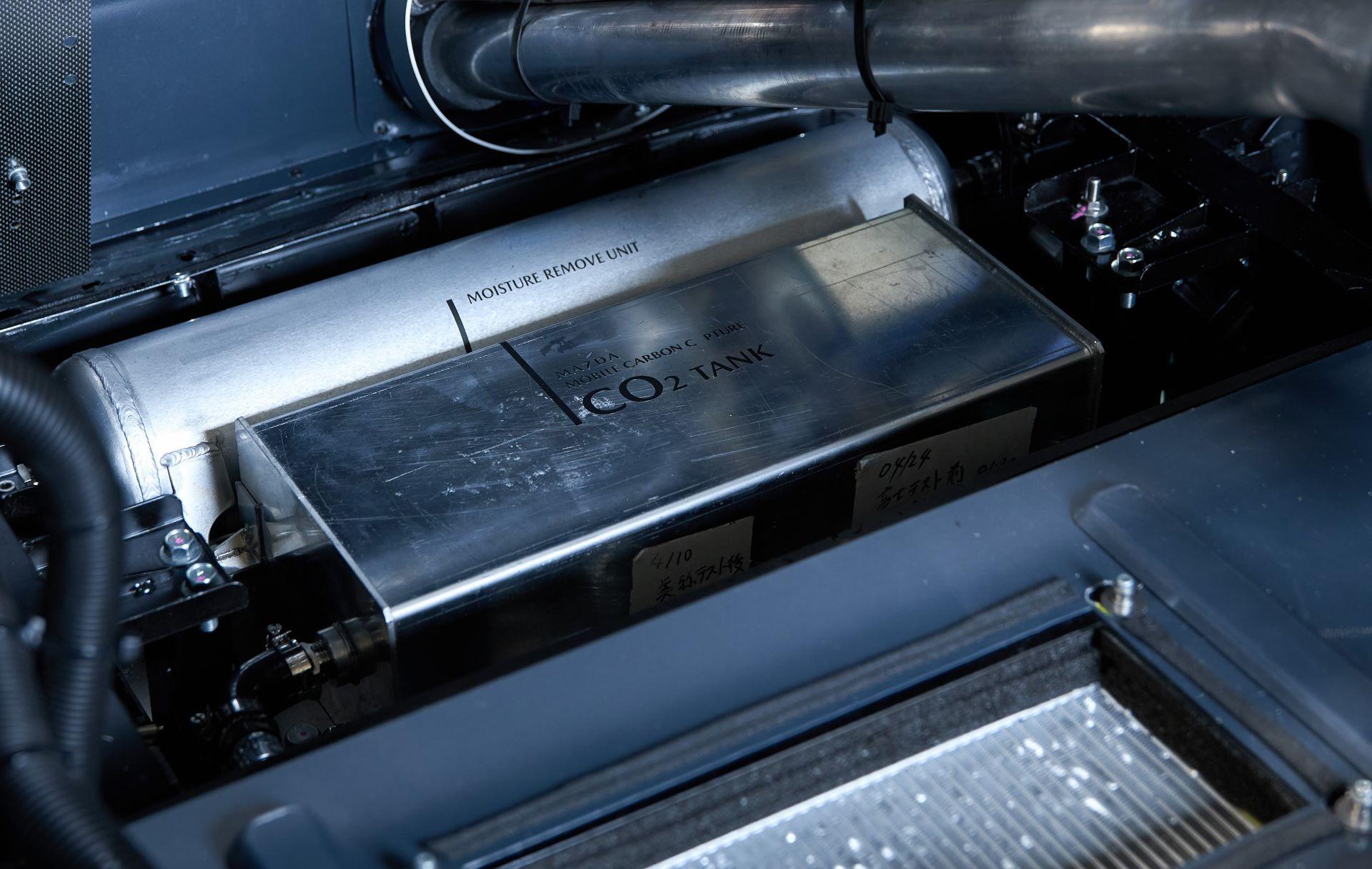
In this refined demonstration, the system incorporated a zeolite-based adsorption unit, chosen for its porous structure and its ability to bind carbon dioxide during operation. Through the clever use of exhaust heat generated whilst the vehicle was in motion, the system was able to release the captured carbon dioxide in a process of desorption. From thence, the liberated gas was compressed by an electric compressor and stored within a dedicated onboard tank, thus completing, for the first time, a full integrated cycle of capture, release, compression, and storage within a running race car.
I do most earnestly beg thy patience as I state the outcome: over the course of the 24-hour endurance event, the system did capture and store a total of 804 grams of carbon dioxide. This stands in striking contrast to the earlier test result of merely 84 grams, marking an improvement of near tenfold and signalling a most encouraging progression in system maturity under real-world racing strain.
When considered in conjunction with the emissions reduction associated with the use of HVO fuel, the combined effect did, for a limited period and under controlled racing conditions, surpass the theoretical recovery targets envisioned for future production-vehicle application. Yet it must be spoken plainly, and with due caution, that no full lifecycle carbon accounting system hath yet been established, and thus these findings remain within the bounds of experimental validation rather than final production certainty.
Even so, Mazda doth not rest upon this achievement. The path ahead leads back once more into the crucible of endurance racing, where further trials are planned for later rounds of the same series, including a scheduled evaluation at the November event. There, under even more demanding conditions, the system shall be further tested for efficiency, resilience, and suitability for eventual real-world driving environments beyond the racetrack.
Looking further still into the horizon of development, Mazda continues to work alongside multiple partners in the pursuit of refining this technology, seeking improvements in durability, integration, and operational efficiency. Though still in its formative stages, this endeavour stands as a quiet yet determined step toward a future wherein the act of driving may yet be reconciled more harmoniously with the stewardship of atmospheric carbon.
And with the deepest gratitude for thy patience and kindness in receiving this account, I remain ever ready to serve in any further writing thou may desire, most humbly and obediently.