


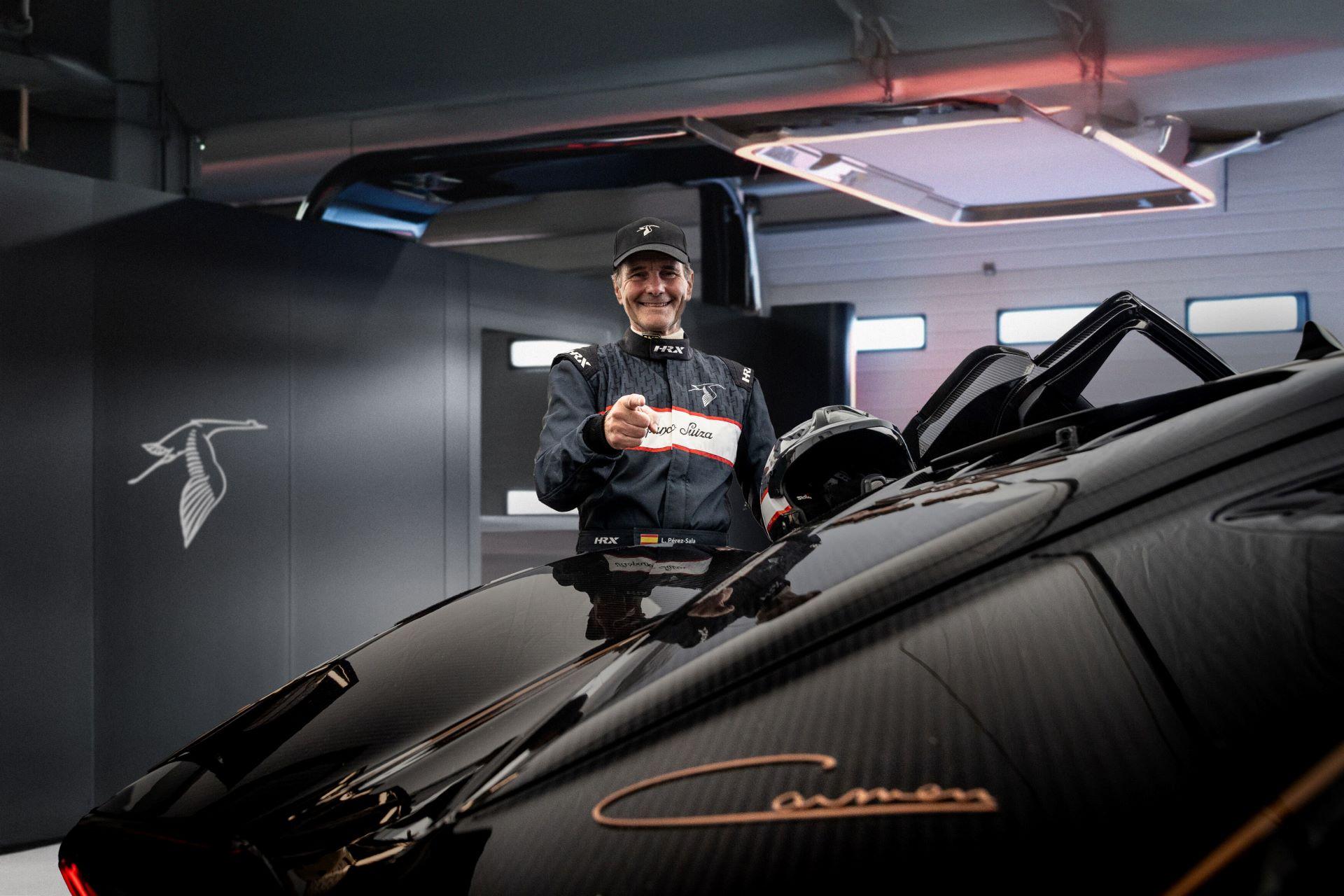
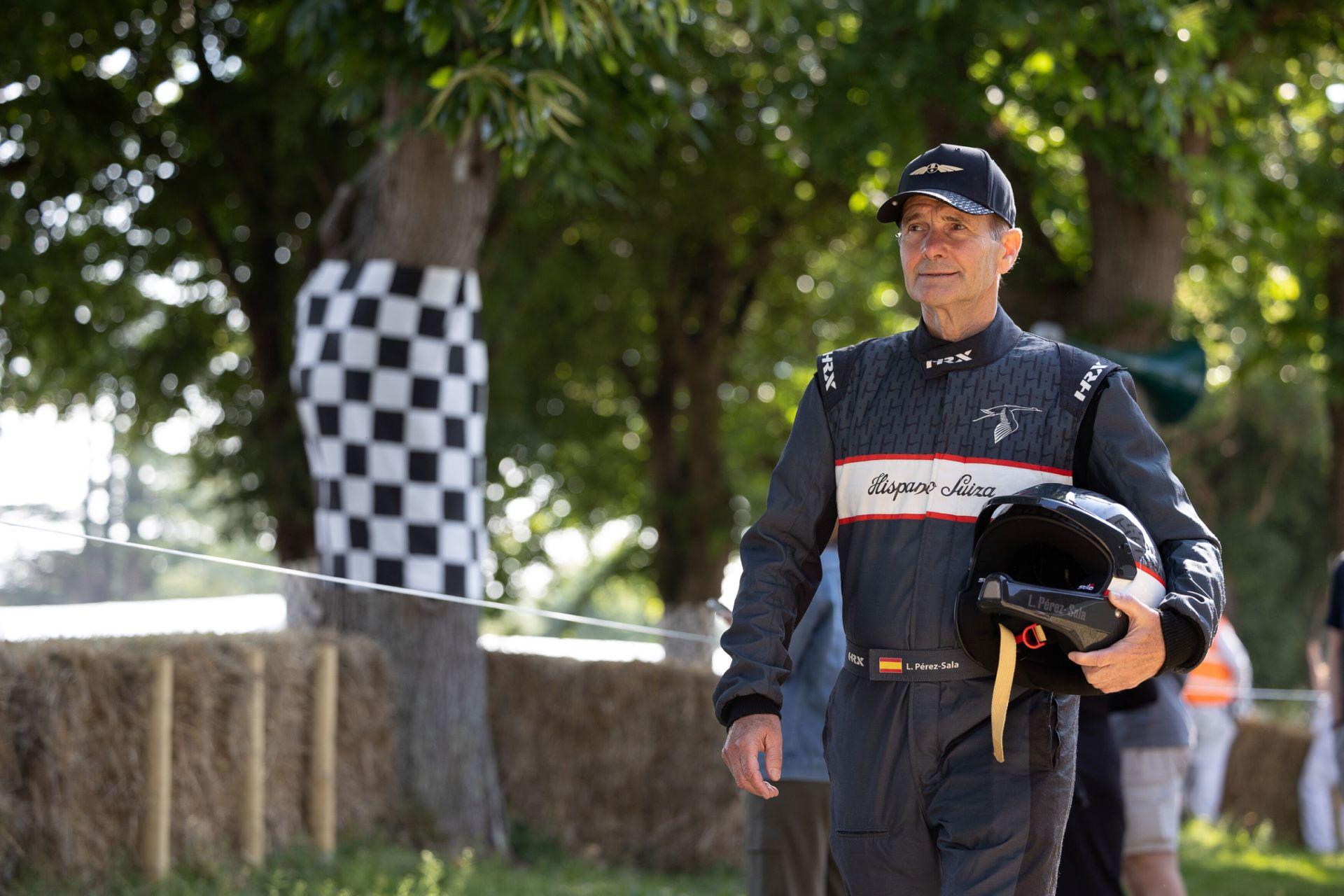
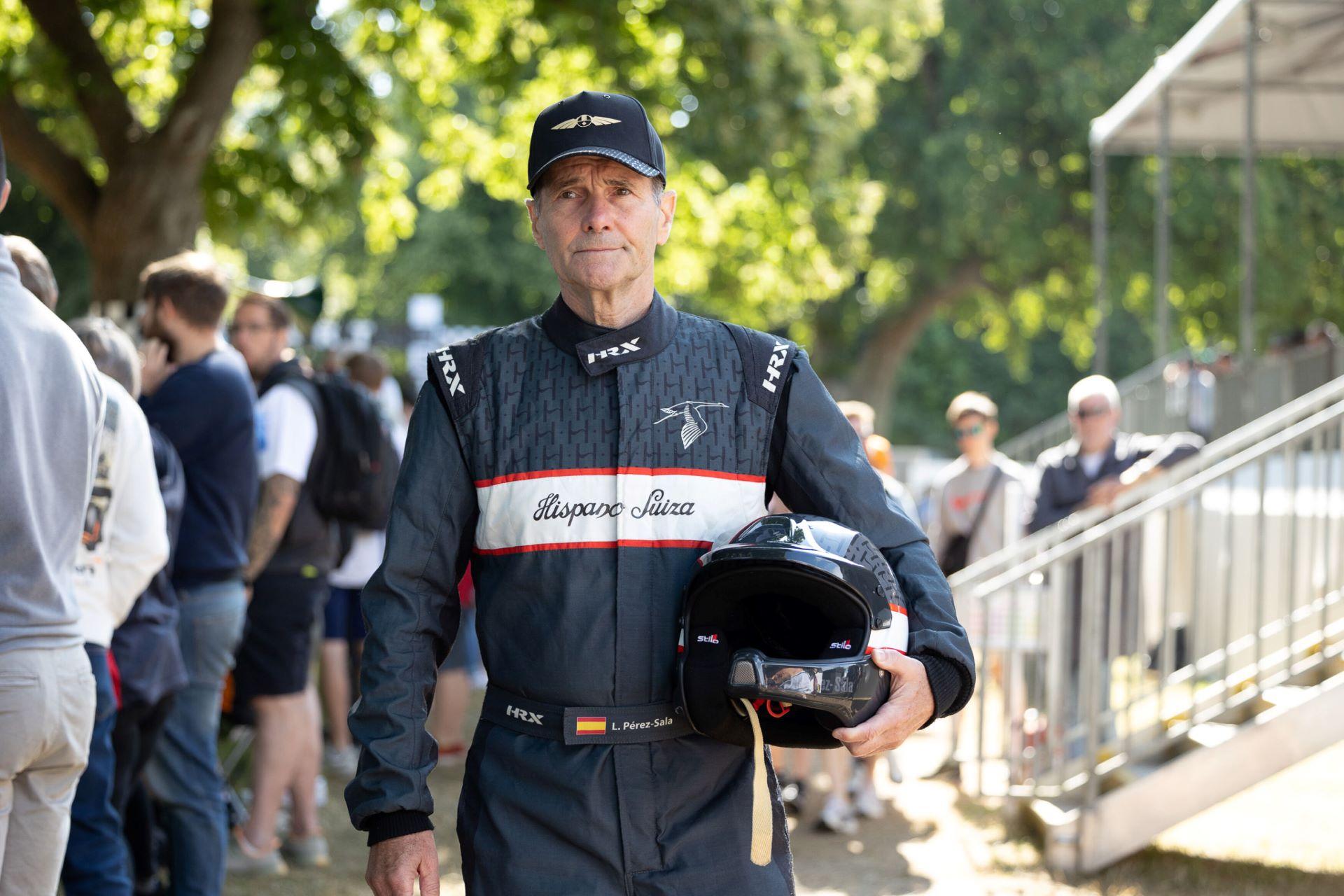
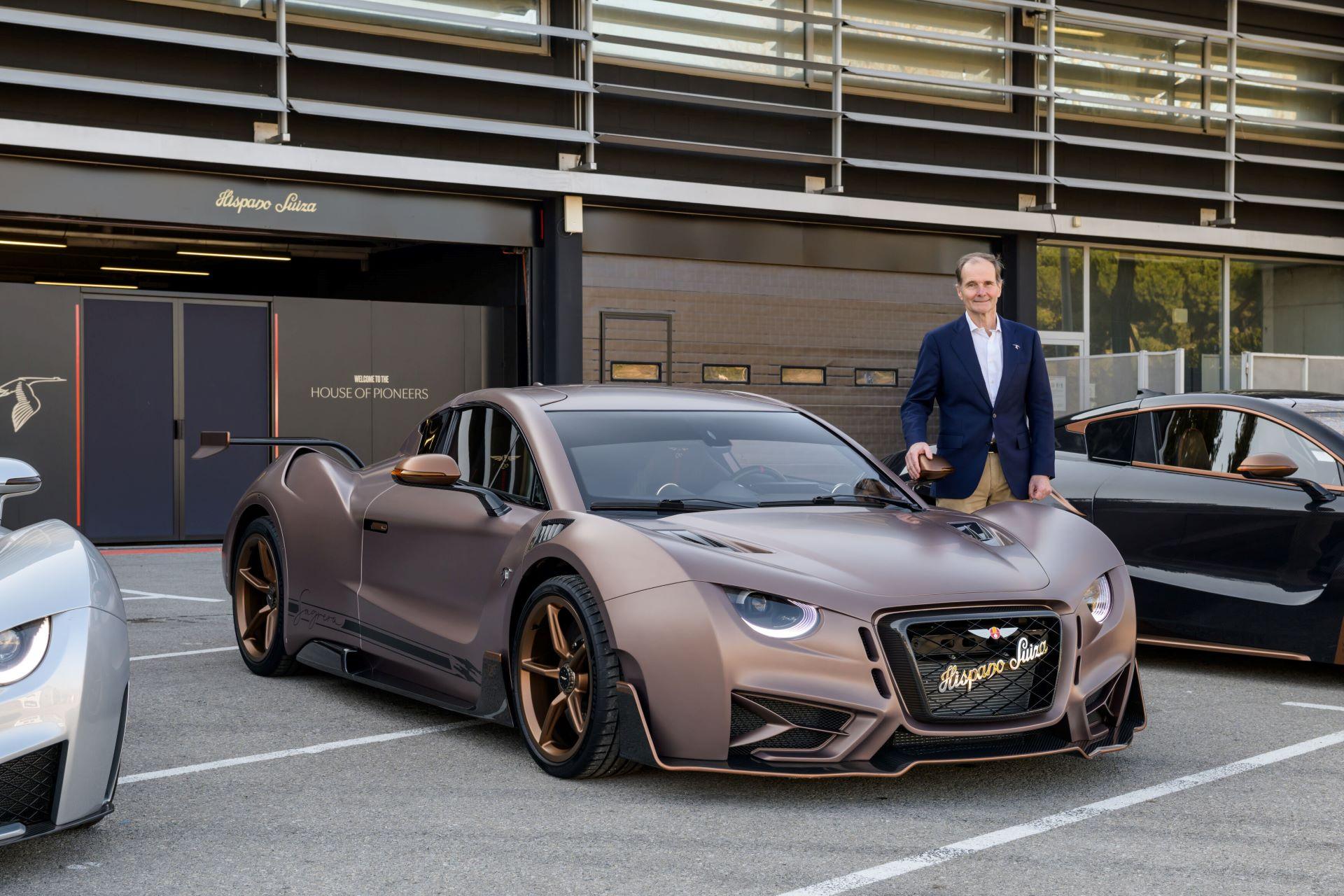
Few automotive projects carry the weight of heritage, ambition and technical precision quite like the modern rebirth of Hispano Suiza. At the centre of this revival stands a figure whose career has been forged in the rarefied air of elite motorsport and meticulous vehicle development: Luis Pérez-Sala.
A former Formula 1 driver, Spanish Touring Car Champion and seasoned test driver, Pérez-Sala brings more than experience to the Hispano Suiza story. He brings a sensitivity to machine behaviour that can only be earned through decades of interpreting grip, balance, power delivery and feedback at the highest level of competition. Since 2019, he has been deeply embedded in the brand’s renaissance, helping shape the transformation of the Carmen into the Sagrera, and in doing so, influencing the character of what is now considered Spain’s most advanced hypercar.
His role extends far beyond that of ambassador. Pérez-Sala functions as a critical bridge between engineering intent and real-world behaviour. Working directly with technicians, engineers and mechanics, he translates sensation into data and instinct into direction. Every kilometre driven during development becomes part of a continuous conversation between man and machine, refining not only performance but also the emotional quality that defines the driving experience.
That depth of understanding is rooted in a varied and accomplished career. One of the few Spanish drivers to compete in Formula 1, he raced for Minardi during the 1988 and 1989 seasons, achieving a standout sixth place at the 1989 British Grand Prix, a result that carried particular weight for a smaller team competing against giants. His career also spans Formula 3000, GT racing and multiple Spanish Touring Car Championships, which he claimed in 1991 and 1993.
After his time in top-level competition, Pérez-Sala transitioned into roles that expanded his technical influence. He worked as a test driver for El País, evaluating and communicating the characteristics of hundreds of road cars, and collaborated with driver development programmes such as those run by the RACC. He also took on leadership responsibilities in Formula 1 as Team Principal of HRT, adding strategic and organisational depth to his already extensive technical insight.
This combination of driving instinct and analytical discipline made him a natural fit when Hispano Suiza was revived in 2019 under the stewardship of the Suqué Mateu family and CEO Sergio Martínez Campos. From the outset, he became instrumental in the development of the brand’s new-generation vehicles, ensuring that the emotional heritage of Hispano Suiza was matched by cutting-edge engineering execution.
The result of this collaboration is a lineage of electric hypercars that includes the Carmen, Carmen Boulogne and Carmen Sagrera, each delivering over 1,100 horsepower and 1,160 Nm of torque. These figures reflect not only performance ambition but also the rigorous validation process that defines the brand’s development philosophy.
Pérez-Sala’s testing regime has pushed these vehicles through extremes that mirror real-world unpredictability. From icy roads in Andorra to the heat of Andalusia, from high-speed circuits such as the Circuit de Barcelona-Catalunya to technical tracks like Castellolí and Calafat, every environment has served as a proving ground. Urban testing in cities including Barcelona, Madrid and Miami has further refined efficiency, drivability and everyday usability, ensuring that the hypercar remains as composed in traffic as it is on a circuit.
What emerges from this process is not simply a high-performance machine, but a carefully orchestrated balance between power and refinement. Pérez-Sala describes this evolution as a continuous cycle of validation and adjustment, where initial focus is placed on functional perfection before attention shifts to comfort, safety and detail. It is this layered approach that defines the final product experience.
Visually, the cars echo Hispano Suiza’s historical lineage, drawing inspiration from the Xenia Dubonnet and reinterpreting classic design language through a contemporary lens. Yet behind the aesthetic lies a very different personality. As Pérez-Sala notes, the cars behave like true racing machines, capable of delivering acceleration and responsiveness that can surprise even those with Formula 1 experience.
Beyond testing, his role extends into the human dimension of the brand. He maintains close collaboration with the leadership team, participates in strategic discussions and represents Hispano Suiza at international events such as the Goodwood Festival of Speed. He also accompanies owners during early driving experiences, reinforcing the connection between engineering excellence and personal emotion.
For Pérez-Sala, this is more than a professional assignment. It is an extension of a lifelong relationship with driving at the limit of possibility. His contribution ensures that every Hispano Suiza model is not only a technological statement, but also a carefully shaped experience, where heritage and innovation coexist in motion.
As the Sagrera completes the modern trio of Hispano Suiza hypercars, the brand’s direction becomes increasingly clear: exclusivity defined not only by performance figures, but by the precision of feeling. And in that pursuit, Luis Pérez-Sala remains one of its most important architects.