



In a striking confluence of Indigenous knowledge, contemporary art, and ecological consciousness, Tate Modern’s Turbine Hall now hosts Goavve-Geabbil, a monumental new sculptural installation by Sámi artist Máret Ánne Sara. Opening on 14 October 2025, this 10th Hyundai Commission marks Sara’s first major work in the United Kingdom and continues Hyundai Motor’s decade-spanning collaboration with the museum, fostering boundary-crossing dialogue between art, industry, and society.
Honouring the Sámi Connection to the Land
Goavve-Geabbil is deeply rooted in Sara’s lived experience as part of a reindeer-herding family in Sápmi, the Arctic homeland of the Sámi people. The installation is an immersive exploration of the intricate relationships between humans, animals, and the natural environment, reflecting both the fragility and resilience of these bonds in the face of climate change.
At the heart of the installation is a multi-layered sculpture of reindeer hides, tightly bound by electrical power cables, which ascends the full 28-metre height of the Turbine Hall. The work’s title, Goavve-, refers to the harsh environmental phenomenon where rain and melted snow freeze into ice, cutting off access to food for reindeer. Through the interplay of hides and cables, Sara creates a poignant metaphor: ancestral traditions and spiritual knowledge flowing through generations are entwined with modern forces of industrial extraction and ecological disruption. The installation bears witness to lives lost and serves as a call for a renewed awareness of our interdependence with the living world.
Engaging the Senses: A Maze of Memory and Knowledge
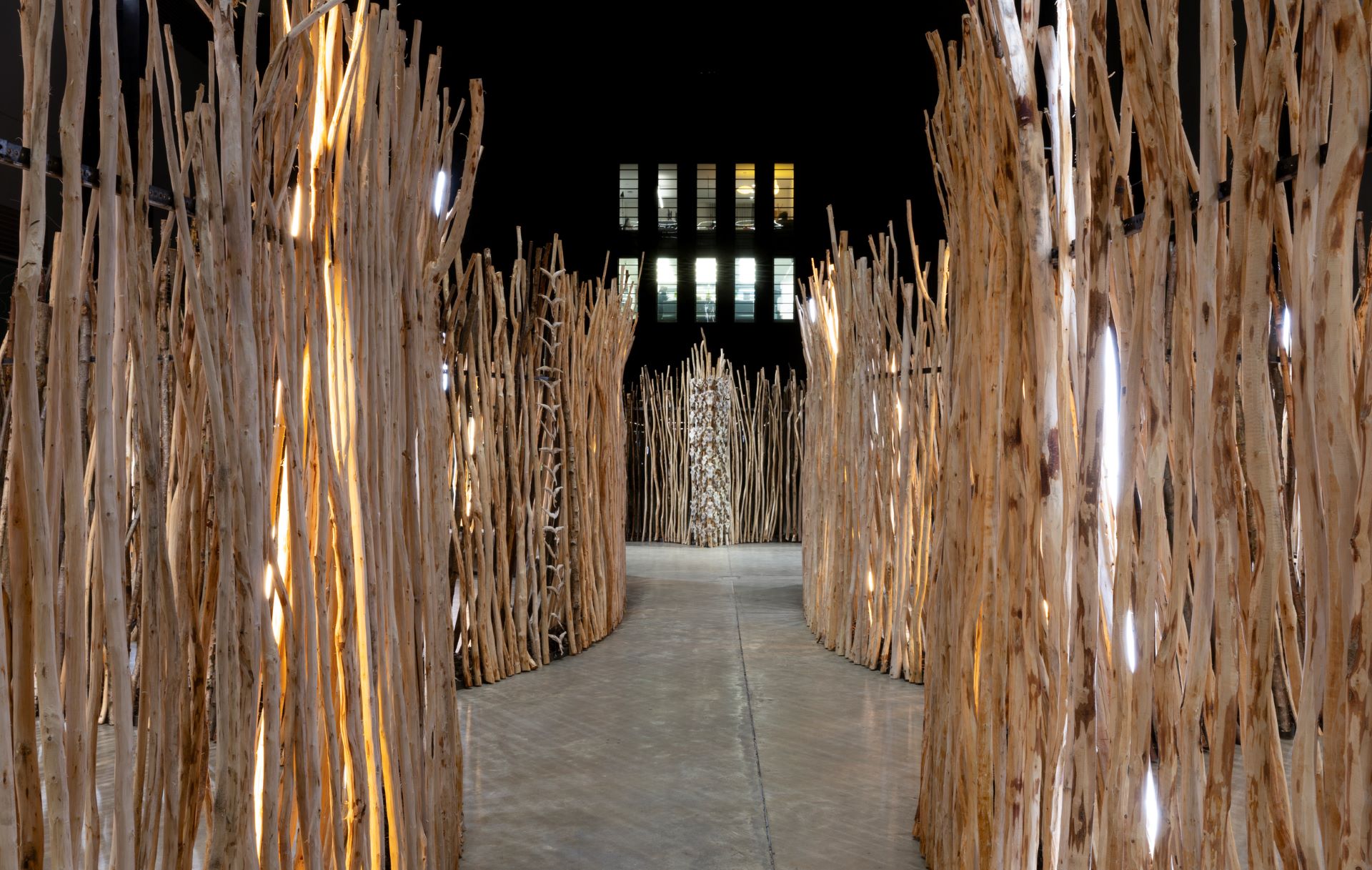
Visitors encounter the -Geabbil component at the east end of the hall, a labyrinthine structure inspired by the reindeer’s remarkable nasal anatomy, capable of heating incoming air by 80°C within a second. Within this maze, audiences are invited to attune themselves to the ancestral energy that permeates the work. Wooden poles carved with reindeer earmarks—distinctive patterns passed down through generations—form the walls, alongside hides and bones integrated in the Sámi tradition of duodji. Every material is repurposed thoughtfully, underscoring the Sámi ethos of gratitude, sustainability, and respect for life.
Sara extends the sensory engagement beyond sight and touch. The installation is infused with scent, from the ‘fear’ emitted by reindeer to the ‘hope’ carried by native plants, while a layered soundscape blends environmental recordings from Sápmi with joik, the traditional Sámi musical practice, and oral teachings from elders. The resulting experience is at once immersive, contemplative, and profoundly human.
A Decade of Artistic Collaboration
The Hyundai Commission, launched in 2014 and recently extended until 2036, offers artists the opportunity to interpret the expansive Turbine Hall in innovative ways. Hyundai Motor’s partnership with Tate is the longest initial corporate commitment in the museum’s history, encompassing the Commission and the Hyundai Tate Research Centre: Transnational. Through this collaboration, the automotive brand has consistently supported art that transcends conventional boundaries, fostering dialogue across disciplines, cultures, and perspectives.
DooEun Choi, Art Director of Hyundai Motor, emphasised the significance of this 10th anniversary commission:
“We are delighted to celebrate the 10th anniversary of the Hyundai Commission with Máret Ánne Sara’s significant work, which transforms Tate Modern’s Turbine Hall into a space grounded in Indigenous history, knowledge and practice. The installation invites audiences to engage with the complex interconnections of our shared world and fosters new dialogues about our collective future.”
Bridging Worlds Through Indigenous Science
Beyond its striking physical presence, Goavve-Geabbil encourages reflection on ecological stewardship and the possibilities offered by Sámi science and worldviews. The installation challenges visitors to consider how traditional knowledge, creativity, and cultural resilience can inform responses to the growing environmental crisis. In doing so, Sara’s work exemplifies the role of art as a bridge between cultural memory, scientific insight, and collective responsibility.
Goavve-Geabbil will be on view at Tate Modern from 14 October 2025 through 6 April 2026, offering audiences an opportunity to experience a profound dialogue between art, Indigenous knowledge, and the living world.