




Pretoria, South Africa, 27 September 2024 – With the searing summer sun baking the soft dunes of Dubai and temperatures soaring to over 60 degrees Celsius by midday, most people would seek shelter indoors. However, for Ford’s engineers, it marks the perfect opportunity to subject their trucks and SUVs—particularly the Ford Ranger—to some of the most punishing tests imaginable. This rigorous process ensures that Ford vehicles are built to thrive in the harshest conditions.
At the forefront of this challenge is Ziyad ‘Z’ Dallalah, who established Ford’s product development team in Dubai in 2009. Since then, his team has become a crucial part of Ford’s global test programme, fine-tuning vehicles to perform reliably in extreme climates around the world.
The Ultimate Test Ground: Dubai’s Desert
In addition to the endless stretches of sand, Ford’s testing includes navigating through crowded city streets and open highways. Urban testing in Dubai offers Ford engineers an ideal environment to evaluate how well powertrain cooling and climate control systems hold up in slow-moving traffic and intense heat. Meanwhile, highway driving and mountain climbs test the vehicle’s performance, handling, and overall body dynamics, including noise, vibration, and harshness (NVH) levels.
However, it’s in the desert where the vehicles truly face the ultimate challenge. The soft, power-sapping sand creates relentless resistance, akin to dragging a heavy load over every dune. “In simple terms, driving in deep, soft sand is like dragging a heavy weight around,” Dallalah explains. “That resistance you feel when you’re dragging that weight—it’s the same thing for vehicles in the desert.”
Driving on sand puts enormous strain on the engine and transmission, which work significantly harder compared to regular road conditions. Lower speeds in the desert mean cooling systems don’t receive the benefit of increased airflow to dissipate heat. This exacerbates the already soaring temperatures and pushes Ford’s trucks and SUVs to their limits.
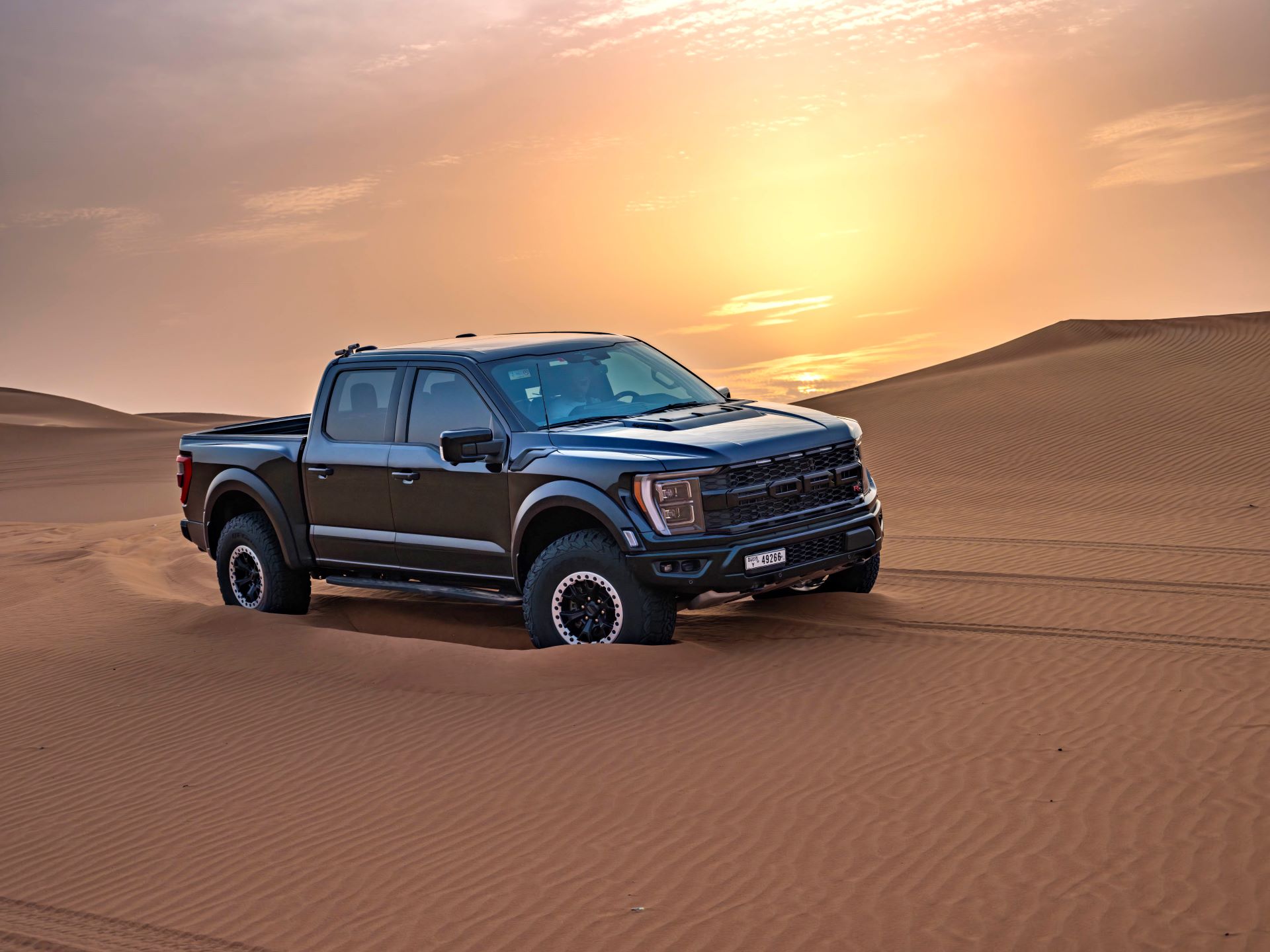
Simulating the Hottest of Conditions
Inside the cabin, Ford engineers monitor how effectively the climate control system manages the heat. After leaving the vehicle to bake in the desert sun for over an hour, with the engine off and windows closed, temperatures inside can reach a staggering 72 degrees Celsius. Once the A/C is turned on, the team ensures it can swiftly cool the interior to the desired temperature, no matter how extreme the outside conditions may be.
Dallalah emphasizes the importance of this process: “Whether you’re based in Dubai, Durban or Darwin, you need to know that if you set the climate control to 15.5 degrees C, it’s going to deliver.”
Combining Technology with Real-World Testing
While real-world desert testing is essential, Ford’s development process also relies heavily on cutting-edge technologies like computer-aided design (CAD) and computer-aided engineering (CAE). These tools help engineers streamline vehicle design and enhance performance before any physical testing begins.
“CAD and CAE have really helped transform the way we design and engineer our vehicles,” says Dallalah. “But nothing beats real-world testing to expose issues you didn’t anticipate. And, until you experience the kind of heat and conditions we get here, it’s hard to imagine just how that affects everything your vehicle needs to handle.”
This relentless dedication to testing and innovation ensures that Ford’s vehicles—whether navigating a bustling city or traversing the harsh deserts of Dubai—are engineered to meet the most demanding needs of their drivers.
For Ford, the blistering heat of Dubai isn’t just an obstacle—it’s an opportunity. By pushing their trucks and SUVs to their limits in some of the most challenging environments on Earth, Ford’s engineers ensure that their vehicles are built to endure the extremes. Whether it’s conquering the dunes or withstanding slow-moving traffic under the desert sun, Ford’s commitment to real-world testing guarantees that its vehicles deliver optimal performance, wherever they are in the world.


