

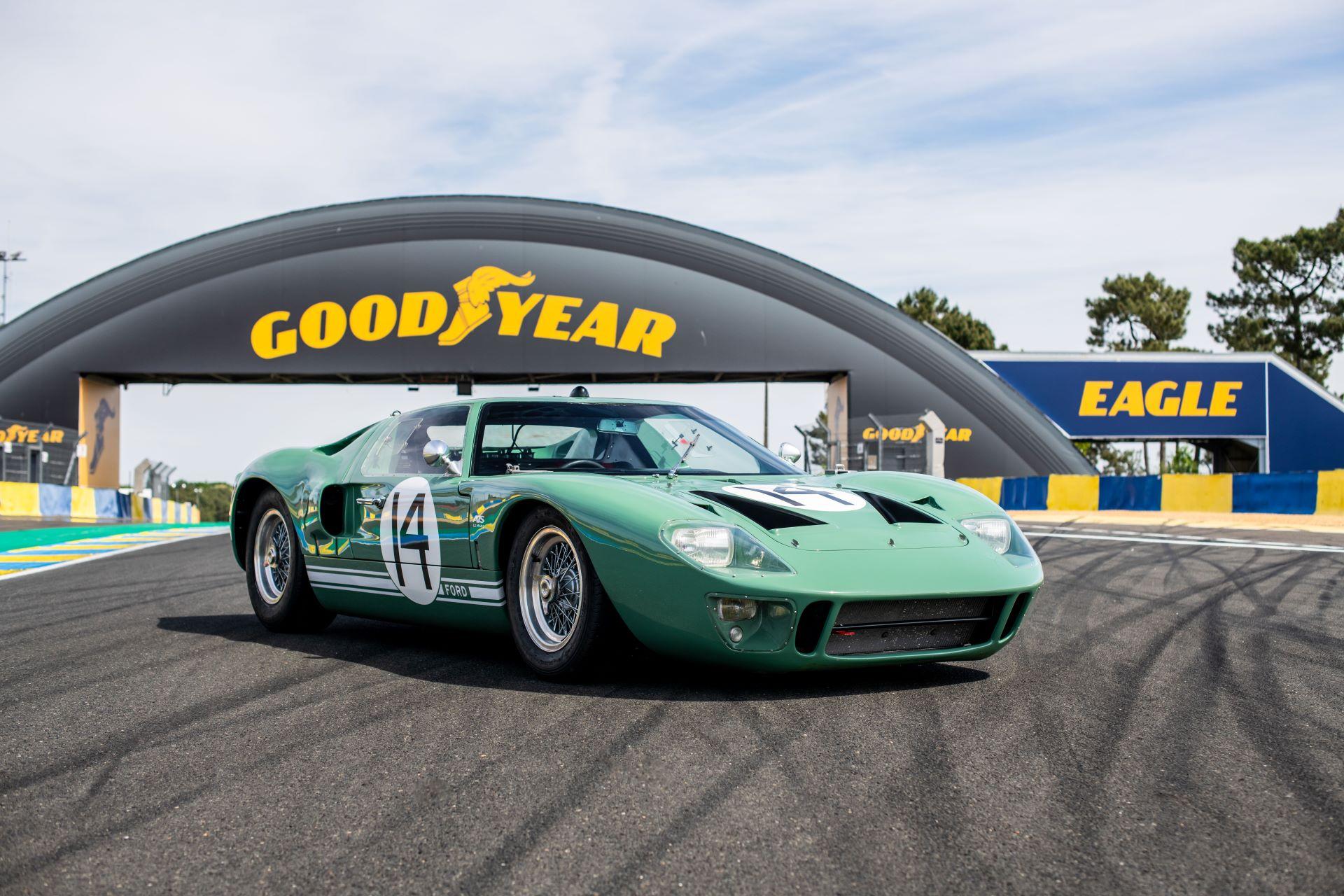
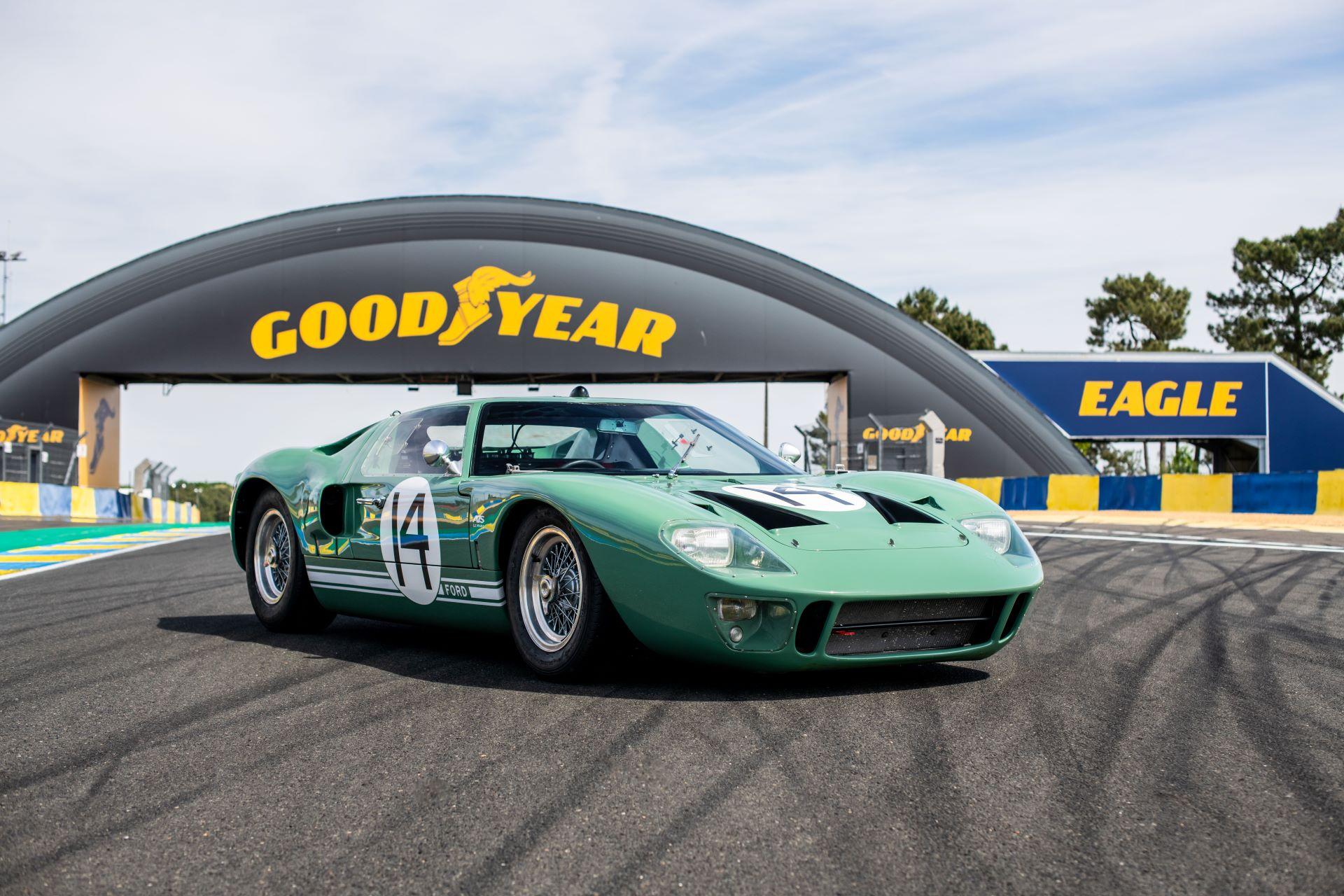
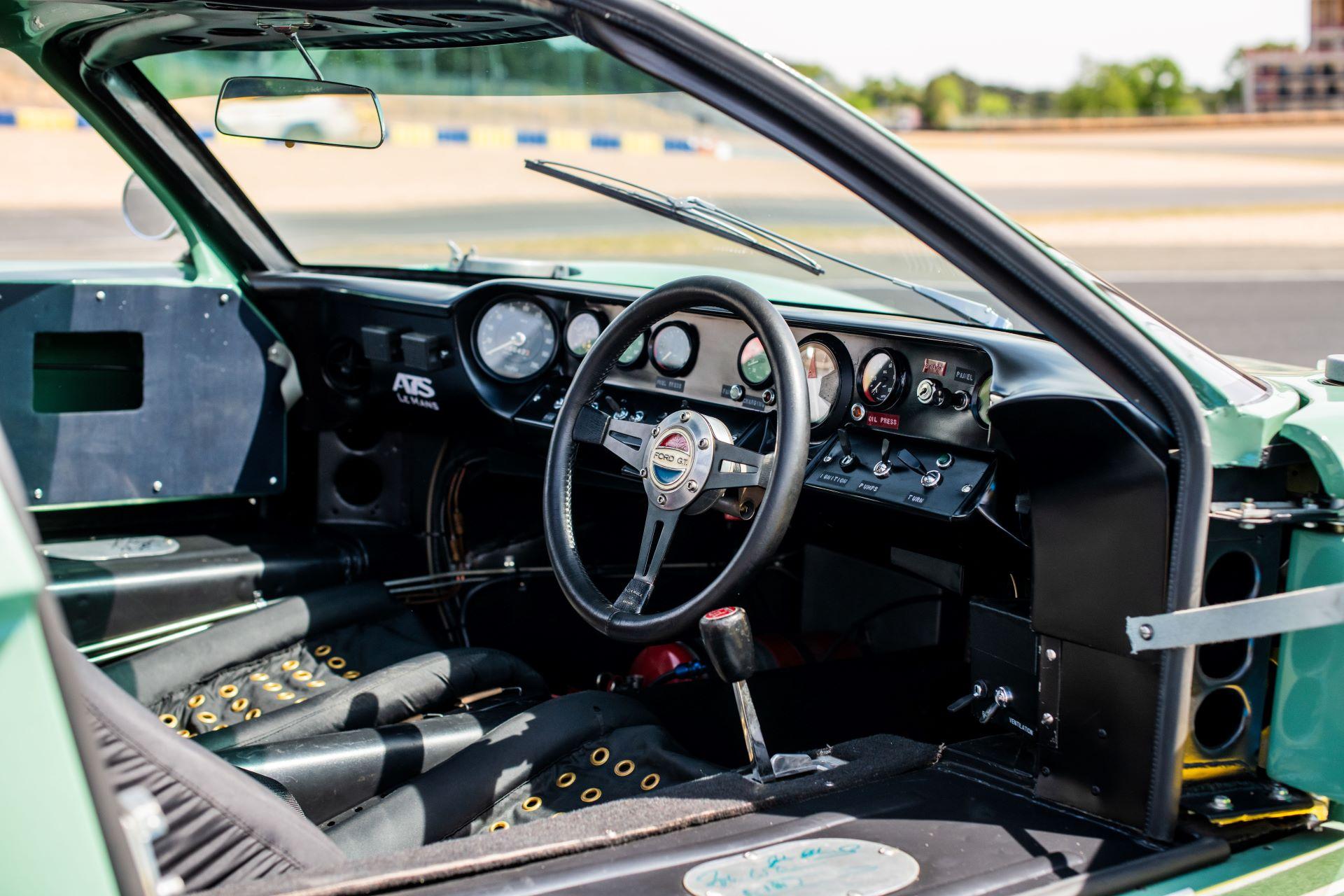
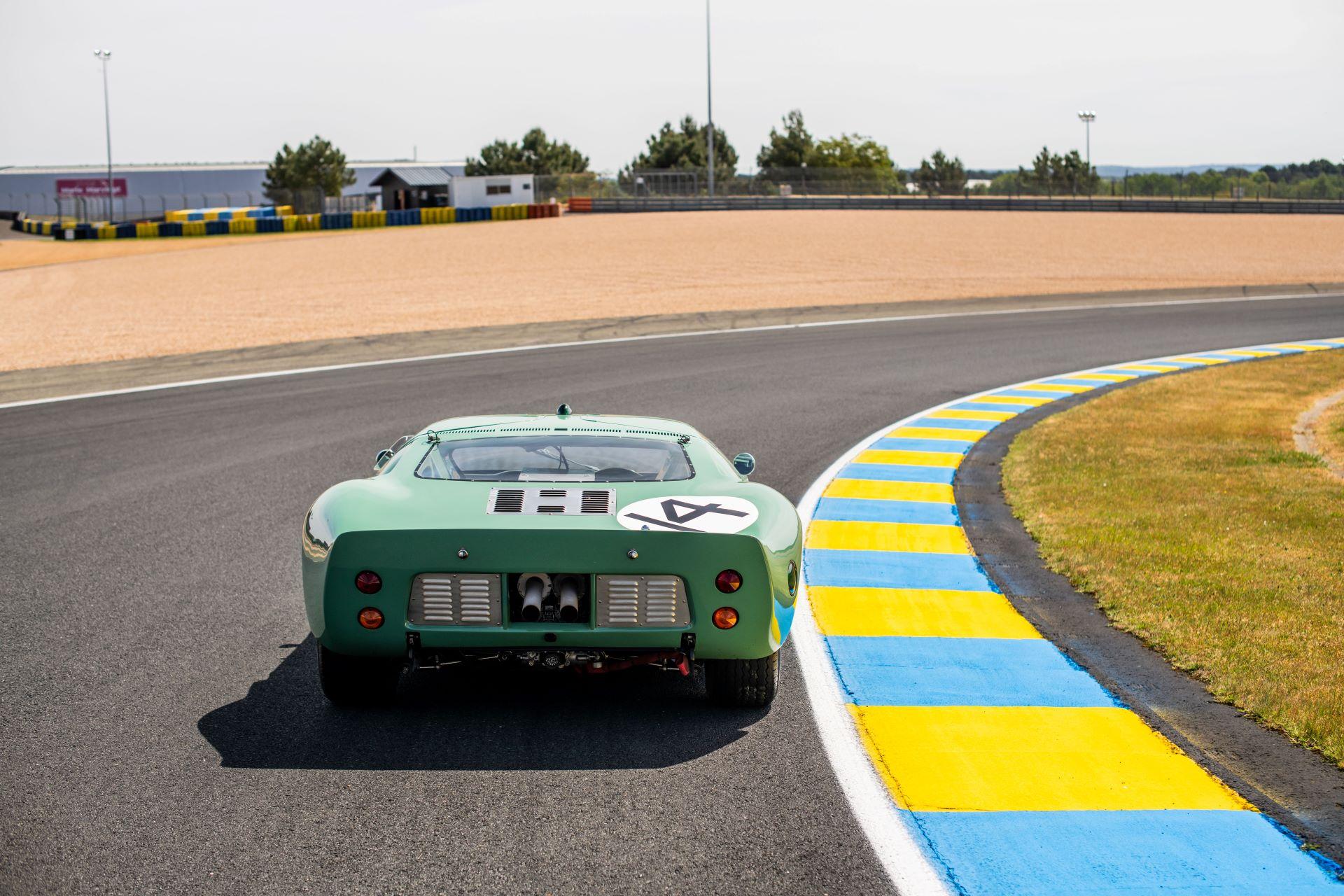
Broad Arrow Private Sales, driven by Hagerty, has unveiled one of the most significant endurance racing machines ever to reach the open market: a 1965 Ford GT40, chassis number P1006. Offered in Europe after more than three decades of single ownership in France, the car represents a rare convergence of factory provenance, racing heritage, and meticulous preservation.
Restored in its distinctive Linden Green livery with white accents, P1006 is not merely a collector’s artefact but a living piece of Ford’s relentless pursuit to defeat Ferrari at the world’s most demanding circuit. It is available for immediate acquisition, accompanied by a comprehensive history file and long-term eligibility for historic motorsport events.
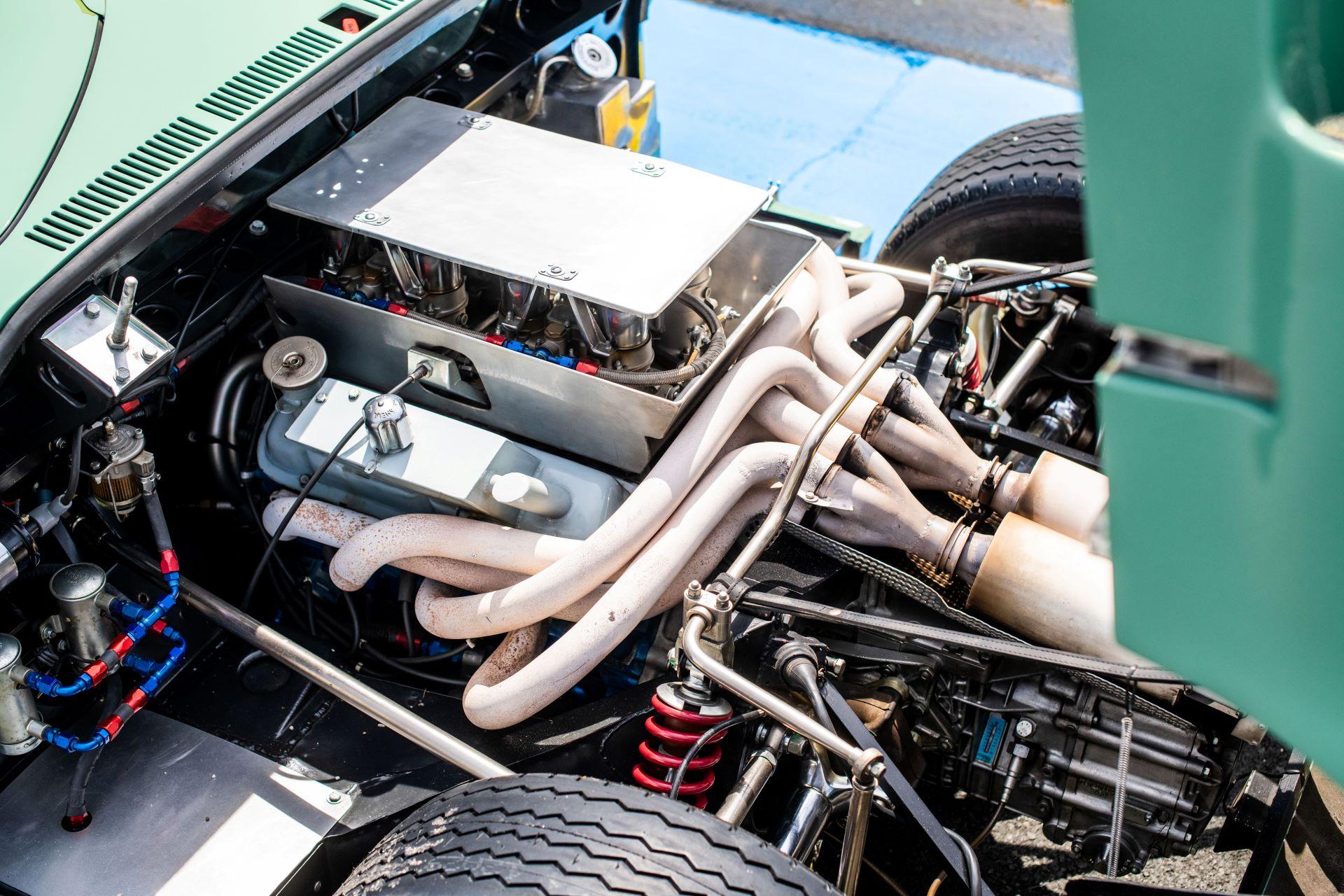
Chassis P1006 carries the DNA of Ford’s early Le Mans ambitions, a period defined by urgency, innovation, and mechanical reinvention. Following the challenging 1964 debut of the GT40 project, Ford enlisted Shelby American to refine the platform into a more competitive endurance weapon. The result was the GT40 MK.1, a car that paired the 4.7-litre (289 cu-in) V8 producing around 380 horsepower with a more robust ZF five-speed gearbox, replacing the fragile Colotti unit. Aerodynamic refinements sharpened its high-speed stability, particularly on the Mulsanne Straight, and shaped the iconic silhouette that would define the GT40 lineage for decades.
P1006 was one of 56 GT40 MK.1 racing chassis produced for the 1965 World Sportscar Championship and was delivered new to Ford Advanced Vehicles in June of that year. It holds particular significance as one of six GT40s entered by Ford for the 1965 24 Hours of Le Mans, a race that would become infamous for its attrition and mechanical brutality.
Behind the wheel at Le Mans were accomplished racers Innes Ireland, a 1961 U.S. Formula One Grand Prix winner, and Sir John Whitmore, the 1961 British Touring Car Championship titleholder. The pair demonstrated strong early pace, with Whitmore setting the tenth fastest time in practice, reinforcing Ford’s growing competitiveness on the global endurance stage.
Yet the 1965 race proved unforgiving. Out of 51 starters, only 14 cars reached the finish in a contest defined by mechanical failures and punishing conditions. Despite its promise, P1006 did not complete the race, as none of the GT40 entries would reach the chequered flag. Ferrari ultimately secured its fifth consecutive Le Mans victory, extending its dominance even as Ford’s programme gathered momentum.
After its Le Mans campaign, P1006 continued its role within Ford’s development programme, contributing to ongoing testing and refinement of the GT40 platform. Following a test incident at Monza in September 1965, the car transitioned out of active factory duty and entered private ownership in the United Kingdom before being acquired in 1978 by a caretaker who commissioned a specialist restoration by GT40 expert John Etheridge. The work returned the car to its original 1965 specification, including a faithful restoration of its Linden Green finish.
In 1993, the GT40 entered the collection of its current owner, a respected French collector and GT40 specialist custodian. For much of the following three decades, the car remained discreetly housed near the circuit that had defined its origins, preserved in carefully maintained condition and supported by a deep historical archive.
The car re-emerged into public life in 2013 following an in-house restoration at Auto Techno Sports (ATS) Le Mans Workshop, preparing it for participation in the Goodwood Revival. There, P1006 took part in the Whitsun Trophy, competing in an evocative all-GT40 field alongside its Mk.1 contemporaries, with legendary endurance driver Henri Pescarolo among those at the wheel.
Its modern historic résumé continued to grow with appearances at the Le Mans Classic in 2016 and display at the 24 Hours of Le Mans Museum, reinforcing its recognised status within the GT40 community. In September 2025, P1006 was issued an FIA Historical Technical Passport valid through 2035, confirming its eligibility for circuit, hill climb, and rally competition in historic racing events.
According to Clément Papin, Car Specialist at Broad Arrow, opportunities to acquire a GT40 of this calibre are exceptionally rare, particularly one so closely tied to Ford’s foundational Le Mans efforts. The combination of documented provenance, factory significance, and long-term stewardship places P1006 among the most desirable endurance racing cars to reach the market in recent years.
More than six decades after it first thundered down the Mulsanne Straight, P1006 stands as a mechanical witness to Ford’s early struggles and eventual triumph at Le Mans. From its role in the 1965 campaign to its influence on the victorious programme that followed in 1966, it remains deeply embedded in one of motorsport’s most storied rivalries. Now, it awaits its next custodian, ready once again for the circuits it was born to challenge.