In the quiet hum of German engineering tradition, somethin’ rather electric is takin’ shape, the kind of shift that don’t just tweak the gears of industry but rethinks the whole damn machine.
The Volkswagen Group together with Technische Universität Braunschweig has set its sights on a new professorship dedicated to “AI Methods in Product Development”, a move that feels less like a formal academic appointment and more like the ignition of a long-awaited engine for the future of mobility research.
At its core, this initiative is built to stretch artificial intelligence across the entire arc of vehicle creation, from the earliest flicker of virtual design to the deep complexity of mechatronic systems, autonomous driving functions, and even the messy, real-world data vehicles collect once they hit the road. It’s an ambition that treats AI not as a tool on the bench, but as a co-pilot in the workshop of invention.
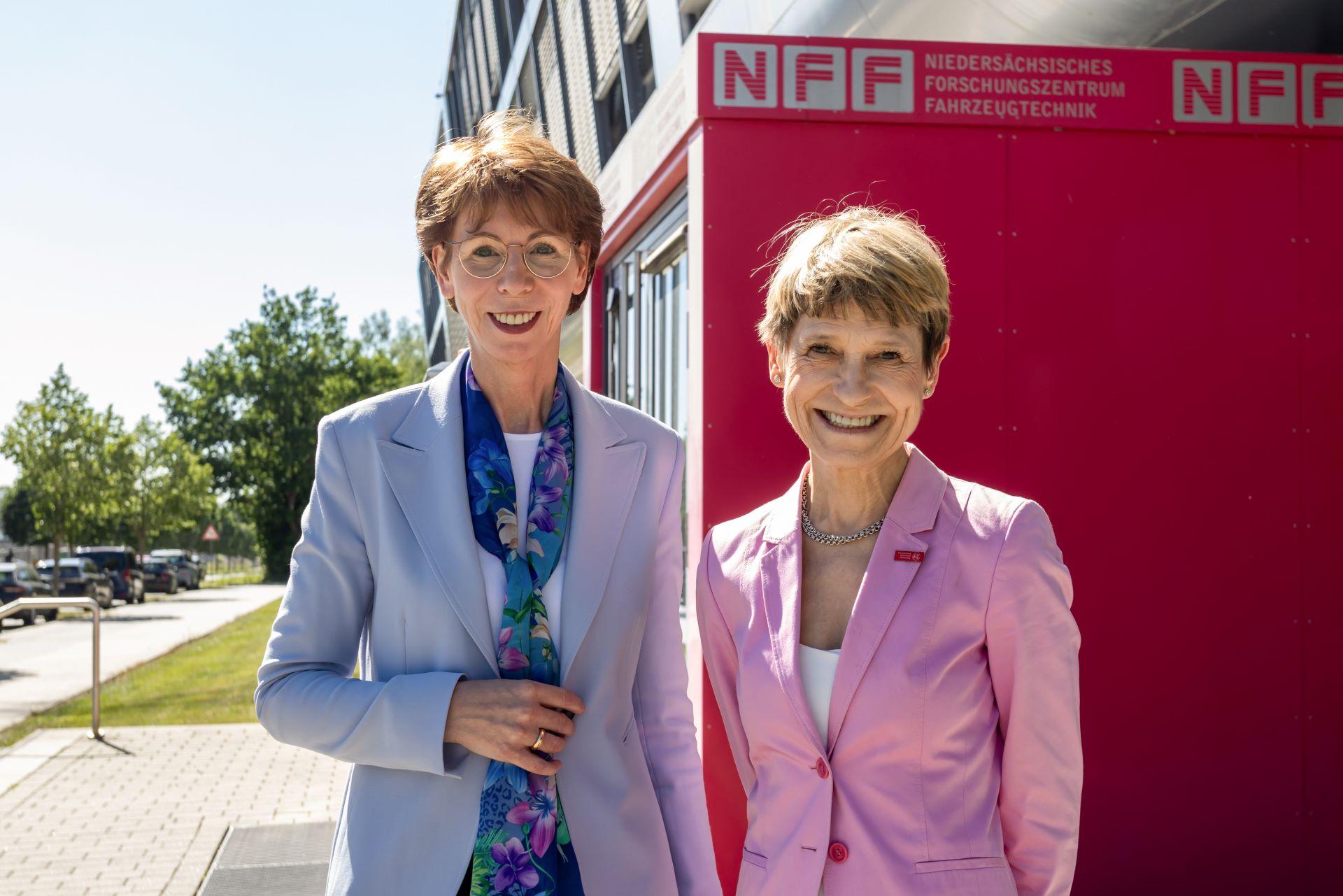
The professorship will be housed within the Institute of Engineering Design at TU Braunschweig, working closely with the Niedersächsisches Forschungszentrum Fahrzeugtechnik, a heavyweight in European mobility research. With its sprawling network of institutes, researchers, and industry partners, the centre forms a fertile ground where theory and application don’t just meet, they reckon with each other and evolve together.
Volkswagen’s leadership has framed the move as a strategic acceleration of knowledge transfer, where scientific breakthroughs don’t linger in journals or lecture halls but find their way into production lines, test fleets, and ultimately the vehicles that roll out to customers. The idea is simple in phrasing yet mighty in scope, shrink the distance between discovery and deployment.
On the academic side, TU Braunschweig sees the professorship as a necessary response to how deeply software and intelligence now shape modern mobility. Vehicles are no longer defined purely by mechanical prowess but by the algorithms that guide them, interpret them, and increasingly define their behaviour on the road.
The collaboration is also expected to ripple outward into Lower Saxony’s wider innovation ecosystem, drawing in suppliers, startups, and research partners into a shared current of development. In doing so, it builds a bridge between academic insight and industrial urgency, where ideas are not only born but stress-tested against real-world demands.
What emerges from this partnership is a vision of mobility development that feels more alive, more adaptive, and far more interconnected than traditional models ever allowed. Artificial intelligence becomes the connective tissue, binding simulation, design, testing, and usage into a continuous loop of learning.
As the position moves toward appointment and eventual transition into a tenured chair, the message is clear without needing flourish. The future of vehicle development is not waiting at the end of innovation, it is being built right in the middle of it, one algorithm, one model, and one collaboration at a time.