


At the shimmering edge of Lake Como, where automotive history tends to dress in its finest tailoring, the Vision BMW ALPINA emerged at the 2026 Concorso d’Eleganza Villa d’Este as something more than a concept. It arrived as a proposition, a carefully sculpted thesis on what happens when heritage is not merely preserved, but actively reinterpreted with discipline and intent.
This one-of-one design study signals a new chapter for BMW ALPINA under the stewardship of the BMW Group, where speed, comfort, and sophistication are not competing ideals but interlocking principles. It is a car that does not shout its evolution; it refines it into something quieter, deeper, and more deliberate.
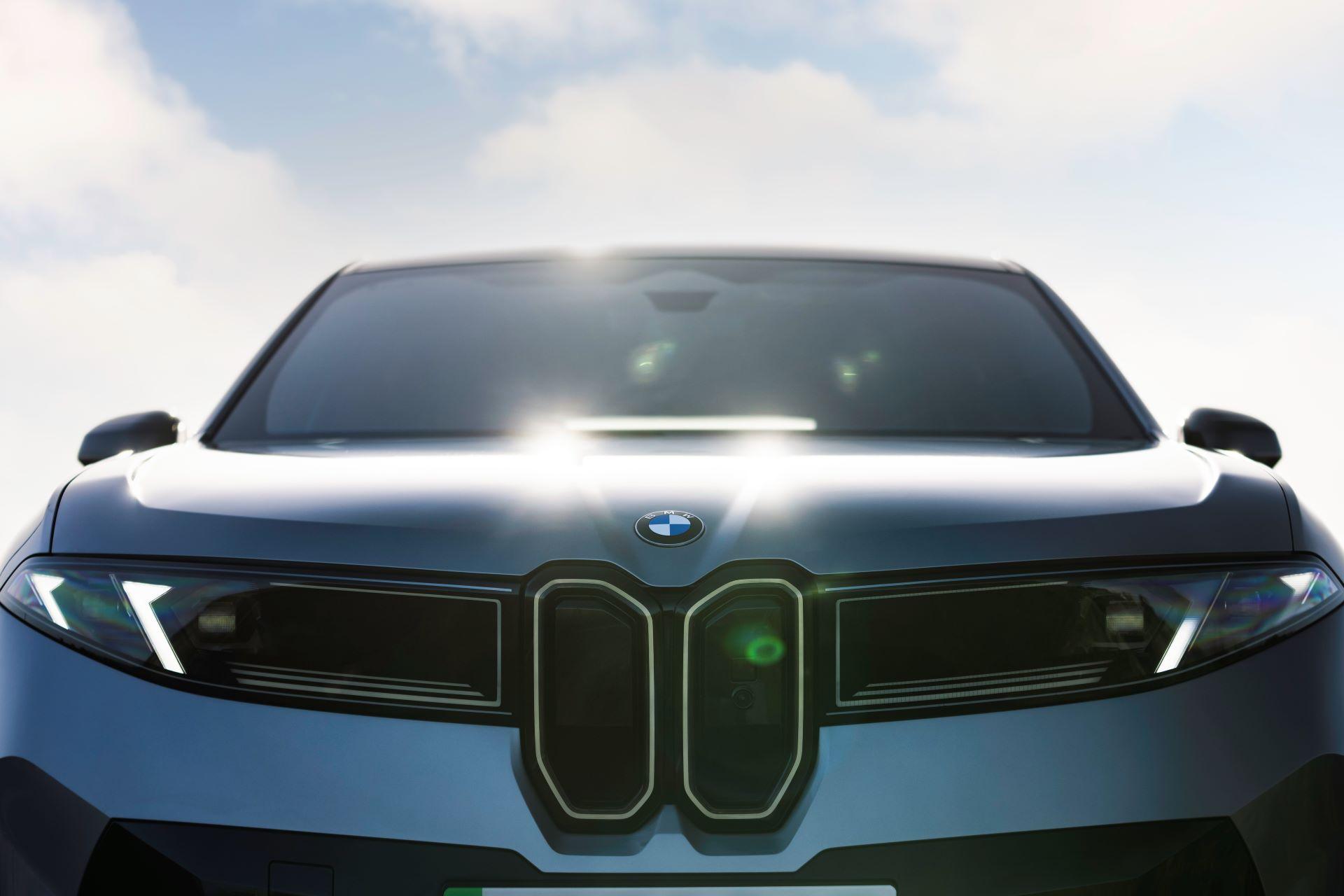
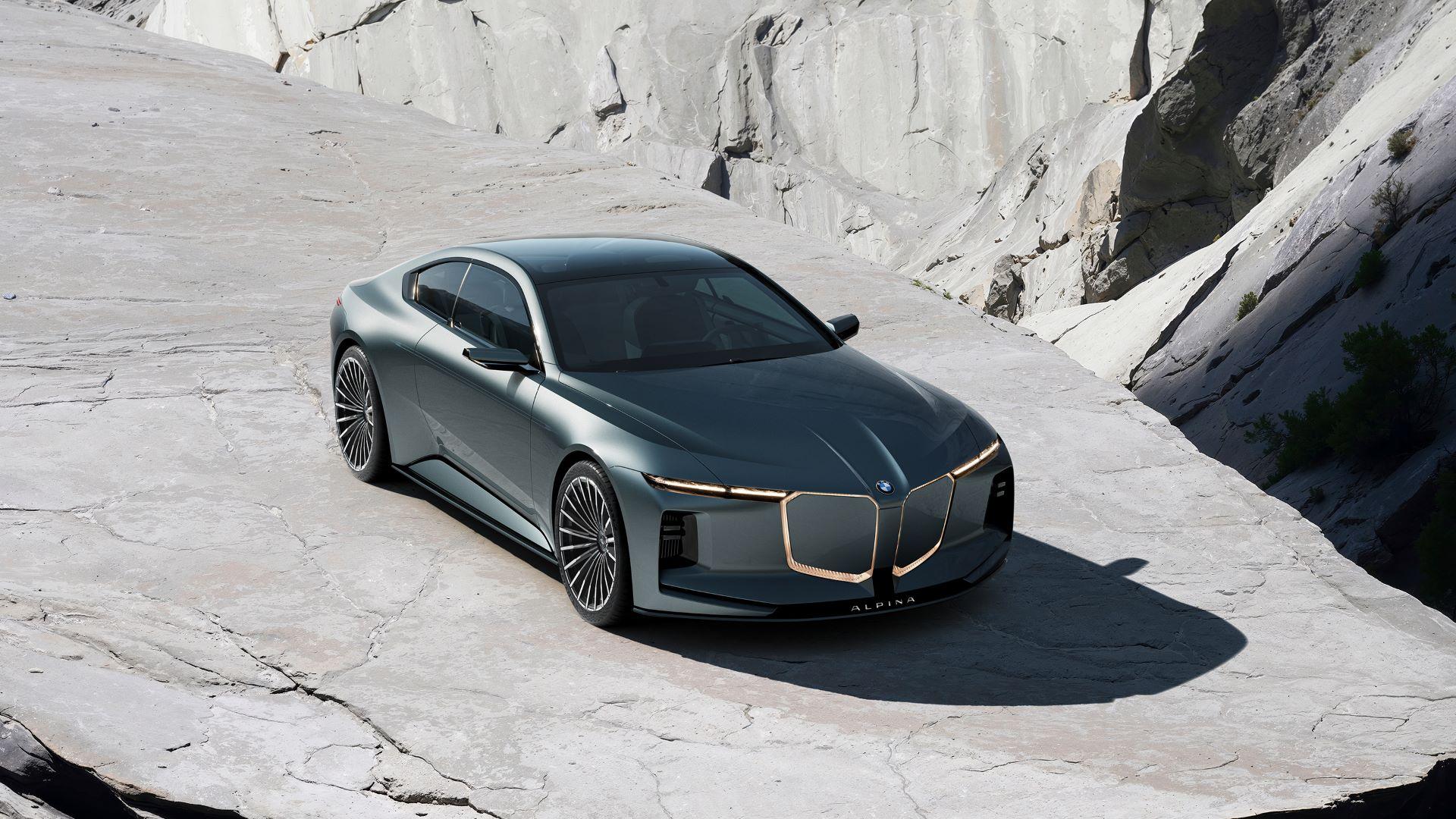
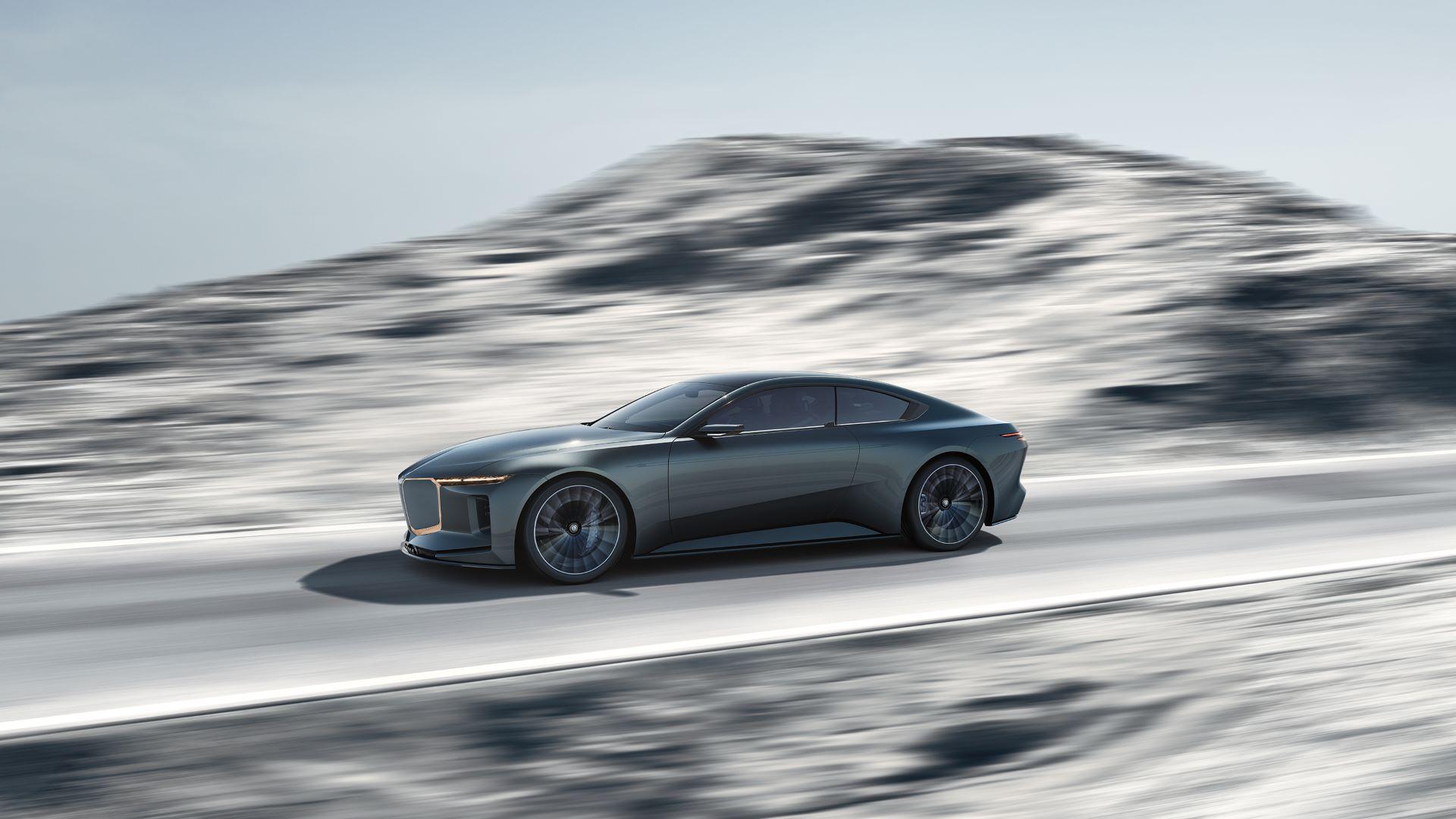
At 5,200 mm in length, the Vision BMW ALPINA establishes presence through proportion rather than aggression. It sits low and wide, its coupé silhouette stretched like a single uninterrupted breath across a long horizon. The design language is anchored by a shark nose reinterpretation of the familiar BMW kidney grille, transformed into a three-dimensional sculptural face that feels less like an ornament and more like the beginning of motion itself.
From this forward-leaning stance, a single visual idea defines the exterior: a speed feature line that rises at a precise six-degree angle, threading its way from the front corners along the body before wrapping into the rear. It is not decorative flourish but directional logic, a drawn trajectory that suggests movement even when the vehicle is still.
In place of overt theatrics, the design leans into what its creators describe as “Second Read” sophistication. The surface reveals itself in layers. Deco-lines, part of ALPINA’s visual vocabulary since 1974, are not applied but embedded beneath the clear coat, present yet restrained, as if the bodywork remembers them rather than displays them. Inward-facing surfaces are finished in dark metallic tones that only fully resolve upon closer inspection, a gesture inspired by historical BMW detailing philosophies where restraint carried more weight than ornamentation.
Lighting becomes another language of subtle revelation. Warm white daytime running elements trace the kidney surrounds like early alpine light cresting a mountain ridge, while illuminated crystal details sit within the slim headlamps like cut fragments of precision. Nothing is exaggerated. Everything is considered.
Even the mechanical signatures remain, not as nostalgia but as continuity. The elliptical four-pipe exhaust persists, as does the ALPINA nameplate, now reimagined as a machined metal statement integrated into the lower front apron. The wheels, 22 inches at the front and 23 at the rear, continue the brand’s long-standing 20-spoke tradition, a quiet thread linking past to present.
Inside, the cabin expands the philosophy rather than simply reflecting it. The architecture is intentionally segmented, each element treated as an independent form rather than absorbed into a uniform whole. The six-degree motif returns, subtly dividing the interior into upper and lower visual fields, reinforcing the exterior’s sense of directional movement.
Materials are chosen with a similar sense of geographical and emotional grounding. Full-grain leather sourced from across the Alpine region creates a tactile landscape that feels both rooted and refined, while stitching patterns echo the exterior deco-lines in a restrained, almost rhythmic cadence. Metal components adopt watchmaking-inspired finishing techniques, balancing satin and polish with meticulous precision.
Technology is integrated rather than imposed. The cabin is anchored by BMW Panoramic iDrive, including a passenger display that stretches the interface across the dashboard like a shared horizon. Heritage blue and green tones animate the system, intensifying as driving modes shift from Comfort+ into more performance-focused settings. Even the digital landscape carries narrative weight, with a rendered Alpine backdrop corresponding to the view south from Buchloe, grounding the interface in a real-world origin.
That origin is essential to understanding what the Vision BMW ALPINA represents. The ALPINA story began in 1965 in Buchloe, where Burkard Bovensiepen established a philosophy that would quietly reshape expectations of performance. His belief was deceptively simple: comfort and speed are not opposites, but collaborators. In endurance racing, while others stripped weight, he added padding, prioritising endurance over austerity. That idea, carried forward into road cars, became the brand’s defining paradox: the faster you could travel comfortably, the faster you could truly go.
The Vision BMW ALPINA channels that thinking into a contemporary form. It is not a nostalgic tribute, but a continuation of a logic that has always placed human experience at the centre of engineering ambition. Even Comfort+, a refinement beyond conventional comfort calibrations, remains part of its conceptual DNA, reinforcing the idea that control is not only about performance, but also about composure.
Historically, models like the ALPINA B7 Coupé of the late 1970s proved that this philosophy could scale into luxury without dilution. Based on the BMW 6 Series of its era, it embodied long-distance capability wrapped in elegance, a template that still echoes through this modern interpretation.
Within the broader strategy of the BMW Group, ALPINA now occupies a carefully defined space between BMW and Rolls-Royce, expanding the upper reaches of the portfolio while preserving the identity that made the marque distinctive. It is a balancing act between guardianship and evolution, ensuring that what ALPINA represents is not only maintained, but sharpened for a new generation.
The Vision BMW ALPINA does not attempt to resolve the tension between heritage and innovation. Instead, it allows that tension to remain visible, like a faint structural line running through its surface. In doing so, it becomes less a prediction of production intent and more a meditation on continuity itself, a reminder that in the right hands, speed is never just about velocity, and comfort is never just about softness. It is about how far you can travel when both are perfectly aligned.