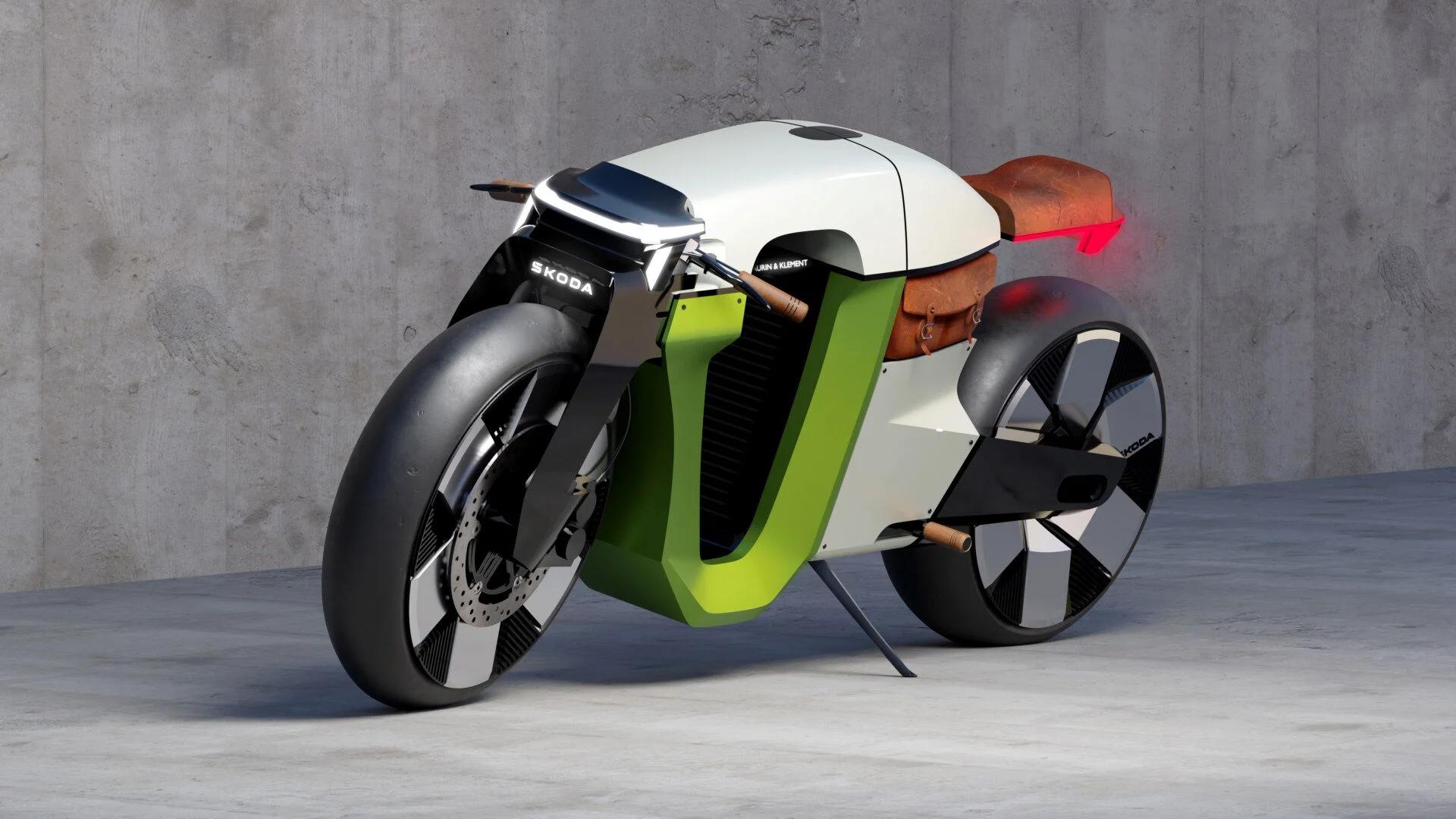
Milton Keynes, 14 May 2025 – With 130 years of design legacy behind it, Škoda is turning to the past to shape the future. The Czech manufacturer’s latest concept, the Slavia B, pays electrified tribute to one of the most pivotal vehicles in its history: the 1899 Slavia B motorcycle. More than just a nod to the past, this futuristic café racer is a declaration of intent – and the first in a new series of visionary reinterpretations from the marque’s design house.
The Slavia B concept debuts as the boldest expression yet of Škoda’s Modern Solid design language, an aesthetic philosophy rooted in clean lines, sculptural strength, and minimalist function. This visual identity also represents the brand’s wider pivot towards electrification, sustainability, and advanced digitalisation – themes embodied in every curve and component of the Slavia B.
A Tribute to Two-Wheeled Beginnings
Long before Škoda became synonymous with practical family cars and high-performance rally machines, its story began with two wheels. In 1895, Václav Laurin and Václav Klement launched their first bicycles, quickly progressing to motorcycles like the original Slavia B just four years later. That early machine helped establish the brand’s reputation for ingenuity and mechanical refinement.
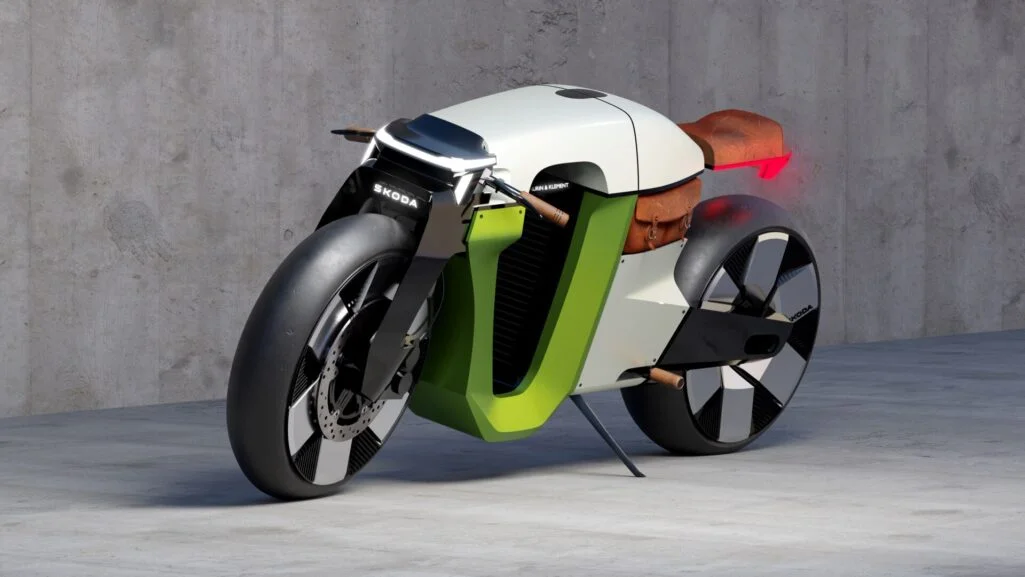
Now, over a century on, the new concept motorcycle reimagines that heritage through a contemporary lens. Retaining the signature frame silhouette of the 1899 original, the Slavia B concept strips the form back for the electric age. The combustion engine is gone; in its place sits an open void within the frame, where a suspended Škoda logo takes centre stage – a quiet but powerful visual cue that symbolises both legacy and transformation.
A Vision Led by Passion
Designed in-house by Škoda’s exterior stylist Romain Bucaille, the concept is the product of both professional expertise and personal passion. “I wanted to go back to the brand’s roots,” Bucaille explains. “As someone who also loves motorcycles, this was a refreshing change and a great creative challenge.”
The result is what Bucaille describes as a “futuristic café racer in Modern Solid style.” Clean contours, crisp edges, and a distinctive lighting signature define the aesthetic, while every element – from the floating seat to the integrated leather tool bag – is steeped in narrative. The design even references early racing history, with subtle tributes to factory rider Narcis Podsedníček and his legendary ride in the 1901 Paris–Berlin race.
A New Chapter Begins
While the Slavia B isn’t destined for production, it marks the opening chapter of an exciting new design series. Following this two-wheeled tribute, Škoda plans to reinterpret more of its historical icons, including the 200 RS rally car, the Voiturette, and the cult-classic 1203 van – all through the lens of modern electric design and sustainability.
For Škoda, these concept models are more than exercises in nostalgia. They are statements of purpose – celebrating the ingenuity of the past while projecting bold ideas for the future. In bringing the Slavia B into the 21st century, Škoda reminds us that true innovation doesn’t forget where it came from.
And if the Slavia B is anything to go by, the journey ahead will be just as thrilling as the ride that started it all.