


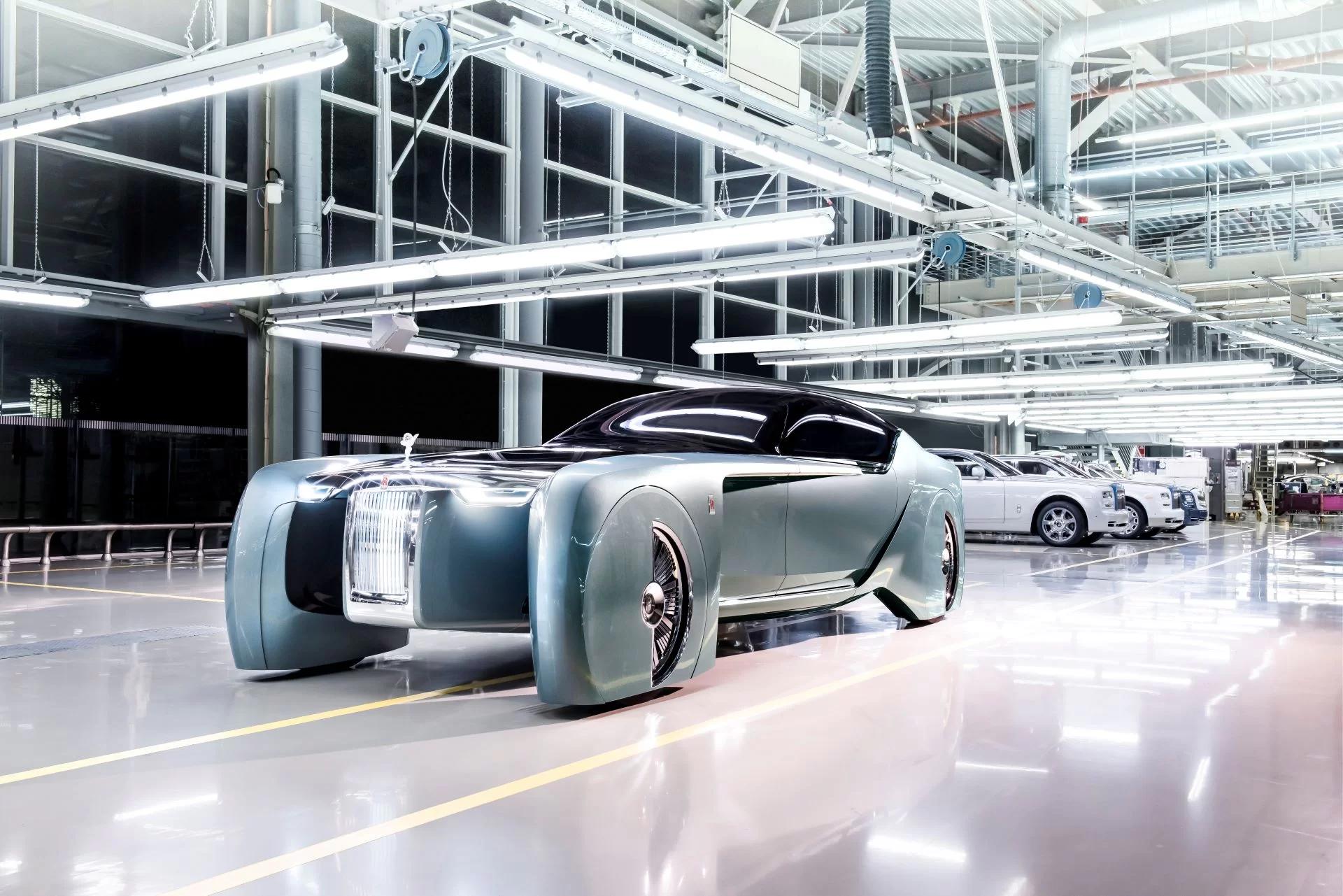
Monday 14 April 2025, Goodwood, West Sussex — In the culminating chapter of its year-long Models of the Marque retrospective, Rolls-Royce Motor Cars turns its gaze not to a single landmark model, but to a lineage of experimental masterpieces—vehicles that embody the spirit of innovation and exploration at the heart of the brand’s modern renaissance. This final feature honours the EX cars of the Goodwood era, experimental motor cars conceived from 2004 onwards, which together represent the first true ‘heritage’ models of the 21st-century Rolls-Royce story.
As part of the brand’s 120th-anniversary celebration—marking the pivotal 1904 meeting between Henry Royce and The Hon. Charles Stewart Rolls—this final instalment offers a fitting tribute to a tradition of experimentation that has shaped the marque for over a century.
A New Era of Experimentation
The EX lineage is deeply rooted in the marque’s engineering DNA. From 1EX in 1919 to 45EX in 1958, these early experimental models allowed Rolls-Royce engineers to test new ideas, technologies, and design directions, far from the constraints of production lines. After a hiatus of nearly half a century, the tradition was revived at the newly established Home of Rolls-Royce at Goodwood. The first modern experimental car, 100EX, emerged in 2004—just a year after production began on Phantom VII—heralding a bold new age of creativity.
Andrew Ball, Head of Corporate Relations and Heritage at Rolls-Royce Motor Cars, explains,
“Experimental models are not and never have been concept cars at Rolls-Royce. They are fully functioning vehicles—platforms for real-world innovation. Though every EX model is unique, they all uphold the Rolls-Royce philosophy of respecting the past while constantly focusing on the future.”
Each Goodwood-era EX car is instantly recognisable by its red ‘Double-R’ badge, a distinctive marker reserved exclusively for these pioneering creations.
100EX (2004) – A Centenary Statement
The unveiling of 100EX at the 2004 Geneva Motor Show was a watershed moment. An open-top, four-seat drophead with a dynamic profile inspired by motor yachts, it was both a celebration of the brand’s centenary and a manifesto for the new Goodwood philosophy.
Built on a shortened aluminium spaceframe and powered by a monumental 9-litre V16 engine, 100EX hinted at the opulence and boldness to come. With teak decking, a boat-tail rear, and an advanced fabric roof lined in cashmere and wool, it set new standards for craftsmanship. It would later evolve into the celebrated Phantom Drophead Coupé, a model now regarded as one of the most desirable Rolls-Royces of the modern age.
101EX (2006) – A Coupé Vision Realised
In 2006, 101EX offered a glimpse into what a Rolls-Royce coupé of the future might look like. More compact and performance-focused than the Phantom, it featured carbon fibre bodywork and a lower, sportier stance.
Most notably, 101EX introduced the now-iconic Starlight Headliner—a celestial canopy of fibre-optic lights that has since become one of the marque’s most beloved Bespoke features. The car’s DNA would carry over into the Phantom Coupé launched in 2008, and ultimately into Wraith and beyond.
200EX (2009) – The Blueprint for Ghost
With 200EX, Rolls-Royce made its intentions clear: this was a prototype destined for production. Sleeker, more dynamic and aimed at a younger clientele, 200EX previewed the first-generation Ghost.
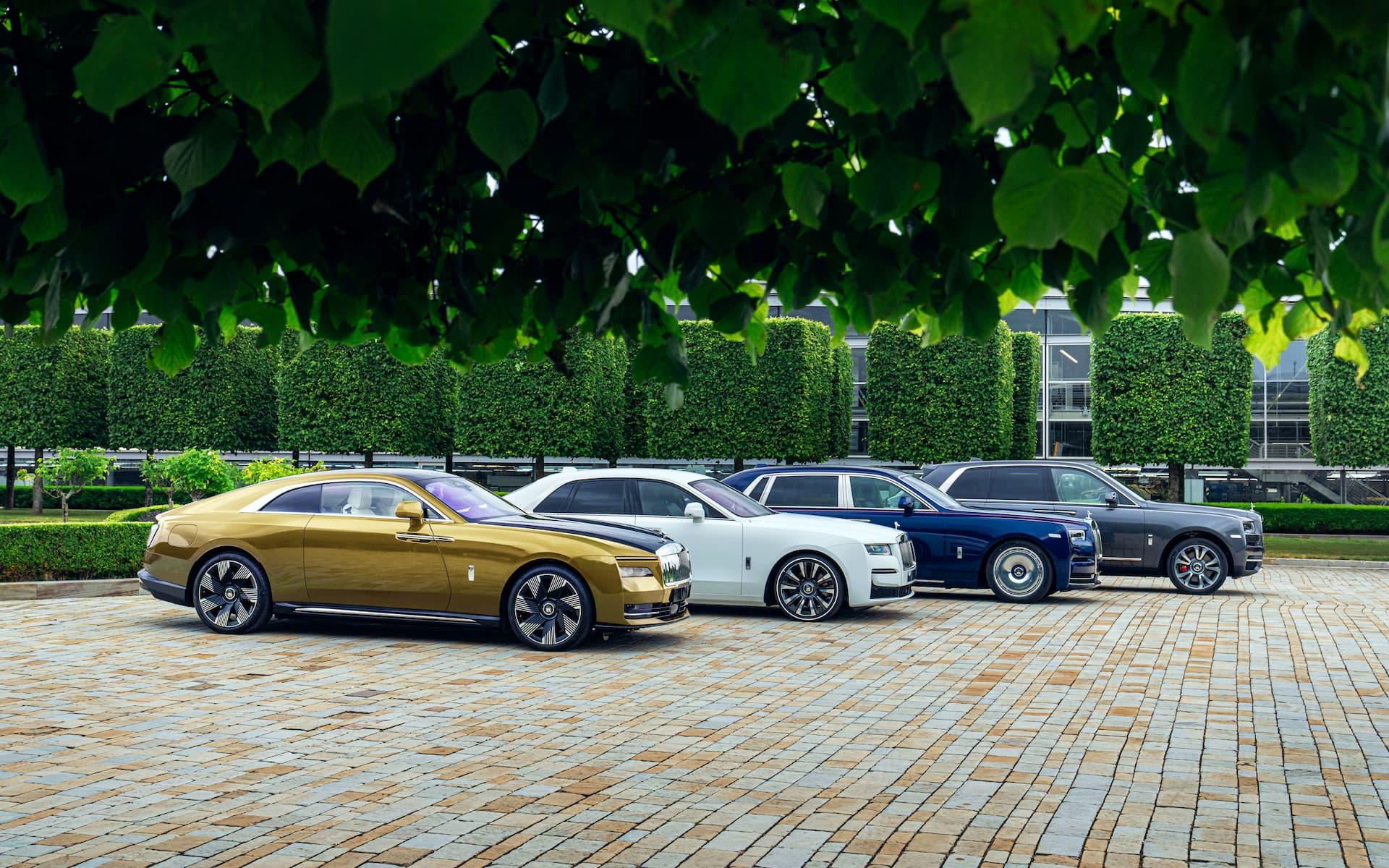
Launched officially in 2010, Ghost would go on to become the most commercially successful model in Rolls-Royce history. Its design, with cleaner lines, less formality, and a focus on driving pleasure, signalled a pivotal moment in broadening the brand’s reach without compromising its essence.
102EX (2011) – Electric Vision, Global Mission
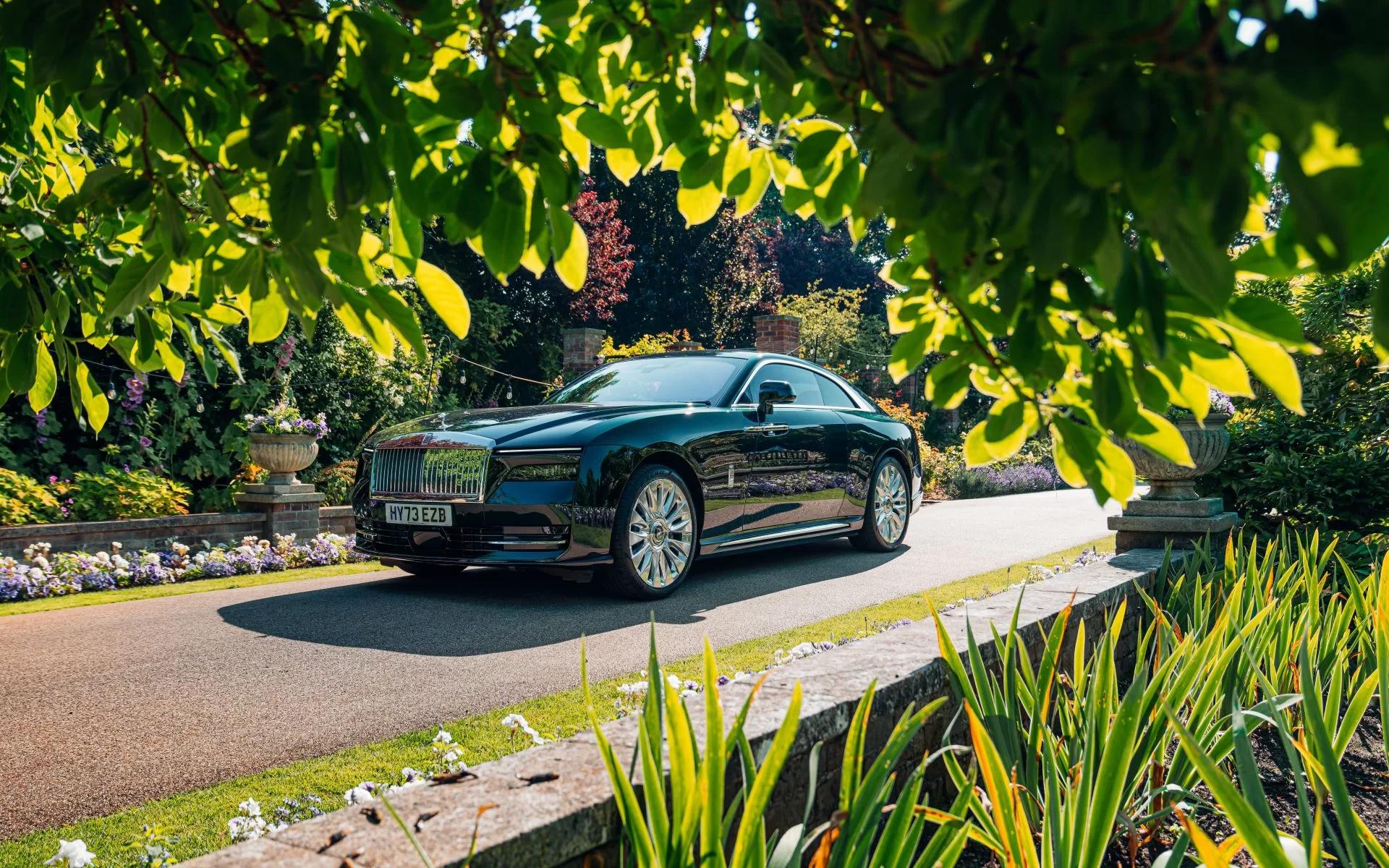
As the world began shifting toward electrification, Rolls-Royce responded with 102EX—the world’s first fully electric super-luxury vehicle. Officially known as the Phantom Experimental Electric (EE), 102EX was no static showpiece. It undertook a global tour, inviting feedback from clients, media, and engineers in Europe, the Middle East, Asia, and North America.
More than a decade before the arrival of Spectre, 102EX laid the foundation for the marque’s transition to all-electric luxury, validating the vision once espoused by Charles Rolls in 1900: that electric power would one day be “cleaner and quieter” than its combustion counterpart.
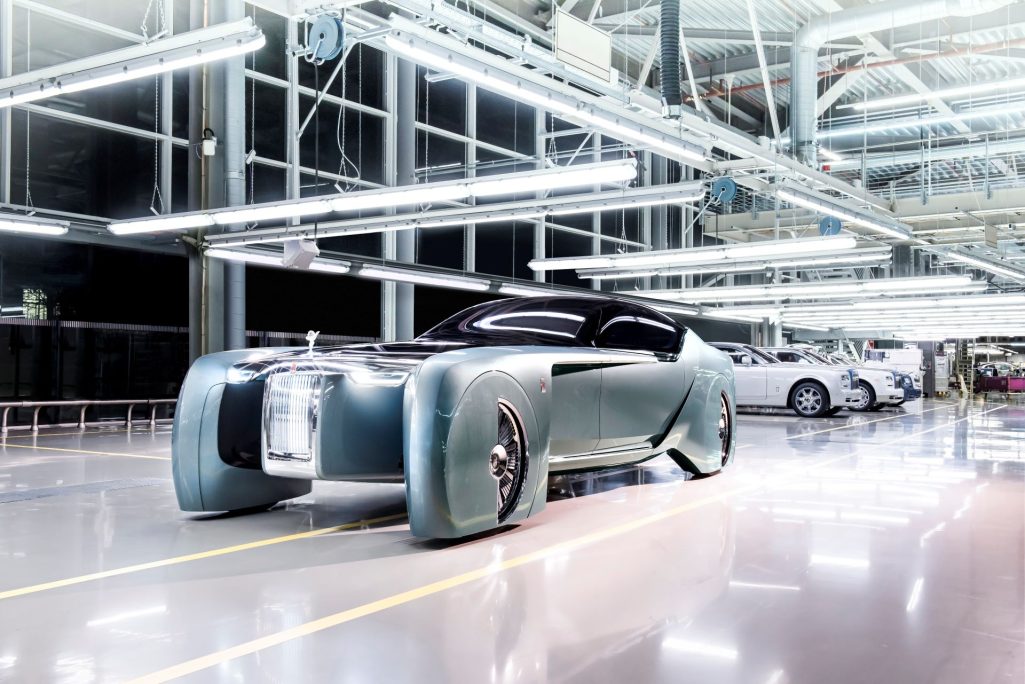
103EX (2016) – Visionary Luxury Reimagined
Commissioned as part of the BMW Group’s centenary celebrations, 103EX represented a striking leap into the future. Unveiled at London’s Roundhouse, it was not bound by production feasibility but instead expressed Rolls-Royce’s vision of personalised, autonomous luxury mobility.
Built around the idea of ‘The Grand Sanctuary’, 103EX reimagined the passenger experience with a spacious, lounge-like interior and zero-emissions powertrain. Though a pure design study, it directly influenced the development of the Spectre and the wider shift toward sustainable, intelligent vehicles.
Legacy of Innovation
The EX models of the Goodwood era are far more than technical curiosities. They are bold declarations of possibility—vehicles that dared to explore uncharted territory. Some, like 100EX and 200EX, paved the way for successful production models. Others, like 102EX and 103EX, served as beacons lighting the path toward electrification and autonomous experiences.
As Rolls-Royce draws its Models of the Marque series to a close, the EX cars stand as a testament to the marque’s unwavering commitment to evolution without compromise. They embody a philosophy where heritage fuels innovation and experimentation is not a detour, but a defining journey in the pursuit of automotive excellence.
In the quiet stillness of the Sussex countryside, where the past and future intersect at the Home of Rolls-Royce, the EX cars continue to whisper possibilities—and to echo the enduring spirit of Royce and Rolls’ first meeting, 120 years ago.