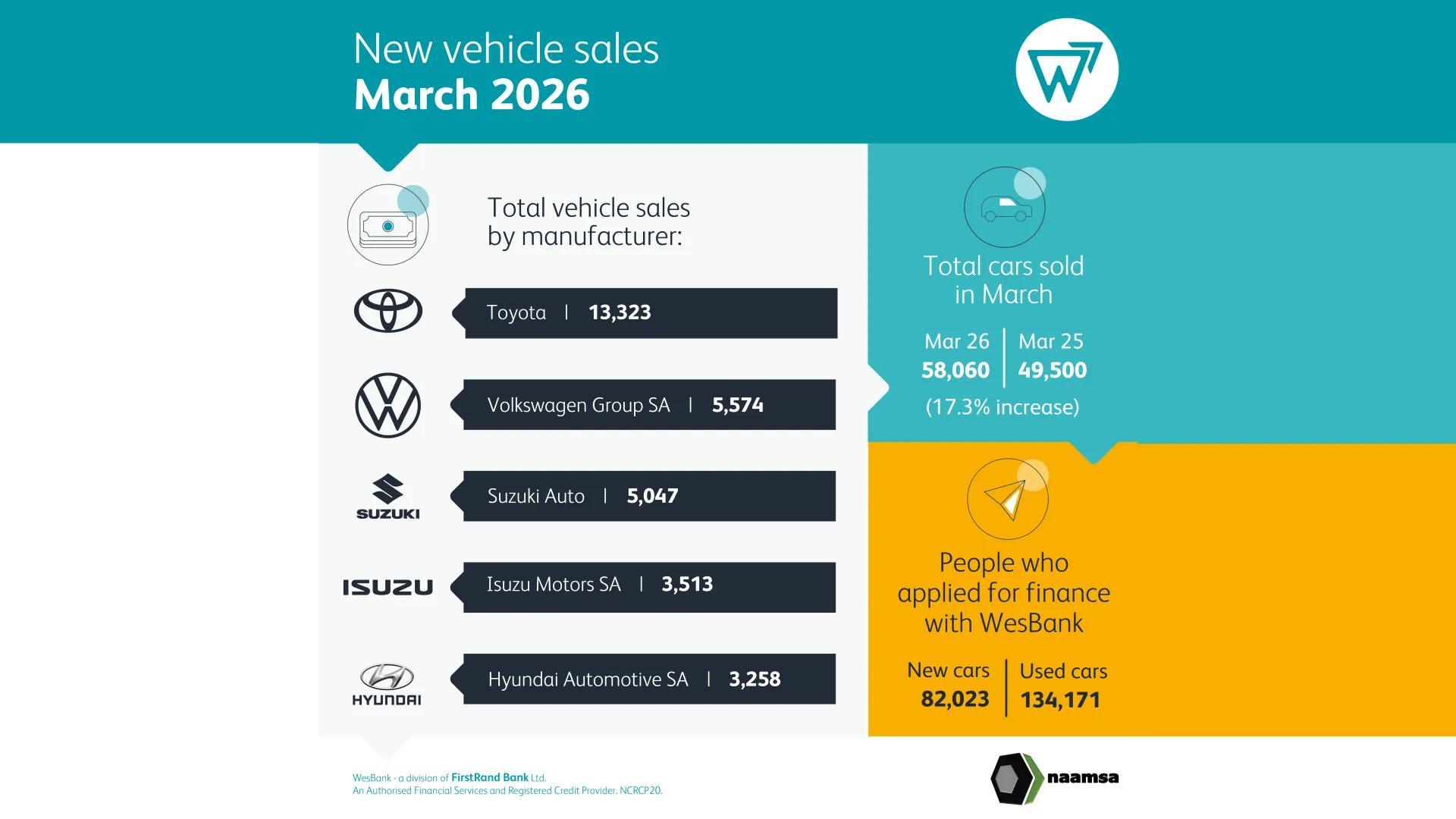
South Africa’s new vehicle market delivered a remarkable performance in March 2026, recording its strongest month in nearly two decades. Domestic sales reached 58,060 units, a 17.3% increase from the 49,500 units sold in March 2025, signalling robust growth underpinned by cumulative interest rate cuts and strengthened consumer and business sentiment. March 2026 marks the highest monthly figure since 2007, setting a solid tone for the year. Year-to-date volumes now stand at 161,978 units, 12.4% ahead of the same period last year, reflecting sustained momentum across the market.
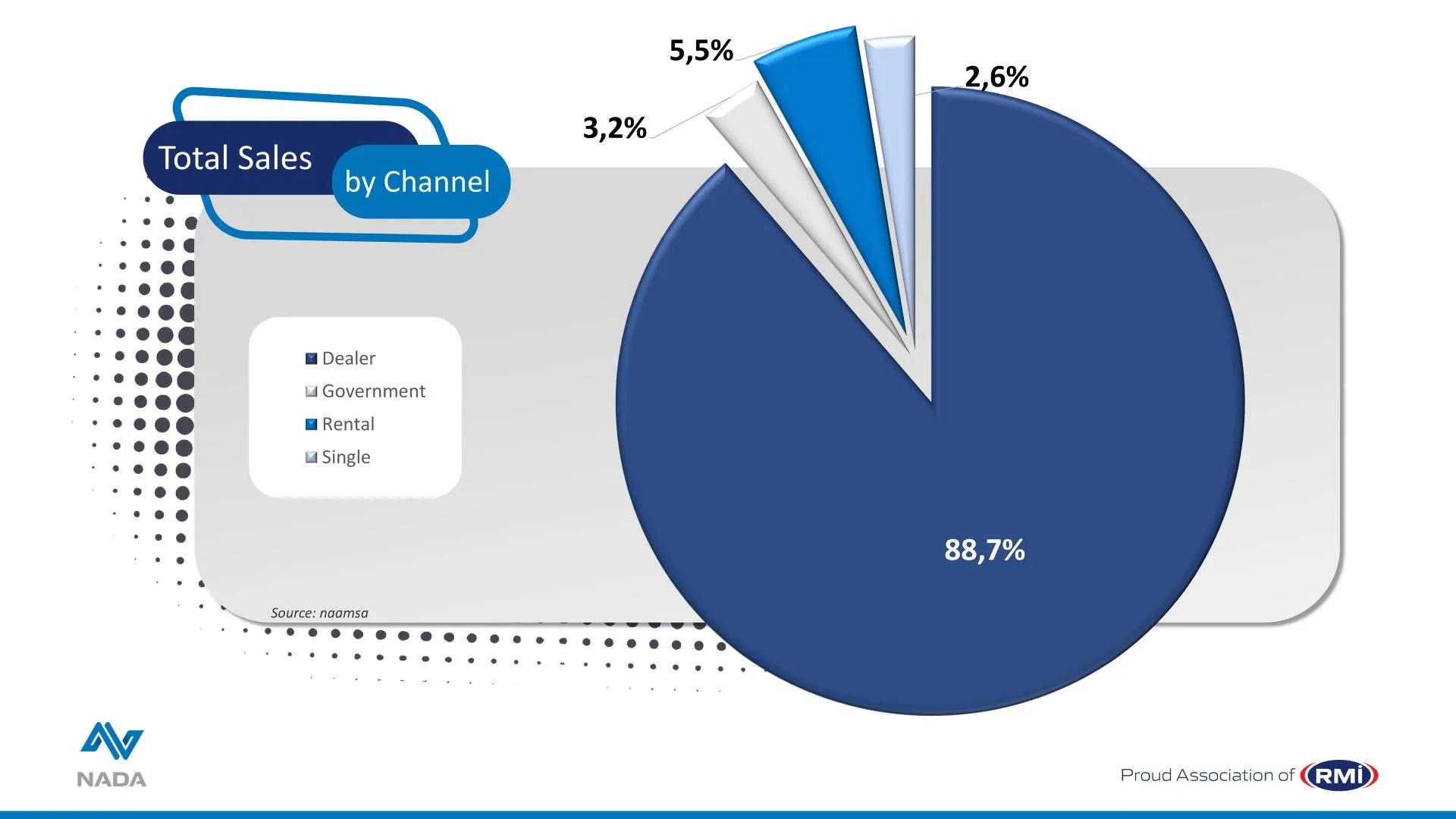
Retail demand remains the backbone of this growth, with dealer channels accounting for 88.7% of total sales. Passenger vehicles led the surge, with 39,370 units sold, an 18.2% year-on-year increase, while car rentals contributed 6.5% of volumes. Light commercial vehicles also posted strong gains, reaching 15,557 units, up 15.7%, medium commercial vehicles rose 14.0% to 823 units, and heavy trucks and buses climbed 14.5% to 2,310 units. Dealer confidence climbed to a 13-year high of 67 index points, reflecting an encouraging business environment.
Lebogang Gaoaketse, Head of Marketing and Communication at WesBank, notes, “March is a result worth noting. The market hasn’t seen numbers like this in nearly two decades, pointing to stronger domestic demand. Successive rate cuts since late 2024 are clearly feeding through, lifting both consumer and dealer confidence. The environment, however, is changing. April introduces new pressure that households and the industry will need to manage carefully.”
Indeed, April brought notable cost pressures. Petrol prices increased by R3.06 per litre and diesel rose by R7.37 to R7.51 per litre, driven by rising global oil prices amid Middle East tensions, coupled with currency weakness. While a temporary R3.00 per litre reduction in the general fuel levy offers short-term relief until 5 May 2026, it does not fully offset the price increase.
Higher electricity tariffs are also expected to weigh on both households and businesses, potentially influencing transport costs, food prices, and broader living expenses. Gaoaketse adds, “The fuel and energy increases coming through in April present a clear headwind for consumers who were only starting to benefit from earlier rate cuts. Our focus remains on structuring finance in a way that is sustainable over time, taking into account total cost of ownership rather than purchase price alone.”
Despite these emerging pressures, the strong first-quarter performance provides a solid foundation for the remainder of the year. Underlying drivers of demand remain intact, and financial institutions like WesBank continue to support customers with solutions tailored to evolving circumstances, ensuring that growth in South Africa’s vehicle market remains sustainable even in a shifting economic landscape.