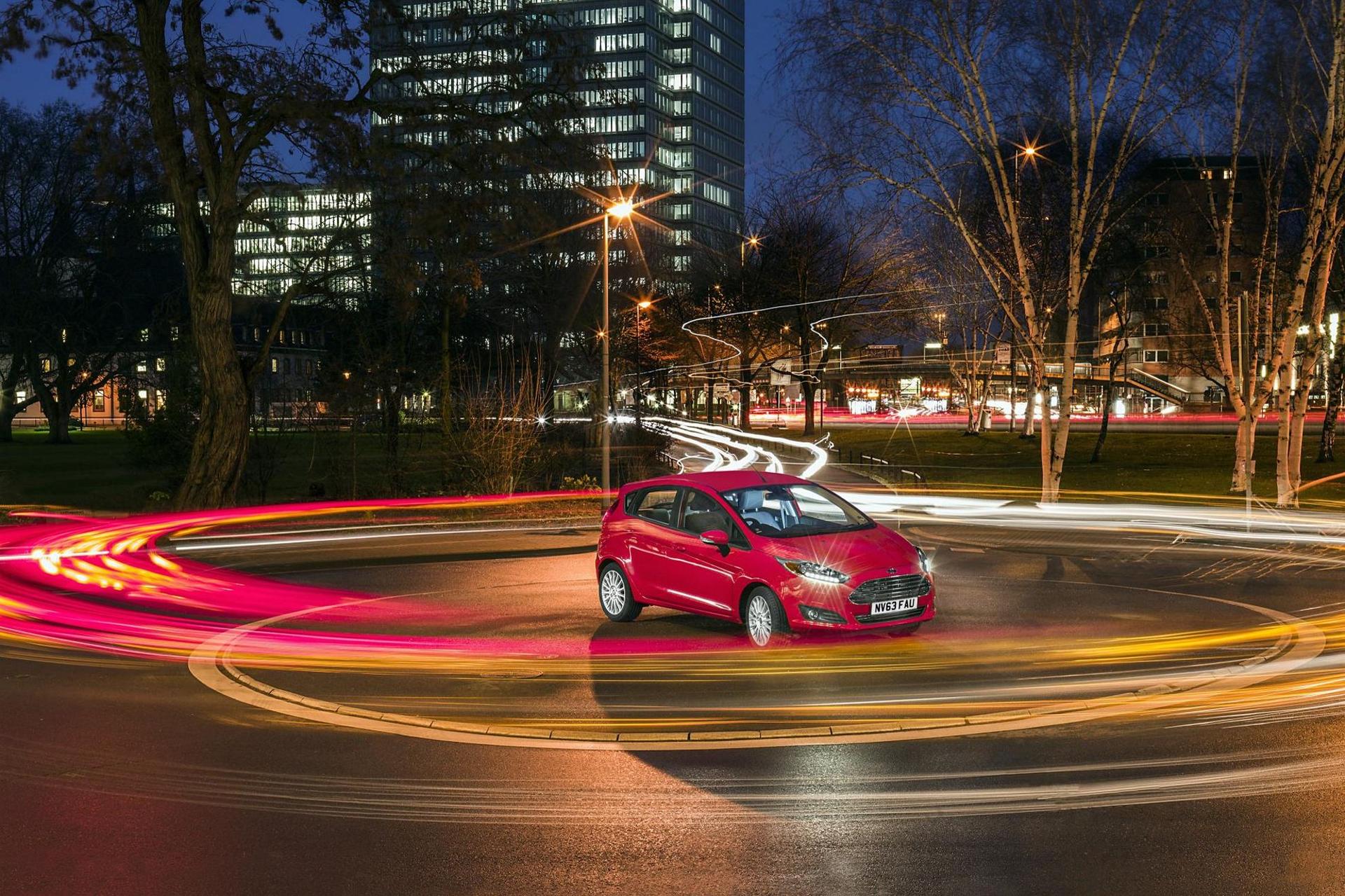
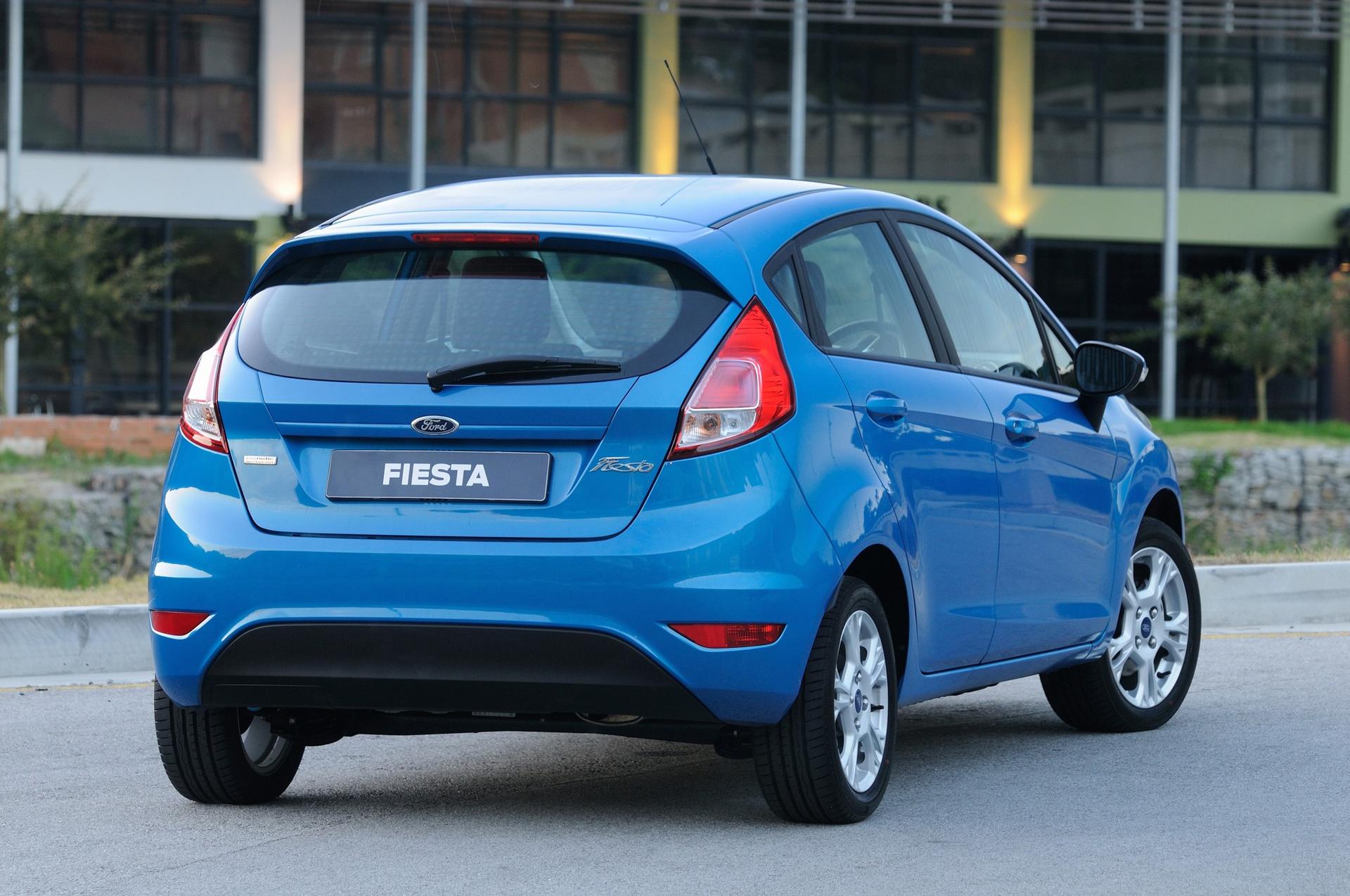
- 2011 marks 35 years since the 1976 launch of the Ford Fiesta – a car that has achieved iconic status
- 15 millionth Fiesta produced in July, with demand for the sixth generation model showing no signs of waning
- 83 323 Fiesta sold in South Africa since 1997
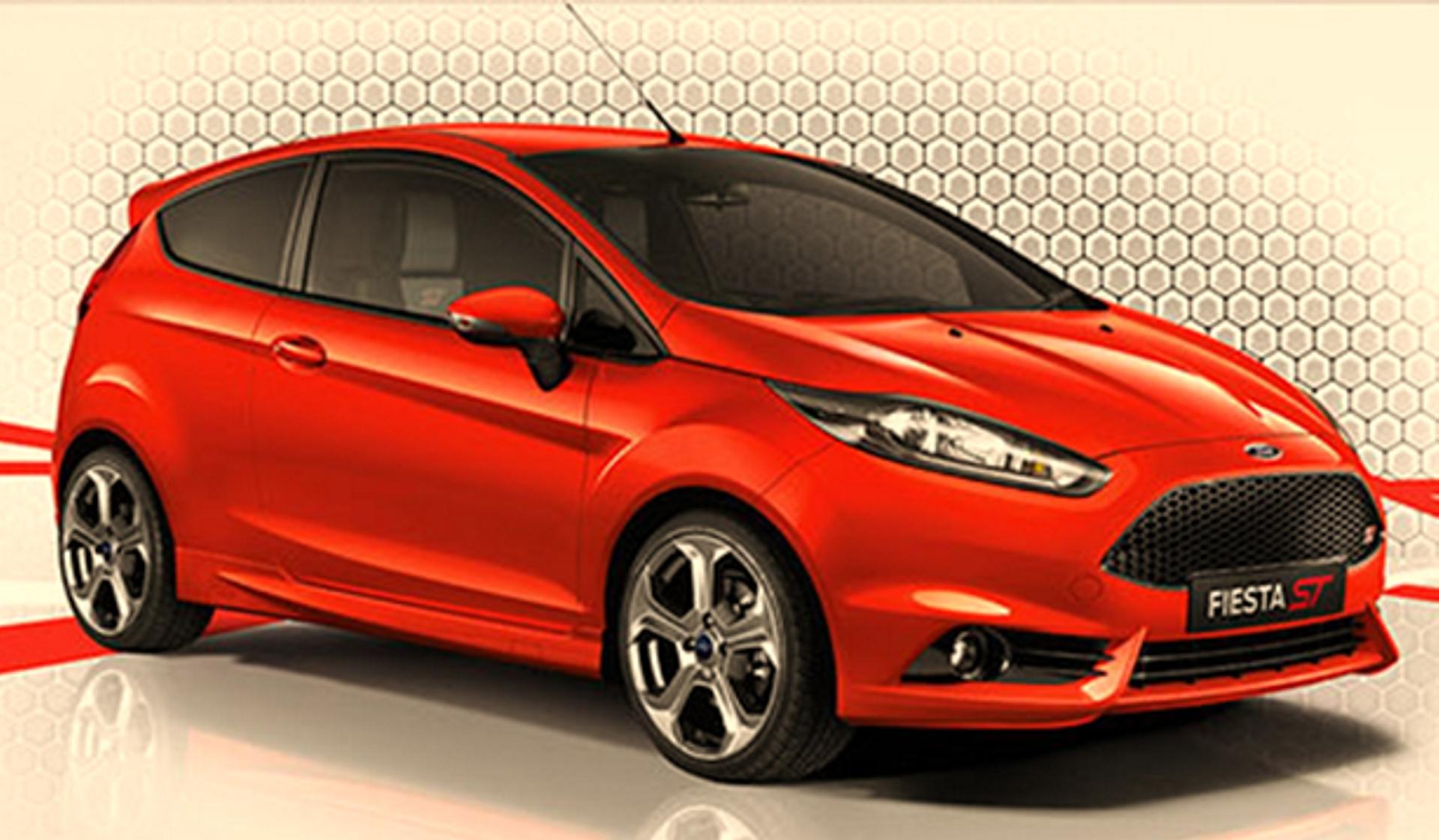
PRETORIA, July 29, 2011 – The Ford Fiesta reached two important milestones in July, celebrating its 35th birthday with a total of 15 million cars produced worldwide.
The Ford Fiesta reached the 15 million production landmark this month, a figure boosted by the popularity of the latest generation model. Ford has built a million of the current model since it debuted 28 months ago.
The Fiesta is one of Ford’s greatest success stories – appealing to several generations of drivers with its attractive styling, practicality, efficiency and performance. South Africa got its first taste of the popular Fiesta in 2007, with an incredible 83 323 models sold since introduction. The Fiesta brand has an illustrious history having walked away with the 1998 South African Car of the Year title.
“The Fiesta is an important model in the Ford line-up,” said FMCSA’s Vice President Marketing, Sales and Service, Dean Stoneley. “The new generation Fiesta was the first product to be introduced under the ‘One Ford’ vision of a single, global company building and designing cars for a single global audience and has been described as Ford’s most significant project since the Model T.”
The very first Fiesta was produced in Valencia, Spain, in 1976 as Ford’s practical and economical response to a fuel crisis that was gripping the world, and it immediately tapped into a small car demand in Europe and around the world.
Valencia continues to build the current Fiesta along with Nanjing, China, Rayong, Thailand, and Cuautitlàn, Mexico but Ford’s manufacturing plant in Cologne, Germany, now produces the majority of new Fiestas.
Thirty-five years, six generations and 15 million cars after its debut, the Fiesta continues to offer practicality, style and efficiency to car buyers of all ages.
“With 15 million sales worldwide, the Fiesta has proven to be a phenomenal sales success to date and will continue to be an integral player in Ford’s future plans,” concludes Stoneley.
FIESTA CONCEPT CARS
Through its history the Fiesta has taken on other – perhaps less familiar – forms having lent its architecture to many concept vehicles as a platform for ideas and innovation. Some were clearly designed to be part of the Fiesta family. Others bore no resemblance to Ford’s small car, but all have demonstrated the potential and diversity of the Fiesta – qualities that have helped make it a global success.
Ghia Corrida (1976)
The Ghia Corrida was the first Fiesta-based concept car, introduced at the Turin Motor Show in November of 1976, the year the Fiesta was introduced. Corrida means bullfight, and the Corrida Concept was Ghia’s vision of a new age sports car with an array of safety features.
Corrida was not only based on a Fiesta, but was also powered by a Fiesta engine. It featured pneumatically operated gullwing doors hinged in two segments and electrically operated flaps for the headlamps to provide optimal aerodynamics performance. The rear luggage compartment was hinged at the bottom.
Corrida’s driving environment was unique. The instrument cluster was an array of boxes that provided a distinctive look of compartmentalisation. The concept car was bold orange with black accents.
Ghia Prima (1976)
One of the first Fiesta-based concepts, the Ghia Prima was featured at the 1976 Turin Motor Show. It was a joint collaboration between Ford designers and Ghia’s coachbuilders.
Prima’s concept was for interchanging roof sections that would transform the shape and functionality of the vehicle. Its character could change into a pickup, station wagon, fastback coupe or two-door notchback. It was shown with a red exterior and beige interior.
Ghia Urban Car (1976)
The Ghia Urban, later called the Ghia Manx, was one of the early Ghia creations using Fiesta architecture and running gear. It was a small city car, standing just 137 centimetres tall and only 259 centimetres long.
Despite its diminutive size and short, two-door profile, this concept car could seat four people. It was designed in the aftermath of the fuel crisis of 1973 as a solution to urban congestion and higher fuel prices. It even had storage for luggage in an area in front of the driver.
Ghia Microsport (1978)
Based on a 1.0-litre Ford Fiesta, the Ghia Microsport was about compact, sports car performance. It was 10 inches shorter than a Fiesta and featured lightweight aluminium panels and impact-absorbing plastic materials at the front and rear.
The two-seater Ghia Microsport was geared for fun and fuel efficiency. Lightweight glass panels were used for the windscreen, rear screen and side glass. The car was finished in a two-tone white and red and was distinctly wedge-shaped with a severely sloping front grille. Twin air ducts characterised the rear-end treatment.
Inside, black leather and red cloth were used for the seats, and a unique plastic cover was used to segregate the luggage compartment from the passenger compartment. This movable cover could be folded away for more stowage capacity.
Ghia GTK (1979)
Highly futuristic, the GTK concept stood for Grand Touring Kombi. It was intended as a sporty, aerodynamic grand touring car with ample luggage space.
GTK Concept was built on an extended Fiesta platform. It featured a number of advanced elements, including electric side windows, an on-board computer and digital instrumentation.
Its design included a central greenhouse effect for the passenger area, which even incorporated glass side pillars. Other GTK features included headlights behind electrically controlled panels.
Aero ducts behind these panels channelled air over the bonnet and roof.
Ghia Pockar (1980)
Pockar meant pocket car. Small and narrow, yet tall, this concept was about space efficiency.
Pockar had room for four occupants and luggage. Its beige-coloured exterior featured two-segment doors cut horizontally. The upper portion of the door opened conventionally, but the bottom portion folded down like a tailgate.
Pockar incorporated luggage compartments into the exterior door panels. The rear seat could be flat-folded to accommodate bulky items.
Ghia Shuttler (1981)
For Ghia, the possibilities for a city coupe continued to beckon at the start of the 1980s. The result of this inspiration was the Ghia Shuttler of 1981.
Based on a Fiesta platform, Shuttler was just 196 centimetres long. This two-door city coupe was finished in metallic anthracite with bold orange accent stripes. Inside, a plush grey and brown cloth interior carried through the orange accent stripes from the vehicle’s exterior.
The wedge-shaped body shape displayed a sporty demeanour, and featured an advanced feature for the time – flush-mounted side glass – plus faired-in enclosures for the side mirrors. Rear air vents were placed to connect between Shuttler’s tail lamps and its side accent stripe.
Ghia Barchetta (1983)
Based on the architecture of the Fiesta XR2, the Ghia Barchetta was an advanced concept for a two-seat sports car, an attractively open market niche at the time.
Barchetta was inspired by the barchettas of the 1950s. It achieved Ford’s goal of demonstrating the potential of an affordable sports car, intriguing European driving enthusiasts about its production possibility.
Barchetta was finished in silver with matte dark grey bumpers and wraparound front indicators, and fitted with perforated 13-inch wheels with Goodyear NCT tyres. It was powered by the XR2’s 1.6-litre, 16-valve engine.
The Ghia Barchetta’s shape can be recognised in the eventual Capri sports car created by Ford Australia.
Fiesta Urba (1989)
Fiesta Urba was built around the idea of a city shopper vehicle. It offered everything the customer would require for a day of power shopping in town.
This ultimate city car concept had two doors on the near side and one on the far side of the vehicle, plus parking aids, built-in garage door openers, a refrigerator in the boot and innovative interior stowage areas.
Finished in a distinctive shade of yellow, the Fiesta Urba was an attractive model. Its interior carried the yellow signature colour as well as accenting grey materials with bright colours.
Fiesta Bebop (1990)
Fiesta versatility was the theme in 1990 which created the Fiesta Bebop.
This jazzy Fiesta-based concept was a dynamic pick-up design geared to sports-minded drivers.
It presented a cheeky new face, roll-over hoop behind the passenger cabin, front and side-wall spoilers and RS air slits in the hood, all wrapped in a customised paint scheme that transformed from yellow at the front to white at the rear with the use of blocks of colour at the transition point.
White wheels provided another distinctive design feature that lent a sporting air to this vehicle.
Ghia Zig (1990)
Part of a unique pair of concept cars, the Ghia Zig Concept debuted in 1990 with the Ghia Zag. Finished in mica black, the aerodynamic two-seat barchetta contrasted with the brilliant white finish of the Zag, a multi-purpose sports concept.
Together, Zig and Zag – both based on Fiesta architecture – were envisioned as a potential system of sports cars, hatchbacks, sedans, pick-ups and delivery vans employing a shared lower door and body panels.
The open topped car featured a truncated windscreen inspired by the sports racing cars of the past. Inside, bright blue seats with neon green inserts provided a striking visual difference from the lustrous black exterior finish. The instrument panel was futuristic with a similar bold colour scheme.
Zig had 16-inch custom-cut tyres and bold wheels.
Ghia Zag (1990)
Futuristic yet practical and versatile, the Ghia Zag was a sports multi-purpose concept similar to a small van. It offered convertible functionality between passenger capacity and loading space, and featured a folding roof rack.
Both vehicles featured seven-element fibre optic headlamps. At the rear, Zag’s design featured a nine-element fibre optic array of tail, brake and warning lights, and – unlike Zig – the Zag featured small, slippery wing mirrors finished in body colour white.
The interior of the Ghia Zag included tube-frame seats in aqua nylon, with the trim in a bold but complementary bright purple. The interior also featured an array of hold-downs, clips and straps to secure a wide variety of sporty goods.
Ghia Lynx Concept (1996)
The Ghia Lynx Concept made its debut at the 1996 Geneva Motor Show. It was a sleek two-door sports coupe with unique fixed arches that formed the side window frames and a track for a retractable roof. With the roof stored in the rear compartment, the Ghia Lynx was a fully open sports car.
Based on the new Fiesta at the time, the Ghia Lynx was proposed for low-volume production. Its wheelbase was stretched considerably over the standard Fiesta’s and its demeanour was sleek and low-profile. It had five-spoke alloy wheels and 17-inch tyres.
The interior shares many elements with the production Fiesta of the period.
Ford Libre Concept (1998)
Making its debut at the Chicago Auto Show in 1998, the Ford Libre Concept was another Ford approach to using Fiesta architecture to create a stunning, open-top sports car.
The Libre Concept featured a rear-hinged second door to allow access to rear seating. It was finished in red with a cream leather interior.
The exterior design featured Ford’s New Edge design language, with teardrop shaped headlamps and a large lower front grille. It was fitted with cast alloy wheels in a five-spoke design with 17-inch Pirelli P-Zero tyres.
Body colour treatments are carried through to the interior of the vehicle, contrasting nicely with the cream-coloured materials.
Ghia Saetta (1996)
Now clearly the genesis for the popular Ford StreetKa, the Ghia Saetta concept debuted at the Turin Motor Show in 1996 featuring bold New Edge exterior design treatments featuring the use of carbon fibre. Its architecture was based on Fiesta technology by Ghia to make the vehicle as production-feasible as possible.
Finished in electric blue, this stunning concept car featured a central arch connecting the upper frame of the windscreen with a bold, silver-coloured architectural truss that gave it a purposeful look of strength through its functionality as a rollover protection bar. Detachable glass panels formed the roof.
The interior of Saetta was bold and futuristic. Designers were less concerned with the interior’s production feasibility, and created an interior of unique shapes and bright colours, with electric blue and silver as the most dominant.
Courier F1 (1999)
A Brazilian Fiesta Courier based concept was created for North American auto shows in 1999. The subcompact Courier was designed to be extremely fuel efficient and environmentally responsible. A customised version of the Brazilian-built Courier pick-up Ford sold in South America, the Courier F1 was intended to test market reaction to a vehicle smaller than any pickup then sold in the United States.
Modifications for the North American auto show circuit included bigger wheels and tyres, a new grille and hood, load shift protector, fog lamps, a one-piece rear bumper with integrated trailer hitch and mouldings on the side and bed. The suspension was raised more than two inches to enlarge the wheel openings to accommodate the Courier’s 15-inch wheels. The Scarlet Red pickup featured unique graphics, including 3-D metallic-etched lettering.
Ford RallyeConcept (2002)
Launched at the Birmingham Show in 2002, the RallyeConcept was Ford’s vision for a future Fiesta rally car to contend Super 1600 rallies at the national and international level, including the FIA Junior World Rally Championship. The car’s basis was a three-door Fiesta.
Powered by a high-performance version of the 16-valve Duratec engine, with alloy block, cylinder head and sump, Ford RallyeConcept was tuned to deliver more than 147kW. It was equipped with a 6-speed Hewland sequential gearbox and a specially designed competition suspension, using many lightweight aluminium components.
The car was shown at Birmingham in a tarmac configuration, with 18-inch Pirelli P-Zero tyres on 15-spoke magnesium wheels.
Fiesta RS Concept (2004)
Unveiled at the 2004 Geneva Motor Show alongside a new Fiesta Junior World Rally Car and the Fiesta ST, the Fiesta RS Concept was a vision for a radical Fiesta performance car.
Its rally-inspired chassis and body modifications, tuner potential and competitive performance, gave the Fiesta RS Concept serious performance potential.
Ford hoped at the time that a production version of the Fiesta RS Concept could be ready for the road in less than two years following programme approval. Target power output for the front wheel drive Fiesta RS Concept would be in excess of 132kW and the car would target zero-to-100km/h figure of around 7 seconds.
Ford Junior World Rally Car Concept (2004)
Ford Team RS unveiled the Fiesta Junior World Rally Car (JWRC) at the 2004 Geneva Motor Show, revealing Ford’s vision for a future competition vehicle.
The RallyeConcept car showed in 2002 stirred up so much interest from the public and the rallying community that Ford decided to make faster Fiestas a priority. Team RS brought together the company’s competition and performance road car engineers into a single division for the first time.
Their efforts immediately focused on the Ford Fiesta, and the new Fiesta ST and the Fiesta Junior World Rally Car were the first tangible results in a comprehensive programme for Ford’s performance cars.
Ford SynUS (2005)
Featured at the 2005 North American International Auto Show the Ford SynUS Concept used European Fiesta architecture to create a vision for an urban vehicle for the North American market.
Capitalising on the nimble size of the Fiesta, Ford designers said the SynUS Concept would be ideal for the narrow streets and dense traffic of urban environments. With the majority of the world’s population living in urban areas by 2010, the time may have come for the small car market in the US market, Ford said.
The SynUS concept explored what such a car might look like, along with a fanciful design theme based around ultimate security. It was designed to stand up to the rough and tumble of life in the big city. Taking its inspiration from bank vaults and armoured cars, this concept’s exterior design immediately communicates that it takes security seriously. When parked and placed in secure mode, protective shutters are deployed over the windshield and side glass. The rear hatch has no window at all.
Ford Verve concept (2007)
Debuted at the 2007 IAA Frankfurt Motor Show, the Verve concept was a strong indicator of the future design direction of Ford’s small cars, using the Kinetic Design styling theme to deliver a dynamic but chic and fashionable package.
Three Verve concept vehicles were produced to meet the differing demands of the European, North American and Asia-Pacific markets, but all were based on the same architecture and employed a matching philosophy in keeping with Ford’s Global Car strategy.
A striking exterior design was intended to appeal to a fashion conscious global audience and a muscular stance was complimented by a B-pillarless structure and a sleek, coupe-inspired roofline. A large inverted trapezoidal lower grille gave the Verve presence along with a rear diffuser design and 18-inch wheels. Inside, inspiration was taken from mobile-phone design, indicating a highly contemporary approach.
Ford hinted at the importance of the Verve concepts when admitting that they had been designed with production feasibility in mind, and the Verve concepts’ athletic exteriors and forward-thinking interior design strongly reflected that of the sixth generation of Fiesta unveiled the following year at the Geneva Motor Show.
Fiesta RS WRC Preview Model (2010)
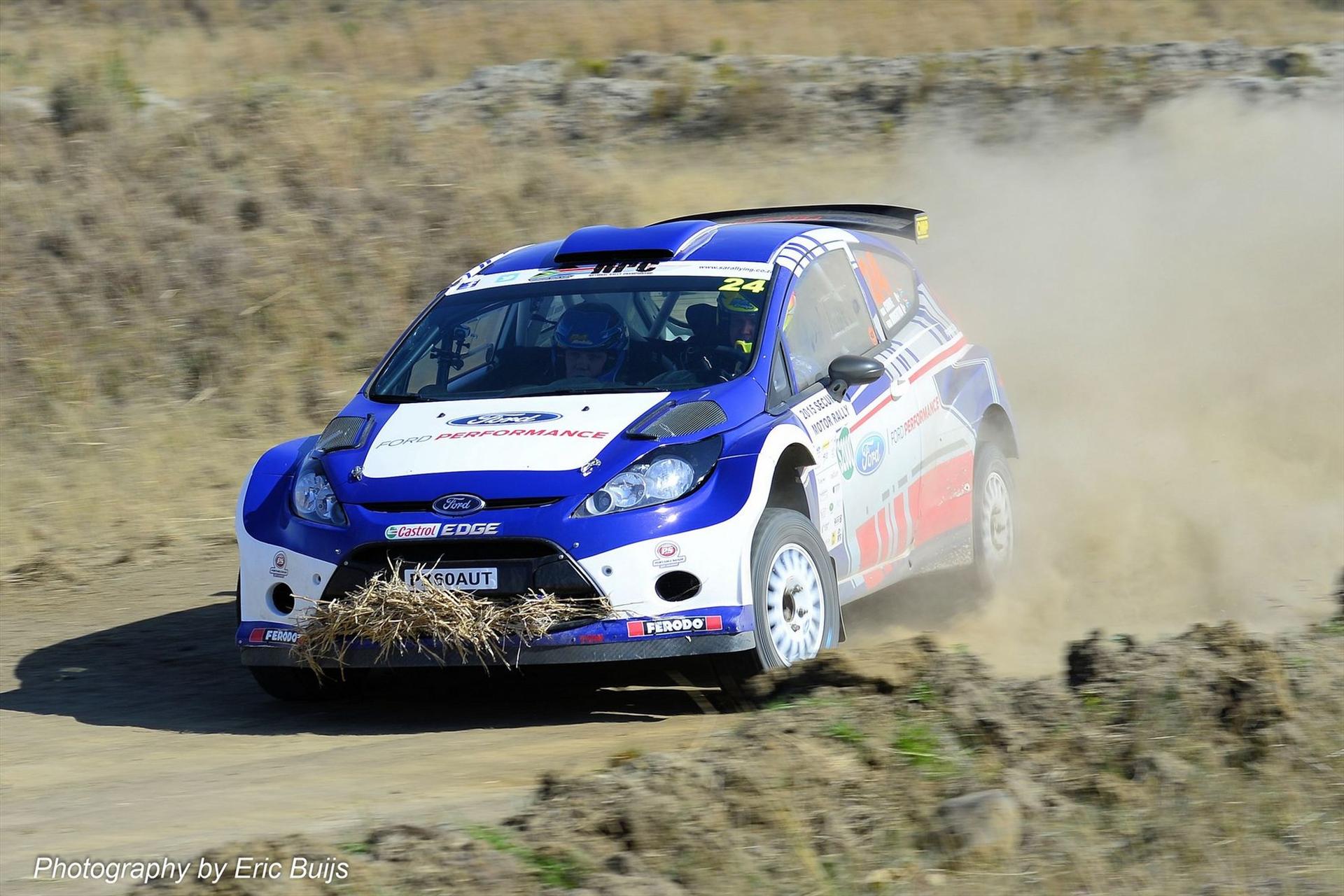
Ford announced its entry into the 2011 World Rally Championship at the 2010 Paris Motor Show, displaying the Fiesta World Rally Car in a specially developed blue and silver livery.
The replacement for the Focus World Rally Car, which won the championship for Ford in 2006 and 2007, the Fiesta World Rally Car was a response to a regulation overhaul by the sport.