



Volvo Car Corporation Challenges EU Goals and Tactics on Cutting Co2 Emissions

Volvo Car Corporation Challenges EU Goals and Tactics on Cutting Co2 Emissions

Volvo Car Corporation warns that EU targets for cutting carbon dioxide emissions are being jeopardised by the absence of harmonised incentives to consumers. Another key issue is the urge for continuous support to automotive research and development, including electromobility. Stefan Jacoby, President and CEO of Volvo Car Corporation, will tell an industry seminar in Brussels […]

By Gerald Ferreira20 March 20124 min read

Stefan JacobyVolvo Car Corporation warns that EU targets for cutting carbon dioxide emissions are being jeopardised by the absence of harmonised incentives to consumers.

Another key issue is the urge for continuous support to automotive research and development, including electromobility.

Stefan Jacoby, President and CEO of Volvo Car Corporation, will tell an industry seminar in Brussels today that jobs, investment and competitiveness in the European car industry could be threatened by the European Commission’s approach towards vehicle electrification.

“Volvo Car Corporation urges the EU to coordinate incentives whilst supporting research and development. The European automotive industry risks losing the present technological leadership if this doesn’t happen,” said Stefan Jacoby. He added: “In the long-term, this jeopardises our industry’s competitiveness and European jobs.” Volvo Car Corporation also raises concerns about the viability of the European Commission’s White Paper on Transport, which states that greenhouse gas emissions in the transport sector will have to be cut by at least 60 percent by 2050 to achieve the EU’s climate change goals. The paper also calls for the use of conventionally fuelled cars in cities to be halved by 2030 and then completely phased out by 2050.
Volvo Car Corporation

Difficult challenge for the industry “European car manufacturers are facing a very difficult challenge when CO2 legislations requiring electrified cars are implemented without initiatives that make these cars affordable for a growing number of consumers,” said Stefan Jacoby.

In 2011 fewer than 50,000 battery electric vehicles were sold in the world, equivalent to a market share of about 0.1 percent. The figure suggests that the car market will continue to be dominated by traditional combustion-engine models for the foreseeable future.

“It is far too early to dismiss the conventional diesel and petrol power trains. We continuously improve their efficiency. In the last two years, Volvo has brought CO2 emissions from our diesel and petrol model ranges down by 13 percent,” said Stefan Jacoby.

Unrealistic electrification predictions Whilst there has been no official target set for the implementation of electrification within the EU, industry studies indicate that several member states are overestimating the speed at which electrified vehicles are being introduced.
Volvo Car Hybrid

The European Commission’s own study, ‘A European Strategy on Clean and Energy Efficient Vehicles’, forecasts only 3-4 percent market share for battery electric vehicles and plug-in hybrids by 2020, with a rise towards 30 percent expected by 2030.

“Both predictions are unrealistic. Considering the lack of coordinated governmental incentives and the high battery system costs, the market share for electrified vehicles will struggle to pass the one percent mark by 2020,” said Stefan Jacoby.

Subsidies and incentives necessary One main reason preventing a rapid increase of electric vehicles on the roads is that the cost for the electrification technology is not being reduced fast enough.

“The automotive industry’s cost reduction efforts can’t fully compensate for the additional battery system cost. Pan-European subsidies and incentives are needed to support a successful market introduction. Unfortunately such necessary initiatives are jeopardised by the current debt crisis,” said Stefan Jacoby.

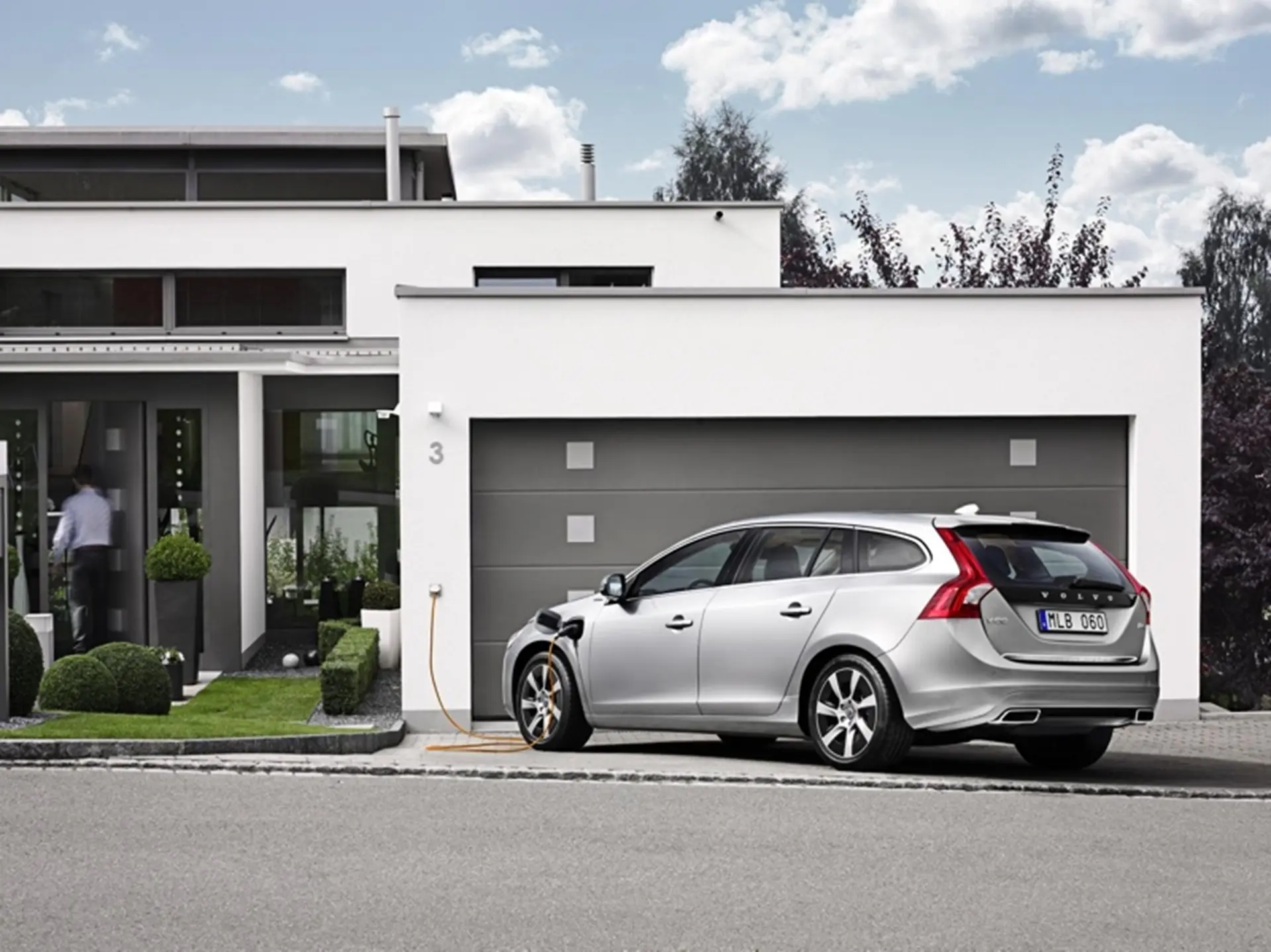
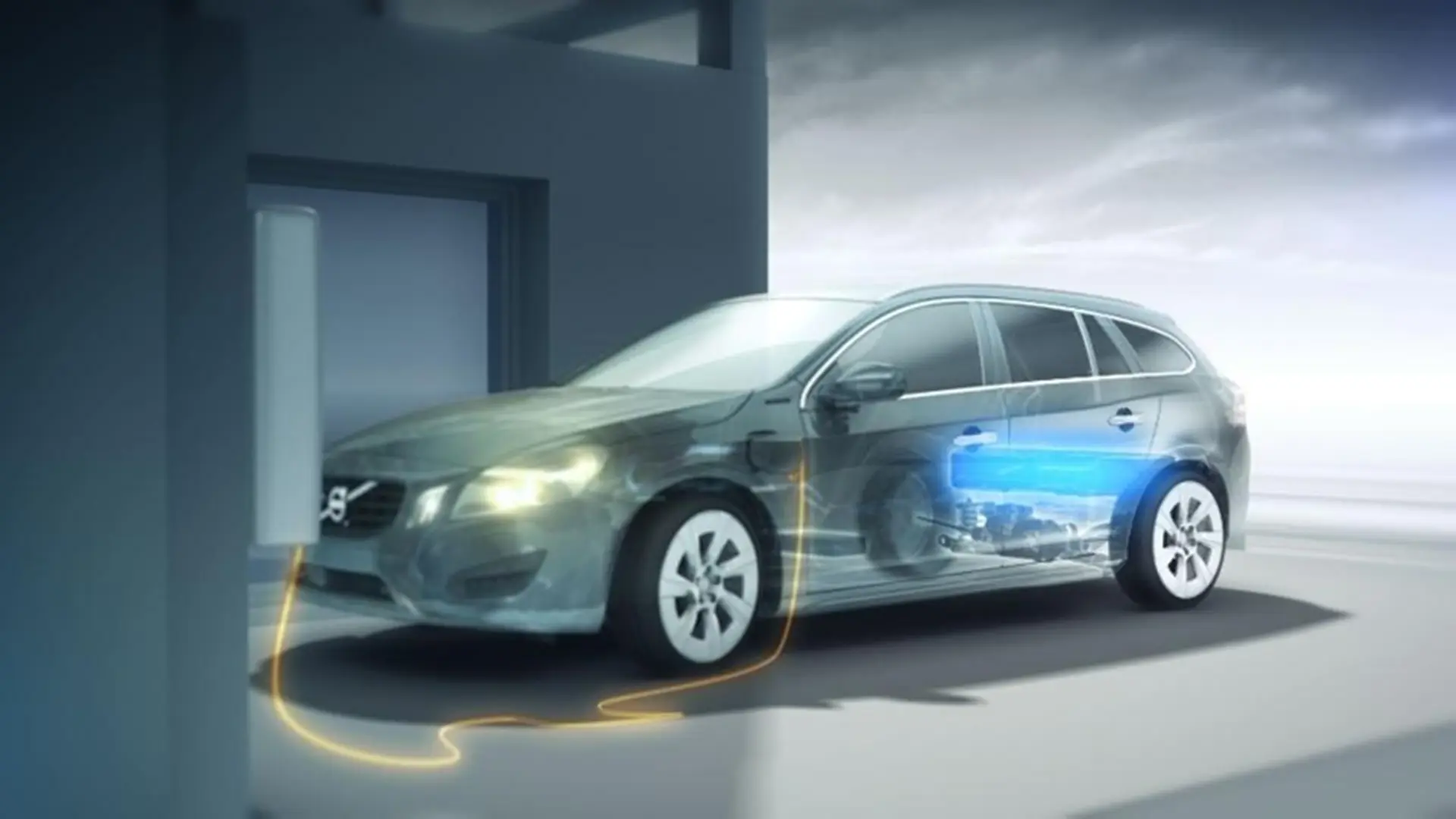
To demonstrate Volvo Car Corporation’s determination to be a leader in electrification, 2012 saw the launch of the new Volvo V60 Plug-in Hybrid.

“The V60 Plug-in Hybrid is a great car and we have seen immense interest from the market, however while we have worked hard to bring the price tag below 50,000 Euro, incentives are needed to reach a broader customer base.”

Technological leadership jeopardised Electric mobility must be achieved through cooperation between the vehicle industry, governments, infrastructure providers, electric energy providers and scientific institutions.

In China, for example, the government has earmarked 15 billion U.S. Dollars to support its domestic vehicle industry’s research and development within electrification. This far exceeds the EU and the United States commitment to electrification.

Delegates from the EU Commission, academia and the industry are today due to debate the key issues and challenges to reach the EU emission targets. More than 300 high level guests from the Brussels policy and business community are also expected to participate in sessions addressing wider issues such as infrastructure, incentives, economic priorities and cost of production can be optimised to make electromobility within Europe a reality.

Comments

Sign in to comment.Sign in

No comments yet. Be the first to share your thoughts.

Promising Future for BIO-DME as a Vehicle Fuel
10
0
ArticleMarch 21, 2012

Promising Future for BIO-DME as a Vehicle Fuel

The Bio-DME project aims to assess whether there is a market for Bio-DME (Di-Methyl-Ether) for commercial vehicles. Now, halfway through the two-year project, the preliminary results show that Bio-DME already functions in daily commercial operations. If diesel fuel were to be replaced by Bio-DME, CO2 emissions would be able to be reduced by a massive […]

VOLVO GROUP EXPANDS PARTNERSHIP WITH WWF
27
6,078
ArticleFebruary 21, 2012

VOLVO GROUP EXPANDS PARTNERSHIP WITH WWF

Volvo Construction Equipment and Volvo Buses have joined the Volvo Group’s co-operation with WWF Climate Savers. The co-operation is based on the Volvo Group’s commitment to reduce carbon-dioxide emissions by 30 million tons from construction equipment, buses and trucks manufactured through to 2014. Volvo’s joint-venture company, SDLG, which manufactures construction equipment in China, will also […]

Volvo Group expands partnership with WWF
2
35,070
ArticleFebruary 17, 2012

Volvo Group expands partnership with WWF

Volvo Construction Equipment and Volvo Buses have joined the Volvo Group’s cooperation with WWF Climate Savers program. The cooperation is based on the Volvo Group’s commitment to reduce carbon-dioxide emissions by 30 million tons from construction equipment, buses and trucks manufactured through 2014. Volvo’s joint-venture company, SDLG, which manufactures construction equipment in China, will also […]

ArticleFebruary 16, 2012

Responsible business is good business

The Volvo Group’s vision is to become world leader in sustainable transport solutions. I believe a company integrating CSR and sustainability into their business model is better prepared to meet future challenges, stakeholder’s expectations and create long-term value.

VOLVO CAR UK BACKS ENVIRONMENTAL AUDIT
1
21,648
ArticleNovember 14, 2011

VOLVO CAR UK BACKS ENVIRONMENTAL AUDIT

VOLVO CAR UK BACKS ENVIRONMENTAL AUDIT SELECT COMMITTEE’S CALL FOR AN AIR QUALITY PUBLIC AWARENESS CAMPAIGN Volvo Car UK has backed the House of Commons Environmental Audit Select Committee’s (EAC) call today (14.11.11) for a Government public awareness campaign to educate people about the positive action they could take to help improve air quality, and […]

Designed Around You Volvo Cars and the Environment
1
25,902
ArticleOctober 7, 2011

Designed Around You Volvo Cars and the Environment

Environmental Care – a Volvo core value Volvo has over many years committed itself to help maintain a healthy environment and – through renewed and dedicated research and development – contribute to cleaner emissions from its cars that would assist in the effort to curb global warming.

ArticleOctober 7, 2011

Volvo Car Corporation world-class technology initiative

Volvo Car Corporation’s world-class technology initiative: New downsized engine range – without compromising luxury or driving pleasure The Volvo Car Corporation is taking the next step towards zero emissions and climate impact through a new, downsized engine range consisting solely of four-cylinder petrol and diesel engines.

ArticleJune 14, 2011

Impressive finish in One Tonne Life

Impressive finish in “One Tonne Life” – The Lindell family get down to 1.5 tonnes of carbon dioxide per person per year Sweden’s Environmental Affairs Minister Andreas Carlgren will today officially close the “One Tonne Life” project in Hässelby just outside Stockholm.

ArticleSeptember 1, 2010

Volvo Cars and the Environment

Environmental care – a core value Volvo has over many years committed itself to help maintain a healthy environment and – through renewed and dedicated research and development – contribute to cleaner emissions from its cars that would assist in the effort to curb global warming. For Volvo Cars it is fundamental that personal mobility […]

ArticleMarch 3, 2009

Volvo presents seven new cars with the green DRIVe badge – all with best-in-class CO2 levels

At the Geneva motor show, Volvo Cars is presenting no less than seven fuel-efficient DRIVe models. All with best-in-class CO2 emission levels. The extremely low figures for the C30, S40 and V50 have been achieved thanks to an advanced Start/Stop system.

ArticleJanuary 28, 2008

Volvo Cars chooses hydropower for its facilities in Sweden and Belgium

The Volvo Car Corporation now relies solely on hydropower from the electricity suppliers for its factories in Sweden and Belgium. This systematic drive for green electricity is the latest measure adopted by Volvo Cars on its path to reach a climate-neutral production in Europe.

ArticleJanuary 28, 2008

Volvo Cars and the Environment 2008

Care for the environment is a core value of the Volvo Car Corporation. This serious commitment to contribute to a cleaner environment dates from the early 1970s and covers the entire lifecycle of the car – from design, engineering and production to useful life, service and recycling. Efficient energy and resource utilisation and reduced emissions […]