


Impressive finish in One Tonne Life

Impressive finish in One Tonne Life

Impressive finish in “One Tonne Life” – The Lindell family get down to 1.5 tonnes of carbon dioxide per person per year Sweden’s Environmental Affairs Minister Andreas Carlgren will today officially close the “One Tonne Life” project in Hässelby just outside Stockholm.

By Gerald Ferreira14 June 20114 min read

Impressive finish in “One Tonne Life” – The Lindell family get down to 1.5 tonnes of carbon dioxide per person per year

Sweden’s Environmental Affairs Minister Andreas Carlgren will today officially close the “One Tonne Life” project in Hässelby just outside Stockholm.

Over a period of six months, the Lindell family have lived climate-smart with their sights firmly set on reducing their emissions from the normal 7.3 tonnes of carbon dioxide per year to the minimal figure of just one tonne.

Following an impressive final sprint, the Lindells finished at 1.5 tonnes. This means the family has succeeded in cutting their emissions by almost 80 percent compared with their start back in January.

When Andreas Carlgren switches off Vattenfall’s smart Energy Watch monitoring system in the “One Tonne Life” house, this will mark the end of the groundbreaking trial by the Lindell family (father Nils, mother Alicja and children Hannah and Jonathan) to cut carbon dioxide emissions to one tonne per person per year. This corresponds to the level that will probably be necessary in order to avoid serious climate changes.

The family’s 80 percent drop shows that the government’s climate target of a 40 percent reduction in Swedish carbon dioxide emissions by 2020 is already within the reach of the average household using the best available know-how and technology.

“On our way down to 2.5 tonnes we didn’t have to make any major compromises in our everyday lifestyles. After that, however, things got tougher. Living at the 1.5 tonne level was an extreme experience for us,” comments Alicja Lindell.

“One Tonne Life” is a project in which A-hus, Vattenfall and Volvo Cars along with partners ICA and Siemens create the necessary preconditions for a climate-smart household.

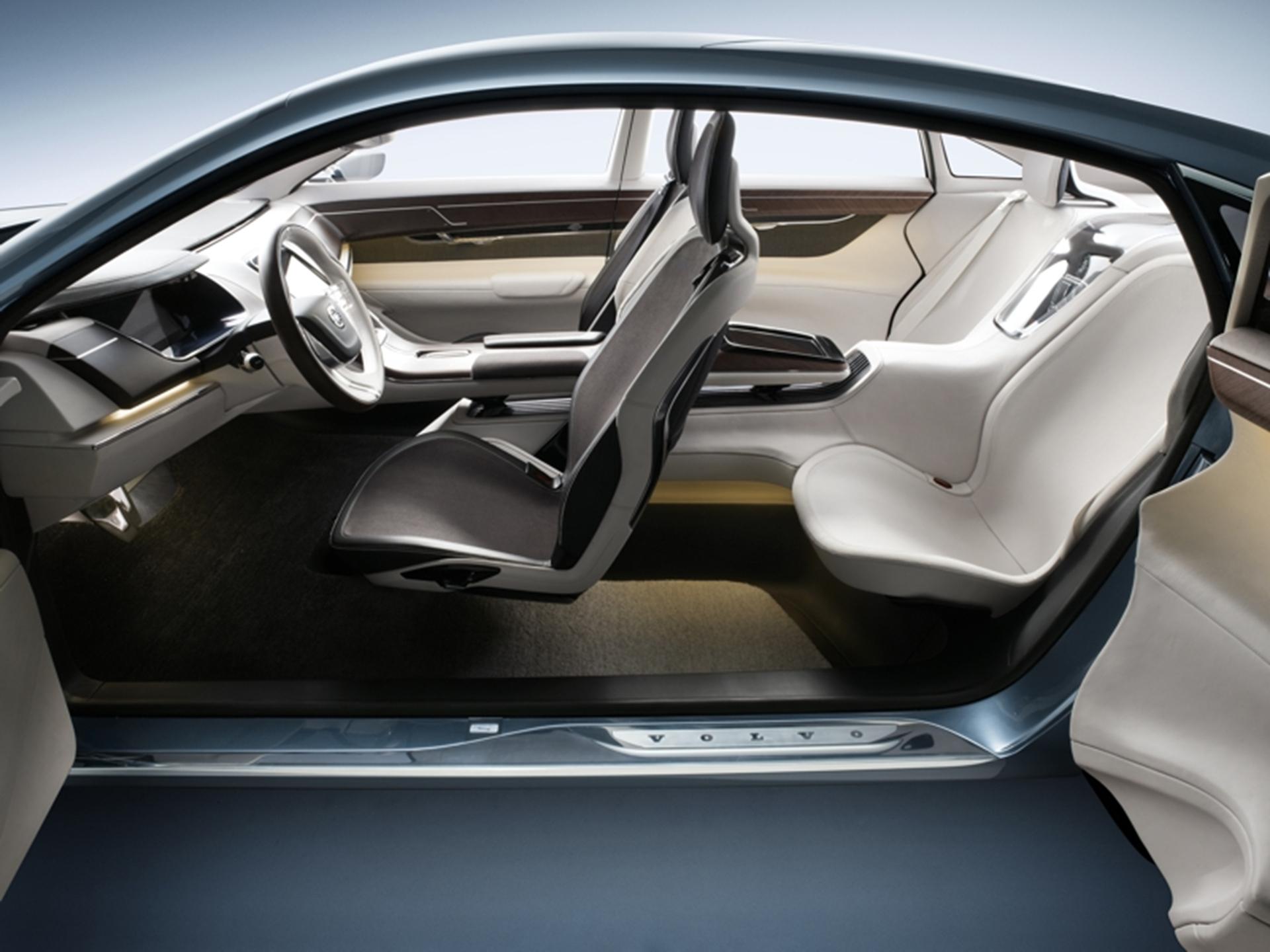
Over a period of six months, the Lindells have switched from their normal 1970s villa and ten-year-old cars to a brand-new, climate-smart wooden house from A-hus and a battery-powered Volvo C30 Electric. Vattenfall has provided renewable electricity, new energy technology and energy coaching. ICA and Siemens are the project’s partners in the areas of food and household appliances.

Biggest reductions in transport and electricity consumption
Transport and electricity consumption are the areas where the family made the most progress.

Emissions from transport dropped by more than 90 percent, not least thanks to the fact that the family’s Volvo C30 Electric was recharged using electricity from hydro-power. The family’s house, built by A-hus, produces its own electricity and with supplementary renewable electricity from hydro-power, carbon dioxide emissions from purchased electricity are almost zero. All told, carbon dioxide emissions from the family’s home have been more than halved.

Food is the third area in which the family made immense progress. By not throwing away food and by choosing wisely, emissions were significantly reduced. By varying the choice of meat and eating more vegetables, anyone can reduce carbon dioxide emissions from food. Towards the end of the trial period, the Lindells ate only vegetarian dishes, and dairy produce was replaced with soya and oats-based alternatives.

Ambitious final sprint – but that “rucksack” weighed them down
In order to reduce their emissions still further, in the final 1.5-tonne week the family chose to reduce the size of their home by closing off one room and all its amenities.

“During that final sprint we avoided most of the food we usually eat. In addition there was no TV, no shopping and no going out to cafés or restaurants. But with a “rucksack” of 900 kilograms, it still isn’t possible to get all the way down to one tonne,” says Nils Lindell.

This “rucksack” consists of the carbon dioxide emissions that take place when various products are manufactured, such as the family’s house, solar panels, car, furniture and clothes.

“We were not able to influence emissions from the production. But we have been able to demonstrate that with the right know-how and motivation, it’s possible to get quite close to one tonne. Not only that, it’s been very enjoyable and a really educational adventure,” concludes Nils Lindell.

Comments

Sign in to comment.Sign in

No comments yet. Be the first to share your thoughts.

Promising Future for BIO-DME as a Vehicle Fuel
16
0
ArticleMarch 21, 2012

Promising Future for BIO-DME as a Vehicle Fuel

The Bio-DME project aims to assess whether there is a market for Bio-DME (Di-Methyl-Ether) for commercial vehicles. Now, halfway through the two-year project, the preliminary results show that Bio-DME already functions in daily commercial operations. If diesel fuel were to be replaced by Bio-DME, CO2 emissions would be able to be reduced by a massive […]

Volvo Car Corporation Challenges EU Goals and Tactics on Cutting Co2 Emissions
8
0
ArticleMarch 20, 2012

Volvo Car Corporation Challenges EU Goals and Tactics on Cutting Co2 Emissions

Volvo Car Corporation warns that EU targets for cutting carbon dioxide emissions are being jeopardised by the absence of harmonised incentives to consumers. Another key issue is the urge for continuous support to automotive research and development, including electromobility. Stefan Jacoby, President and CEO of Volvo Car Corporation, will tell an industry seminar in Brussels […]

VOLVO GROUP EXPANDS PARTNERSHIP WITH WWF
31
6,078
ArticleFebruary 21, 2012

VOLVO GROUP EXPANDS PARTNERSHIP WITH WWF

Volvo Construction Equipment and Volvo Buses have joined the Volvo Group’s co-operation with WWF Climate Savers. The co-operation is based on the Volvo Group’s commitment to reduce carbon-dioxide emissions by 30 million tons from construction equipment, buses and trucks manufactured through to 2014. Volvo’s joint-venture company, SDLG, which manufactures construction equipment in China, will also […]

Volvo Group expands partnership with WWF
6
35,070
ArticleFebruary 17, 2012

Volvo Group expands partnership with WWF

Volvo Construction Equipment and Volvo Buses have joined the Volvo Group’s cooperation with WWF Climate Savers program. The cooperation is based on the Volvo Group’s commitment to reduce carbon-dioxide emissions by 30 million tons from construction equipment, buses and trucks manufactured through 2014. Volvo’s joint-venture company, SDLG, which manufactures construction equipment in China, will also […]

ArticleFebruary 16, 2012

Responsible business is good business

The Volvo Group’s vision is to become world leader in sustainable transport solutions. I believe a company integrating CSR and sustainability into their business model is better prepared to meet future challenges, stakeholder’s expectations and create long-term value.

VOLVO CAR UK BACKS ENVIRONMENTAL AUDIT
4
21,648
ArticleNovember 14, 2011

VOLVO CAR UK BACKS ENVIRONMENTAL AUDIT

VOLVO CAR UK BACKS ENVIRONMENTAL AUDIT SELECT COMMITTEE’S CALL FOR AN AIR QUALITY PUBLIC AWARENESS CAMPAIGN Volvo Car UK has backed the House of Commons Environmental Audit Select Committee’s (EAC) call today (14.11.11) for a Government public awareness campaign to educate people about the positive action they could take to help improve air quality, and […]

Designed Around You Volvo Cars and the Environment
12
25,902
ArticleOctober 7, 2011

Designed Around You Volvo Cars and the Environment

Environmental Care – a Volvo core value Volvo has over many years committed itself to help maintain a healthy environment and – through renewed and dedicated research and development – contribute to cleaner emissions from its cars that would assist in the effort to curb global warming.

ArticleOctober 7, 2011

Volvo Car Corporation world-class technology initiative

Volvo Car Corporation’s world-class technology initiative: New downsized engine range – without compromising luxury or driving pleasure The Volvo Car Corporation is taking the next step towards zero emissions and climate impact through a new, downsized engine range consisting solely of four-cylinder petrol and diesel engines.

ArticleSeptember 1, 2010

Volvo Cars and the Environment

Environmental care – a core value Volvo has over many years committed itself to help maintain a healthy environment and – through renewed and dedicated research and development – contribute to cleaner emissions from its cars that would assist in the effort to curb global warming. For Volvo Cars it is fundamental that personal mobility […]

ArticleMarch 3, 2009

Volvo presents seven new cars with the green DRIVe badge – all with best-in-class CO2 levels

At the Geneva motor show, Volvo Cars is presenting no less than seven fuel-efficient DRIVe models. All with best-in-class CO2 emission levels. The extremely low figures for the C30, S40 and V50 have been achieved thanks to an advanced Start/Stop system.

ArticleJanuary 28, 2008

Volvo Cars chooses hydropower for its facilities in Sweden and Belgium

The Volvo Car Corporation now relies solely on hydropower from the electricity suppliers for its factories in Sweden and Belgium. This systematic drive for green electricity is the latest measure adopted by Volvo Cars on its path to reach a climate-neutral production in Europe.

ArticleJanuary 28, 2008

Volvo Cars and the Environment 2008

Care for the environment is a core value of the Volvo Car Corporation. This serious commitment to contribute to a cleaner environment dates from the early 1970s and covers the entire lifecycle of the car – from design, engineering and production to useful life, service and recycling. Efficient energy and resource utilisation and reduced emissions […]