Care for the environment is a core value of the Volvo Car Corporation. This serious commitment to contribute to a cleaner environment dates from the early 1970s and covers the entire lifecycle of the car – from design, engineering and production to useful life, service and recycling.
Efficient energy and resource utilisation and reduced emissions are important elements of this commitment, as is a healthy in-car environment.
Reducing carbon dioxide emissions
One of the greatest challenges facing the car industry is to reduce fuel consumption and, as a result, emissions of greenhouse carbon dioxide, which contribute to climate change. Volvo Cars aims for a multienergy society. Several energy efficient solutions collectively challenge the complex climate change issues. In this area, some of our most important contributions are:
-
Cars driven by alternative fuels, such as the bioethanol-powered Volvo Flexifuel range, consisting of the S40, V50, C30, V70 and S80;
-
A higher proportion of high-efficiency diesel engines, such as the 1.6D used in the Volvo S40, which delivers a fuel consumption of 4.9 litre/100 km – and C30 Efficiency with a fuel consumption of 4.5 litre/100 km and CO2 emissions of 119 g/km will be on the market during 2008;
-
Continued development of engines and gearboxes, such as the S40 and V50 2.0D Powershift, an automatic gearbox which reduces fuel consumption by about 8% compared to the conventional automatic gearbox; and
-
Ongoing research into weight reduction, rolling resistance and aerodynamics, the latter by using the company’s state-of-the-art wind tunnel.
Climate-neutral electricity at Volvo
Since January 1st 2008, Volvo Cars manufacturing units in Europe use only “green” electricity – hydropower. Thus we support development of climate neutral electricity production. This is our latest step in making our manufacturing untis in Europe climate neutral.
Wide range of alternative fuels and technologies
At present, fossil fuels such as petrol and diesel oil account for about 98% of total automotive fuel consumption. A wide range of alternative fuels and technologies is required to replace these.
In 2005, Volvo launched bioethanol-powered FlexiFuel cars in Sweden delivering significantly lower emissions of fossil carbon dioxide in service. The Volvo Flexifuel offer includes the S40, V50 and C30 with a 1.8-litre Flexifuel engine, and the V70 and S80 with a 2.0-litre Flexifuel engine – all are available in many European markets. In 2008, the V70 and S80 will also be available with a 2.5-litre turbo Flexifuel engine.
This flexifuel range is also ready to be used in South Africa once an infrastructure for the local supply and distribution of bioethanol is established.
Cutting fuel consumption is the biggest challenge facing the car industry and electric hybrid technology can offer an improvement in fuel economy of about 30%. Our new hybrid development centre in Gothenburg represents a major step on the road to sustainable mobility.
This initiative as already produced the C30 Recharge Concept, a unique electrical hybrid car which was displayed last year at the Frankfurt Motor Show and which forms the basis for a production car that could be launched within the next 5 years.
As a further token of Volvo’s commitment to a cleaner environment, our Swedish market company competed in the 2007 Swedish Touring Car Championship (STCC) with an E85 bioethanol-powered Volvo S60.
Investment in new technology
Volvo Cars is investing 10 billion Swedish kronor (about the same amount in SA Rand) in environmental research and development over a five-year period with the aim of reducing the fuel consumption and environmental emissions of Volvo cars.
In 2006, the Ford Motor Company, together with Volvo Cars, established European Hybrid Technologies in Gothenburg. Devoted to the development of hybrid technologies, the centre is staffed by engineers from Volvo Cars and the Ford Motor Company.
Towards cleaner air
Volvo Cars launched the three-way catalytic converter and oxygen sensor (Lambdasond®) over 30 years ago, enabling noxious emissions to be cut by 90%. Today, the exhaust emission control systems used in our petrol engines eliminate between 95 and 99% of the carbon monoxide, nitrogen oxides and hydrocarbons in the exhaust gases, while our diesel engines are equipped with a particulate filter that traps approximately 95% of the soot particles.
Volvo engines comply with strict exhaust emission requirements and several units, including our V8 and our new six-cylinder engine, also meet exhaust emission limits equivalent to the particularly stringent California LEV-II ULEV standard. In the “green” states in America we also offer an engine complying with the PZEV (Partial Zero Emission Vehicle) emission control standard – one of the toughest in the world.
Healthy in-car environment
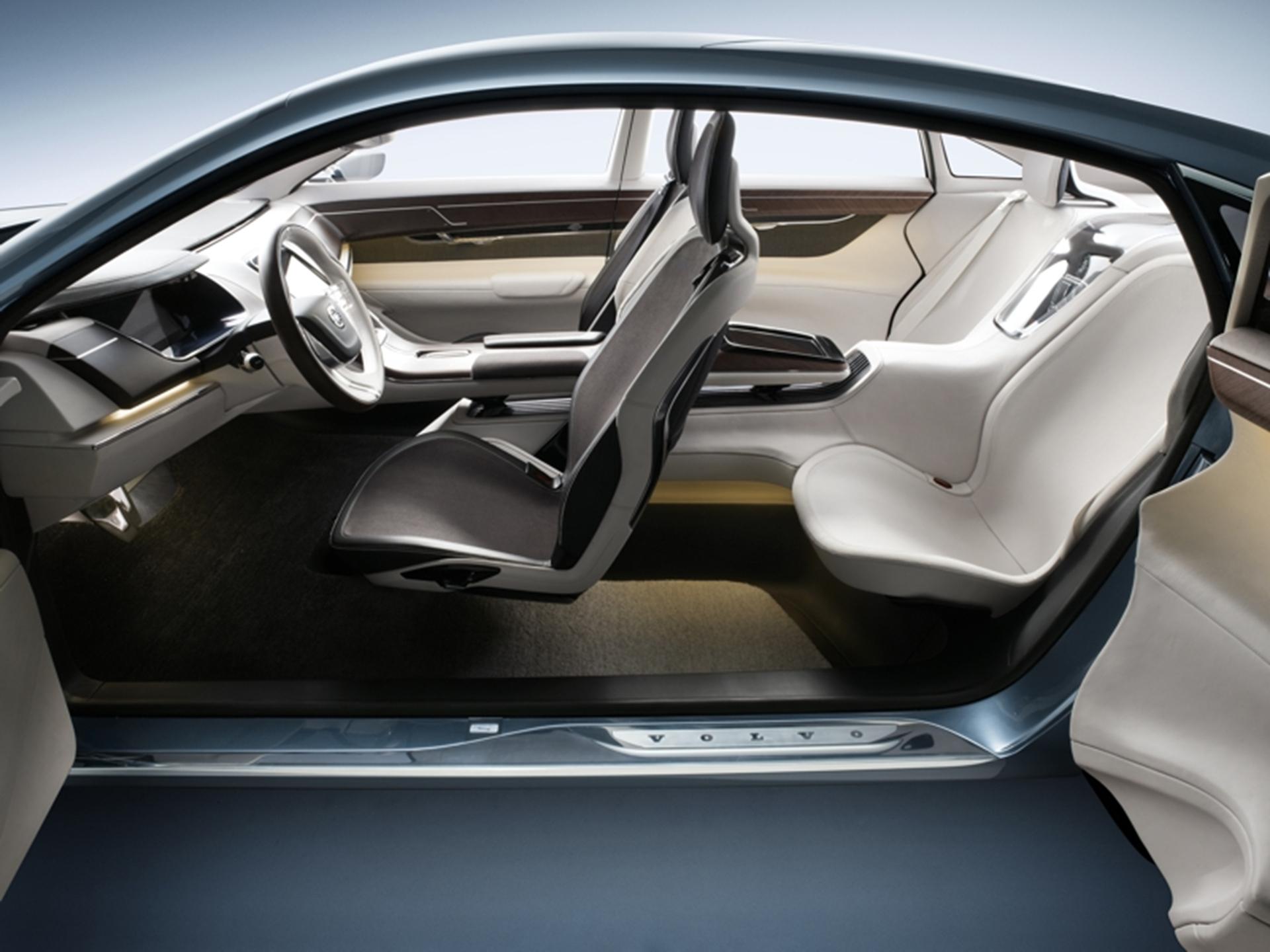
Offering a healthy in-car environment is a high priority for Volvo Cars. All of our upholstery materials and interior textiles are tested for certain harmful or allergenic substances and emissions, and meet the requirements of Öko-Tex Standard 100. Volvo Cars’ advanced Interior Air Quality System (IAQS) reduces the levels of certain harmful gases and particulates. In addition, several of the interior metal components are tested for contact allergies, and actually meet the EU requirements for nickel leakage from jewellery.
With the launch of the new Volvo S80 in 2006, we also introduced our Clean Zone Interior Package (CZIP), a feature developed specifically for allergy-sufferers, and providing a cabin air environment recommended by the Swedish Asthma and Allergy Association. Swedish Asthma & Allergy Association also recommend the Interior Air Quality System and the Automatic Ventilation. Today, the CZIP and automated ventilation are available in V70, XC70 and S80. The IAQS is available for all our models.
Reduced lifecycle impact
Over the last forty years, Volvo Cars has reduced the environmental impact of car manufacturing to a significant extent. An example is the emission of solvents – an area of priority in the automotive industry as a whole. Now we also only use climate neutral electricity at our manufacturing units in Sweden and Belgium.
At present, new Volvo cars are designed to be 85% recyclable, and designed for 95% recoverability. Volvo was the first carmaker to supply Environmental Product Information (EPI) to help the consumer to choose a Volvo model on the basis of its life-cycle environmental performance.
We are involved in a number of environmental projects in partnership with AB Volvo. These range from the Volvo Environment Prize to Volvo Adventure, an environmental competition for young people around the world conducted in collaboration with UNEP (United Nations Environment Programme).
VOLVO CARS’ ENVIRONMENTAL HERITAGE:
-
1945 Volvo introduces remanufactured spare parts – an exchange system still in use
-
1972 UN Global conference on the environment in Stockholm: Volvo raises the critical role of the car in society
-
1976 Three-way catalytic converter with oxygen sensor (Lambdasond®) removes up to 90% of noxious exhaust fumes
-
1982 Torslanda plant begins to use waste heat from local oil refinery
-
1987 Torslanda water treatment plant removes 90% of harmful effluents
-
1989 New, proactive environmental policy
-
1989 Life-cycle assessment using EPS (Environmental Priority Strategies in product design)
-
1989 Volvo demonstrates alcohol power technology: cleanest car tested to date
-
1989 Introduction of internal environmental audits
-
1989 Plastics in Volvo cars marked to facilitate recycling
-
1990 First award of Volvo Environment Prize
-
1991 Volvo Cars first to introduce car free of ozone-depleting chlorofluorocarbons (CFCs)
-
1991 Paintshop at Torslanda plant is world’s cleanest
-
1992 Asbestos eliminated from car production
-
1992 Volvo Environmental Concept Car (ECC)
-
1993 Chlorofluorocarbons (CFCs) no longer used in climate systems of series-produced Volvo cars
-
1994 ECRIS, a new research facility for environmentally optimised dismantling
-
1995 Volvo Bi-Fuel, Volvo Cars’ first generation of methane-driven cars
-
1995 Introduction of standards to improve dealers’ environmental activities
-
1995 Launch of Car & Eco Care, the Volvo Cars range of environmentally labelled car care products
-
1996 Dialogue on the Environment provides environmental training for all employees
-
1996 Introduction of environmental standards for suppliers
-
1998 Introduction of PremAir® – a radiator coating designed to convert harmful ground-level ozone into pure oxygen
-
1998 Volvo Cars is first carmaker to publish environmental product information (EPI) for cars (originally named EPD)
-
1999 IAQS (Interior Air Quality System) introduced for cleaner cabin air
-
2000 Tailpipe emission control technology from Volvo Cars’ ULEV engines becomes available globally
-
2001 New generation of Bi-Fuel cars
-
2002 Volvo Adventure environmental education programme for young people (formerly Volvo Young Environmentalist Award)
-
2002 PZEV engine introduced in California
-
2002 New Volvo cars designed for 85% recyclability
-
2003 Volvo Cars achieves global ISO 14001 certification
-
2004 Introduction of particulate filter for diesel engines
-
2004 Volvo Cars’ new V8 engine is world’s first V8 to comply with ULEV II
-
2004 Volvo 3CC sustainable mobility concept car unveiled
-
2004 Volvo S40 1.6D is first Volvo car with fuel consumption less than 5 l/100 km
-
2005 Bioethanol (E85) powered Volvo S40/V50 FlexiFuel launched in Sweden
-
2006 Volvo FlexiFuel launched in eight more markets
-
2007 IAQS & Automatic ventilation recommended by Swedish Asthma & Allergy Association
-
2007 Volvo Flexifuel offer launched in several more European markets
-
2007 Volvo FlexiFuel offer broadened – 3 models and 5 engines introduced
-
2007 Volvo ReCharge Concept – a plug-in hybrid with 100 km battery range – introduced
-
2008 Volvo uses only green electricity (hydropower) in European manufacturing units