


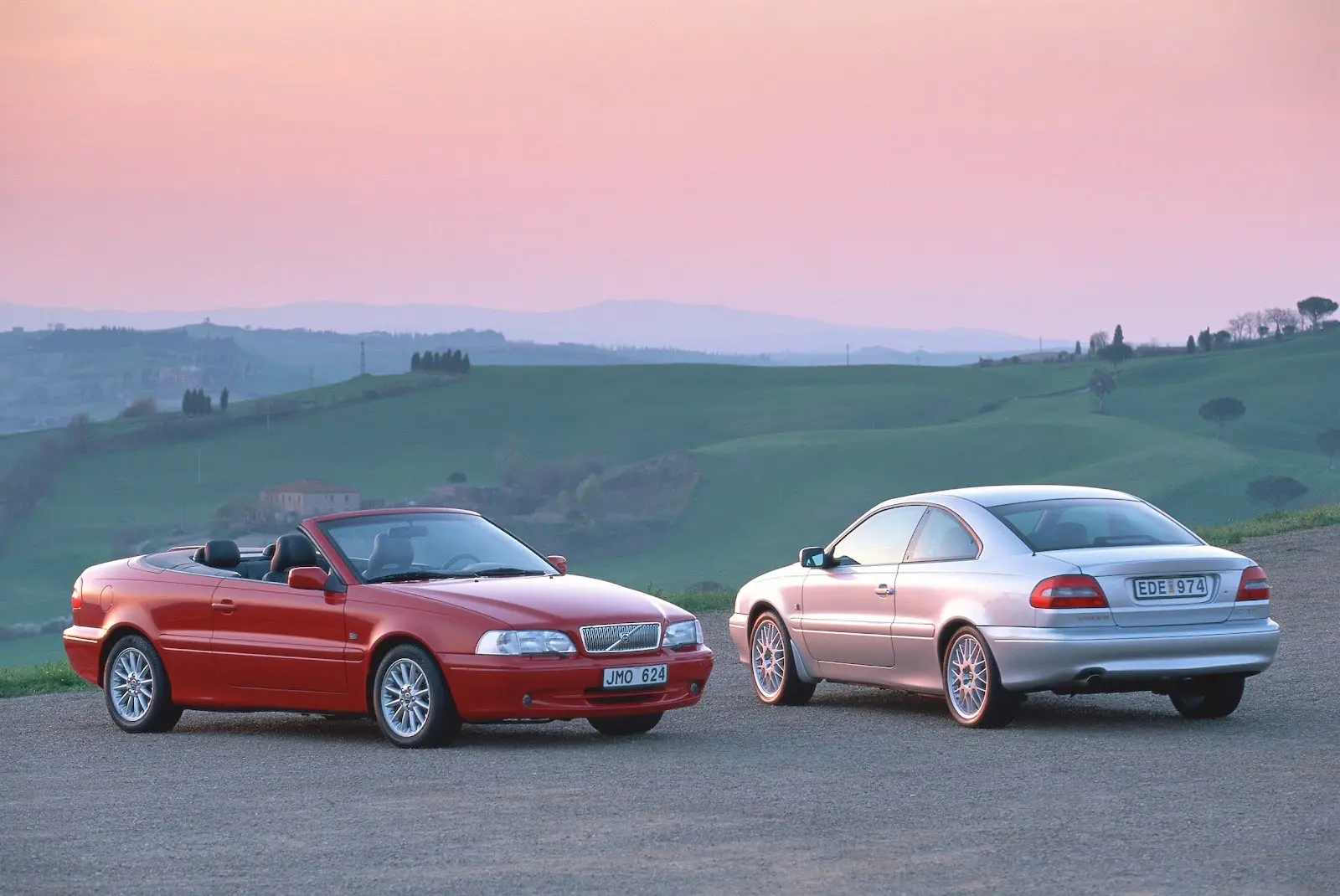
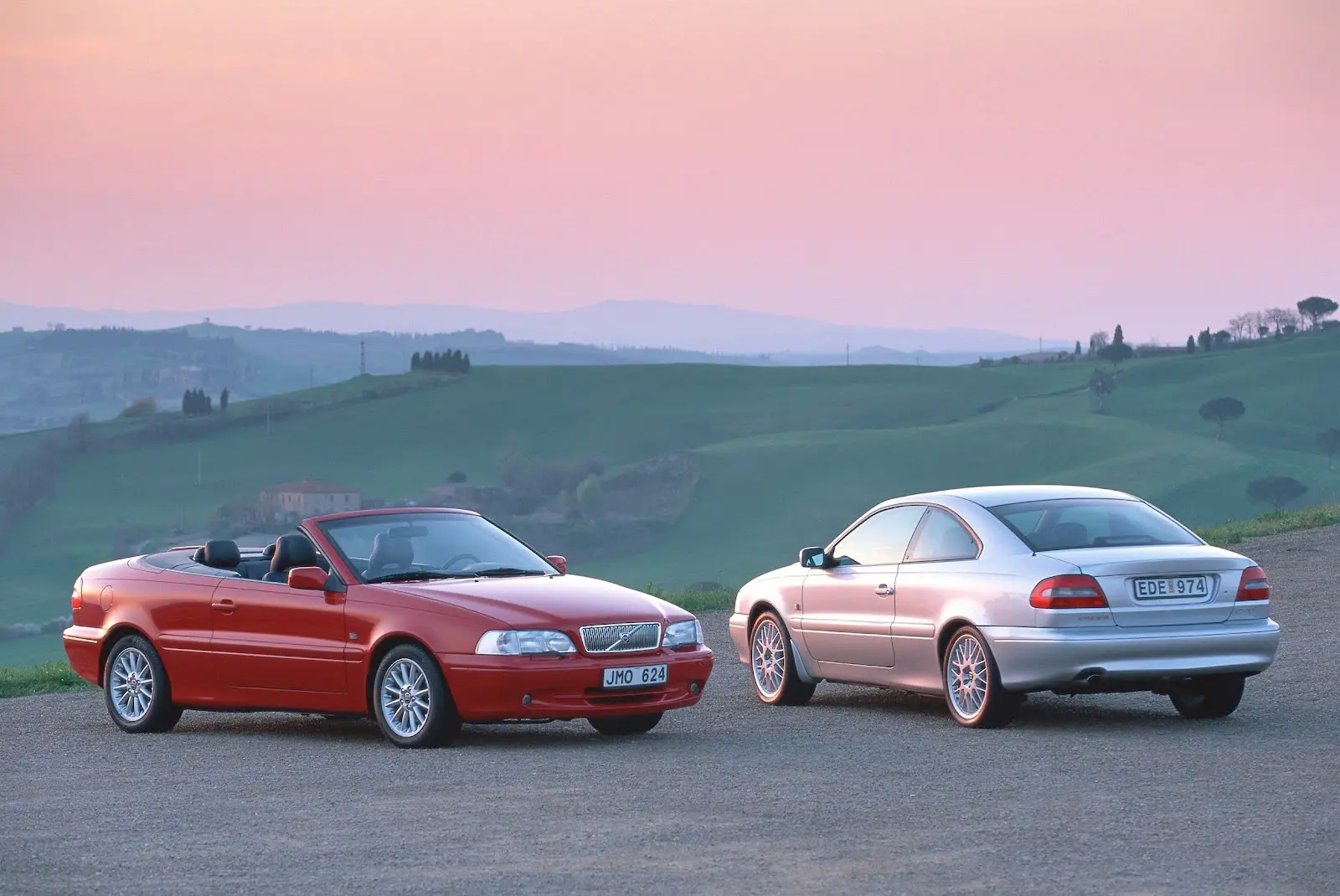
2026 marks a milestone year for the Volvo C70, the Swedish marque’s iconic two-door grand tourer. With the first-generation C70 turning 30 and the second-generation celebrating its 20th anniversary, the model has cemented its place as one of Volvo’s most emotionally led vehicles—a car that challenged conventions and redefined what a Volvo could look and feel like.
When the first-generation C70 debuted at the Paris Motor Show in 1996, it was a bold departure from the brand’s traditional boxy image. Designed by Peter Horbury, the C70 combined sleek, elegant lines with charismatic five-cylinder performance. Horbury famously described the project as “throwing away the box but keeping the toy inside,” reflecting his vision of a Volvo that could be both emotional and engaging without compromising the brand’s signature quality.
Powered by a range of five-cylinder engines, including the turbocharged 2.3-litre producing 180 kW and 330 N.m of torque, the first-generation C70 was one of the most powerful front-wheel-drive vehicles of its time. Initially offered as a coupe, it was joined by a convertible in 1997, the first Volvo drop-top since the P1900 of the 1950s. Praised by automotive media, Quentin Willson of Top Gear highlighted its poise and precision, calling it “a Volvo with attitude.” Its cinematic appeal was cemented when it starred in the 1997 film The Saint, echoing the classic P1800 driven by Roger Moore.
The first-generation C70 ran until 2005, producing 76,809 units, with the coupe remaining the rarer of the two variants at 26,036 cars. Its blend of style, performance, and rarity makes it a cherished collector’s model today.
In 2006, Volvo introduced the second-generation C70, uniting coupe and convertible into a single, more sophisticated grand tourer. The hallmark of this generation was its fully automatic, three-piece folding hardtop—developed by Webasto and Pininfarina—which transformed the C70 into a versatile all-season vehicle. The roof raised or lowered in under 30 seconds, while still preserving nearly 200 litres of boot space, offering both coupe-like security and open-air freedom.
The second-generation C70 retained Volvo’s signature five-cylinder engines, with the T5 delivering 186 kW and 370 N.m of torque, yet shifted its focus toward refinement and usability. With space for four passengers and their luggage, it embodied the grand touring ethos, combining comfort, performance, and style in a way that few Volvos had attempted before. A 2010 facelift brought its styling in line with contemporary Volvo models, further enhancing its appeal. In total, 89,074 units were produced between 2006 and 2013, making this generation even more popular than its predecessor.
Today, both generations of the C70 are celebrated for their elegance, distinctive powertrains, and the role they played in reshaping perceptions of Volvo. Grant Locke, Managing Director of Volvo Car South Africa, reflected on the car’s legacy: “The Volvo C70 holds a unique place in our heritage. It was one of the first Volvos that didn’t just meet expectations, it surprised people with its poise, performance and design. That willingness to push the boundaries is something that defines us still. As we celebrate the milestone anniversaries of both C70 generations, we’re also looking forward, championing vehicles that deliver the same sense of engagement and excitement, shaped for a more sustainable future.”
For enthusiasts and collectors, the C70 remains a symbol of Volvo’s willingness to embrace emotion, innovation, and performance. From its bold beginnings in 1996 to its sophisticated second-generation form, the C70 has quietly rewritten Volvo’s story, proving that Swedish engineering can be as thrilling as it is elegant.