



As summer temperatures soar, the quest for innovative solutions to keep vehicles cool and energy-efficient intensifies. Nissan’s latest breakthrough in automotive technology promises to revolutionize the way we experience cabin comfort and energy consumption. The Japanese automaker, in collaboration with Radi-Cool, has introduced a pioneering paint technology embedded with metamaterials that significantly lowers cabin temperatures and reduces air-conditioning energy usage. This article delves into the intricacies of this revolutionary technology, its development process, and its potential impact on the automotive industry.
The Science Behind Nissan’s Cool Paint
Metamaterials: A Game-Changer in Cooling Technology
At the heart of Nissan’s cool paint is the use of metamaterials—synthetic composites engineered with structures that exhibit properties not commonly found in nature. These advanced materials consist of two microstructure particles that interact with light in unique ways:
Near-Infrared Ray Reflection: One particle reflects near-infrared rays from the sun, which are typically absorbed by traditional paints and converted into heat.
Electromagnetic Wave Generation: The second particle creates electromagnetic waves that counteract and redirect the sun’s energy away from the vehicle, significantly reducing heat absorption.
By incorporating these particles, Nissan’s paint reduces the transfer of heat to vehicle surfaces such as the roof, hood, doors, and panels, resulting in a cooler cabin environment.
Performance Metrics: Real-World Testing
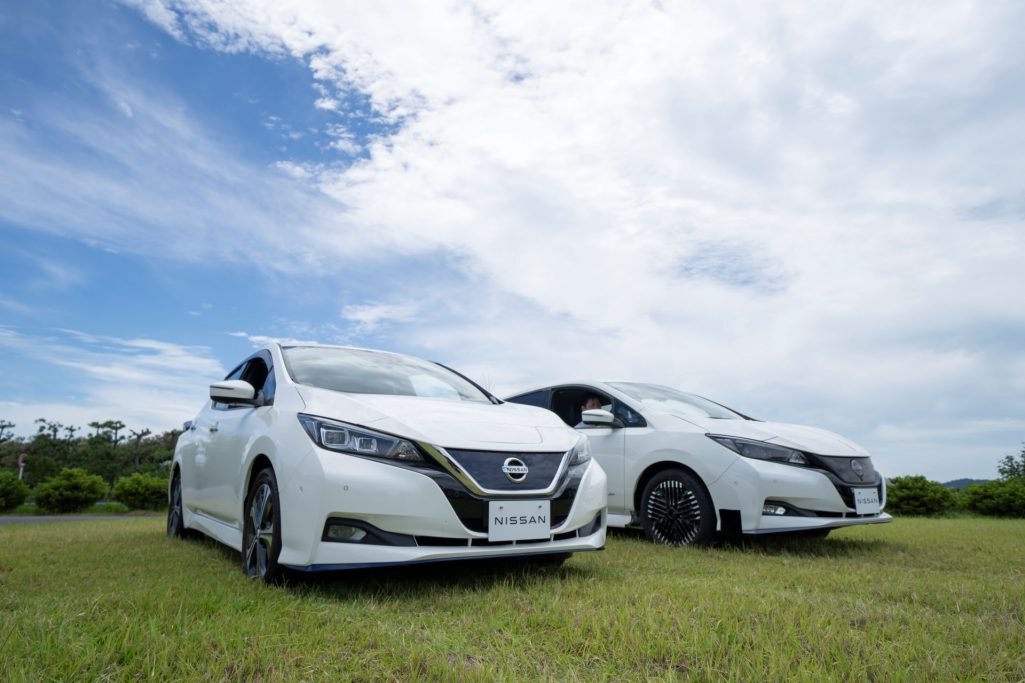
Nissan began a 12-month feasibility trial in November 2023 at Tokyo International Air Terminal, Haneda, in collaboration with Japan Airport Terminal Co., Ltd., Radi-Cool Japan, and All Nippon Airways (ANA). The cool paint was applied to a Nissan NV100 service vehicle operated by ANA airport services. This setting, with its large tarmac and high-temperature environment, provided an ideal scenario for evaluating the paint’s performance.
The results have been promising:
Exterior Temperature Reduction: Vehicles treated with the cool paint exhibited up to a 12-degree Celsius reduction in exterior surface temperatures compared to those with traditional paint.
Interior Temperature Decrease: The cabin temperature was up to 5 degrees Celsius cooler, improving overall comfort and reducing the reliance on air-conditioning.
Benefits and Applications
Energy Efficiency and Comfort
The cooling performance of Nissan’s paint not only enhances occupant comfort but also contributes to improved energy efficiency. A cooler cabin reduces the workload on the air-conditioning system, which in turn lowers fuel consumption in internal combustion engine vehicles and reduces battery drain in electric vehicles. This innovation aligns with Nissan’s commitment to creating more sustainable and efficient automotive solutions.
Potential for Various Applications
While the technology is still in the testing phase, its potential applications are vast. The paint could be particularly beneficial for light commercial vehicles such as vans, trucks, and ambulances that spend extended periods exposed to high temperatures. The ability to maintain a cooler cabin environment can enhance driver comfort and operational efficiency.
Development Challenges and Future Prospects
Overcoming Technical Hurdles
Developing an automotive version of radiant cooling paint posed several challenges. Dr. Susumu Miura, senior manager at the Advanced Materials and Processing Laboratory, Nissan Research Center, led the project. His team had to ensure the paint could incorporate a clear topcoat, be applied via a spray gun, and meet rigorous Nissan quality standards. Testing over 100 samples, they have confirmed that the paint resists salt, chipping, peeling, and scratches, and maintains color consistency.
Looking Ahead
As development continues, Nissan aims to offer this technology for special orders and in various colors. The team is exploring thinner paint options that provide the same level of cooling performance while adhering to automotive industry standards.
Conclusion
Nissan’s innovative paint technology represents a significant leap forward in automotive cooling solutions. By leveraging metamaterials to combat heat absorption and enhance energy efficiency, this development has the potential to redefine comfort and sustainability in the automotive sector. As testing progresses, the hope is that this technology will soon be available to a broader range of vehicles, contributing to a more comfortable and eco-friendly driving experience.