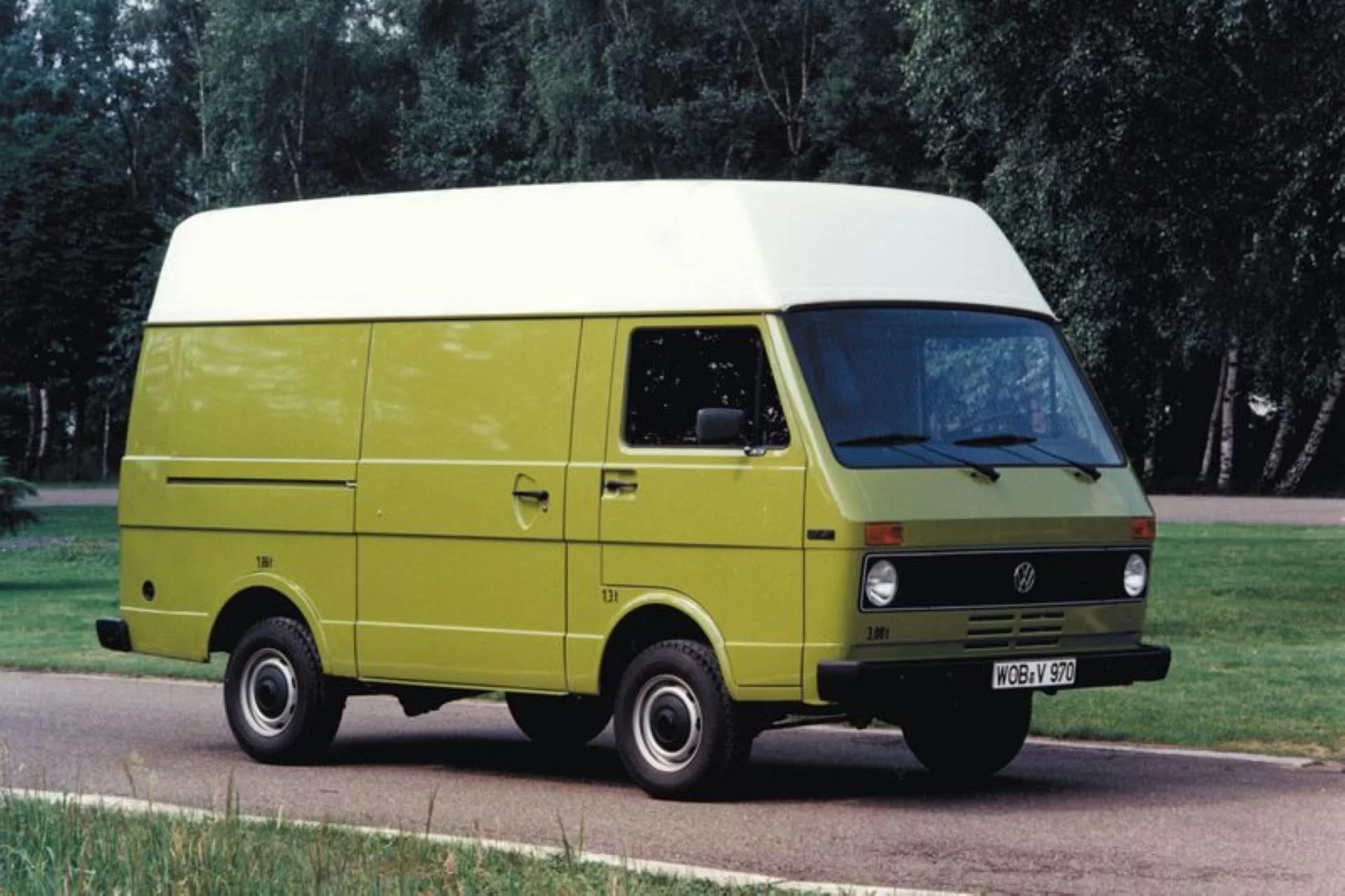
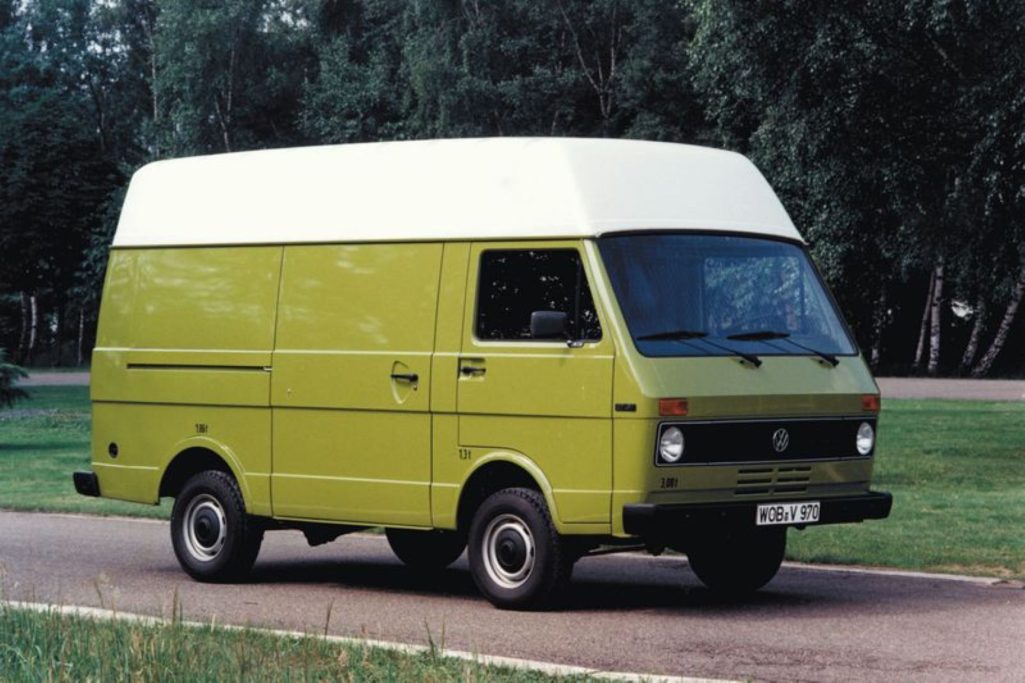
Hanover, 23 April 2025 – Fifty years ago this month, a quiet revolution in commercial transport began in Berlin. It was April 1975 when Volkswagen unveiled the LT, a light cargo transporter that would go on to redefine utility, ergonomics, and everyday practicality for decades to come. Designed to slot above the iconic VW Bus (affectionately known as the Bulli) but below the brand’s heavy trucks, the LT—short for “Lasten-Transporter”—would become a versatile and beloved staple in both the cargo and leisure sectors.
Filling the Space Between
Volkswagen’s mission was clear: create a vehicle that bridged the gap between the nimble Bulli and more substantial commercial haulers. The LT answered that call with a distinctive approach to space efficiency, offering up to 7.85 cubic metres of cargo volume—over 50% more than the T2 Bulli—while only growing 34 cm in length and 30 cm in width. Its cab-over-engine design placed the powerplant between the front seats, freeing up rear space and maximising usability within a compact footprint.
From launch, the LT was available in an impressively diverse range of body styles: panel van, station wagon, bus, dropside, double cab and chassis. It was also available in two wheelbases and two roof heights, showcasing Volkswagen’s dedication to customer-centric flexibility.
Ergonomics Pioneer in a Utility World
Where most light commercial vehicles of the time sacrificed comfort for utility, the LT set new standards in driver ergonomics. Developed in collaboration with ergonomic scientists, the LT’s cabin featured an intuitively arranged dashboard, a large panoramic windscreen, and oversized side mirrors—innovations that made everyday driving both safer and more comfortable. Independent front wheel suspension, another rarity in the segment, brought unexpected ride quality to a utilitarian workhorse.
Initially powered by a 2.0-litre petrol engine from the Audi 100 or a 2.7-litre diesel from Perkins, the LT’s drivetrain evolved significantly over time. A turning point came in 1979 with Volkswagen’s first in-house six-cylinder diesel engine, notable not only for its torque and smoothness but also for being quiet enough to be used by Volvo in its passenger cars.
The LT Grows Up
Throughout the 1980s and early ’90s, the LT underwent a series of strategic facelifts and performance upgrades. Highlights include the 1983 introduction of a six-cylinder turbo diesel producing 102 hp—making the LT the most powerful transporter in Europe at the time—and the debut of switchable all-wheel drive in 1985. By the 1990s, it was common to see the LT repurposed as a base for motorhomes, thanks to its durability, layout flexibility, and cargo capacity. This culminated in the launch of the Florida in 1988, a factory-built motorhome for four, complete with a wet cell.
Second Generation: Modernising the Legacy
In 1996, the LT was reborn. Now developed in collaboration with Mercedes-Benz and launched under the newly formed Volkswagen Commercial Vehicles (VWN) brand, the second-generation LT embraced a more car-like configuration. Engines moved under a short bonnet for easier access and lower step-in height, and the platform grew even more versatile, offering gross vehicle weights from 2.6 to 4.6 tonnes.
The legendary TDI engines powered this generation, capped in 2002 by a 2.8-litre unit producing 158 hp and 331 Nm of torque—benchmark figures in the light commercial vehicle class.
From LT to Crafter: The Evolution Continues
The LT’s story evolved further in 2006 with the launch of its spiritual successor, the Crafter. Maintaining the LT’s core principles of versatility and utility, the Crafter introduced a sharper truck-like design and expanded capabilities. The 4MOTION version, showcased at the 2012 Rallye Dakar, demonstrated the vehicle’s off-road prowess and rugged adaptability.
With over 480,000 units sold across a decade, the Crafter continued the LT legacy of dependability and flexibility in multiple variants—from panel vans to double cabs.
2016 and Beyond: A Crafter Born Entirely from VW DNA
The 2016 Crafter marked a new chapter as Volkswagen developed the vehicle completely in-house, even building a dedicated plant in Września, Poland. Developed with intense customer input, the vehicle was a triumph of form following function. Available with front-, rear-, or all-wheel drive, the Crafter quickly became a benchmark in the segment, winning Transporter of the Year 2017.
In 2018, the Crafter family welcomed the all-electric e-Crafter and the Grand California motorhome—further testament to the platform’s adaptability.
2024: Digital Precision Meets Everyday Utility
Today, the Crafter enters a new era of digitalisation and connectivity. With a standard digital cockpit, optional 12.9-inch infotainment display, and integrated ChatGPT-powered voice control, the 2024 Crafter sets new standards in both comfort and usability. Ergonomics are once again in focus, with revised controls, electronic parking brake, and a suite of new driver assistance systems that elevate safety and ease of use—while maintaining the same price point.
A Legacy Built to Last
From the LT 28 to today’s high-tech Crafter, Volkswagen’s commitment to innovation, adaptability, and user-centric design has remained unwavering. After five decades, what began as a clever compromise between a Bus and a truck has matured into one of the most respected names in commercial vehicles.
The LT’s DNA still runs strong—on job sites, camper trails, and delivery routes across the world. And while its form may have evolved, its function remains just as clear: to move people, cargo, and ideas forward. Always with purpose. Always with precision.