




The world of historic motoring has long celebrated elegance, endurance and engineering heritage, but for 1000 Miglia Srl, those values now sit alongside a more contemporary benchmark: certified road safety excellence. With the achievement of the UNI ISO 39001:2016 under ACCREDIA accreditation, the organisation has secured a defining position in the European motorsport and event management landscape. It is, to date, the only Italian organisation in its sector to hold this recognition.
The certification, issued by Q-Aid Assessment & Certification, confirms that road risk management is not treated as an auxiliary concern but embedded into the operational DNA of every event. Rather than a static compliance exercise, it reflects a structured, evolving system designed to anticipate, reduce and manage risk across every layer of activity, from planning to execution.
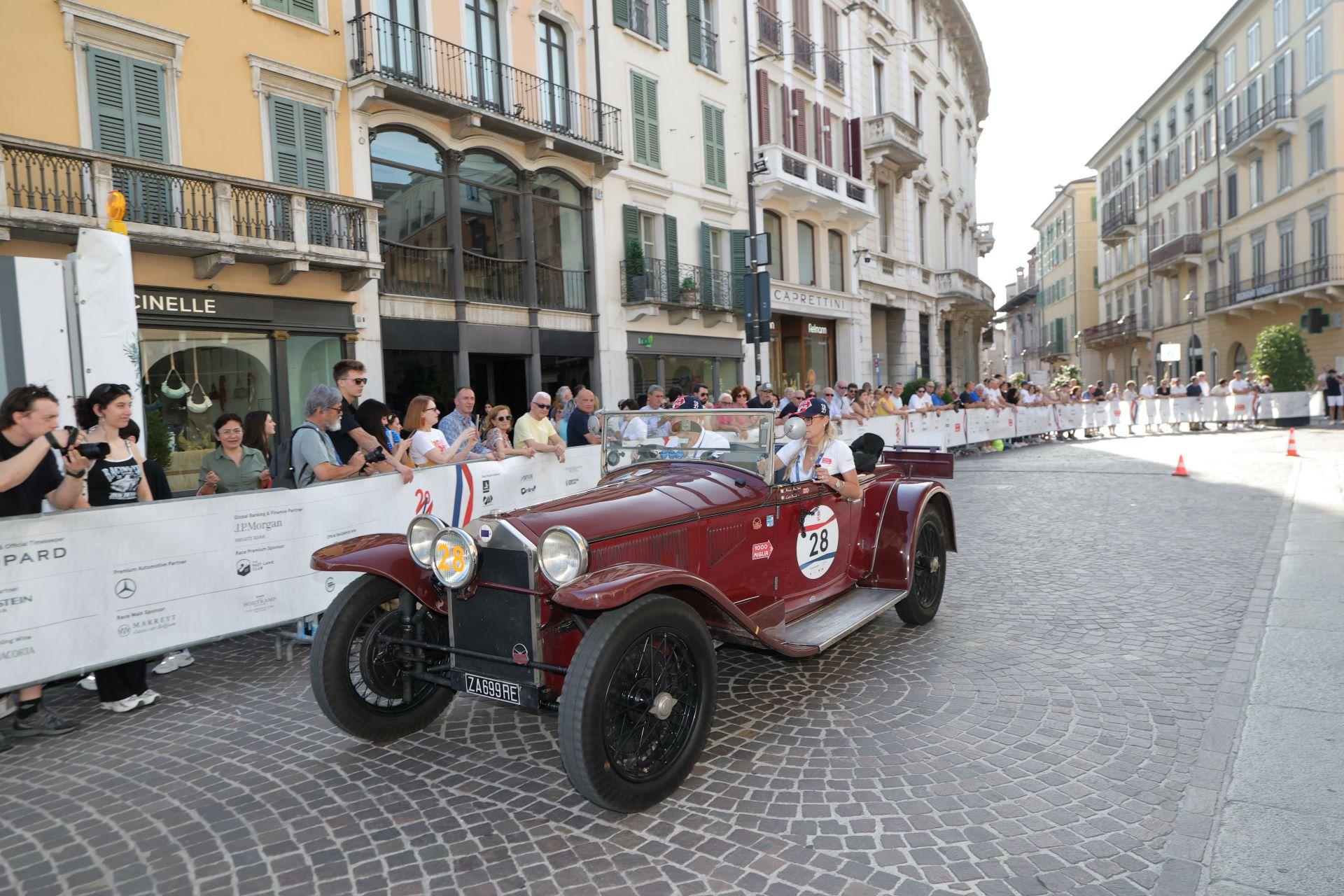
That philosophy was tested in real-world conditions during the 1000 Miglia Experience Italy 2026, where independent technicians observed and verified the effectiveness of safety protocols directly along the route. Their evaluation covered everything from vehicle technical compliance and participant accreditation to staff readiness and emergency response procedures. The result was not only validation of existing systems but confirmation that safety measures function cohesively under live operational pressure.
At the heart of this framework is a rigorous organisational policy that treats risk analysis as a continuous discipline rather than a one-time requirement. Control measures are implemented dynamically throughout events, supported by trained personnel and reinforced by strict participant regulations. Even seemingly simple decisions, such as the prohibition of alcohol consumption during the race and its removal from meal service along the route, are designed as deliberate safeguards within a broader safety architecture.
Operational reliability is further strengthened through close coordination with law enforcement, particularly the Traffic Police, whose presence along event routes ensures real-time support and enforcement. Together, these systems create a layered safety environment capable of responding swiftly to breakdowns, incidents or emergencies while maintaining continuity of the event experience.
The ISO framework also formalises what might otherwise remain implicit: staff qualification standards, vehicle suitability checks and participant accreditation are no longer procedural checkpoints but components of an integrated system of continuous monitoring and improvement. This transforms safety from a regulatory obligation into an organisational rhythm, one that evolves with every edition of the event.
Beyond the roads of Italy, 1000 Miglia’s commitment to safety has also extended into international dialogue. At the Permanent Mission of Italy to the United Nations in Geneva, a dedicated meeting held on 12 May brought together key figures in global road safety policy, including Luigi Maria Vignali, UN Secretary-General’s Special Envoy for Road Safety Jean Todt, Commander Federica Deledda, and Francesca Parolin. The exchange positioned the Red Arrow’s operational experience within a wider global effort to improve road safety standards and awareness.
By aligning certified technical systems with diplomatic engagement, 1000 Miglia is effectively extending its heritage beyond motorsport tradition. The organisation is transforming its historical legacy into an active platform for advocacy, where precision engineering, disciplined governance and cultural prestige converge to support a more responsible driving future.
What emerges is not just a certification milestone, but a recalibration of identity: a historic event organisation redefining excellence not only by speed or prestige, but by the safety structures that allow both to exist responsibly on the open road.