




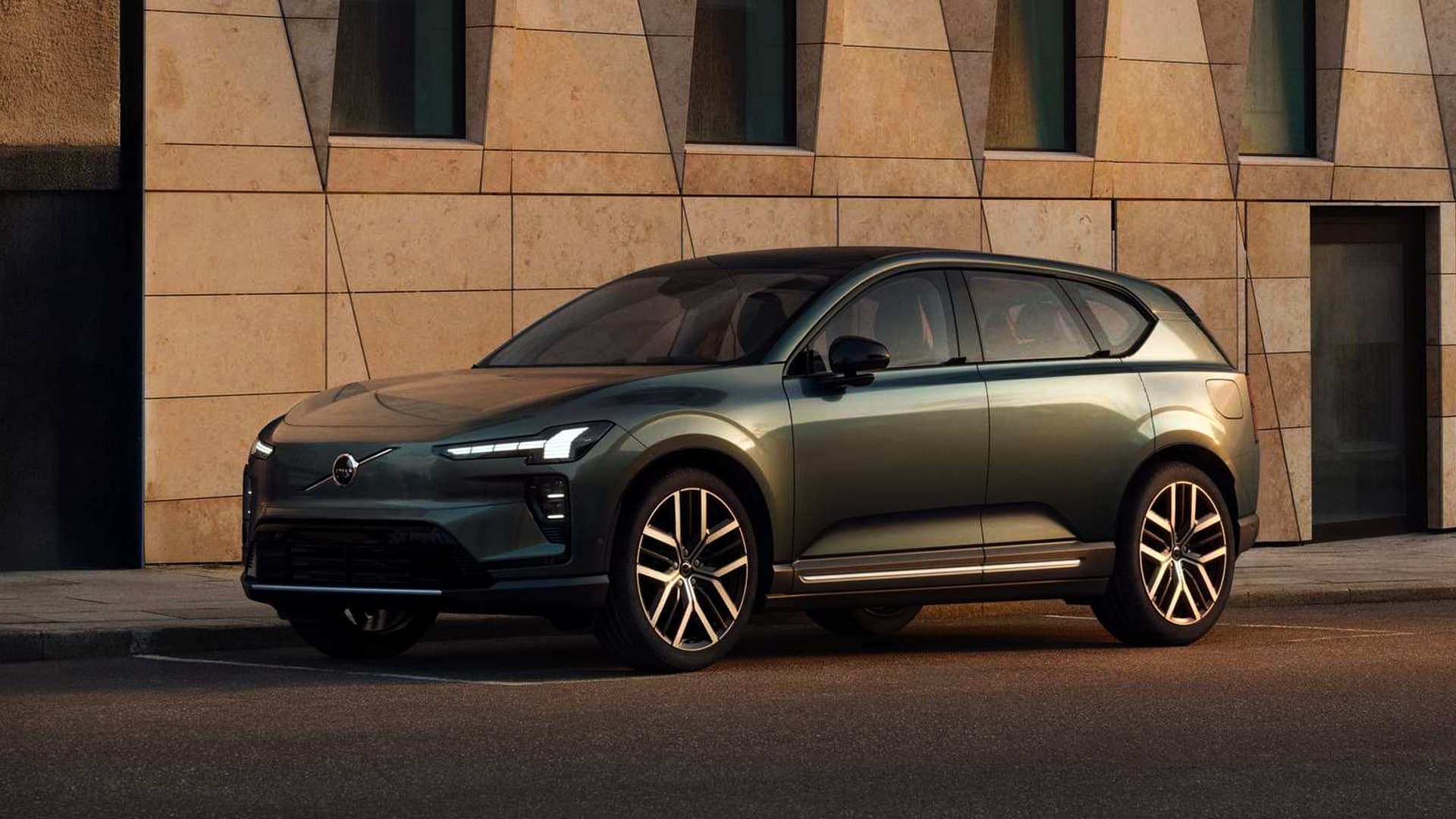
Volvo EX60: What South Africa Can Expect From the 2027 Model
Volvo's EX60 gives South African buyers a new electric SUV to watch, but its arrival needs a more careful explanation than a launch headline. Revealed internationally on 21 January 2026, the five-seat model now has detailed local product pages. That does not mean a South African price or a guaranteed delivery date has been announced for every version.
As checked on 20 November 2026, the useful story is what Volvo has specified for this market, how the EX60 differs from the XC60, and which details still need confirmation before buyers commit.
What is confirmed about South African availability?
Volvo lists the standard EX60 as a 2027 model. Its local retailer, Produkta Volvo Cars Mbombela, describes it as coming to South Africa and explicitly says local prices have not yet been published. The retailer also says the car is not yet on sale here.
That makes it sensible to register interest while keeping a purchase timetable flexible. A model-year label identifies the product specification; it is not a promise that a particular car will be delivered during a particular month.
The EX60 Cross Country has a separate timetable. Volvo's South African page advertises pre-orders and deliveries from mid-2027, while describing that version as model year 2028. Buyers should therefore distinguish the standard EX60 from the Cross Country when asking about allocation. Neither an overseas price converted into rand nor a general enquiry form establishes a confirmed local transaction price.
A new electric model, not an XC60 conversion
In its January reveal announcement, Volvo introduced the EX60 on its SPA3 electric architecture, with the HuginCore computing system. The announcement also highlighted large aluminium castings and cell-to-body construction, which integrates the battery into the vehicle's structure.
This is a dedicated electric model rather than a petrol XC60 with a battery substituted for its engine. That distinction matters when comparing the two names: their similar positioning does not make their powertrains interchangeable.
The EX60 needs external charging. Buyers wanting an XC60 with an engine should investigate the separate mild-hybrid or plug-in hybrid offerings instead. The decision starts with the propulsion system and how it fits the driver's routine, before moving to upholstery or equipment packages.
Read the local powertrain figures carefully
The South African specification page details the rear-wheel-drive P6 Electric and all-wheel-drive P10 AWD Electric. It lists nominal battery capacities of 83 kWh and 95 kWh respectively, with preliminary combined ranges of up to 645 km and 695 km.
Those figures should not be confused with the international launch's headline range for the P12 AWD. A specification reported for one derivative or market does not automatically describe the car offered locally.
Volvo identifies the range numbers as preliminary WLTP-based figures. They are useful for a controlled comparison, but not a promise of identical distance on every journey. Temperature, speed, terrain and vehicle specification all matter. Treat the quoted maximum as a reference point when assessing your routes, rather than a distance to plan on using completely.
Fast charging comes with conditions
Volvo's local overview describes an 800-volt electrical system and approximately 16 minutes for a 10–80% DC charge under suitable conditions. Its examples specify a 350 kW station for the P6 and a 400 kW station for the P10.
These are charging-station ratings, not a statement that the battery receives that power continuously. Volvo qualifies the time by charger output, battery temperature and vehicle condition. A lower-powered stop should not be budgeted as a guaranteed 16-minute visit. The relevant question is which compatible charging sites support the journeys you actually make.
Recognisable lighting on a new body
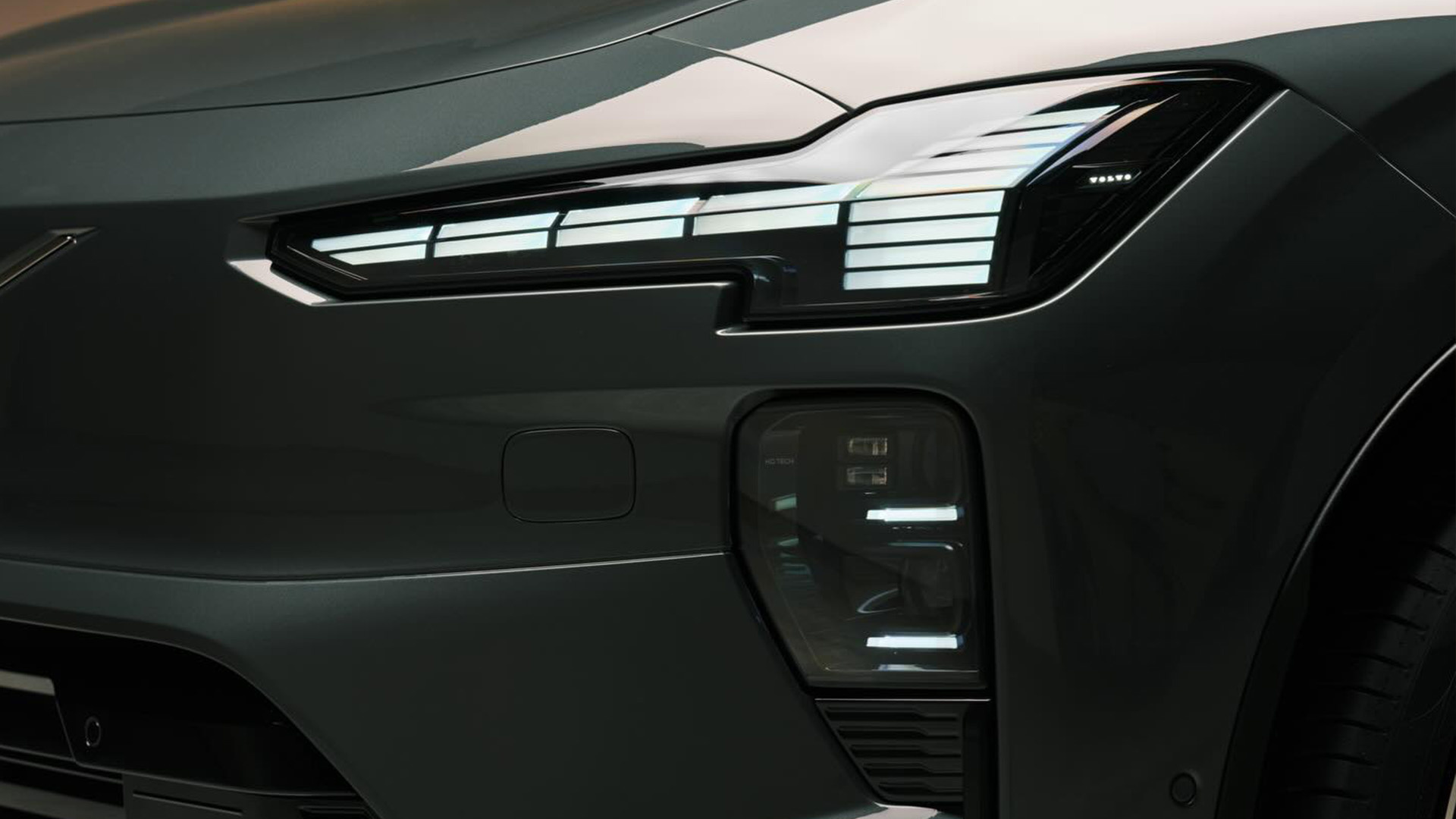
The EX60 retains Volvo's Thor's Hammer light signature, with a segmented horizontal pattern across the upper front lamps. Its smooth nose and separate lower lighting elements give the electric SUV a different face from the grille-led XC60.
Volvo describes Matrix LED lighting that adjusts its pattern around other road users. The visible lamp signature identifies the design, while the adaptive function concerns how illumination is managed in use. A photograph of the lights cannot demonstrate that function, and equipment should be checked against the exact version ordered.
A cabin worth trying before ordering
Volvo's interior description shows a landscape centre screen paired with a separate driver display. A two-spoke steering wheel with flattened upper and lower edges is intended to preserve the driver's view of the instruments.
That layout is worth evaluating in person once demonstrators are available. Check display visibility from your own seating position and how comfortably you reach frequently used controls. Published equipment lists can establish what is fitted; they cannot establish whether the arrangement suits you.
Volvo also describes Google Gemini as a conversational assistant, with features that can evolve through software updates. Its technology announcement qualifies availability by market, so buyers should confirm which connected services are included locally and what requires an ongoing subscription.
The EX60 is a concrete upcoming model with substantial local specifications. The remaining buying decision depends on confirmed South African pricing, the final equipment list and an allocation date for the exact derivative you choose.
Comments
Newest firstLoading comments…