




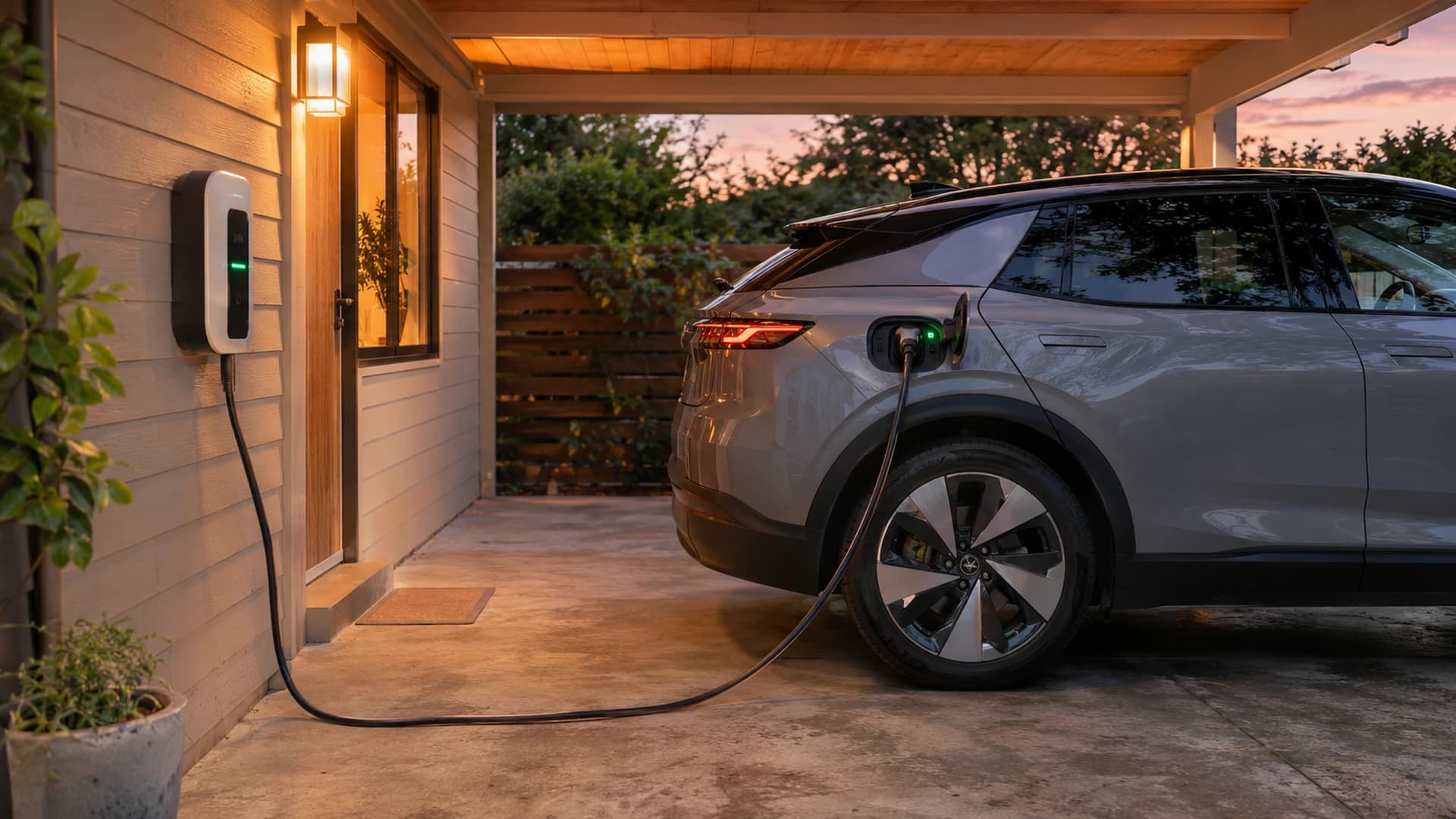
Home EV charging in South Africa: what to check before you buy
A convenient place to charge can make an electric vehicle easier to live with. But a parking bay and a plug are only the beginning. Before choosing a car, establish where you will charge, how quickly you need to replenish the battery and what electrical work the property may require.
A fully electric vehicle must be charged from an external electricity supply. A plug-in hybrid can also be charged externally, while a conventional hybrid generally does not plug in. Check which type you are considering before comparing charging arrangements.
Work backwards from your daily driving
Start with your typical distance and the time the car will be parked. Someone who drives 40 km on most weekdays and parks at home overnight has different needs from someone who covers 250 km a day and returns late.
As a simple illustration, a car using 18 kWh per 100 km would use about 7.2 kWh to drive 40 km. Actual consumption varies with speed, terrain, temperature, traffic, driving style and the vehicle. Charging losses also mean the electricity drawn from the supply can be higher than the energy added to the battery.
The point of the calculation is not to predict an exact bill. It is to see whether your usual parking window is likely to provide enough time for your daily energy needs, with some margin for unexpected journeys. Ask the dealer for realistic consumption information and check the car's charging specifications.
Understand kW and kWh
A kilowatt, written kW, describes power: roughly how quickly energy is delivered. A kilowatt-hour, or kWh, measures energy. Think of a battery's usable capacity in kWh and the charging power in kW. The US Department of Energy's charging overview explains why vehicle capability, equipment and battery state all affect charging time.
For a simplified example, adding 21 kWh at a constant 7 kW would take three hours. Real sessions take longer because of losses and changing charging rates. A vehicle with a lower AC charging limit, or a supply unable to sustain the charger's maximum output, will charge more slowly than the equipment's headline rating suggests.
You do not need to fill the battery from empty every night. For regular use, follow the vehicle manufacturer's advice on charging limits and battery care. The best routine is the one that supports your travel while respecting the car's instructions.
Ask for an electrical assessment
Have a qualified electrician assess the proposed installation before buying charging equipment. They can check the available supply, distribution board, cable route, protective devices and condition of the existing installation. They should also explain the applicable installation and certification requirements for your property.
Do not assume an existing household socket is suitable for sustained vehicle charging. Use only equipment and connections approved for the vehicle and installed as required by the manufacturer and a qualified professional. Improvised extension leads or damaged plugs are poor substitutes for an appropriately assessed setup.
Ask for a written quote that separates the charger, installation materials, labour, any distribution-board work and certification. A long cable route or upgrades to the supply can materially change the total. The Department of Energy's home-charging guidance also recommends having an electrician assess electrical capacity. Its charging levels and local rules are US-specific, so apply South African requirements locally.
Check permission and practical access
If you rent, obtain the owner's permission before arranging work. In a sectional-title scheme or shared parking area, speak to the body corporate or managing agent about approval, metering, access and responsibility for maintenance. Clarify the process in writing before paying for equipment.
Consider where the charging port is on the vehicle, whether the cable reaches without crossing a walkway and how the equipment will be protected from weather and physical damage. Also establish who pays for electricity if the parking supply is shared. A private meter or another agreed allocation method may be needed.
If you expect to move, ask whether the equipment can be removed, who owns the installation and what making good the property would involve.
Budget for electricity and backup options
Estimate charging cost by multiplying the energy drawn from the supply by your applicable electricity tariff. For example, 100 kWh at an illustrative R3 per kWh is R300. This is not a current tariff quote: actual rates, tariff structures, charging losses and possible fixed charges vary. Use your own bill or supplier's current schedule.
Consider what happens during an electricity interruption. Ask a qualified installer what, if anything, your existing backup system can safely support. Do not assume that an inverter, generator or solar installation can charge a car at the full advertised rate. Plan alternative charging for essential journeys and check public charger access, connector compatibility, payment methods and operating status before relying on a particular site.
Make the decision around your routine
Before signing for a vehicle, request its AC charging limit, connector details and recommended equipment. Obtain an installation assessment and quote, confirm property permissions, and compare the expected charging window with your normal travel.
Home charging can be convenient without being exceptionally fast. The right setup is one that safely restores the energy you usually use, fits your property and leaves you with a workable plan when your routine changes.
Comments
Newest firstLoading comments…