



SUV or double-cab bakkie for family life? Start with how you will use it
A double-cab bakkie can carry camping gear and tools in an open load bed, while an SUV puts luggage inside an enclosed cabin. Both can be useful family vehicles, but the better choice depends on the people, places and cargo you actually need to accommodate.
Before comparing accessories or badge names, describe a normal week and a demanding weekend. How many seats are occupied? What needs to stay dry? Will the vehicle carry heavy equipment, tow a trailer or travel on gravel? These questions make the shortlist more useful than choosing on appearance alone.
Start with the back seat
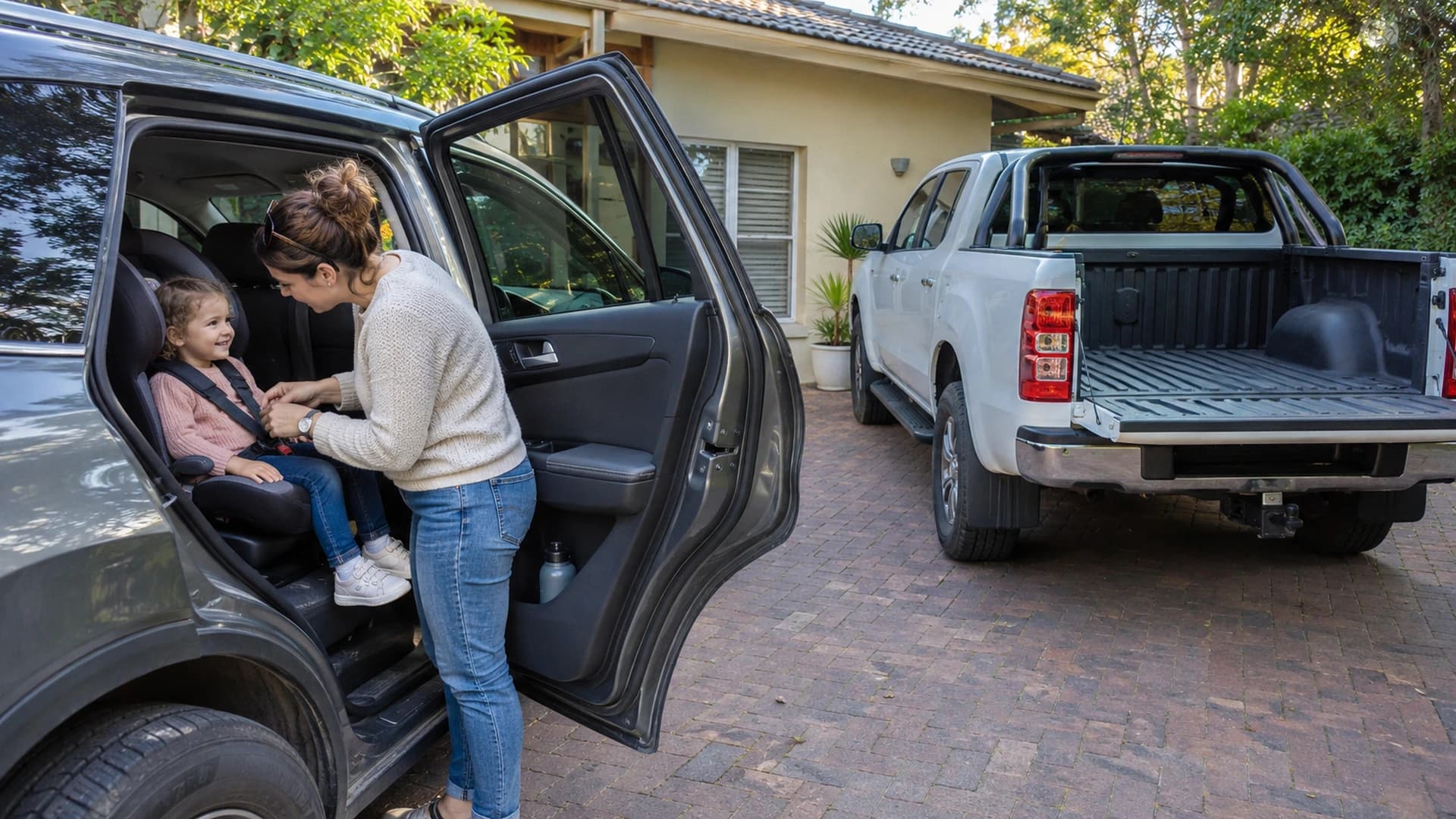
Take everyone who regularly travels with you to view the vehicle. Check how easily children and older passengers climb in and out, and whether the doors open far enough in a typical parking bay. High ground clearance can be helpful on rough roads, but a tall step into the cabin may be inconvenient for smaller passengers.
If you use child seats, bring them along. Confirm the vehicle's anchorage provisions in the handbook and check whether the seats fit securely in the positions you intend to use. An impressive exterior size does not guarantee enough room for three child restraints across the rear bench. Also check legroom with the front seats set for the adults who normally use them.
On a test drive, pay attention to the rear passengers as well as the driver. Seat angle, headroom, ventilation and ride comfort matter on a long trip.
Decide what the luggage needs to do
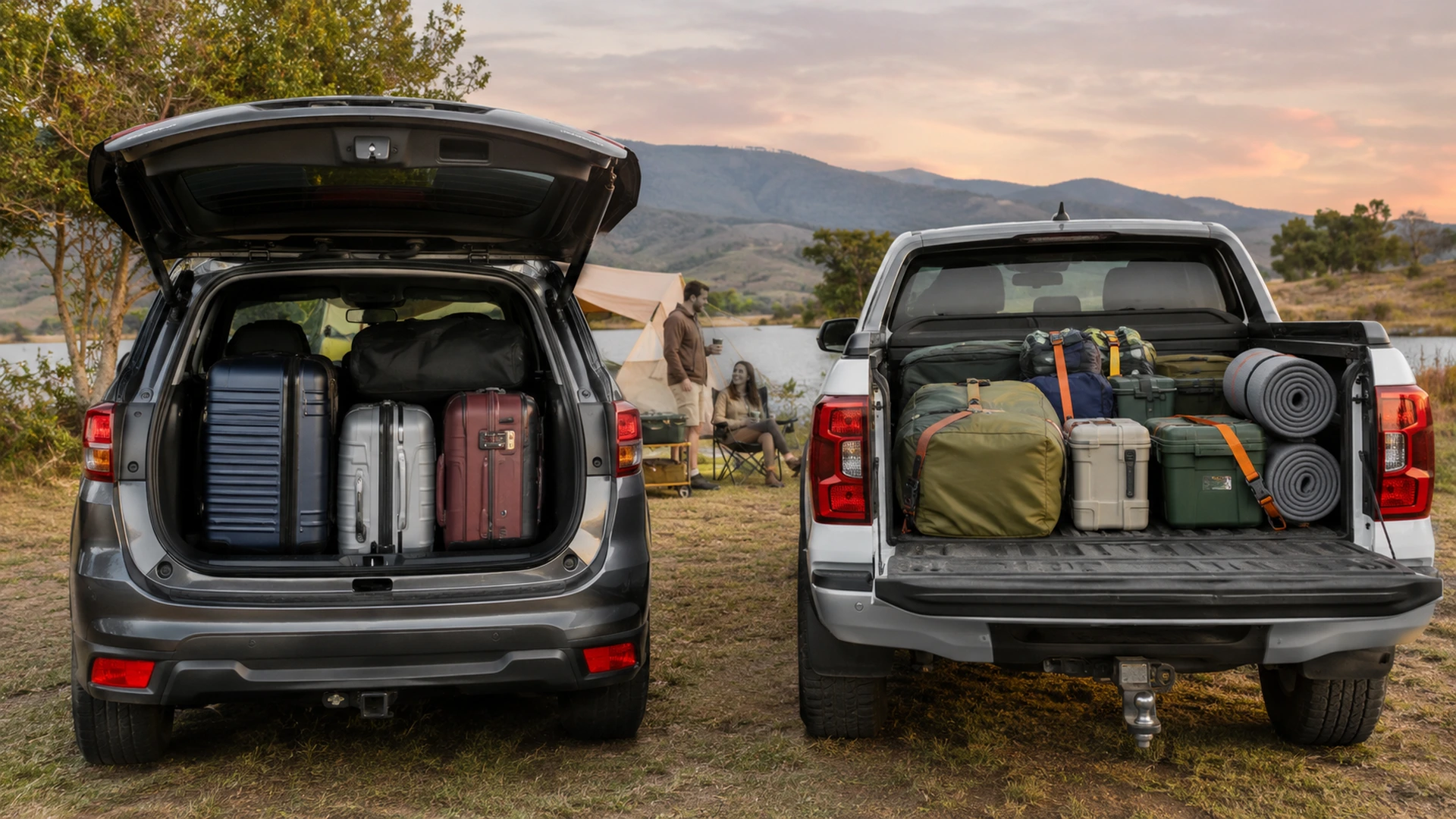
An SUV's enclosed boot keeps bags separated from weather without needing a separate canopy. Check the height of the boot opening, the shape of the space and what happens when all seats are in use. A seven-seat vehicle may have much less room behind the third row than behind the second.
A bakkie's load bed can suit muddy equipment, bulky tools or items you do not want inside the cabin. A canopy or secure cover can make it more useful for luggage, but include its price and weight in the decision. Check the usable opening and tie-down points with the actual items you plan to carry.
Neither body style makes loose cargo safe by itself. Secure items so they cannot move under braking or in a collision, and avoid stacking luggage where it obstructs the driver's view. A cargo barrier or suitable restraint system may help, provided it is compatible with the vehicle and installed correctly.
Look beyond the headline payload
Payload is the mass a vehicle can carry within its permitted limits. Passengers, luggage, accessories and equipment all use some of that allowance. A canopy, roof rack or recovery equipment is not weightless simply because it stays on the vehicle between trips.
Use the specific vehicle's handbook and manufacturer information to check the applicable gross vehicle mass, axle limits and accessory restrictions. Published figures may vary by derivative and equipment, so ask the dealer for the values that apply to the exact vehicle. If you are close to a limit, weighing the loaded vehicle at a suitable weighbridge is more useful than guessing.
For towing, check the vehicle's rated braked or unbraked trailer limit, the permitted load on the towball, and the allowable combined mass. The trailer's loaded mass matters, not just its empty weight. The RAC's towing guide explains why the vehicle and trailer figures need to be considered together. Its licence and legal information is UK-specific; check current South African requirements separately.
Match the drivetrain to the route
Four-wheel drive can be useful on suitable loose or slippery terrain, but it does not remove the need for good tyres, careful driving and appropriate recovery planning. Some SUVs offer all-wheel drive, some bakkies have selectable four-wheel drive, and many versions of both drive only two wheels. Equipment can differ substantially within the same model range.
If you regularly use steep, rutted access roads, ask about clearance, approach and departure angles, and whether a low-range transfer case is fitted. Compare those specifications with the route you actually use rather than assuming an adventurous appearance means the vehicle has the equipment you need. For occasional gravel, tyre condition and sensible speed can be more relevant than a long list of off-road accessories.
Check the costs and live with the details
Obtain insurance quotations for the exact models, then compare servicing, tyre sizes, fuel use and replacement parts. Ask what a service plan covers, how long it lasts and what happens when its distance or time limit is reached.
Finally, park each vehicle where you normally park. Check visibility, turning space, garage height and the effort needed to lift everyday bags into the boot or load bed. Test the vehicle with your family and equipment before committing.
An SUV may make more sense when enclosed luggage and easy passenger access are the priorities. A double-cab may earn its place when a separate load bed and work capability are regularly useful. The strongest choice is the one that fits ordinary days as well as the occasional adventure.
Comments
Newest firstLoading comments…