





South Africa's automotive exports reached R291 billion in 2025. What does that mean for the industry?
South Africa exported R291 billion worth of vehicles and automotive components in 2025, up from R268.8 billion in 2024, according to the 2026 Automotive Trade Manual release from naamsa. The industry body's figures show the importance of foreign markets to local manufacturing, while also revealing a more complicated picture for component suppliers.
The headline covers the value of exports, not the number of vehicles sold locally, the industry's profit or the amount of South African-made content in each exported vehicle. It is a useful starting point for understanding how local production connects to international demand.
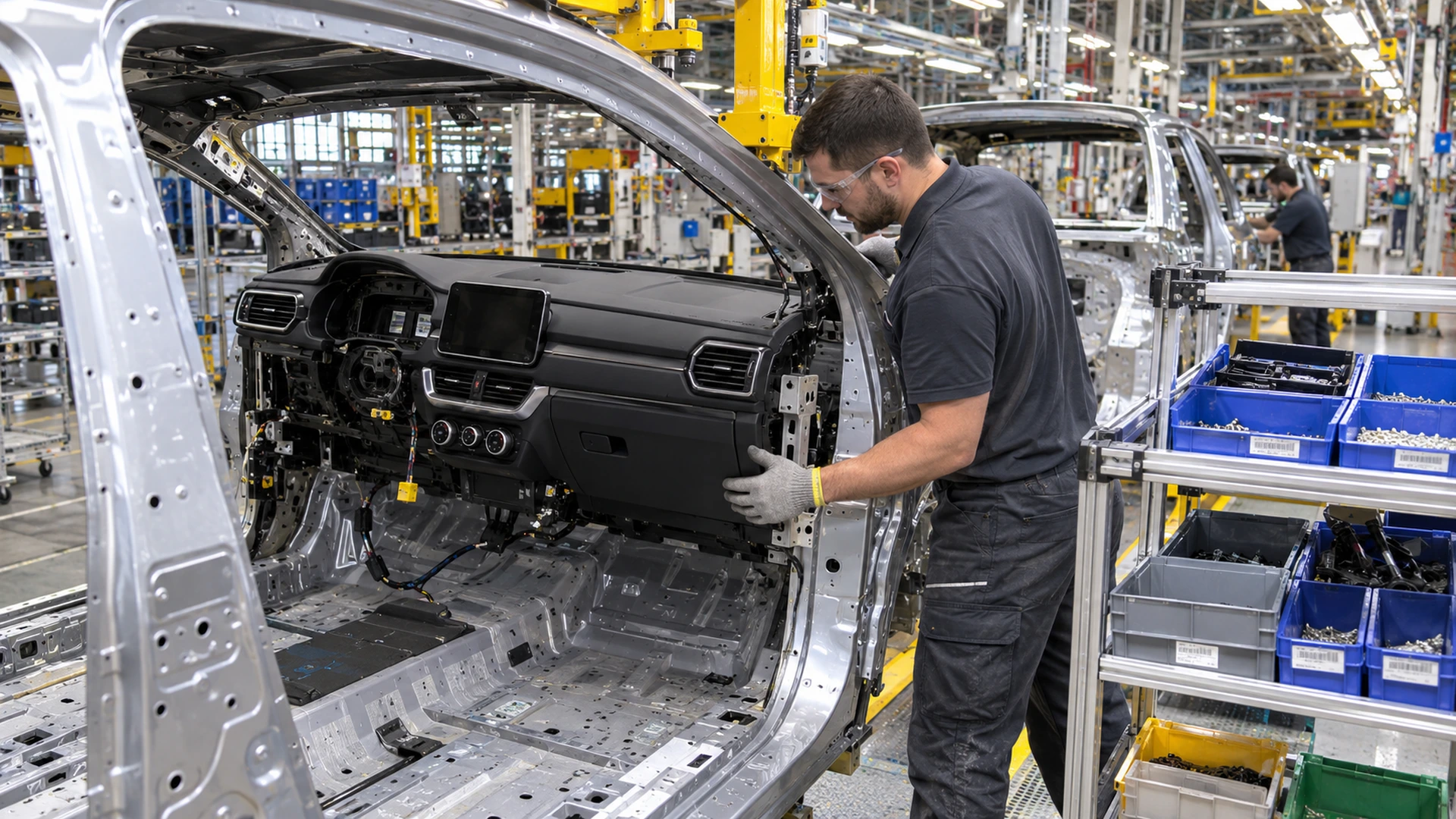
Images are AI-generated illustrations.
Vehicles drove the increase
Naamsa reports that vehicle export value rose from R205.4 billion in 2024 to R229.8 billion in 2025. Component exports moved the other way, declining from R63.4 billion to R61.2 billion. The combined increase therefore does not mean that every part of the automotive supply chain grew at the same rate.
The values reflect the worth of exported products, not just their number. Changes in the mix of vehicles and components, prices and exchange rates can affect comparisons in rand terms. The figures alone do not establish how many additional jobs were created or how profitable an individual manufacturer was.
Naamsa describes the R291 billion total as 15.6% of South Africa's total exports in 2025. This places the sector among the country's substantial sources of export trade, but that percentage should not be confused with a share of gross domestic product or the share of vehicles built with local parts.
Europe remained a major destination
The industry body reports that trade arrangements with the European Union and United Kingdom supported automotive exports to the region valued at R182.8 billion, or 62.8% of the overall automotive export value. That is a significant concentration: access to overseas markets matters to production decisions and to the companies that supply local vehicle plants.
Demand abroad can change with economic conditions, customer preferences, vehicle regulations and trade arrangements. A change in the value of exports to one market does not automatically explain what will happen to local showroom prices. Transport, taxes, currency movements, manufacturer decisions and competition all influence the price of an individual car.
For employees and suppliers, the importance of export markets is more direct. Production programmes often serve customers in more than one country, so the ability to meet the quality, cost and delivery requirements of international buyers matters alongside domestic sales.
Component imports remain important
The same release says imports of original-equipment components by the seven domestic vehicle manufacturers rose from R147.4 billion in 2024 to R151 billion in 2025. Imported components are part of the supply chain even when a vehicle is assembled in South Africa.
That distinction is important when discussing local content. Assembly location, the origin of parts and the destination of the finished vehicle are different questions. A locally assembled model can use a combination of locally made and imported components, and that mix may vary by model and part.
Naamsa identifies opportunities to increase local production of components, including those associated with new-energy vehicles. Potential is not the same as a confirmed investment or a guarantee that a particular part will be manufactured locally. Suppliers still need viable volumes, skills, capital, reliable infrastructure and customers for the products they make.
The transition creates questions for suppliers
The global shift towards electric and other new-energy vehicles changes the types of parts some manufacturers may need. The naamsa release identifies potential areas including battery assembly, thermal management, e-axles and fuel-cell-related components. These are examples of possible opportunities, not a statement that all South African factories have already adopted them.
The pace of change will differ across markets and vehicle types. Suppliers whose current work is tied to conventional powertrains may need to assess how future demand could affect their products, while other suppliers may see opportunities in components used across several types of vehicle.
For the local industry, the challenge is to retain existing production while preparing for changing export requirements. That involves more than choosing a powertrain: investment decisions also depend on the wider supply chain, skills and the cost and reliability of production.
What should motorists take from the figures?
The trade data helps explain why South African motoring news often links a local factory announcement with developments in Europe or other export destinations. A plant can serve local buyers and overseas customers, while its suppliers operate within an international network.
For someone shopping for a car, however, the national export total is not a substitute for checking the vehicle itself. Confirm the specification, warranty, service support, parts availability and delivery timing for the particular model. A locally assembled vehicle is not automatically cheaper or better supported than an imported alternative; those details need to be checked individually.
The 2025 figures show an industry with a substantial export footprint and differing fortunes across vehicles and components. The next question is how manufacturers and suppliers adapt that footprint as trade conditions and vehicle technology continue to change.
Comments
Newest firstLoading comments…